

What are the differences between an anal vein thrombosis and hemorrhoids in terms of causes, symptoms, and course?
An anal vein thrombosis and hemorrhoids are two different conditions in the anal area that differ significantly in their origin, symptoms, and course. While hemorrhoids arise from an enlargement of the natural vascular cushion in the anal canal, an anal vein thrombosis is a blood clot in the veins at the outer edge of the anus.
Causes
The causes of both conditions are different. Hemorrhoids develop due to increased pressure on the hemorrhoidal plexus in the anal canal, for example from chronic straining during bowel movements, obesity, or pregnancy. A genetically weak connective tissue can also promote their development. Find more information here about the causes of hemorrhoidal disease.
An anal vein thrombosis, on the other hand, is often triggered by sudden pressure changes in the abdominal area, such as those caused by straining, heavy lifting, prolonged sitting, or mechanical stimuli (e.g., anal intercourse). Thermal influences like cold or humid weather, as well as hormonal factors and alcohol consumption, can also play a role. Read more here about the causes of anal thrombosis.
Symptoms
The symptoms vary significantly. Hemorrhoids usually develop gradually and initially cause hardly any discomfort. Typical symptoms in advanced stages include anal itching, moisture, bright red bleeding, and a foreign body sensation. Pain is rare and only occurs with complications such as strangulated hemorrhoids. Read more here about bleeding hemorrhoids or the general symptoms of hemorrhoids.
In contrast, anal venous thromboses are characterized by sudden, severe pain and a palpable bluish-red swelling at the anal margin. The tension and pressure sensation is often so intense that sitting becomes nearly impossible. Find further information here on the symptoms of an anal thrombosis.
Course
Hemorrhoids are chronic and classified into four severity grades, ranging from mild discomfort (Grade I) to permanently prolapsed tissue (Grade IV). Without treatment, they can worsen and cause complications such as bleeding or mucosal inflammation.
An anal venous thrombosis usually heals on its own. The clot is absorbed by the body within a few weeks, with pain typically subsiding after just a few days. In rare cases, surgical removal of the thrombus may be necessary.
|
Criterion |
Anal vein thrombosis |
Hemorrhoids |
|
Origin |
Venous blood clot at the outer edge of the anus |
Enlargement of the hemorrhoidal cushion in the anal canal |
|
Common causes |
Long sitting, straining, mechanical irritation, cold |
Chronic straining, overweight, pregnancy |
|
Symptom onset |
Sudden |
Gradual |
|
Main symptoms |
Severe pain, bluish-red swelling, feeling of pressure |
Itching, moisture, bright red bleeding, foreign body sensation |
|
Pain |
Very severe, especially when sitting |
Rare, mostly only with complications |
|
Bleeding |
Usually none |
Bright red blood on stool or toilet paper |
|
Location |
At the outer edge of the anus |
Inside the anal canal |
|
Course |
Acute, usually heals within 2–6 weeks |
Chronic, sometimes with deterioration |
|
Treatment |
Painkillers, ointments, possibly surgical removal |
Conservative therapy, sclerotherapy, surgical procedures for severe grades |
This comparison highlights the essential differences between anal vein thromboses and hemorrhoids, giving affected individuals initial clues to classify their symptoms. Nevertheless, in case of uncertainty, a doctor should always be consulted to ensure an accurate diagnosis and appropriate treatment. Find further information here on the treatment of anal vein thrombosis, as well as on the treatment of hemorrhoidal disease.
How are anal vein thromboses and hemorrhoids diagnosed and treated?
The diagnosis and treatment of anal vein thrombosis and hemorrhoids differ in some aspects, as they are two distinct conditions. However, both require careful examination by a doctor to clarify the exact cause of the symptoms and initiate appropriate therapy.
|
Criterion |
Anal vein thrombosis |
Hemorrhoids |
|
Treatment goal |
Pain reduction, regression of the thrombosis |
Symptom relief, regression, or removal |
|
Main measures |
Pain ointments, painkillers, cooling |
Local preparations, minimally invasive or surgical procedures |
|
Surgical options |
Removal of the thrombus (rarely necessary) |
Rubber band ligation, sclerotherapy, hemorrhoidectomy |
|
Duration of healing |
2–6 weeks, usually without complications |
Chronic course, depending on the severity of the condition |
Diagnosis
The diagnosis is based on a detailed medical history and physical examination.
Anal vein thrombosis:
Medical history: The doctor asks about sudden onset of pain, swelling, and other symptoms such as itching or stabbing pain. Most affected individuals report a suddenly developed, painful lump at the anal margin.
Physical examination: By visual inspection, the doctor typically recognizes a bluish-red, taut-elastic swelling at the anal margin. The lump is easily palpable and cannot be pushed back into the anal canal.
Further examinations: Additional procedures such as proctoscopy are usually not necessary, as the diagnosis is clear due to the external location.
Read more here about the doctor's visit for anal vein thrombosis.
Hemorrhoids:
Medical history: Typical questions concern symptoms such as itching, moisture, bright red bleeding, and a feeling of pressure or a foreign body. Pain is less typical with hemorrhoids but can occur in advanced stages.
Physical examination: The doctor inspects the anal area and gently palpates the anal canal. Visible hemorrhoids can be recognized depending on the severity of the disease, while internal hemorrhoids are diagnosed by palpation.
Proctoscopy: For a more precise assessment of internal hemorrhoids or to differentiate from other diseases, a proctoscope is used. In unclear cases, a rectoscopy or colonoscopy may also be necessary.
Treatment
The treatment of anal vein thrombosis, as well as the treatment of hemorrhoidal disease, depends on the type and severity of the condition.
Treatment of anal vein thrombosis
Conservative therapy: In most cases, no surgical treatment is necessary. Pain-relieving ointments (e.g., with lidocaine), anti-inflammatory preparations, and painkillers such as ibuprofen or diclofenac are recommended. Cooling can reduce the feeling of tension.
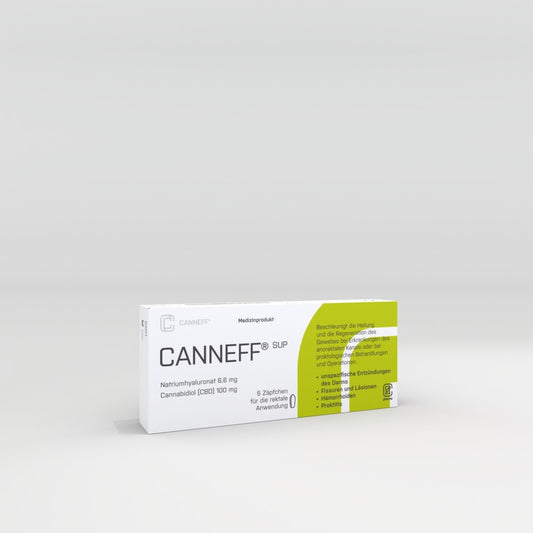
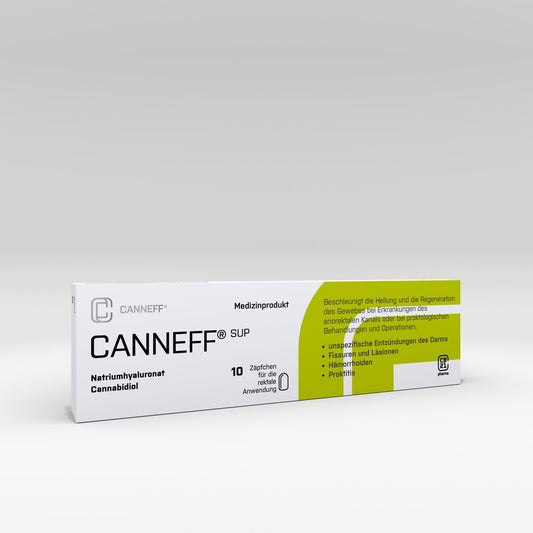
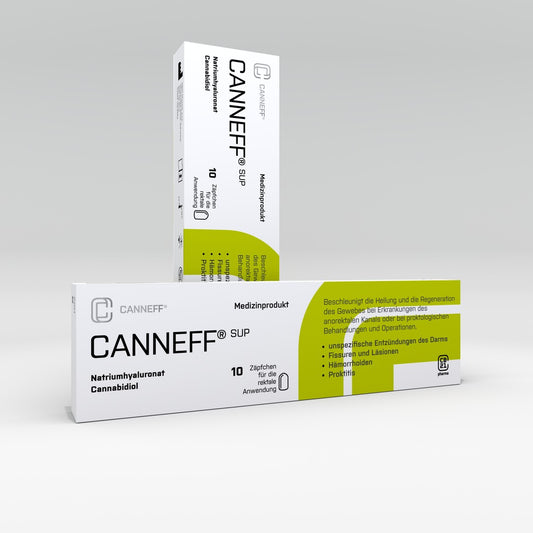
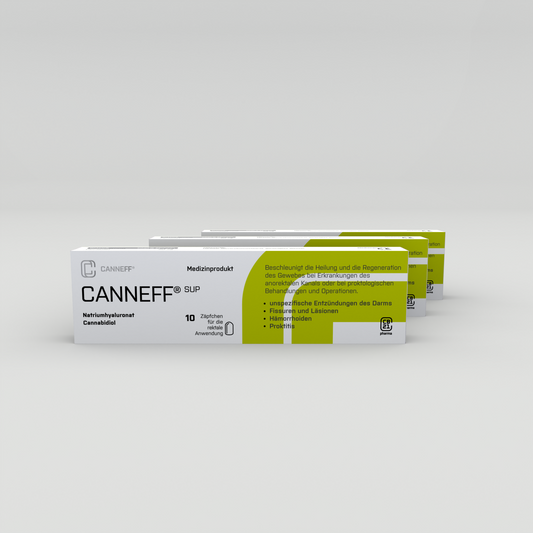
Spontaneous healing: The thrombosis usually heals on its own within two to six weeks. The body breaks down the blood clot, and the symptoms quickly decrease. To promote rapid regeneration of the mucous membrane, CANNEFF® SUP suppositories can be used.
Surgical measures: For very large or extremely painful thromboses, the doctor can remove the clot through a small incision. These procedures are performed under local anesthesia and are only necessary in severe cases.
Treatment of hemorrhoids
Conservative treatment (Grade I–II):
Local therapies such as ointments or suppositories like CANNEFF® SUP suppositories with anti-inflammatory and itch-relieving ingredients. Sitz baths (e.g., with chamomile or oak bark) to soothe the skin and promote blood circulation. Stool-regulating measures through a high-fiber diet and adequate fluid intake.
Minimally invasive procedures (Grade II–III):
Rubber band ligation: A rubber band is placed around the hemorrhoids, causing them to die and fall off.
Sclerotherapy: Sclerotherapy by injection to shrink the tissue.
Infrared coagulation: Heat treatment that reduces hemorrhoids.
Surgical treatment (Grade III–IV):
Hemorrhoidectomy: Surgical removal of hemorrhoid nodes.
Stapler method: For tightening and repositioning the tissue.
HAL method: Ultrasound-guided ligation of the feeding vessels.
The combination of modern diagnostics and targeted treatment enables effective relief of symptoms in both cases. Early medical evaluation is important to avoid complications and initiate the right therapy to effectively treat hemorrhoids.
More about the treatment of hemorrhoids:
- Treatment of Grade I Hemorrhoids
- Treatment of Grade II Hemorrhoids
- Treatment of Grade III Hemorrhoids
-
Treatment of Grade IV Hemorrhoids
What role do nutrition, lifestyle, and hygiene play in the prevention and treatment of these conditions?
Nutrition, lifestyle, and hygiene play a central role in the prevention and treatment of anal vein thrombosis and hemorrhoids. These factors not only influence the development of these conditions but also affect their course and healing. Targeted adjustments in daily life can alleviate symptoms and prevent relapses.
Nutrition
A high-fiber diet is essential to keep stool soft and bowel movements regular. Hard or irregular stools increase pressure in the anal area and promote both anal vein thrombosis and hemorrhoids. Foods such as whole grains, fruits, vegetables, and legumes support digestion and prevent constipation. At the same time, it is important to drink enough fluids – ideally 1.5 to 2 liters of water or unsweetened tea per day – to optimize stool consistency.
Lifestyle
An active lifestyle supports blood circulation in the pelvic area and reduces the risk of blood pooling in the veins. Regular exercise such as walking, swimming, or light jogging strengthens muscles, stimulates digestion, and helps prevent overweight—a risk factor for both conditions. It is especially important to avoid prolonged sitting, as this impairs circulation and increases pressure in the anal area. Those who sit for long periods due to work should take regular breaks, stand up, and move around.
Hygiene
Gentle and regular hygiene of the anal area is essential to avoid irritation and infections. After bowel movements, cleaning with lukewarm water or a soft, damp cloth is recommended. Avoid harsh soaps or scented or preservative-containing wet wipes, as they can irritate sensitive skin. Drying should be done by gently patting to avoid additional friction. For existing complaints, sitz baths with anti-inflammatory additives like chamomile or oak bark can have a soothing effect.
Interaction of diet, lifestyle, and hygiene
A combination of a high-fiber diet, sufficient exercise, and careful hygiene creates the best conditions to reduce pressure in the anal area, prevent inflammation, and promote healing. For those affected, anti-inflammatory and healing-promoting products like CANNEFF® SUP suppositories with CBD and hyaluronic acid are a useful addition to soothe the mucous membranes and support regeneration.

Preventive measures
Avoiding straining: Avoid straining during bowel movements. Taking your time and creating relaxed conditions is helpful.
Healthy sitting habits: Avoid sitting for long periods on hard or cold surfaces. Seat cushions can help reduce additional pressure on the anal area.
Stress reduction: Stress can affect digestion. Relaxation techniques such as yoga or meditation contribute to overall health.
By integrating these measures into daily life, both anal vein thromboses and hemorrhoids can be effectively prevented or their symptoms alleviated. However, early medical consultation remains crucial, especially with persistent or recurring symptoms.
When should you see a doctor for symptoms like pain, swelling, or bleeding?
Symptoms such as pain, swelling, or bleeding in the anal area can indicate various conditions and should be taken seriously. A timely visit to the doctor is important to clarify the cause and initiate appropriate treatment. Especially with sudden, severe pain or palpable swellings that are tender and firm-elastic, an anal vein thrombosis could be present. Persistent or worsening pain that makes sitting or moving difficult also requires medical evaluation.
Bleeding during bowel movements is another warning sign that should not be ignored. Bright red, fresh blood often indicates hemorrhoids or an anal fissure, while darker blood or larger amounts could point to bleeding in the upper digestive tract or serious causes. Regular or repeated bleeding, even if painless, should definitely be examined to rule out other conditions such as tumors.
Additionally, fever, severe swelling, or redness can indicate an infection, such as an anal abscess, which requires prompt medical intervention. Warning signs such as unintended weight loss, persistent changes in bowel habits, or a foreign body sensation in the anal area should also prompt immediate consultation with a doctor or proctologist.
An early visit to the doctor not only allows for an accurate diagnosis but also helps prevent complications such as infections or chronic conditions. Do not hesitate to seek medical advice, especially if self-treatment measures do not bring improvement or if symptoms worsen. Targeted treatment can not only relieve symptoms but also minimize the risk of long-term consequences.
Can anal venous thromboses or hemorrhoids heal on their own, and what complications are possible?
Anal venous thromboses and hemorrhoids can heal on their own in certain cases, but healing depends on the severity of the condition and individual circumstances. Anal venous thromboses, caused by a blood clot in a vein at the anal margin, often resolve without medical intervention. Within two to six weeks, the body usually breaks down the clot on its own. During this time, pain can significantly decrease as the swelling subsides and the tension on the skin lessens. Supportive measures such as cooling compresses, pain-relieving ointments, or anti-inflammatory medications can alleviate symptoms and promote the healing process.
Hemorrhoids, on the other hand, often develop gradually and can be successfully treated in the early stages (Hemorrhoids Grade I and Hemorrhoids Grade II) with conservative measures such as a high-fiber diet, sitz baths, or special ointments and suppositories. These measures can help reduce swelling and prevent further discomfort. In advanced stages (Hemorrhoids Grade III and Hemorrhoids Grade IV), self-healing is unlikely, and medical or surgical interventions are often necessary to relieve symptoms and prevent complications. Read more here about the different stages of hemorrhoids or about hemorrhoid surgery.
Possible complications
Although anal vein thromboses are generally harmless and cannot cause dangerous embolisms, there are some possible complications. In rare cases, the stretched skin over the thrombosis can rupture, leading to bleeding. These are usually harmless but can be painful and require special wound care; otherwise, they can result in an anal abscess or an anal fistula. Chronic anal vein thromboses or recurrent anal vein thromboses can also affect quality of life and should be medically evaluated.
Hemorrhoids can also lead to complications if left untreated. The most common include severe bleeding, which can cause anemia, as well as inflammation or eczema in the anal area due to persistent moisture. In advanced stages, hemorrhoids can become strangulated (incarcerated), causing severe pain and reduced blood flow to the tissue. In rare cases, this can lead to tissue damage or infections that require emergency treatment.