

What is endometriosis and how does it manifest in the body?
Endometriosis is a chronic, inflammatory disease in which tissue similar to the uterine lining grows outside the uterine cavity. This so-called endometrium-like tissue reacts like normal endometrium to the hormones of the female cycle – it builds up, bleeds, but cannot be expelled from the body. This causes recurring inflammation, blood accumulations, and eventually scars, cysts, and adhesions.
The disease can manifest in different parts of the body. Most commonly affected are the peritoneum, ovaries, fallopian tubes, intestines, bladder, or the uterine muscle (adenomyosis). In rare cases, endometriosis lesions are also found outside the abdominal cavity – for example, in the lungs, diaphragm, or scar tissue after surgeries.
Depending on the location, these lesions can bleed with each period. However, since the blood cannot drain, this leads to inflammatory reactions and chronic irritation. Typical symptoms are cramping pain before and during menstruation, but also persistent lower abdominal pain, back pain, pain during sexual intercourse, pain during urination or bowel movements. Endometriosis often also causes fertility problems.
The symptoms of endometriosis are very individual. Some women have little or no complaints, while others experience severe limitations in daily life, work, and private life. It is characteristic that the symptoms often occur cyclically but can also be chronic – especially if adhesions or deeply infiltrating lesions are already present.
How common is endometriosis and how widespread is this disease?
Endometriosis is one of the most common diseases worldwide among women of childbearing age – the number of unreported cases is significant, as many cases remain undiagnosed for a long time. The exact frequency of endometriosis is difficult to determine because many affected women initially show no or only nonspecific symptoms. However, studies and estimates suggest that about 8 to 15% of all girls and women of childbearing age. In Germany, this affects an estimated up to two million women. The World Health Organization (WHO) worldwide, there are around 190 million affected individuals out.
Prevalence is particularly high in certain clinical groups:
|
Group |
Prevalence |
|
Women with chronic lower abdominal pain |
30–60 % |
|
Women with menstrual pain (dysmenorrhea) |
up to 60% |
|
Women with infertility |
about 20–50% |
|
First-degree relatives of affected individuals |
about 7%, compared to 1% in control groups |
The disease can begin as early as adolescence – with the onset of the first menstruation – but often remains years undetected. On average, it takes seven to ten years from the first appearance of symptoms to diagnosis. Many women only learn about their endometriosis during fertility treatments or gynecological surgeries.
In 2017 alone, about 28,000 women hospital treatment due to endometriosis – a number that reflects the extent of diagnosed cases but only inadequately captures the actual prevalence.
Particularly problematic is the lack of social and medical awareness of the disease: Many affected individuals initially receive misdiagnoses – such as irritable bowel syndrome, psychogenic pain, or premenstrual syndrome – which delays care and promotes chronic courses.
What causes and risk factors promote the development of endometriosis?
The exact causes of endometriosis are not yet clearly understood, but various scientific theories and statistically proven risk factors provide clues to its development.
Despite intensive research, there is still no uniformly confirmed cause for endometriosis. Rather, it is assumed to be a multifactorial process in which various biological, genetic, and immunological mechanisms interact. The main theories of origin are:
Retrograde menstruation (implantation theory): Here, menstrual blood with endometrial cells does not fully flow out through the vagina but flows backward through the fallopian tubes into the abdominal cavity. The mucosal cells adhering there can implant and develop further. This phenomenon occurs in about 90% of all menstruating women – but only some develop endometriosis, indicating other influencing factors.
Coelomic metaplasia theory: This theory assumes that cells of the peritoneum (coelomic epithelium) transform into endometrium-like tissue under certain conditions – such as hormonal influences or inflammation (metaplasia).
Archimetra hypothesis (relation to adenomyosis): Endometriosis could also arise from a developmental disorder of the uterine lining itself, which then invades deeper muscle layers or outside the uterus. This also explains the frequent simultaneous diagnosis of Adenomyosis in endometriosis patients.
Stem cell and immune theories: Some studies suggest that Stem cells or Immune system dysregulation contribute to the development. Autoimmune processes and inflammatory reactions at endometriosis lesions suggest an immunological involvement.
Genetic factors: Endometriosis occurs more frequently in families. Among first-degree relatives, there is up to a sixfold increased riskto also develop the disease. Recent genetic studies identified, among others, mutations in the Neuropeptide-S receptor 1that occur noticeably frequently in severe endometriosis forms (grade 3–4).
|
Risk factor |
Effect on disease risk |
|
Early menarche (first menstruation) |
Increased risk due to prolonged exposure to estrogen |
|
Short menstrual cycles |
More bleeding per year → higher risk due to frequent cycles |
|
Late menopause |
Prolonged hormonal activity |
|
Childlessness / late first birth |
Fewer cycle breaks due to pregnancy |
|
Short or no breastfeeding |
Lack of hormonal rest phases |
|
Family history (mother, sister) |
Up to sixfold increased risk |
|
Certain environmental factors & endocrine disruptors |
Not yet conclusively researched, but discussed |
Are there ways to prevent it?
So far there are no proven preventive measures of endometriosis. Known risk factors such as cycle density or genetic predisposition cannot be actively influenced. However, an early recognition of symptoms and early therapy initiation help to prevent disease progression and reduce symptoms.
What typical symptoms and complaints occur with endometriosis?
Endometriosis causes a variety of complaints that can vary in intensity depending on the location and extent of the lesions – typical are cycle-dependent pain and reduced quality of life.
Endometriosis is known for its "chameleon-like" appearance: some affected individuals are almost symptom-free, while others suffer from severe, sometimes chronic pain. The symptoms vary greatly, making diagnosis difficult and often leading to long periods of suffering.
|
Symptom |
Description |
|
Dysmenorrhea |
Severe, cramp-like lower abdominal pain before and during menstruation |
|
Chronic lower abdominal or back pain |
Persistent complaints, often worsened by the cycle |
|
Dyspareunia |
Pain during sexual intercourse, especially with deep penetration |
|
Dysuria |
Painful urination, bladder irritation symptoms |
|
Dyschezia |
Pain during bowel movements, especially during menstruation |
|
When the bladder or intestines are affected |
|
|
Gastrointestinal complaints |
Nausea, bloating, diarrhea, or constipation – often cycle-dependent |
|
Intermenstrual or spotting bleeding |
Cycle disorders caused by hormonal reactions of the lesions |
|
Fatigue and exhaustion |
Often due to chronic inflammation, pain, and sleep disturbances |
|
Headaches, dizziness, susceptibility to infections |
Other accompanying symptoms indicating systemic processes |
|
Unfulfilled desire to have children |
Often the first sign when endometriosis lesions affect the fallopian tubes or ovaries |
Symptoms depending on location
Symptoms correlate less with size and more with the location of endometriosis lesions. Typical affected areas are:
- Ovaries → Endometriomas (“chocolate cysts”)
- Peritoneum/Douglas pouch → Lower abdominal pain, pain during sex
- Bladder/ureters → Irritable bladder, blood in urine
- intestines → Pain during bowel movements, cyclical rectal bleeding
- uterine muscle (adenomyosis) → Increased and prolonged menstrual bleeding
The intensity of symptoms often increases shortly before the period and subsides again at its end. In advanced disease, however, pain can persist permanently, for example due to adhesions and inflamed irritated nerve tissue.
Nonspecific and often misinterpreted
Endometriosis symptoms often resemble other conditions such as irritable bowel syndrome, urinary tract infections, or psychosomatic disorders. Many affected individuals initially receive misdiagnoses. On average, seven to ten years until the correct diagnosis – especially when there are no obvious cycle disorders.
How is endometriosis diagnosed and what early detection options are available?
Diagnosing endometriosis is often difficult and lengthy because the symptoms are nonspecific – targeted diagnostics therefore require experience, structured medical history, and the use of imaging and surgical procedures.
Why diagnosis is often delayed
A major problem in diagnosis is that endometriosis symptoms resemble many other conditions – including irritable bowel syndrome, urinary tract infections, or psychological stress disorders. Additionally, Cycle-related complaints are socially normalized , which leads many women to endure severe pain for years without seeking medical help.
The average time from first symptoms to diagnosis in Germany is between seven and ten years , on average three years for patients wishing to conceive
Stepwise diagnosis
The diagnosis of endometriosis is multi-step and begins with a thorough medical history :
Medical history (patient interview)
- Detailed recording of symptoms (timing, location, relation to cycle)
- Questions about menstrual flow, pain progression, sexuality, desire to have children, family history
Gynecological examination
- Speculum and palpation examination to assess changes in the pelvis
- Palpation of painful areas, nodules, or adhesions (e.g., Douglas pouch)
Transvaginal ultrasound (sonography)
- Helpful in detecting cysts (especially endometriomas on the ovaries)
- Adhesions and nodular changes can also become indirectly visible
- However, small or superficial lesions may remain undetected by ultrasound
Magnetic resonance imaging (MRI)
- Additionally used if deep infiltrating endometriosis is suspected
-
Precisely shows the location and extent of lesions outside the uterus
Laparoscopy (abdominal endoscopy)
- Gold standard for a definitive diagnosis
- Under general anesthesia, a camera is inserted into the abdominal cavity through a small incision
- Suspicious lesions can be directly visualized, classified, and removed if necessary
- A microscopic examination (histology) of the tissue sample taken confirms the diagnosis
New developments in early detection
- Saliva test (non-invasive): Research is ongoing on methods to analyze biomarkers in saliva samples that could indicate endometriosis – however, clinical application is not yet available.
- Blood tests for inflammatory markers or hormonal changes are not yet reliable enough.
- Cycle apps or symptom diaries help with early detection through structured documentation that can indicate cycle-dependent patterns.
Clinical classification of endometriosis
For classification, endometriosis is divided according to the location and extent of lesions:
|
Form |
Characteristics |
|
Peritoneal endometriosis |
On the peritoneum (superficial or deep) |
|
Ovarian endometriosis |
Endometriomas (cysts) in or on the ovaries |
|
Tubal endometriosis |
Involvement of the fallopian tubes, sometimes with adhesions |
|
Deep infiltrating endometriosis |
Lesions that penetrate deeper than 0.5 cm into adjacent tissue (e.g., bowel) |
|
Adenomyosis (internal endometriosis) |
Which medication and hormonal treatment approaches help with endometriosis?
The goal of medication and hormonal treatment for endometriosis is to relieve pain, inhibit lesion growth, and prevent recurrence – a causal cure is not yet possible.
Medication-based pain therapy
Many patients initially receive symptomatic treatment with painkillers. These relieve symptoms but do not affect the progression of the disease:
-
Non-steroidal anti-inflammatory drugs (NSAIDs): Active ingredients such as Ibuprofen, Diclofenac or Naproxen have pain-relieving and anti-inflammatory effects. They are especially suitable for mild to moderate menstrual pain.
-
COX-2 inhibitors: These selective anti-inflammatory drugs are gentler on the stomach and can be specifically used for chronic inflammation caused by endometriosis.
Long-term use should always be medically supervised to avoid side effects.
Hormonal therapy (endocrine treatment)
Since the growth of endometriosis lesions is driven by Estrogen promoted, hormonal treatment approaches aim to lower estrogen levels or suppress cyclical hormonal changes.
|
Therapy type |
Mode of action |
Note |
|
Progestogens (e.g., dienogest) |
Suppress ovulation, reduce estrogen levels, inhibit buildup of the uterine lining |
Dienogest is specifically approved for endometriosis |
|
Estrogen-progestogen combinations (pill) |
Prevent the menstrual cycle, stop buildup and bleeding of the endometrium |
Can be taken cyclically or continuously |
|
Levonorgestrel IUD (hormonal coil) |
Locally acting progestogen reduces menstrual bleeding and pain |
Used off-label for endometriosis |
|
GnRH analogs (e.g., leuprorelin) |
Induce artificial menopause, suppress estrogen production |
Use limited to a maximum of 6 months |
|
GnRH antagonists (e.g., elagolix) |
Immediately inhibit release of LH/FSH, relieve symptoms faster than GnRH analogs |
New, combined with add-back therapy in studies |
|
Aromatase inhibitors (e.g., letrozole) |
Block estrogen synthesis outside the ovaries as well |
Usually combined with other hormonal preparations |
Add-back therapy during hormonal suppression
With long-term hormonal suppression – for example, by GnRH analogs – typical menopausal symptoms such as hot flashes, osteoporosis, or loss of libido may occur. To alleviate these, a so-called Add-back therapy used. Patients additionally receive a low dose of estrogen and/or progestogen.
Complementary, non-hormonal agents
In addition to conventional medical therapies, complementary substances are increasingly being used:
-
Pycnogenol (pine bark extract): In a small study, it showed anti-inflammatory effects in combination with hormonal preparations.
-
Vitamin D: According to current studies, a low vitamin D level may be associated with more severe symptoms. However, supplementation is only recommended if a deficiency is proven.
Therapy decision: individual and needs-based
The choice of drug therapy depends, among other things, on:
- severity of symptoms
- desire to conceive
- the patient’s age and general health condition
- location of the lesions
- acceptance of possible side effects
In many cases, a Combination of painkillers and hormone therapy useful – sometimes also following surgery to prevent relapses.
Which surgical procedures are used for endometriosis?
Surgical procedures play a central role in the treatment of endometriosis, especially in cases of severe pain, pronounced findings, or unfulfilled desire to conceive – the goal is the complete removal of affected lesions and the restoration of organ function.
Indications for surgery
Surgical intervention is particularly recommended when:
- severe or chronic pain exist that cannot be sufficiently relieved with medication
- a infertility are present and anatomical changes (e.g., adhesions) exist
- endometriosis lesions on the bowel, bladder, or other organs impair function
- suspected endometriosis with unclear diagnosis exists (diagnostic-therapeutic laparoscopy)
- cysts, especially endometriomas, present, which should be surgically removed
Overview of surgical techniques
Laparoscopy (abdominal endoscopy) – gold standard
The most common and minimally invasive method for diagnosing and treating endometriosis.
- Under general anesthesia, an endoscope is inserted through small incisions in the abdomen
- Endometriosis lesions are treated with laser, electrical coagulation, ultrasound scalpels or cold instruments removed or destroyed
- Adhesions are released, cysts opened or completely removed
- Tissue samples are taken and examined histologically
Advantages:
- minimal scarring
- rapid recovery
- high diagnostic accuracy
- combined diagnosis and therapy in one procedure
laparotomy (open surgery)
Is only used in very complex cases, such as:
- deep infiltrating endometriosis involving the bowel or bladder
- extensive adhesions or repeat surgeries
- larger cysts or suspected tumors
organ-preserving specialized surgeries
Especially in endometriosis affecting:
- intestines → removal of affected bowel sections with suture reconstruction
- bladder or ureter → partial resection or reconstruction in cases of deep infiltration
- uterus (adenomyosis) → removal of the affected muscle tissue
hysterectomy and oophorectomy
In particularly severe cases and after family planning is complete, removal of the uterus (hysterectomy) and/or the ovaries (oophorectomy) should be considered – especially in cases of:
- therapy-resistant endometriosis
- severe adenomyosis
- multiple recurrences despite conservative therapy
Attention: This decision should be made individually, carefully, and considering all therapy alternatives. Removal of the ovaries leads to an artificial menopause with corresponding side effects.
combination therapy and follow-up care
After surgery, a hormonal follow-up treatment is often useful to prevent recurrence (relapse) – e.g., with Dienogest or GnRH analogs over three to six months. Without additional therapy, up to 50% of patients develop new lesions within five years.
How does endometriosis affect the desire to have children, and what options are available for fertility problems?
Endometriosis is one of the most common causes of infertility, as the condition can affect both the fallopian tubes and the ovaries – however, there are numerous treatment options to support fertility.
Endometriosis and its impact on fertility
About 40 to 50% of women with endometriosis have difficulty becoming pregnant. The disease can affect fertility in various ways:
adhesion and damage to the fallopian tubes
Endometriosis lesions that settle on the fallopian tubes can cause Adhesions and scar tissue can occur. These prevent the natural transport of the egg into the fallopian tube and thus fertilization by sperm.
damage to the ovaries and eggs
In deep infiltrating endometriosis (e.g., on the ovaries), Endometriomas (chocolate cysts) can develop, impairing ovarian function. This can lead to both reduced egg quality as well as a reduced egg reserve can occur.
Impaired implantation
Even if the egg is fertilized, the environment in the uterine area by endometriosis lesions and inflammation can be altered so that healthy implantation of the embryo is made more difficult.
Altered immune response
Endometriosis can affect the immune system, which can also lead to problems with pregnancy. There can be a misregulation where the body recognizes the fertilized embryo as "foreign" and rejects it.
Treatment options for fertility problems caused by endometriosis
Depending on the severity of endometriosis and individual needs, various options are available to fulfill the desire to have children:
Surgical removal of endometriosis lesions
-
Laparoscopy: Many women initially undergo a Laparoscopy performed, in which the endometriosis lesions are removed. This can help to remove adhesions and cyststhat impair fertility. In many cases, the chance of spontaneous pregnancy increases after this treatment.
Hormonal therapy to support fertility
-
After surgical removal of endometriosis lesions, hormonal treatment help stabilize the cycle and reduce the risk of relapse.
-
Progestins (dienogest) and GnRH analogs (e.g., leuprorelin) can be used to suppress the growth of new endometriosis lesions and preserve ovarian function.
In vitro fertilization (IVF)
For women whose fallopian tubes or eggs have been severely affected by endometriosis, In vitro fertilization (IVF) will be a solution.
-
In IVF, Eggs retrieved, fertilized outside the body and then implanted into the uterus.
-
Women with endometriosis have a slightly lower success rate with IVF, but the chances of pregnancy are often high, especially after successful surgery to remove endometriosis lesions.
Intracytoplasmic sperm injection (ICSI)
If the partner's fertility is also limited or in severe endometriosis where eggs are not of the desired quality, ICSI can be a helpful method. Here, a single sperm is directly injected into an egg to facilitate fertilization.
Egg donation
In cases where the eggs are severely impaired and self-fertilization is not possible, Egg donation are an option. Healthy eggs from a donor are used.
chances and prospects of success
The chances of pregnancy despite endometriosis are often very good, especially if the disease is detected and treated early. The IVF success rates for endometriosis patients vary but are often around 40 to 50% per treatment cycle – depending on the severity of the disease and the woman's age.
Consistent therapy, whether through surgery, hormonal support, or assisted reproductive techniques, can significantly improve fertility. Even after surgical removal of endometriosis lesions, the chances of pregnancy increase.
Which self-help strategies and complementary measures are useful for endometriosis?
In addition to medical treatment, self-help strategies and complementary measures can also play an important role in managing endometriosis by helping to relieve pain and improve overall well-being.
complementary measures and lifestyle changes
The treatment of endometriosis is not limited to medication or surgical procedures. Numerous complementary strategies can relieve symptoms and improve the quality of life for those affected:
Nutrition
A balanced diet can help reduce inflammation in the body and stabilize hormone balance. Some specific recommendations include:
-
Anti-inflammatory foods: Omega-3 fatty acids from fish, nuts, and seeds, as well as antioxidant-rich foods like berries, leafy greens, and turmeric, can have anti-inflammatory effects.
-
Avoiding sugar and refined carbohydrates: These can promote inflammatory processes and negatively affect hormone balance.
-
Avoiding dairy products and red meat: Some studies have shown that consuming dairy products and red meat can worsen symptoms of endometriosis because they contain hormonally active substances.
Sports and exercise
Regular physical activity has many benefits for endometriosis patients:
-
Pain relief: Moderate exercise can promote blood circulation and relieve muscle tension in the abdominal area.
-
Stress reduction: Yoga, Pilates, and relaxing activities such as Walking or Swimming help reduce stress levels and improve body awareness.
-
Promoting hormone regulation: Endurance sports like running or cycling can help stabilize hormonal balance.
stress management and relaxation techniques
Stress can worsen endometriosis symptoms, so the use of Relaxation techniques crucial:
-
Mindfulness: Stress management through meditation and mindfulness training can help relieve pain and improve emotional well-being.
-
Progressive muscle relaxation (PMR) and autogenic training: These methods aim to reduce physical tension, which can be beneficial for chronic pain.
Heat applications
Heat can be effective against the cramping pain of endometriosis:
-
Hot water bottle or heating pad: Especially in the lower abdominal area, heat can help relieve pain and loosen muscle tension.
-
Warm bath: A relaxing bath with essential oils (e.g., lavender or chamomile) can have an additional calming effect.
Acupuncture
Acupuncture has established itself as a complementary treatment for endometriosis. It is often used to:
- Relieve pain and regulate hormone balance.
- Reduce inflammation and promote blood circulation in the affected organs.
There is evidence that acupuncture can also be helpful in improving fertility in endometriosis when combined with other therapies.
Herbal and dietary supplements
Some herbal remedies and dietary supplements have proven helpful for women with endometriosis:
- Pycnogenol (pine bark extract): This antioxidant has anti-inflammatory properties and may help alleviate endometriosis symptoms.
- Vitamin D: Some studies show that a deficiency in vitamin D may be associated with more severe endometriosis symptoms. Supplementation can therefore be beneficial.
- Folic acid and magnesium: These micronutrients have a relaxing effect on the muscles and can help relieve cramps during menstruation.
self-help groups and psychological support
Dealing with chronic pain and the emotional burdens caused by endometriosis can be very challenging. Here, self-help groups and psychological support can be a valuable help:
- Exchanging experiences with others affected can provide emotional support and share important insights.
- Therapy options such as cognitive behavioral therapy or psychological counseling can help improve coping with pain and the psychological burdens of the condition.
How does endometriosis progress and what is the long-term prognosis for those affected?
The course of endometriosis is individual for each affected woman and depends on various factors – however, early diagnosis and targeted therapy can be crucial in improving quality of life and prognosis.
Endometriosis is a chronic disease whose course can vary over time. In many cases, the disease begins in youth with severe menstrual pain and can remain undetected for years. In other patients, the first symptoms appear later in life, usually in the context of an unfulfilled desire to have children.
The course can roughly be divided into the following phases:
early stage
- In the early stage, the endometriosis lesions are small and mostly limited to the peritoneum or the ovaries limited.
-
The symptoms are often still mild and mainly manifest as painful periodsoccasionally accompanied by spotting between periods or pain during intercourse.
advanced stage
- If the disease remains untreated, the endometriosis lesions can grow larger and spread to adjacent organs such as fallopian tubes, intestines or bladder.
- adhesions and cysts can develop that impair the function of the affected organs and lead to stronger chronic pain.
- At this stage, the following often occur as well fertility problems present.
late stage (severe endometriosis)
- In more severe cases, the endometriosis lesions are deeply infiltrating and can also invade the uterine muscle (adenomyosis) or penetrate other deep organs.
- adhesions and organ dysfunctions are common, which not only increases the pain but also significantly reduces the chances of a natural pregnancy.
long-term prognosis of endometriosis
The long-term prognosis largely depends on how early the disease is diagnosed and which treatment methods are used. With early detection and appropriate therapy, many women can lead a normal life, even if the disease cannot be completely cured.
pain and quality of life
- chronic pain are a common problem that many women with endometriosis face throughout their lives. However, a combination of surgical procedures, hormonal treatments and self-help strategies significantly relieve pain and improve quality of life.
- long-term pain treatment and pain management techniques (e.g., acupuncture, meditation, physiotherapy) are helpful in better coping with the chronic nature of the disease.
fertility
- Endometriosis is one of the most common causes of unfulfilled desire to have childrenAbout 30–50% of affected women have difficulty becoming pregnant, especially if the fallopian tubes or ovaries are severely affected.
- Early treatment through surgical removal of endometriosis lesions and supportive hormonal therapy can improve fertility.
- assisted reproductive technologies such as IVF offer many women with endometriosis the opportunity to become pregnant.
relapses and recurrences
- Endometriosis can often recur after treatment, especially if no hormonal therapies can be used to prevent relapses. Studies show that in about 40–50% of women new endometriosis lesions can appear within five years after surgery.
-
Long-term management with a combination of surgery and hormonal preparations can help reduce the likelihood of relapses.
Prognosis related to comorbidities and lifestyle
- Endometriosis can be associated with other conditions such as irritable bowel syndrome, chronic fatigue syndrome or autoimmune diseases may be associated, which can complicate the course of the disease.
- A healthy lifestyle with balanced nutrition, regular exercise and Stress management is crucial to alleviate symptoms and improve overall quality of life.
What potential does CBD have in the treatment of endometriosis?
Cannabidiol (CBD) could be a promising addition to the treatment of endometriosis. Studies in animal models and initial clinical observations indicate that CBD has anti-inflammatory and pain-relieving properties. This could counteract inflammation-related pain and the growth of endometriosis lesions. It modulates key mechanisms such as inflammation, oxidative stress, and neuroimmune sensitization, which play a crucial role in the symptoms of endometriosis.
Research shows that CBD reduces inflammatory markers such as TNF-α and IL-1, decreases oxidative stress, and influences neuroinflammatory processes. This could reduce both the size and volume of lesions as well as chronic pain. Preclinical studies suggest that CBD may also inhibit the formation of new blood vessels (neovascularization) and tissue proliferation (fibrosis), which could contribute to stabilizing or reducing lesions. For patients who do not respond adequately to conventional hormone therapies or cannot tolerate them, CBD could be a useful alternative.
Although the preclinical results are promising, clinical research is still in its early stages. So far, there are only a few large-scale studies evaluating the long-term benefits and optimal dosage of CBD for endometriosis. Further investigations are needed to fully establish the safety, efficacy, and specific benefits of CBD in this particular context.
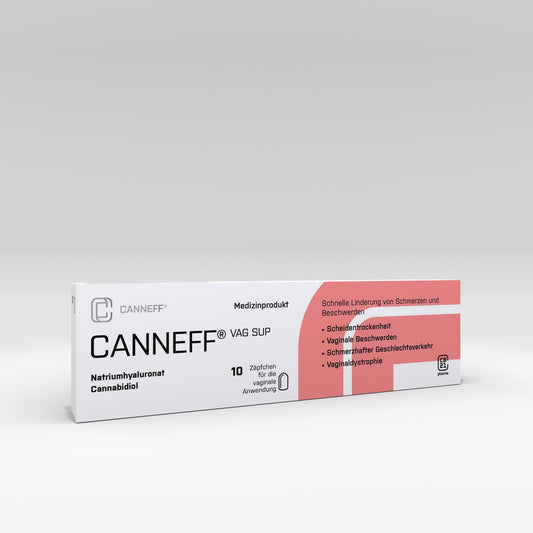
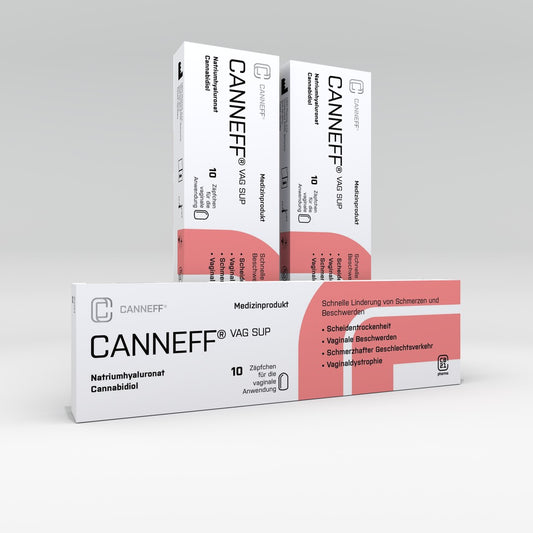
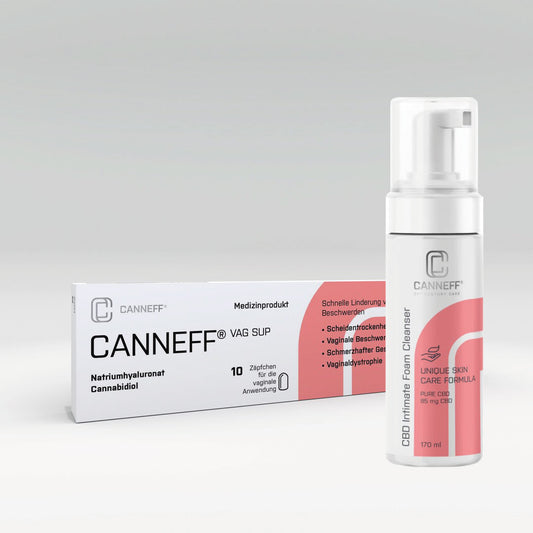
A clinical study is currently underway with CANNEFF vaginal suppositories containing CBD and hyaluronic acid for endometriosis.