

How does radiation therapy affect the mucous membranes in the intimate area?
Radiation therapy in the pelvic area can damage the sensitive mucous membranes in the intimate area – especially in the vagina, vulva, urethra, and rectum. The result is acute irritation and long-term changes such as dryness, shortening, or narrowing of the vagina, which can significantly impair quality of life. In the treatment of gynecological cancers – such as cervical cancer, endometrial carcinoma, or vulvar cancer – radiation therapy is a central part of oncological treatment. Both external radiation of the pelvis and internal radiation via the vagina (intravaginal brachytherapy) are used. These therapies are highly effective against tumor cells but often also affect healthy tissue in the radiation field, including the intimate mucous membranes.
Mucous membrane irritations in the genital area are a common and significant side effect of radiation therapy in the pelvic region. While acute symptoms can affect up to 80% of patients, about one-third also suffer from long-term complaints. Targeted, early-initiated mucous membrane care – e.g., with CANNEFF® vaginal suppositories and dilators – is key to preventing serious consequences such as vaginal stenosis or chronic pain.
What acute mucous membrane reactions occur during pelvic radiation?
Many patients experience typical acute side effects during or shortly after radiation therapy:
- Vaginal mucous membrane inflammation (radiation vaginitis) with burning, itching, redness, and discharge
- Irritation of the urethra with frequent urge to urinate
- Irritation of the rectum with soft stools or diarrhea
- Sensitivity, swelling, and slight tendency to bleed in the genital area
These symptoms arise from the inflammatory reaction of the mucous membranes to ionizing radiation and usually subside a few weeks after the end of therapy.
Why is the intimate area especially sensitive to radiation?
The mucous membrane in the vagina is – as in the intestines – a tissue with a high cell division rate. Ionizing radiation particularly affects such cells because it damages DNA and impairs regeneration. Additionally, local blood flow is reduced, which complicates wound healing. Estrogen production – for example, after ovarian damage or antihormonal therapy – can also be reduced, which further dries out the mucous membrane.
To prevent or alleviate these damages, targeted mucosal care and regular mechanical dilation are recommended. Proven measures include:
- Vaginal dilation therapy with body-friendly plastic dilators to prevent narrowing and adhesions
- Recafem tampons, which provide continuous dilation of the vagina overnight
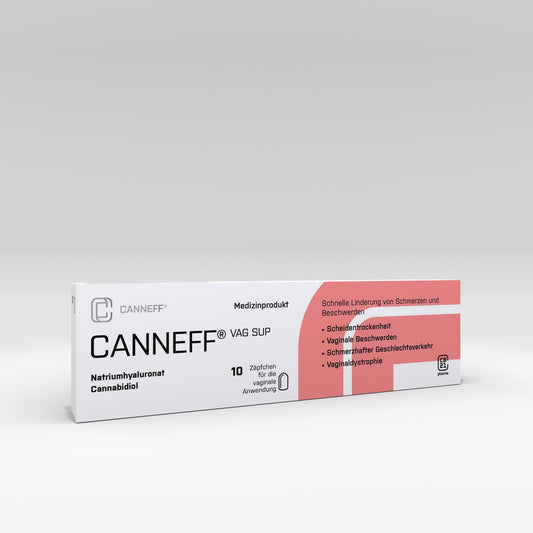
- Medical vaginal suppositories, such as CANNEFF® Vaginal Suppositories with CBD and hyaluronic acid, which have been proven to promote mucosal regeneration, reduce inflammation, and improve moisture supply
What long-term effects can radiation therapy have on the vaginal or rectal mucosa?
However, the possible late side effects, which may only manifest months to years after therapy, are particularly significant for quality of life:
- Dry vaginal mucosa (atrophic vaginitis), which tears or bleeds easily
- Shortening, narrowing, or adhesion of the vagina (stenosis), often with pain during sex or gynecological examinations
- Sensory disturbances or loss of desire due to nerve damage or poor blood circulation
These changes are not only physically distressing but also negatively affect sexuality, relationships, and emotional health.
What are typical symptoms of radiation-induced vaginitis or proctitis?
Radiation-induced vaginitis often manifests as dryness, burning, discharge, and pain in the intimate area.
|
Symptom |
Description |
|
Vaginal lubrication is greatly reduced, often accompanied by a feeling of tension. |
|
|
Burning and itching |
Irritation of the vaginal mucosa, often accompanied by redness and hypersensitivity. |
|
Watery or mucous discharge |
Often odorless, may indicate inflammatory processes. |
|
Contact bleeding |
Even slight mechanical stimuli (e.g., examination) lead to mucosal bleeding. |
|
Often caused by dryness, micro-injuries, or stenosis. |
|
|
Pressure or discomfort sensations |
Many patients describe a "raw," inflamed sensation in the vaginal area. |
In proctitis, an inflammatory reaction of the rectum, symptoms mainly include urgency to defecate, diarrhea, mucus discharge, and rectal pain.
|
Symptom |
Description |
|
Rectal pain |
Burning or stabbing pain during bowel movements or at rest. |
|
Urgency to defecate (tenesmus) |
Frequent urge to defecate, often without actual success. |
|
Diarrhea or soft stool |
Caused by mucosal irritation and altered water absorption. |
|
Mucus discharge |
Inflammatory altered mucosa secretes increased amounts of mucus. |
|
Especially with chronic mucosal erosion. |
|
|
Cramping pain or pressure sensation in the pelvis |
Expression of inflammatory processes in the lower bowel segment. |
Both conditions are among the most common mucosal reactions after radiation therapy in the pelvic area. During radiation of the pelvic region – for example, in cervical cancer, endometrial carcinoma, or vulvar cancer – the vagina and rectum often lie within the radiation field. This applies to both external radiation and intravaginal brachytherapy. Although these treatments aim to destroy tumor cells, they also damage the intact mucous membranes of the vagina and rectum. As a result, radiation vaginitis or radiation proctitis can occur – either acutely (during or shortly after therapy) or as a chronic late effect.
How common are mucosal irritations in the genital area caused by radiation?
Mucosal irritations in the genital area occur in a large proportion of patients undergoing radiation therapy in the pelvic region. Studies show that between 50% and 80% of affected women develop acute mucosal changes, while about 30% to 40% suffer from long-term complaints such as dryness, pain, or narrowing of the vagina. Radiation therapy is often performed in the pelvic area for gynecological tumors such as cervical cancer, endometrial carcinoma, vulvar cancer, or rectal tumors. Since the vagina, vulva, rectum, and bladder lie directly in the radiation field, the mucous membranes of these areas are particularly sensitive to radiation. Their cells divide very quickly – a characteristic that makes them especially vulnerable to the damaging effects of ionizing radiation.
- In clinical observations, acute vaginal irritations were observed in about 60–80% of patients – typically within the first 2–4 weeks of radiation therapy.
- The complaints range from dryness, redness, and itching to painful inflammations with discharge.
- These symptoms often subside within 2–6 weeks after the end of radiation – provided consistent local care is applied.
|
Risk factor |
Influence |
|
High total radiation dose |
Increases the risk of permanent mucosal atrophy |
|
Intravaginal brachytherapy |
Specifically increases local mucosal stress |
|
Combination with chemotherapy |
Intensifies acute side effects |
|
Postmenopausal condition |
Less protection from estrogen, higher risk of dryness |
|
Lack of vaginal care |
Often leads to late effects such as stenosis or loss of sensation |
Which medical aids can support irritated mucous membranes after radiation therapy?
Various medical aids are used to relieve and prevent mucosal damage after radiation therapy – including vaginal dilators, specialized medical products like CANNEFF® vaginal suppositories with CBD and hyaluronic acid, as well as mechanically effective tampons like the Recafem tampon. They promote regeneration, maintain the elasticity of the vaginal wall, and prevent painful late effects such as stenosis or atrophy.
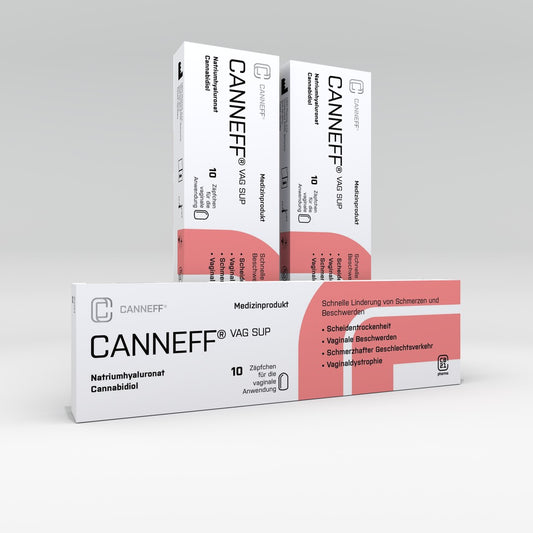
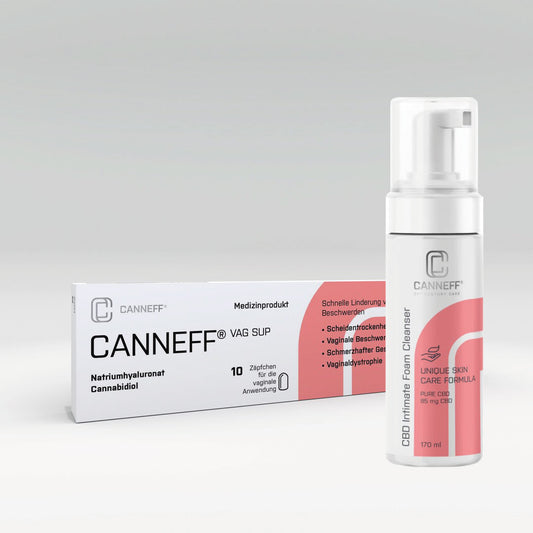
CANNEFF® is a medical vaginal suppository specially developed for the care of irritated, dry, or injured vaginal mucosa – ideal for complaints resulting from radiation therapy, antihormone therapy, or menopause.
Dilators are cylindrical plastic aids in various sizes that are regularly inserted into the vagina. Their goal is to maintain the elasticity of the vaginal walls, prevent shortening or adhesions, and facilitate gynecological follow-up examinations.
The Recafem tampon is made of an expandable material and is inserted vaginally overnight to achieve gentle, continuous stretching of the vagina. This prevents narrowing and shortening and is especially suitable for patients who can only use dilators to a limited extent.
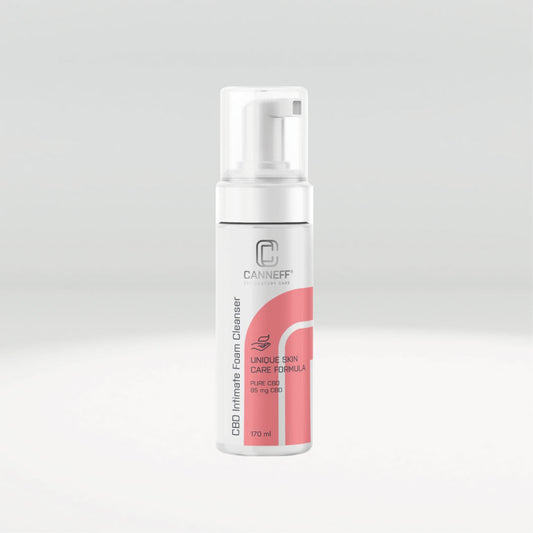
In addition to suppositories and mechanical aids, special lubricants with a pH between 4 and 5 and without irritating additives can make everyday life easier – especially with pain during intercourse or when inserting dilators.
How can CANNEFF® with CBD and hyaluronic acid help with radiation-induced mucosal complaints?
CANNEFF® Vaginal Suppositories with CBD (cannabidiol) and hyaluronic acid can effectively help relieve dryness, inflammation, itching, and pain caused by radiation. The product supports the regeneration of damaged tissue, promotes moisture of the vaginal mucosa, and helps prevent late effects such as stenosis or micro-injuries – all without hormones.
Regular use of CANNEFF® suppositories can:
✔ Significantly reduce dryness
✔ Relieve itching, burning, and microtears
✔ Soothe mucosal irritation
✔ Improve vaginal elasticity
✔ Promote regeneration of the vaginal mucosa
✔ Alleviate sexual complaints (dyspareunia)
CANNEFF® Vaginal Suppositories with CBD and hyaluronic acid offer effective, well-tolerated, and hormone-free support for radiation-induced mucosal complaints. They promote regeneration, relieve inflammation, and improve the quality of life of oncologically treated patients – especially when used early.
What should patients keep in mind regarding mucosal care during radiation therapy?
During radiation therapy in the pelvic area, patients should care for the vaginal mucosa early and consistently to relieve acute irritation and prevent long-term damage such as dryness, adhesions, or narrowing of the vagina. Accompanying intimate mucosal care with medical products, regular information from the treatment team, and gentle handling of the intimate area are central.
The specific use of care products should always be discussed with the treating radiation oncologist or gynecologist – especially in cases of:
- Mucosal tears or bleeding
- Combination with chemotherapy
- Pre-existing vaginal infections
What should be avoided during therapy?
❌ Intimate wash lotions with perfume or alcohol
❌ Intimate shaving in the irradiated area (increases risk of infection)
❌ Vaginal intercourse in case of pain or acute irritation
❌ Self-medication with hormone-containing vaginal products (only after medical consultation)
Caring for the vaginal mucosa during radiation therapy is not a minor issue but an important preventive measure to maintain quality of life, gynecological follow-up, and sexual health in the long term.
Without proper care, acute symptoms can occur already during therapy:
- Itching, burning, redness
- Inflammation (radiation vaginitis)
- Pain when urinating or sitting
- first signs of mucosal atrophy
CANNEFF® vaginal suppositories with CBD and hyaluronic acid offer an effective, hormone-free, and well-tolerated solution – especially during the sensitive therapy phase.
When is medical advice necessary for intimate area complaints after radiation therapy?
Medical advice is always necessary when persistent, increasing, or new symptoms occur in the intimate area after radiation therapy – especially with pain, bleeding, discharge, severe dryness, or changes in mucosal structure. Early medical support should also be sought for sexual limitations or uncertainty in handling medical aids.
The vaginal mucosa is particularly sensitive to radiation because its cells renew very quickly. During radiation of the pelvis (e.g., for cervical, endometrial, or vulvar cancer), the vagina is often included in the treatment.
Possible consequences:
- Painful dryness
- Itching, burning, bleeding
- Inflammation (radiation vaginitis)
- Loss of elasticity
- Disruptions to intimacy and quality of life
A certain degree of irritation or dryness is not unusual after radiation of the pelvis or vagina. However, in the following cases, specialist evaluation is urgently recommended:
|
Symptom |
Possible significance |
|
Persistent itching or burning |
Indication of radiation vaginitis, mucosal atrophy, or secondary infection |
|
Vaginal bleeding outside of menstruation |
Possible sign of mucosal lesions, erosions, or late reactions |
|
Change in discharge (odor, color) |
May indicate bacterial or fungal infections |
|
Indication of vaginal stenosis, mucosal tears, or pronounced dryness |
|
|
Shortening or narrowing of the vagina |
Possible late effect, potentially treatable early with dilator therapy |
|
Lumps or hardening in the tissue |
Possible indication of recurrence or other changes |
Medical advice should be sought for any unusual symptoms in the intimate area after radiation therapy – regardless of how mild the complaints may seem. This is the only way to detect serious late effects early and treat them with targeted measures. Targeted therapies – e.g., with CANNEFF® vaginal suppositories, vaginal dilation, or physiotherapeutic pelvic floor work – can significantly improve quality of life.