

Why does dental health worsen during menopause?
The decline of female sex hormones – especially Estrogen – affects not only bones, skin, and mucous membranes but also directly impacts the oral cavity. Hormone deficiency influences saliva flow, blood circulation, and gum elasticity. This makes the oral mucosa more susceptible to irritation and inflammation, while teeth and jawbone can lose stability.
It is especially relevant that saliva loses importance as a "natural protective barrier." Reduced saliva production means less acid neutralization, less remineralization, and higher susceptibility to cavities and infections. At the same time, the regenerative capacity of the gums decreases – a key cause of gum inflammation and periodontitis.
Overview: Hormones and dental health
|
Hormonal changes |
Effects in the oral cavity |
possible consequence |
|
Estrogen deficiency |
reduced blood flow, less collagen, decreased elasticity |
gum bleeding, mucosal irritations |
|
progesterone decline |
impaired mucosal barrier |
increased risk of infections |
|
reduced saliva flow |
dry mucous membranes, altered oral microbiome |
dry mouth, cavities, bad breath |
|
decrease in bone density |
weakening of the jawbone |
loose teeth, periodontitis |
It becomes clear: The deterioration of dental health during menopause is no coincidencebut a direct consequence of hormonal changes.
What role do hormones play in gum inflammation and periodontitis – reducing risk during menopause?
Hormones – especially Estrogen and progesterone – significantly influence the structure and defense of the gums. During menopause, the decline of these hormones leads to altered Blood flow, collagen structure, and immune response in the oral tissue. This makes the gums more sensitive, inflamed more quickly, and slower to heal.
Especially critical: Estrogen deficiency weakens the microcirculation and reduces the production of collagen fibers that support the gums. The tissue loses firmness, allowing bacterial plaque can more easily penetrate the gum pockets. This increases the risk of Gingivitis and the subsequent Periodontitis – a chronic inflammation that can lead to bone loss and tooth loss.
Hormones and gum health overview
|
Hormonal changes |
Effect on the gums |
Risk of diseases |
|
Declining estrogen levels |
Reduced blood flow, fewer collagen fibers |
|
|
Lower progesterone |
Weakened immune defense against bacteria |
More frequent infections |
|
Disturbed hormone balance |
Delayed wound healing |
Chronic inflammation, mucosal lesions |
|
Loss of bone density (osteoporosis) |
Breakdown of the jawbone |
Tooth loosening, tooth loss |
Modern therapy approaches without antibiotics
Traditionally, gum inflammation is treated with antibacterial rinses (e.g., chlorhexidine) or in severe cases with antibiotics are treated. However, these methods are often associated with side effects (taste disorders, mucous membrane irritation, discoloration) and promote development of resistance.
A new approach is the use of CANNEFF® DENTAL GEL:
-
contains Cannabidiol (CBD) and squalane, which have been proven to have anti-inflammatory and regenerative effects,
-
inhibits pathogenic germs such as Porphyromonas gingivalis (main cause of periodontitis),
-
reduces inflammatory markers (IL-6, IL-8) and activates the Nrf2 signaling pathway, which supports healing,
-
clinical studies show a significant reduction in gingivitis and bleeding index after 56 days of use – without side effects.
This makes CANNEFF® DENTAL GEL a effective and safe alternative to classic antibiotic preparations – especially for women in menopause whose gums are particularly susceptible due to hormonal changes.
What typical dental problems occur during menopause?
The hormonal changes during menopause lead to changes in the oral cavity that affect both teeth and gums. The decreasing estrogen level affects saliva flow, mucous membrane stability, microcirculation, and bone metabolism. This results in typical complaints that many women experience for the first time or that worsen during this phase of life.
|
Problem |
Cause |
Consequences for those affected |
|
Dry mouth (xerostomia) |
Reduced saliva production due to hormone deficiency or medication |
Susceptibility to cavities, bad breath, difficulty swallowing |
|
Gingivitis (gum inflammation) |
Mucous membrane becomes thinner and more susceptible to plaque |
Gum bleeding, pain when brushing |
|
Periodontitis |
Weakening of the periodontal apparatus, intensified by estrogen deficiency |
Jawbone loss, tooth loosening, tooth loss |
|
Burning Mouth Syndrome (tongue burning) |
Hormonal nerve irritations, dryness |
Burning, tingling, pain |
|
Altered sense of taste |
Changes in saliva and mucous membranes |
Metallic taste, reduced taste perception |
|
Bone loss in the jaw |
Connection with osteoporosis |
Loosening of teeth, higher loss rate |
Dry mouth during menopause – what helps?
Dry mouth (medical) Xerostomia) is a typical symptom during menopause. Due to the decreasing estrogen levels, saliva production decreases, which can lead to dry mucous membranes, increased thirst, bad breath, and a higher risk of cavities and gum inflammation.
Causes
- Hormonal changes: Estrogen deficiency reduces blood flow and saliva secretion.
- Medications: Antidepressants, blood pressure medications, or sleeping pills often worsen dryness.
- Altered microbiome: Less saliva means less protection against bacteria.
Measures against dry mouth
|
Approach |
Effect |
Recommendation |
|
Increase fluid intake |
Moisturizes mucous membranes, supports saliva production |
At least 1.5–2 liters of water or unsweetened tea per day |
|
Stimulate saliva flow |
Mechanical stimulation |
Sugar-free chewing gum, sugar-free candies, water-rich fruits and vegetables |
|
Optimize oral care |
Protection against caries and gum inflammation |
Fluoride toothpaste, soft toothbrush, interdental cleaning |
|
Adjust lifestyle |
Reduce additional stressors |
Avoid smoking and alcohol as they dry out the mucous membranes |
|
Medical support |
Anti-inflammatory and mucosal regeneration |
CANNEFF® DENTAL GEL with CBD & squalane: forms a protective barrier, reduces inflammation, promotes mucosal healing |
|
Moisturizing products |
Direct relief for pronounced xerostomia |
saliva substitutes, oral gels, or sprays |
Dry mouth during menopause is distressing but well treatable. In addition to adapted oral hygiene and healthy habits, modern products such as CANNEFF® DENTAL GEL to specifically soothe the mucous membranes and relieve inflammation without antibiotics.
How are dry mouth and mucosal irritations related to menopause?
Dry mouth and mucosal irritations are Direct consequences of hormonal changes during menopause. They are considered important risk factors for further dental and gum diseases and should be treated early. As estrogen levels drop during menopause, the function of the salivary glands and oral mucosa changes. Saliva flow decreases, and its composition changes. This causes important protective functions to be lost: acids are neutralized less effectively, bacteria are less controlled, and the mucous membranes dry out.
The result is Dry mouth (xerostomia), which many women experience as burning, tightness, or pain. Thinner, less elastic mucous membranes also react more sensitively to irritations from food, toothpaste, or dentures.
Connection between hormone deficiency and mucosal problems
|
Changes due to estrogen deficiency |
Effects in the oral cavity |
Typical complaints |
|
↓ Saliva production |
Less moisture, poorer buffering |
Dryness, increased caries and fungal infections |
|
Altered saliva (pH, proteins) |
Reduced defense against microorganisms |
Bad breath, infections |
|
Mucosal atrophy |
Thinner, more vulnerable oral mucosa |
Burning, microcracks, pain |
|
Disturbed microcirculation |
reduced healing |
Delayed regeneration after injuries |
Bad breath and dry mucous membranes during menopause
Many women notice changes in their oral cavity during menopause: dry mucous membranes and associated frequent bad breath. These symptoms are direct consequences of hormonal changes and have both functional and social impacts. The causes of bad breath and dry mucous membranes during menopause are closely linked to hormonal changes. The declining estrogen levels lead to reduced saliva production and poorer blood circulation in the mucous membranes. This results in a saliva deficiency that limits the antibacterial effect in the mouth and can no longer sufficiently neutralize odor-causing agents. Additionally, the oral microbiome changes: an imbalance in the oral flora favors bacteria that release foul-smelling sulfur compounds. Furthermore, dry or atrophic mucous membranes are more susceptible to micro-injuries, which in turn can intensify inflammation and unpleasant odor.
Can menopause increase the risk of periodontitis?
Yes. The risk of periodontitis increases significantly during menopause. The main cause is Estrogen deficiency, which affects bone metabolism, collagen formation, and immune defense. This makes the gums more susceptible to inflammation, while the jawbone breaks down faster. Combined with frequently occurring Dry mouth a milieu develops in which disease-causing bacteria can more easily dominate.
Women in menopause therefore more frequently show deep gum pockets, gum bleeding, and loosening of teethStudies also show that the loss of bone density in the jaw parallels the risk of osteoporosis.
Risk factors for periodontitis during menopause
|
Risk factor |
Effect in the periodontium |
Consequence |
|
Estrogen deficiency |
Weaker collagen structure, reduced microcirculation |
Easier spread of inflammation |
|
Bone loss (osteoporosis) |
Loss of alveolar bone |
Tooth loosening, tooth loss |
|
Dry mouth (xerostomia) |
less protection from saliva, altered microbiome |
Faster plaque growth |
|
Weakened immune defense |
reduced defense against germs |
Chronic periodontitis |
Thus, menopause is considered critical phase for the development and progression of periodontitisClose dental monitoring and targeted prevention are especially important during this life phase.
What new therapeutic approaches exist for gum inflammation without antibiotics?
Classic therapies for gingivitis and early periodontitis often rely on antimicrobial rinses or systemic antibioticsHowever, these have disadvantages: development of resistance, side effects such as taste disturbances and mucosal irritations, as well as limited long-term usability. Modern approaches therefore rely on non-antibiotic, inflammation-modulating, and tissue-healing methods.
An innovative example is CANNEFF® DENTAL GEL, a medical device containing cannabidiol (CBD) and squalane.
Evidence from studies on CANNEFF® DENTAL GEL
|
Investigation |
Results |
Tolerability |
|
Preclinical studies |
Inhibition of Porphyromonas gingivalis (similarly effective as chlorhexidine); activation of the Nrf2 signaling pathway; reduction of proinflammatory cytokines (IL-6, IL-8) |
No cytotoxic effects |
|
Clinical study I – Periodontitis (56 days, double-blind, placebo-controlled) |
Significant reduction in gingivitis, bleeding, and modified gingival index compared to placebo |
No side effects |
|
Clinical study II – Peri-implant mucositis (21–35 days) |
Significant improvement in bleeding-on-probing index; demonstrable anti-inflammatory effect |
Very good tolerability |
Advantages of non-antibiotic therapeutic approaches
- Antimicrobial without risk of resistance (CBD acts against oral pathogens)
-
Eanti-inflammatory and regenerative (Activation of endogenous protective pathways)
- Suitable for long-term use (no discoloration, no taste disturbances)
- Support after surgical procedures (e.g., implantation, periodontal surgery)
This opens up the use of CANNEFF® DENTAL GEL an evidence-based approach, to effectively treat gingivitis, without relying on antibiotics – especially valuable during menopause when mucous membranes are more sensitive and the risk of chronic inflammation increases.
What role does the endocannabinoid system play in oral health?
The Endocannabinoid system (ECS) is an endogenous regulatory system consisting of Cannabinoid receptors (CB1, CB2), endogenous ligands (endocannabinoids like anandamide), and enzymes. It plays a central role in Homeostasis of inflammation, pain, immune response, and tissue regeneration – also in the oral cavity.
Importance for oral health
-
CB2 receptors in gingival tissue: Studies show that human gingival fibroblasts express CB2 receptors. When this receptor is activated by cannabidiol (CBD), there is a Reduction of proinflammatory cytokines (IL-6, IL-8) and a reduction of inflammatory reactions.
-
Protection against oxidative stress: CBD activates the Nrf2 signaling pathway, regulates antioxidant mechanisms, and thus protects cells from free radicals
-
Antimicrobial effect: Preclinical data show that CBD inhibits the growth of pathogenic bacteria such as Porphyromonas gingivalis can inhibit, which are considered the main causes of periodontitis
- Pain relief and mucosal protection: The ECS also acts on a neuronal level and influences pain perception as well as the healing of irritated mucous membranes.
Relevance during menopause
During menopause, due to Estrogen deficiency the susceptibility to gingivitis, periodontitis, and mucosal irritations. Here, targeted Modulation of the ECS – for example through the use of CBD-containing preparations such as CANNEFF® DENTAL GEL – helping to restore balance in the oral cavity:
-
Regulating inflammation
-
Relieving mucosal irritations
-
Accelerating healing processes
-
Opening up antibiotic-free treatment options
The ECS is thus a Central therapeutic target For modern, non-antibiotic treatment of oral complaints, especially with hormonal changes during menopause.
How can women in menopause prevent dental problems?
Women in menopause can effectively protect their oral and dental health with targeted measures. Although hormonal changes increase the risk of gum inflammation, periodontitis, dry mouth, and bone loss, a combination of preventive dental care, a healthy lifestyle, and modern medicine can prevent complaints.
Key prevention strategies
|
Measure |
Effect |
Special considerations during menopause |
|
Thorough oral hygiene |
Reduces plaque, prevents inflammation |
Soft toothbrush, fluoride toothpaste, daily interdental care |
|
Regular dental visits |
Early detection of gum problems, caries, and bone loss |
At least twice a year, including professional dental cleaning |
|
Promotes saliva flow |
Protection against caries, neutralizes acids |
Drink plenty of water, sugar-free chewing gum, water-rich foods |
|
Avoid nicotine and alcohol |
Reduces inflammation and mucosal damage |
Additionally protects mucous membranes and gums |
|
Calcium- and vitamin-rich diet |
Strengthens teeth and bones |
Dairy products, green vegetables, sesame, vitamin D and K for bone metabolism |
|
Targeted support for mucous membranes |
Relief from inflammation, aphthae, mucositis |
CANNEFF® DENTAL GEL with CBD and squalane protects and regenerates gums without antibiotics |
|
Linking intimate and oral health |
Protection against mucosal atrophy and dryness |
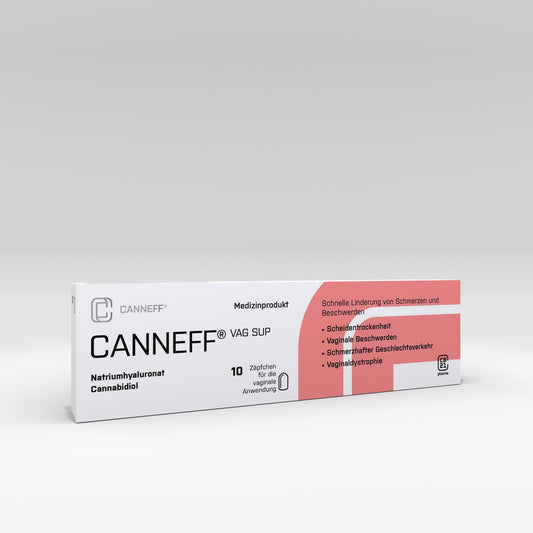
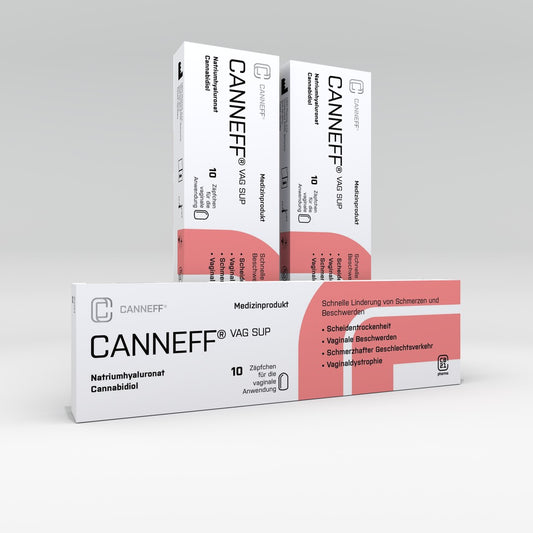
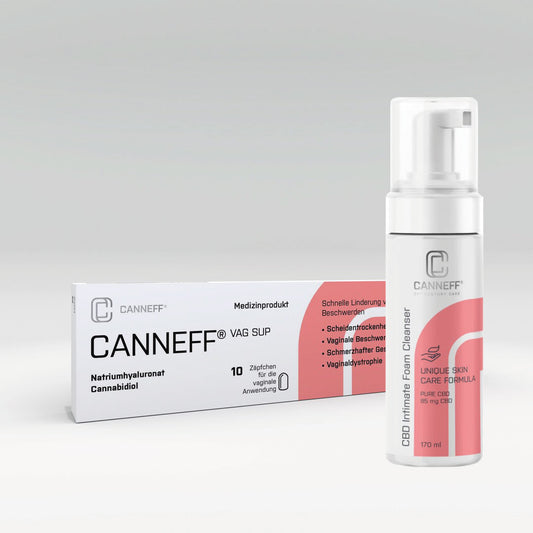
CANNEFF® vaginal suppositories with CBD and hyaluronic acid relieve dryness and promote mucous membrane health |
With these preventive measures, women in menopause can not only maintain dental health but also preserve overall quality of life.
When is a dental visit particularly important during menopause?
A dental visit is especially important for women in menopause when hormonal changes have already left initial marks in the oral cavity. Since symptoms often start gradually, early check-ups are crucial to prevent inflammation, bone loss, and tooth loss.
Typical situations that require a dental visit:
|
Symptom / change |
Reason for dental visit |
Risk if left untreated |
|
Gum bleeding or swelling |
Indication of gingivitis or early periodontitis |
Progressive inflammation up to tooth loss |
|
Dry mouth (xerostomia) |
Risk of caries, bad breath, mucosal irritations |
Increased risk of infections and mucosal injuries |
|
Burning sensation in the mouth / tongue burning |
Clarification of possible burning mouth syndrome or mucosal atrophy |
Chronic pain, reduced quality of life |
|
Loosening teeth |
May indicate bone loss in the jaw |
Untreated, tooth loss threatens |
|
Frequent aphthae or mucosal lesions |
Clarification of chronic inflammations |
Persistent pain, risk of infection |
|
Changes in taste or bad breath |
May be related to hormonal fluctuations or bacterial infections |
Progressive inflammation, restriction of eating and social behavior |
Regular check-ups – at least twice a year – are especially important during this life phase. Dentists can detect changes early, provide professional treatment, and recommend supportive therapies, e.g., CANNEFF® DENTAL GEL for anti-inflammatory and regenerative care of sensitive mucous membranes.
Which supportive therapies can relieve complaints in the oral and intimate areas simultaneously?
Menopause affects not only general health but also impacts Oral and vaginal mucous membranes Typical consequences are dryness, inflammation, pain, and increased susceptibility to infections. A holistic approach that considers both areas is therefore particularly sensible.
Supportive therapies for mucosal health
|
Area |
Typical complaints |
Suitable therapies |
Special features |
|
Oral cavity |
Gingivitis, periodontitis, aphthae, mucosal irritations |
CANNEFF® DENTAL GEL with CBD & squalane: anti-inflammatory, pain-relieving, regenerating |
Clinically proven effective against gingivitis, mucositis, peri-implant inflammation |
|
Intimate area |
Vaginal dryness, pain during intercourse, fissures, mucosal atrophy |
CANNEFF® vaginal suppositories with CBD & hyaluronic acid: moisturizing, anti-inflammatory, healing-promoting |
Clinical studies show relief from dryness, sleep disturbances, hot flashes, and joint pain |
|
Systemic / holistic |
General tendency to inflammation, dry mucous membranes |
Adequate fluid intake, calcium- and vitamin-rich diet, smoking cessation |
Supports the effect of local therapies |
Both products – CANNEFF® DENTAL GEL and CANNEFF® vaginal suppositories – rely on CBD as an anti-inflammatory active ingredient and promote the regeneration of sensitive mucous membranes. Supplemented with hyaluronic acid in the intimate area and squalane in the oral cavity, tailored solutions are created for the most common menopausal complaints – without the use of antibiotics or hormones. This way, Relieve oral and intimate discomfort simultaneously, which noticeably improves the quality of life for women during menopause.