

What is proctitis?
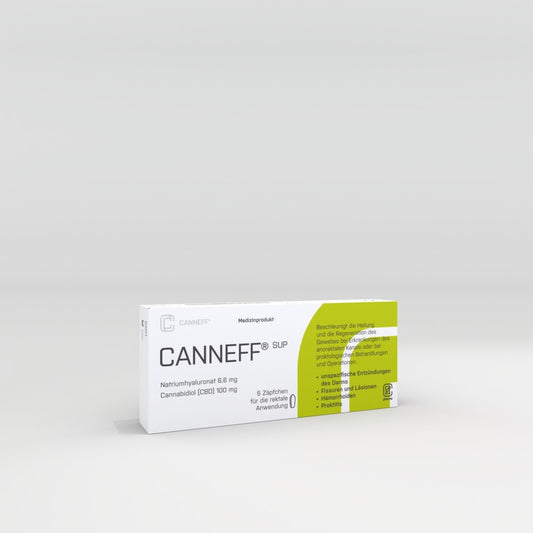
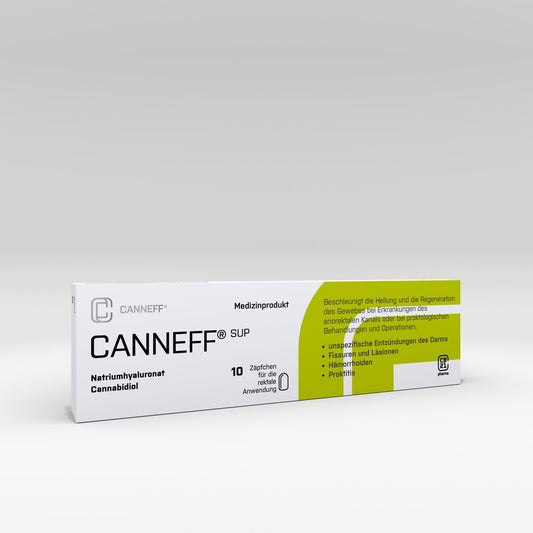
Proctitis refers to the inflammation of the rectal mucosa, that is, the last section of the rectum and anus. The causes of proctitis are diverse; proctitis is often the result of a bacterial infection. Besides bacterial infections, proctitis is also often caused by inflammatory bowel diseases or radiation therapy. CANNEFF® SUP is ideal for treating proctitis and can promote and accelerate tissue healing. Read more here about the causes of proctitis and the various treatment options for proctitis, the painful inflammation of the mucous membrane of the rectum.
How does proctitis manifest?
The symptoms vary depending on the cause of proctitis and range from rectal discomfort such as itching, pain in the anal area to swelling of the anus and even bloody-purulent stools. Burning sensation or severe pain can also occur. Depending on the cause, proctitis can be painless or very painful. Other signs may include persistent urge to defecate (tenesmus) or an unpleasant pressure sensation in the rectum, even when the bowel is already empty. Some affected individuals also report increased fatigue or exhaustion, which can be caused by chronic inflammation and possible anemia due to blood loss. In severe cases, fever or a deterioration of general condition may occur, which can indicate a more advanced infection. Read more here about the symptoms of proctitis.
How do you get proctitis?
Causes of proctitis?
There are many possible causes of proctitis. Most cases of proctitis are due to unprotected sexual intercourse and sexually transmitted pathogens such as chlamydia and gonococci. Basically, people who frequently have anal sex or sexual intercourse with multiple partners have a significantly increased risk of developing proctitis. When inserting objects into the anus or during sexual intercourse, it is also possible for the intestinal wall to tear. These Anal fissures, i.e., injuries to the mucous membrane of the anus can also, under certain circumstances, cause proctitis. Read more here about the diverse causes of proctitis. Stress also often plays a role as a cause of proctitis. Read more here about stress as a cause of proctitis.
Furthermore, inflammation of the rectum can occur in the context of chronic inflammatory bowel diseases. For example, in Crohn's disease or ulcerative colitis. Radiation therapy, for instance for cancer, or other radiation exposure can also be a cause of proctitis, as the mucous membrane is strongly irritated due to the therapy. In addition, proctitis can also be caused by Hemorrhoids can be triggered.
How is proctitis treated?
Is proctitis curable?
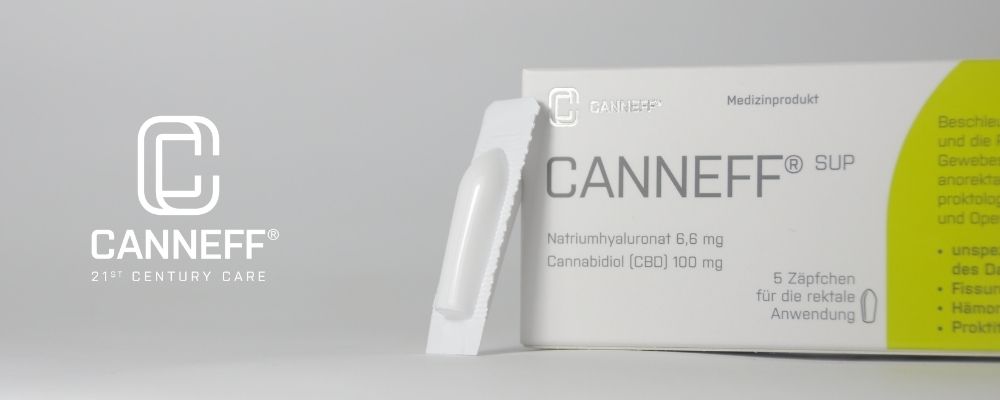
If proctitis is detected early, the prospects for a complete cure are very good. However, the treatment of proctitis depends heavily on the cause. Ointments and suppositories with anti-inflammatory agents can relieve pain and itching. Also CANNEFF® SUP suppositories can thus be involved in the therapy and treatment of proctitis, as well as other anal and anorectal complaints such as Hemorrhoids, Anal fistulas and Anal fissures help. Learn everything about the use of CANNEFF suppositories in the treatment of proctitis in this blog post. Find further information here about the herbal treatment for proctitis, as well as various therapy approaches regarding the alternative treatment for proctitis.
Is proctitis dangerous?
Can proctitis spread?
If the symptoms of proctitis persist for a long time or if proctitis is insufficiently or not treated at all, it is possible that it spreads to the entire intestine. This can promote the formation of ulcers as well as chronic inflammatory bowel diseases such as Crohn's disease. In the further course of proctitis, it is also common to develop Anal fissures or anal fistulas , which also often cause severe painAbscesses in the anal area, which require surgical treatment, can also occur. Furthermore, untreated proctitis can lead to permanent changes in the intestinal structure, such as scarring or rectal stenosis, which significantly complicate bowel movements. In rare cases, there is an increased risk of developing colorectal cancer, especially if chronic inflammation and mucosal damage persist over a long period. Therefore, early and consistent treatment of proctitis is crucial to avoid complications and maintain quality of life.
Read more here about the symptoms of proctitis or the treatment of proctitis.
Which home remedies can help with proctitis?
Which remedies can help with proctitis?
What really helps with proctitis?
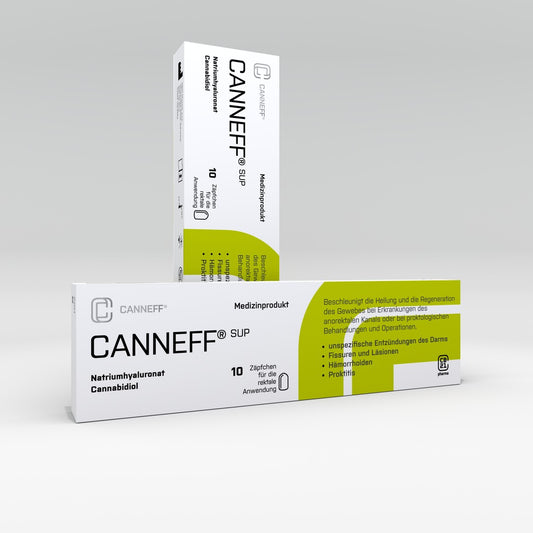
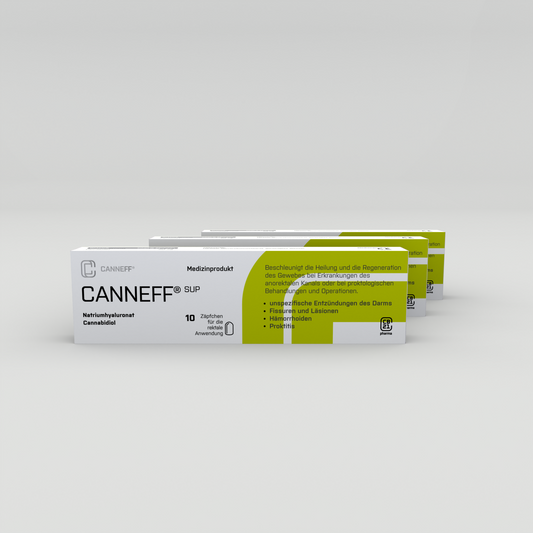
Some home remedies from naturopathy, which in many cases help against help with hemorrhoids and can also be used in the treatment of proctitis. With CANNEFF® SUP Due to the unique combination of active ingredients, suppositories can provide Hyaluron and CBDto achieve an anti-inflammatory and itch-relieving effect. CANNEFF® SUP Suppositories are medical products containing pharmaceutical-grade cannabidiol (CBD). CBD is a cannabinoid from the hemp plant with great medical potential. Read more here about the treatment of proctitis with suppositories.
In addition, it is important to reduce or even prevent stress. Stress can also have a significant impact on gut health. Thus, traumatic events and psychological stress are also considered driving factors. Read more here about stress as a cause of proctitis or find further information here on home remedies for treating proctitis.
How is proctitis diagnosed?
The diagnosis of proctitis often involves a rectal examination as well as endoscopic procedures if necessary. The doctor can diagnose proctitis based on symptoms, analyses, and a thorough medical history. The following examinations are usually performed to diagnose proctitis. A blood test can already provide clues about infections or other diseases that may cause proctitis. Stool tests can be used to look for infections that may cause proctitis. Rectal bacterial and microbial cultures are often taken from samples of the rectum. Common endoscopic procedures are used to determine the cause, i.e., the diagnosis of proctitis, to examine the lining of the anus, rectum, and colon more closely. Colonoscopy allows a detailed examination of the mucous membrane of the rectum and the entire colon. Sigmoidoscopy is suitable for examining the lining of the rectum and the lower colon. Read more here about the diagnosis and the symptoms of proctitis.
What are the risk factors for proctitis?
Risk factors for proctitis include unprotected anal intercourse, certain sexually transmitted infections, as well as inflammatory bowel diseases like Crohn's disease or ulcerative colitis, and radiation therapy in the pelvic area. Thus, the risk factors for proctitis include unprotected anal intercourse, which increases the risk of sexually transmitted infections such as chlamydia, gonococci, or herpes simplex, which often lead to inflammation of the rectal mucosa.
Inflammatory bowel diseases such as Crohn's disease or ulcerative colitis significantly contribute to the development of proctitis, as they chronically irritate the bowel and make the mucous membrane more susceptible. Another common cause is radiation therapy in the pelvic area, which can especially cause mucosal damage during tumor treatment.
In addition, other factors such as a weakened immune system, frequent insertion of foreign objects into the anal area, or repeated mechanical irritation can increase the risk of proctitis. An unbalanced diet and psychological stress can also make the mucous membrane of the rectum more sensitive. In this blog post, you will learn everything about nutrition for proctitis.
Read more here about the various causes of proctitis, or about stress as a cause of proctitis. In this blog post, you will learn everything about nutrition for proctitis.
What complications can occur with untreated proctitis?
Untreated proctitis can lead to serious complications, such as spreading throughout the entire bowel, the development of ulcers, chronic inflammatory bowel diseases, and Anal fissures or Anal fistulas. Furthermore, chronic proctitis can increase the risk of infections and abscess formation in the anal area, which is often accompanied by severe pain and may require surgical treatment. In severe cases, narrowing of the rectum (rectal stenosis) can occur, significantly impairing bowel movements. Untreated inflammation over the long term also increases the risk of tissue damage and, in rare cases, the development of malignant changes in the affected anal area. Therefore, early diagnosis and consistent treatment of proctitis are crucial. Find all information here about the treatment of proctitis and how CANNEFF® SUP suppositories can contribute to improving your quality of life.
How can quality of life be improved with proctitis?
Measures such as appropriate and prompt treatment of proctitis, adjustments in diet and lifestyle, as well as the use of supportive therapeutic approaches like CANNEFF® SUP Suppositories can help improve quality of life. A fiber-rich diet helps regulate bowel movements and reduce the strain on the inflamed mucous membrane. Additionally, avoiding spicy, fatty, or heavily processed foods and consuming enough fluids can alleviate symptoms. In this blog post, you will learn everything about nutrition for proctitis.
Regular sitz baths with anti-inflammatory additives, such as chamomile or oak bark, can noticeably reduce pain and irritation in the anal area. Find more information here about home remedies for treating proctitis. Stress reduction also plays an important role, as psychological pressure can negatively affect gut health. Relaxation techniques such as yoga, meditation, or breathing exercises can be supportive here. If necessary, collaboration with specialists, nutritionists, or psychologists should also be considered to improve quality of life in the long term. Read more here about treatment of proctitis with suppositories.