

How long is sick leave after hemorrhoid surgery?
The duration of sick leave depends on the method of hemorrhoid surgery and individual healing. Generally:
|
Surgical method |
Sick leave |
|
Rubber band ligation |
1–3 days |
|
Sclerotherapy (coagulation) |
2–4 days |
|
Stapler hemorrhoidectomy (Longo) |
5–10 days |
|
HAL-RAR method |
7–14 days |
|
Open hemorrhoidectomy (Milligan-Morgan) |
14–21 days |
Depending on the job, sick leave may be extended. Office workers can often return sooner, while those with physical jobs need longer breaks.
When can you return to work after hemorrhoid surgery?
Returning to work depends greatly on individual healing after hemorrhoid surgery and the type of activity.
-
Office work: Return possible after 5–10 days if sitting does not cause severe discomfort.
-
Physically demanding jobs: A break of 2–4 weeks is advisable, as heavy lifting and prolonged standing can hinder the healing process.
-
Self-employed and people without sick leave: The first few days should be especially cautious with only light activities.
How long does full recovery take after hemorrhoid surgery?
The healing time depends on the chosen method of hemorrhoid surgery. While minimally invasive procedures like rubber band ligation or HAL-RAR allow healing within 2–3 weeks, an open hemorrhoidectomy can take up to 6 weeks for all symptoms to subside.
-
Week 1: Severe pain, initial wound healing begins.
-
Week 2-3: Pain decreases, bowel movements normalize.
-
Week 4-6: Complete healing, occasional mild discomfort possible.
Read more in the blog post on Experiences of a Hemorrhoid Surgery.
Are there differences in recovery time depending on the surgical method?
Yes, different procedures of hemorrhoid surgery have different healing times:
|
Surgical method |
Pain (scale 1-10) |
Healing time |
|
Rubber band ligation |
2/10 |
1–2 weeks |
|
Sclerotherapy |
2/10 |
1–2 weeks |
|
HAL-RAR method |
4/10 |
2–3 weeks |
|
Stapler hemorrhoidectomy (Longo) |
5/10 |
3–4 weeks |
|
Open hemorrhoidectomy (Milligan-Morgan) |
8/10 |
4–6 weeks |
Patients with more severe hemorrhoids (hemorrhoids grade 3 or hemorrhoids grade 4) usually have a longer healing time. Read more here about the stages of hemorrhoidal disease. Find further information in the blog post about the symptoms of hemorrhoids, such as itching, burning, swelling, pain, or even bleeding.
How long should you avoid sports after hemorrhoid surgery?
Sports activities should only be resumed after complete healing.
|
Sport |
Return after |
|
Walking |
2–5 days |
|
Light Yoga |
1–2 weeks |
|
Swimming |
3 weeks (wound must be closed) |
|
Jogging |
3–4 weeks |
|
Strength training & Weightlifting |
5–6 weeks |
|
Cycling & Horseback Riding |
6 weeks or more |
Especially strong straining and heavy lifting should be avoided to prevent relapses. You can also find comprehensive information in the blog post on preventive measures for hemorrhoids.
When can you sit normally again after hemorrhoid surgery?
Sitting can be uncomfortable after hemorrhoid surgery. In the first few days, it is advisable to sit on your side or slightly leaning forward to reduce pressure on the anus. After 1–2 weeks, most patients can sit normally again. A soft cushion or a hemorrhoid ring cushion can help.
Which factors influence the healing time after surgery?
The speed of healing after a hemorrhoid surgery depends on several factors:
-
Surgical method: Minimally invasive procedures heal faster.
-
Nutrition: A high-fiber diet (fruits, vegetables, whole grains) prevents constipation.
-
Fluid intake: At least 2 liters of water daily support digestion.
-
Bowel movements: Avoid excessive straining; use stool softeners if necessary.
-
Movement: Gentle movement promotes blood circulation and wound healing.
-
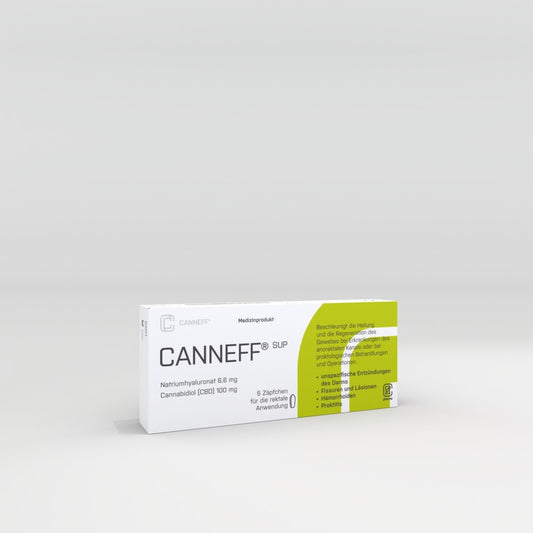
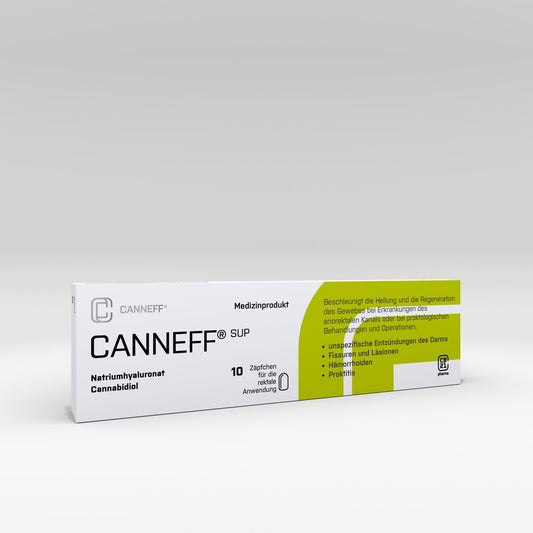
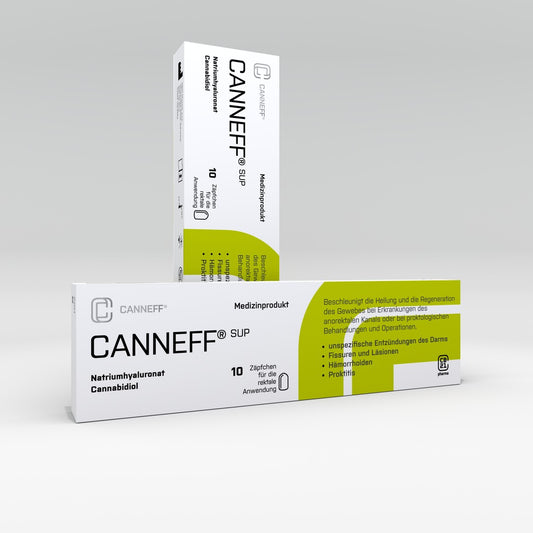
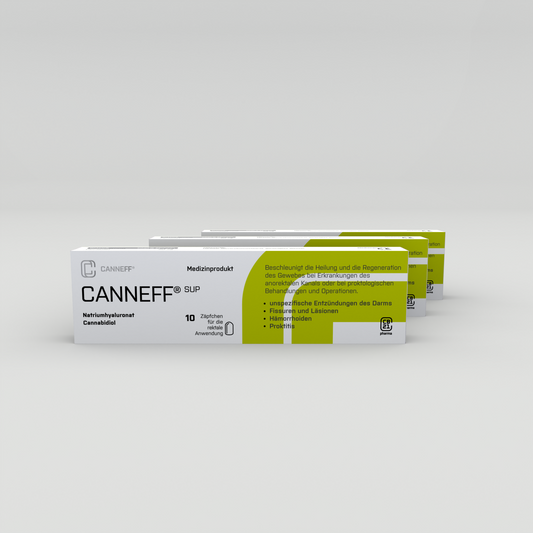
CANNEFF® SUP suppositories: CANNEFF® SUP suppositories can reduce inflammation and speed up healing.
How can healing be accelerated after hemorrhoid surgery?
There are several measures that help support the healing process after a hemorrhoid surgery:
|
Measure |
Effect |
|
High-fiber diet |
Promotes soft stool consistency |
|
Drink enough water |
Supports bowel movements |
|
Sitz baths (chamomile, oak bark) |
Anti-inflammatory, soothing |
|
CANNEFF® SUP suppositories |
Application of CANNEFF® SUP suppositories promotes healing, reduces discomfort |
|
Avoidance of heavy lifting |
Reduces pressure on the anus |
|
Exercise (walking) |
Promotes blood circulation |
When can you drive again after hemorrhoid surgery?
Driving should only be resumed when sitting after the hemorrhoid surgery no longer causes severe pain and no pain medication is being taken. This is usually the case after 7–14 days. For longer trips, it is advisable to take breaks every 30–60 minutes and stand up briefly.
Which complications can delay recovery?
In rare cases, complications can occur after surgery:
|
Complication |
Possible symptoms |
|
Postoperative bleeding |
Bright red blood in stool or on toilet paper |
|
Infections |
Redness, pain, fever |
|
Anal stenosis (scar narrowing) |
Problems with bowel movements |
|
Fecal incontinence |
Uncontrolled stool passage |
|
Anal thrombosis |
Painful, hard lumps in the anal area |
If heavy bleeding, fever, or persistent pain occurs, a doctor's visit is necessary. The healing time after a hemorrhoid surgery depends greatly on the method and individual factors. While minimally invasive procedures allow for quick recovery, healing after an open surgery takes several weeks. A healthy diet, sitz baths, and CANNEFF® SUP suppositories can support healing and relieve discomfort. You can also read more about various therapy approaches in the blog post on hemorrhoid treatment. The blog post about the doctor's visit for hemorrhoids provides comprehensive information on diagnosis and examinations.