

What are hemorrhoids?
Hemorrhoids are enlarged and twisted blood vessels in the wall of the lower rectum and anus. They develop due to increased pressure that causes the blood vessels to expand. These enlarged vessels can form lumps either inside or outside the anus, causing pain or bleeding. The diagnosis of hemorrhoids is usually made through an examination of the anus and rectum, often using instruments such as an anoscope, sigmoidoscope, or colonoscope. Most symptoms of hemorrhoids can disappear without treatment. However, in some cases, medical intervention may be necessary, such as the rubber band ligation procedure, injection sclerotherapy, or generally a hemorrhoid surgery.
Are there different types of hemorrhoids?
There are different types of hemorrhoids, which can be classified according to their location and severity. Internal hemorrhoids form above the anorectal junction, while external hemorrhoids form below this junction. Both types can either remain inside the anus or protrude outward. Depending on their size and extent, hemorrhoids are classified into different severity levels, from Grade 1 to Grade 4. Grade 1 shows only slight enlargements, while Grade 4 is the most severe form and refers to an anal prolapse, where the hemorrhoids permanently protrude from the anus.
Are hemorrhoids dangerous?
Hemorrhoids are generally not life-threatening, but they can cause extremely unpleasant complications, especially if left untreated or advanced. Possible complications include bleeding, thrombosis, and anal prolapse. These complications can cause significant pain and discomfort. Therefore, it is important to treat enlarged hemorrhoids promptly to avoid serious problems.
What complications can hemorrhoids lead to?
With advanced hemorrhoids, the risk of complications increases. The following complications are possible with hemorrhoidal disease:
Anal eczema
This condition causes weeping skin changes and ulcers on the anus. The anal fold can be affected by anal eczema, a skin rash. Depending on the cause of the anal eczema, it can gradually spread further in the intimate area.
Anal fissure
An anal fissure or tear in the anus usually occurs when hemorrhoids become irritated from using toilet paper. This then causes tears in the anal mucosa, which is also very painful. Here you can find further information to distinguish between anal fissure or hemorrhoids.
Anal abscesses
In addition, wounds on the anus can become infected with bacteria from stool, which can lead to pus-filled abscesses in the anal area, known as anal abscesses.
Anal fistulas
Anal fistulas can develop from an anal fissure or from anal abscesses. Fistulas are unnatural connections that extend from the intestine to the surface of the skin where they do not belong.
Anal vein thrombosis
If the erectile tissues become trapped, blood clots can form. This appears as a bluish-black and swollen lump next to the anus. Such a blood clot is also called an anal vein thrombosis or perianal thrombosis. Many also refer to it as external hemorrhoids, which is not entirely correct. An anal vein thrombosis in this sensitive area causes significant pain, often making sitting impossible. The anal vein thrombosis usually heals on its own; in the early phase, a minor surgical removal under local anesthesia can promptly help and speed up healing. You can relieve the pain with sitz baths, painkillers, and certain suppositories. Find more information here to distinguish between anal vein thrombosis or hemorrhoids.
Anemia
(Anemia), if the hemorrhoids bleed constantly and heavily. Read more here about hemorrhoid bleeding.
How do hemorrhoids affect quality of life?
Hemorrhoids can affect the quality of life of those affected. The associated symptoms such as itching, pain, bleeding, and discomfort can heavily impact daily life and lead to limitations. People with hemorrhoids may feel uncomfortable and may fear embarrassing situations, especially when bleeding occurs. The symptoms can also affect self-confidence and lead to social isolation, as those affected may avoid activities that could worsen their symptoms. Furthermore, hemorrhoids can cause sleep disturbances, as the symptoms can become more severe, especially at night.
What causes hemorrhoids?
Hemorrhoids can be promoted by various factors such as an unbalanced diet, lack of exercise, pregnancy, and congenital connective tissue weakness. Read more here about the different causes of hemorrhoids.
Who is particularly at risk of getting hemorrhoids?
Certain people have a higher risk of developing hemorrhoids. These include:
- elderly people
- pregnant women
- overweight individuals
as well as people…
- with disorders of rectal functions
- with connective tissue weakness
- who sit excessively
- who perform heavy physical labor
- who eat food that is too spicy or low in fiber
- with excessive alcohol consumption
Read more here about the causes of hemorrhoids and the different stages of hemorrhoidal disease.
How common are hemorrhoids?
Hemorrhoids are one of the most common diseases in industrialized countries. It is estimated that more than half of all adults over 30 years old experience problems with hemorrhoids at some point in their lives. The condition most commonly occurs between the ages of 45 and 65, affecting both men and women equally.
What can be said about hemorrhoids during pregnancy?
About half of all women experience discomfort in the anal area during or immediately after pregnancy due to bodily changes that favor hemorrhoids. Pregnancy hormones soften and loosen connective tissue, while the growing baby and uterus press on the blood vessels in the anal area. The pushing contractions during childbirth pose an additional strain. Read more here about the causes of hemorrhoids.
What do hemorrhoids have to do with sexuality?
For people with hemorrhoids, sexual intercourse can cause pain or discomfort, especially when the hemorrhoids are irritated. It can help to use enough lubricant and avoid positions that might strain the hemorrhoids. Additionally, certain sexual practices such as anal stimulation should be approached with caution, as they can cause pain, irritation, and bleeding. Read more here about hemorrhoids and sexuality.
How does diet contribute to hemorrhoids?
An unhealthy diet, including eating too much spicy food and too few fibers, can increase the risk of hemorrhoids. Fiber is important for gut health and preventing constipation, which in turn can reduce the risk of hemorrhoids. Read more here about the causes of hemorrhoids and how you can prevent hemorrhoids.
Can certain sports increase the risk of hemorrhoids?
Certain exercises and sports that heavily strain the pelvic floor and put pressure on the blood vessels of hemorrhoids can increase the risk of hemorrhoids. Sports such as tennis, squash, volleyball, soccer, or intense weight training should be avoided to reduce the risk of hemorrhoids. Read more here about the causes of hemorrhoids and how you can prevent hemorrhoids.
What are the symptoms of hemorrhoids?
Hemorrhoids may initially cause little or no discomfort. Possible symptoms of hemorrhoids include:
- Bright red blood on the stool or toilet paper, especially with Grade 1 hemorrhoids, which can bleed during bowel movements. Bleeding may increase with Grade 2 hemorrhoids. Read more about hemorrhoid bleeding here.
- Itching, anal burning, and moisture around the anus.
- Sensation of a foreign body or pressure in the anal area, which can make sitting uncomfortable.
- Feeling that the bowel is not completely emptied despite defecation.
- Discharge of mucus or stool during flatulence.
- Severe pain in advanced hemorrhoidal disease.
As hemorrhoidal disease progresses, the symptoms can worsen. It is important not to confuse hemorrhoids with skin tags. Skin tags or sentinel folds are harmless skin folds around the anus. Read more here about the different stages of hemorrhoidal disease.
How do I recognize hemorrhoids?
Hemorrhoids can initially start with itching and moisture in the anus, as secretions from the bowel escape and irritate the skin. This can lead to an unpleasant sensation and itching as well as sometimes anal burning. With strong straining and hard stools, the swollen hemorrhoids can swell further and become injured, which can lead to bleeding. When the connective tissue around the hemorrhoids loosens, they can protrude from the anus.
What do hemorrhoids feel like?
In addition to the typical symptoms, hemorrhoids can cause a feeling of pressure in the anus, accompanied by the concern that a foreign body is present in the anus. Those affected also often report the feeling that the bowel has not been completely emptied. As the disease progresses, hemorrhoids may protrude from the anus and may no longer be manually pushed back.
Can hemorrhoids be present without visible symptoms?
It is possible that enlarged hemorrhoids cause no visible symptoms. However, problems such as itching, bleeding, moisture, or a feeling of pressure in the anus often occur. In these cases, it is a hemorrhoidal disease. However, other conditions in the anal area can cause similar complaints.
How are hemorrhoids diagnosed?
The diagnosis of hemorrhoids often begins with the general practitioner, who can then refer you to a specialist such as a proctologist if necessary. The doctor discusses the patient's symptoms, medical history, and lifestyle habits. They can perform a digital rectal exam to detect changes. Severely pronounced hemorrhoids may be visible, but mildly enlarged hemorrhoids are often neither visible nor palpable. For a more precise assessment of the anal canal and rectum, proctoscopy (examination of the anal canal) and rectoscopy (examination of the rectum) can be performed. These examinations are usually painless and can be done on an outpatient basis in the practice. Special preparation of the rectum is generally not required. If bleeding from the bowel cannot be explained by the rectal examination, a colonoscopy may be recommended to rule out serious causes such as colon cancer. Read more on this topic in the blog post Hemorrhoids Doctor.
Which doctor should you see for hemorrhoids?
The first point of contact should be the general practitioner, who can refer you to a specialist such as a proctologist if necessary. A competent physician can identify hemorrhoids and decide whether further examination or treatment is required. Read more in the blog post Hemorrhoids Doctor.
When should I see a doctor for hemorrhoids?
It is recommended to see a doctor if you repeatedly experience pain, bleeding, moisture, or itching in the anal area. Even a single instance of bleeding from the anus should prompt a consultation with a doctor. Read more in the blog post Hemorrhoids Doctor.
Are there new technologies in the diagnosis of hemorrhoids?
New technologies in the diagnosis of hemorrhoids include, for example, transanal endoscopy, which allows detailed visualization of the anal canal and lower rectum. High-resolution anoscopy offers improved imaging of the anal canal and hemorrhoids compared to conventional anoscopy. Endoanal ultrasound (EAUS) uses sound waves to produce precise images of the anorectal region, which is helpful in assessing hemorrhoids and possible complications. Additionally, laser-based imaging techniques are increasingly used to enable precise diagnoses and obtain detailed images of the affected area.
What treatment options are available for hemorrhoids?
Various treatment options are available for hemorrhoids. Conservative measures include optimizing dietary habits, regulating bowel movements, and careful anal hygiene. This includes adequate fluid intake, avoiding straining during bowel movements and prolonged sitting, as well as the use of ointments and creams to relieve symptoms. Medicinal therapies may include locally applied ointments, suppositories, or creams that aim to reduce pain, itching, and inflammation. If conservative and medicinal therapies are insufficient and in cases of severe hemorrhoidal disease, various surgical procedures such as the Longo method, hemorrhoidal artery ligation (HAL), or recto-anal repair (RAR) may be considered. Read more here about surgery for hemorrhoids.
Find more detailed information here about the treatment of each stage of hemorrhoidal disease:
|
Hemorrhoids- |
Treatment |
What is the basic therapy for hemorrhoids?
The basic therapy mainly includes measures for stool regulation, dietary optimization, and careful anal hygiene. This includes a high-fiber diet and changes in bowel habits (avoiding excessive straining). If chronic constipation is present, it should be treated. Additionally, the doctor provides tips for proper anal hygiene. If these measures are insufficient, medication therapies and non-surgical procedures such as sclerotherapy and rubber band ligation may be used.
Use of ointments for hemorrhoids?
Ointments for hemorrhoids can vary depending on the severity of the symptoms. For mild complaints, ointments with witch hazel or zinc can help, while for severe complaints, ointments with a local anesthetic such as lidocaine may be prescribed. Ointments with cortisone require a prescription and are used under medical supervision, as they should only be applied for a limited time to avoid damaging the mucous membrane in the anal region.
Which medications are used to treat hemorrhoids?
In the treatment of hemorrhoids, various medications are used depending on the severity of the symptoms and the individual needs of the patient. Local preparations are applied externally and serve to relieve mild to moderate complaints (Hemorrhoids Grade I to Hemorrhoids Grade II). They are available as ointments, creams, suppositories, or anal tampons and contain active ingredients such as local anesthetics for pain relief, astringents to contract tissue, and anti-inflammatory agents. These preparations can help reduce symptoms like itching, anal burning, and pain in the anal area and support the healing process.
Flavonoids are used in tablet form for systemic therapy. This group of substances, which includes citrus bioflavonoids, hesperidin, diosmin, rutin, and hydroxymethylrutinose, is used both for the treatment of hemorrhoids themselves and to optimize the course of the disease after surgery. Flavonoids can help improve blood circulation, reduce inflammation, and alleviate the symptoms of hemorrhoids.
What modern surgical procedures for hemorrhoid treatment are available?
Modern surgical procedures offer effective solutions for hemorrhoid problems and include various techniques that can be applied depending on the severity of the condition and the patient's needs. Read more here about the stages of hemorrhoidal disease.
Longo Method (anal lifting)
This procedure is especially suitable for hemorrhoids that have prolapsed from the anus and can be easily pushed back. In the Longo method, a special stapling device is used to tighten the intestinal mucosa above the hemorrhoid area to eliminate the prolapse. Only the excess hemorrhoidal tissue is removed, while the normally sized hemorrhoid region is preserved. The suture is placed above the pain-sensitive anal canal, resulting in less postoperative pain. Patients who choose this procedure generally require fewer painkillers and experience a faster recovery.
Recto-Anal Pexy (RAR Method)
The RAR method, also known as Doppler-guided mucopexy (DGM), is a minimally invasive treatment option for hemorrhoids in stages II and III. In this procedure, the supplying vessels in the rectum are ligated and the mucosa is tightened deep inside to pull the tissue prolapse back inside the anus and treat the hemorrhoids. This method is particularly gentle and leads to a quick recovery with only minor discomfort.
Hemorrhoidal Artery Ligation (HAL method)
The HAL method is used when the hemorrhoids can still be pushed back. The doctor uses ultrasound to locate the hemorrhoidal nodes and ligates the supplying arteries to reduce blood flow. By reducing blood supply, the hemorrhoids shrink and any bleeding stops. This procedure does not require anesthesia and often allows a quick return to work.
These modern surgical procedures offer effective and gentle options for the treatment of hemorrhoids. Compared to traditional methods, they allow for faster recovery and a quicker return to normal daily life. The choice of the appropriate procedure depends on the individual patient's situation and the severity of the hemorrhoidal disease.
How effective are non-surgical treatments compared to surgeries?
Non-surgical treatments such as infrared therapy, diathermy, electrocoagulation, sclerotherapy, and rubber band ligation offer various options for the treatment of hemorrhoids. Infrared therapy aims to treat bleeding in mild hemorrhoidal disease through localized heat generation. Diathermy and electrocoagulation use heat to destroy and shrink hemorrhoidal tissue.
If medication treatment is unsuccessful, endoscopic procedures such as sclerotherapy and rubber band ligation are used. Sclerotherapy aims to reduce the blood flow to the hemorrhoids, causing them to shrink. Rubber band ligation ties off the hemorrhoidal cushions, causing the tissue to die and be expelled with the stool. This method is particularly effective for bleeding hemorrhoids of Grade II hemorrhoids and Grade III hemorrhoids and is often performed on an outpatient basis.
How effective non-surgical treatments are depends, among other things, on the severity of the hemorrhoids and the individual patient's response to the treatment. While non-surgical methods often represent an effective option for mild to moderate cases, surgery may be considered for more severe cases or if these methods fail. Read more about surgery for hemorrhoids here.
Are there alternative medical approaches for treating hemorrhoids?
Alternative medical approaches can also contribute to the treatment of hemorrhoids, especially for mild symptoms. These include, for example, lukewarm sitz baths. Adding chamomile or oak bark to lukewarm water can relieve symptoms and have a soothing effect on the affected areas.
Stress can play a role in the development of hemorrhoids. Relaxation techniques such as meditation, breathing exercises, or yoga can help reduce tension in the sphincter muscle and alleviate symptoms.
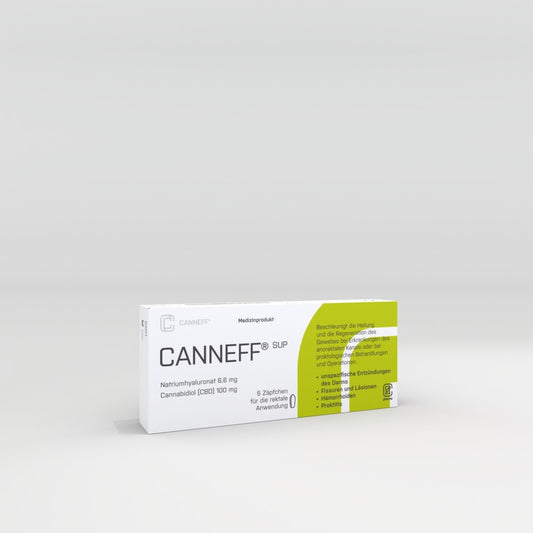
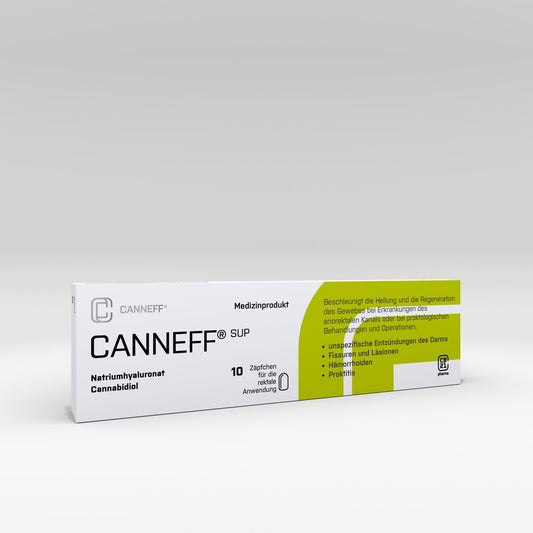
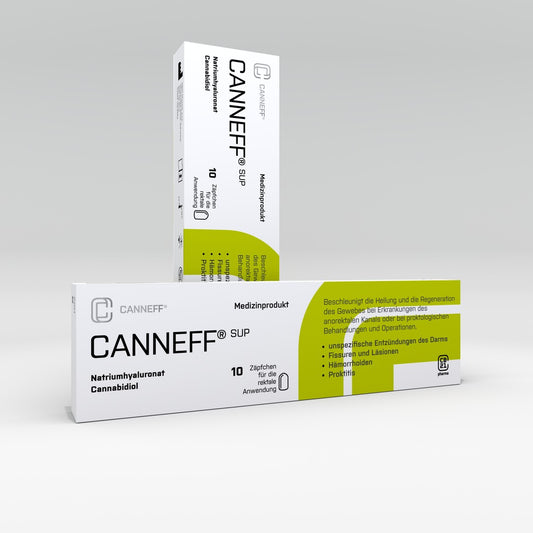
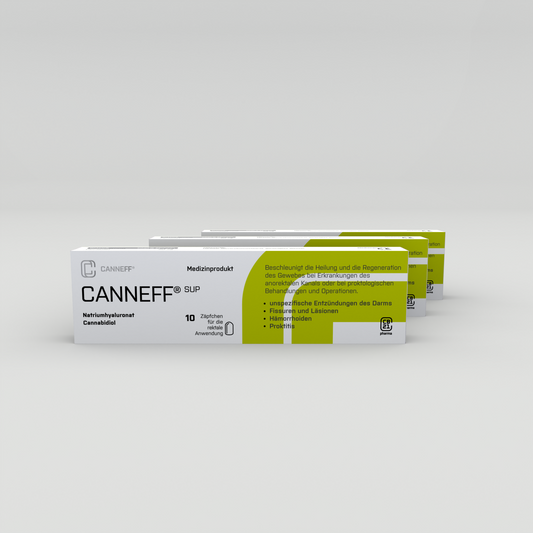
Ointments and CANNEFF SUP rectal suppositories can also help with mild symptoms such as moisture and itching around the anus by quickly relieving the discomfort.
Can ointments cure hemorrhoids?
Ointments and creams frequently recommended to relieve hemorrhoid symptoms often contain active ingredients such as zinc, panthenol, witch hazel, or aloe vera. These can help alleviate temporary symptoms like skin irritation and itching. Cortisone-containing ointments may also be prescribed by a doctor to reduce inflammation. However, these ointments cannot cure hemorrhoids; they only serve for symptomatic treatment to temporarily relieve discomfort. There are also special ointments that locally numb and thus reduce pain. Additionally, there are the CANNEFF SUP suppositories, developed with cannabidiol (CBD) and hyaluronic acid, which are intended to promote faster healing and tissue regeneration.
How do ointments work in the treatment of hemorrhoids?
Ointments with various active ingredients such as zinc, panthenol, or aloe vera can relieve symptoms like itching and skin irritation in hemorrhoidal conditions. Cortisone-containing ointments are often prescribed to reduce inflammation. The application is usually done directly on the affected area in the anal region. Some ointments also contain local anesthetics like lidocaine to reduce pain.
How are ointments applied for hemorrhoids?
Ointments and creams for the treatment of hemorrhoids can be applied directly to the affected area in the anal region. For hygienic application, special applicators can be used, allowing the ointment to be applied precisely and hygienically inside the anal canal.
Are there side effects from using hemorrhoid creams?
Side effects from using hemorrhoid creams are rare but can occasionally occur. With corticosteroid creams, it is important to use them only for a limited period, as prolonged use can lead to side effects such as skin thinning. Local anesthetics can cause temporary reactions like skin irritation or allergic reactions.
What helps quickly with acute hemorrhoid symptoms?
For quick relief from acute and distressing hemorrhoid symptoms or to reduce pain sensitivity before a proctological examination, the use of a preparation with a local anesthetic such as lidocaine is recommended.
Which herbal medicine helps against hemorrhoids?
For complaints related to hemorrhoids, preparations containing zinc, panthenol, or natural active ingredients such as witch hazel or aloe vera are often recommended. These products are available in pharmacies and drugstores.
What can I do myself for hemorrhoids?
How can hemorrhoids be prevented?
Symptomatic hemorrhoids can be reduced through simple measures. A high-fiber diet helps to soften stool and prevent constipation. Cleaning the anal area with water and a special soap for the anal region can help minimize irritation. Additionally, pelvic floor training, especially during and after pregnancy, is recommended. Early consultation with a doctor can prevent or at least slow the progression of the condition. Read more here about the causes of hemorrhoids and how you can prevent hemorrhoids.
What role does hygiene play in preventing hemorrhoids?
Thorough hygiene in the anal area helps avoid irritation and reduces the risk of hemorrhoids. Moist residue around the anus can further irritate enlarged hemorrhoids. For this reason, the anus should be carefully cleaned after bowel movements. A recommended approach is to moisten toilet paper with a little water first and then dry with dry paper. However, excessive hygiene can also worsen symptoms. Wet wipes and washing lotions may contain substances that irritate the skin and cause allergic reactions. Therefore, only use products intended for the anal area. Read more here about the causes of hemorrhoids and how you can prevent hemorrhoids.
What home remedies are available to relieve hemorrhoid symptoms?
As home remedies for hemorrhoids, sitz baths are often recommended. Clear water can be used, but a mixture with herbal additives such as arnica, chamomile, or witch hazel is also possible. These additives are available in pharmacies or drugstores.
To avoid constipation and excessive straining during bowel movements, dietary changes, adequate hydration (1.5 to 2 liters per day), and regular exercise are recommended. A fiber-rich diet with fruits, grains, vegetables, and legumes can help soften stool and reduce straining. Excessive straining during bowel movements can worsen discomfort and cause pain. This can be avoided by preventing constipation, paying attention to bodily signals like the urge to defecate, and going to the toilet relaxed and without rushing.
What is the course and prognosis of hemorrhoids?
The course of hemorrhoidal disease is usually chronic and progressive. Once enlarged, hemorrhoids typically do not shrink on their own. However, it can vary. In some cases, the condition remains stable, while in others the hemorrhoids continue to enlarge and the symptoms may worsen.
The prognosis for hemorrhoids is generally good, especially when treated promptly. Early intervention can help control the symptoms and prevent further complications. Appropriate treatment can also help reduce the risk of hemorrhoids recurring.
However, hemorrhoids can recur despite treatment. Some people experience periodic flare-ups of hemorrhoids that require treatment.
Can hemorrhoids lead to permanent health problems?
Hemorrhoids can lead to permanent health problems, especially if they are not properly treated or if complications arise. Untreated hemorrhoids can cause persistent symptoms such as itching, pain, bleeding, and anal irritation, which can affect quality of life. Additionally, some people may develop blood clots in the enlarged hemorrhoids, leading to painful swelling and inflammation. These conditions often require medical intervention. Persistent itching and irritation of the anal area can cause anal eczema, which may result in inflammation and discomfort. In some cases, hemorrhoids can lead to further issues such as anal fistulas or abscesses, which may require surgical treatment. Repeated heavy bleeding from hemorrhoids can cause iron deficiency and anemia, leading to fatigue and other health problems.
What risks are associated with the treatment of hemorrhoids?
After the surgical procedure, pain in the anal area may occur, which can cause difficulties with bowel movements and sitting. These symptoms can usually be relieved with painkillers. There is also a risk of postoperative bleeding after the treatment, which may require further medical intervention. Infection of the surgical wound is possible and requires appropriate treatment. Temporary problems with urination may occur after the treatment, but these are usually temporary. There is a risk of narrowing of the anal opening after the treatment, which may require further interventions. In rare cases, fecal incontinence can occur, where bowel control is no longer fully possible.
What costs are associated with the treatment of hemorrhoids?
The costs for the treatment of hemorrhoids can vary depending on the chosen method and country. Generally, the costs include medical fees, hospital stays (if necessary), medications, and follow-up treatments.
Do health insurance companies in Austria cover the costs for the treatment of hemorrhoids?
Usually, statutory health insurance covers the costs for the treatment of hemorrhoids, including necessary surgical procedures.
Are there differences in cost coverage between conservative and surgical treatments?
For certain services, deductibles or cost contributions may apply. You can obtain detailed information from your responsible social insurance provider.