

Can hemorrhoids be removed by oneself, or is it dangerous?
Many people with hemorrhoids want to avoid going to the doctor and look for ways to remove them themselves. However, manual removal is extremely risky and not recommended. It can lead to severe bleeding, infections, or permanent damage in the anal area. Hemorrhoids are vascular cushions with an important function in the rectum. Improper removal can impair the natural sealing of the bowel and lead to incontinence.
Are there natural ways to get rid of hemorrhoids?
Hemorrhoids of Grade 1 and Grade 2 can actually regress with targeted treatment. Natural methods include:
|
Natural method |
Effect |
|
High-fiber diet |
Promote soft stool and reduce irritation |
|
Sitz baths with chamomile or oak bark |
Have anti-inflammatory and soothing effects |
|
Aloe vera or witch hazel |
Relieve itching and inflammation |
|
Psyllium husks |
Support healthy digestion |
|
Exercise & targeted workouts |
Promote blood circulation in the pelvic area |
These measures help relieve symptoms and prevent the progression of hemorrhoids. However, for advanced hemorrhoids (Grade 3 and Grade 4), home remedies are usually not sufficient.
How safe are home remedies for self-removal of hemorrhoids?
Home remedies cannot “remove” hemorrhoids, but only relieve symptoms. Manual self-removal, such as cutting or ligation with threads, is highly dangerous. Many patients report severe pain and subsequent inflammation. Infections can penetrate into deeper tissue layers and lead to abscesses or fistulas.
Is manual removal of external hemorrhoids possible?
External hemorrhoids are particularly uncomfortable, but their removal should always be done under medical supervision. Under no circumstances should you try to cut or pull them out yourself. The vessels can bleed heavily and lead to severe inflammation. If removal is necessary, a proctologist can properly remove the hemorrhoids under sterile conditions.
What are the risks of removing hemorrhoids yourself?
The risks of improper self-removal are serious:
-
Severe bleeding caused by injury to the sensitive vascular cushions
-
Infections due to unsterile procedures
-
Pain and scarring, which worsen the healing process
-
Anal abscesses or fistulas that require complicated surgical follow-up treatment
-
Permanent damage to the sphincter muscle, which can lead to incontinence
For these reasons, any form of self-removal is strongly discouraged.
What non-surgical alternatives are there to self-removal?
Instead of dangerous self-treatment, there are modern, safe methods to reduce hemorrhoids:
|
Treatment |
Description |
|
Rubber band ligation |
Hemorrhoids are painlessly tied off with a rubber band until they fall off |
|
Sclerotherapy (sclerosis) |
An injection scleroses the hemorrhoids, causing them to shrink |
|
Laser treatment |
Hemorrhoids are reduced through targeted heat |
|
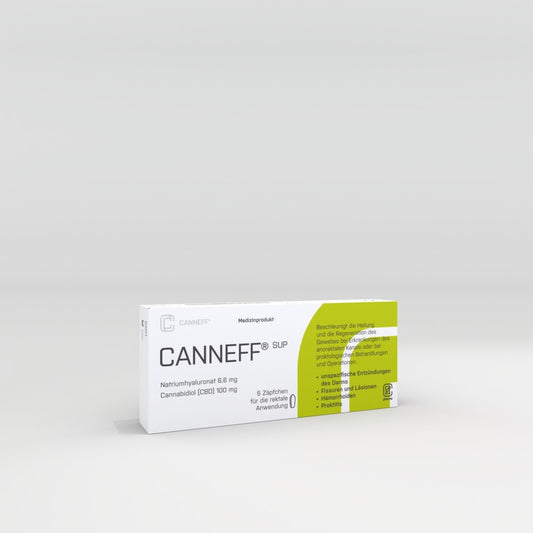
CANNEFF® suppositories |
Herbal preparations relieve symptoms and promote healing |
These methods are performed by doctors and offer an effective alternative to surgical removal.
Can tying off hemorrhoids at home work?
Some people try to tie off hemorrhoids themselves with threads or rubber bands. However, this method is extremely dangerous, as incorrect application can lead to severe infections or uncontrolled bleeding. Medical rubber band ligation is a safe procedure performed by doctors in the clinic.
When should you never try to treat it yourself?
There are clear warning signs that require immediate medical treatment:
-
Severe bleeding from the anus
-
Swelling or hardened lumps that do not subside
-
Intense pain when sitting or during bowel movements
-
Purulent or foul-smelling discharge from the anal area
-
Hemorrhoids that do not improve despite treatment
In such cases, a doctor visit is essential. Any improper self-treatment can worsen the condition.
Which doctors specialize in the removal of hemorrhoids?
For persistent symptoms or larger hemorrhoids, a specialist in proctology or gastroenterology is the right contact. Surgeons specializing in anorectal diseases can also perform surgical treatments.
Points of contact for professional treatment:
-
General practitioner (initial examination and referral)
-
Proctologist (rectal specialist)
-
Gastroenterologist (specialist in stomach and intestinal diseases)
-
Surgeon specializing in coloproctology (surgical procedures)
Modern treatments are gentle and minimally painful, which is why a doctor’s visit is always preferable to risky self-treatment.
Are there cases where hemorrhoids resolve on their own?
Yes, hemorrhoids of Grade 1 and Grade 2 can often resolve through consistent lifestyle adjustments. Important measures for self-healing include:
-
High-fiber diet to improve bowel movements
-
Plenty of fluids to prevent constipation
-
Regular exercise to promote blood circulation
-
Sitz baths and herbal ointments to relieve symptoms
-
Avoiding excessive straining during bowel movements
Advanced hemorrhoids (Grade 3 and Grade 4) require medical treatment as they do not resolve on their own. Removing hemorrhoids yourself is dangerous and can have serious consequences. Instead, there are numerous safe, non-invasive treatment options that can be performed by doctors. Home remedies and lifestyle changes can help relieve symptoms and reduce smaller hemorrhoids. However, a doctor’s visit is essential for persistent symptoms or advanced stages.