

What is lichen sclerosus?
Lichen sclerosus is a chronic inflammatory skin condition that mainly affects the genital and anal areas. The disease causes white, parchment-like skin changes that can be accompanied by itching, pain, and skin shrinkage. The exact cause is still unclear, but a connection with autoimmune processes, hormonal factors, and genetic predisposition is suspected. Lichen sclerosus usually occurs in flare-ups and can lead to long-term discomfort if not treated promptly.
Is lichen sclerosus contagious?
Lichen sclerosus is not contagious. The disease is not caused by bacteria, viruses, or fungi and therefore cannot be transmitted through sexual contact, shared use of toilets, or touching. However, since the symptoms are often mistaken for sexually transmitted infections (STIs) or fungal infections, medical evaluation is important to avoid misdiagnosis.
How common is lichen sclerosus?
The exact prevalence of lichen sclerosus is difficult to determine because many cases go undiagnosed. Studies estimate that up to 3% of women and up to 0.07% of men are affected. The condition is especially common in women after the menopause, but younger adults and children can also be affected. Because many sufferers avoid seeing a doctor out of embarrassment, the number of unreported cases is likely high.
Who is most commonly affected by lichen sclerosus?
Lichen sclerosus primarily occurs in women after menopause but can also affect men and children. Women with hormonal fluctuations, such as those after the menopause or due to hormonal contraceptives, are particularly at risk. Men can also develop the condition, especially in the area of the foreskin and glans, where the so-called genital lichen sclerosus develops. In children, the disease often resolves during puberty but can reoccur in adulthood.
Which body areas are affected by lichen sclerosus?
Lichen sclerosus mainly occurs in the genital and anal areas but can also affect other parts of the body. The most commonly affected regions are:
|
Body area |
Frequency of occurrence |
Possible symptoms |
|
Genital area (labia, clitoris, foreskin, glans) |
Very common |
Itching, pain, skin shrinkage, scarring |
|
Perianal area (skin around the anus) |
Common |
Itching, skin cracks, pain during bowel movements |
|
Inner thighs |
Rare |
Whitish skin changes, dryness |
|
Back and shoulder area |
Very rare |
Whitish plaques, itching |
Is lichen sclerosus curable?
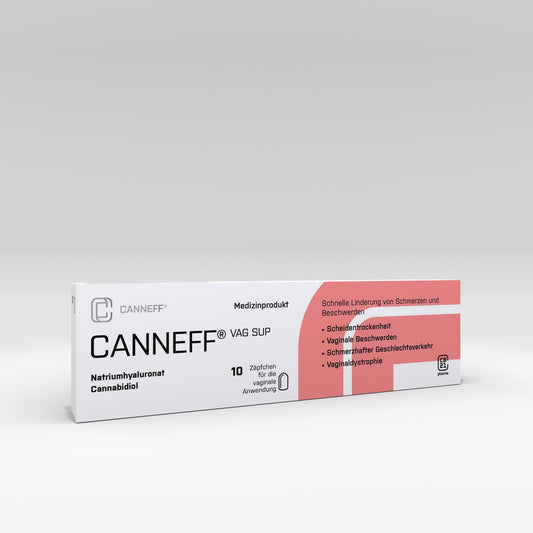
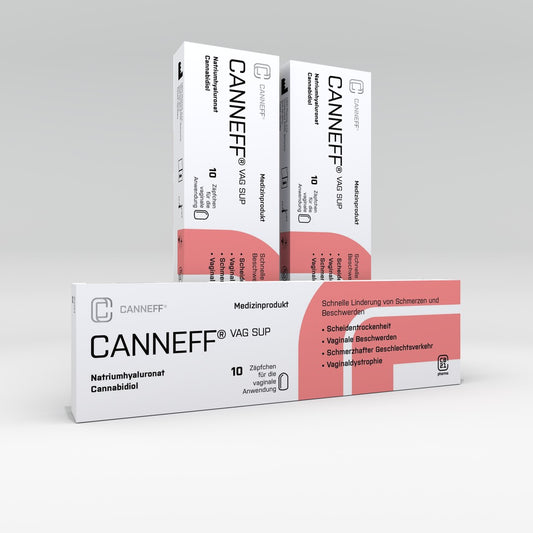
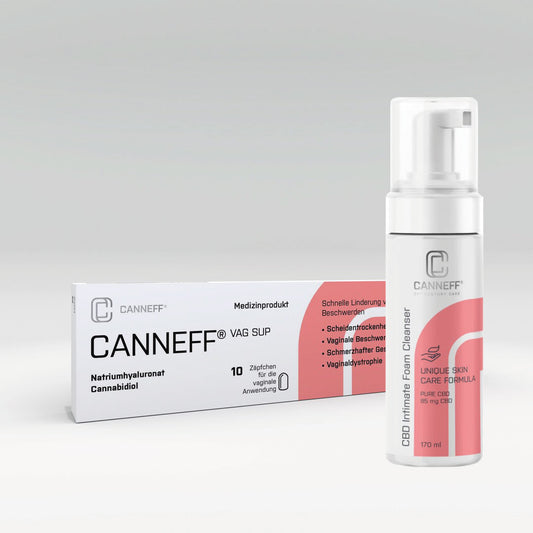
Lichen sclerosus is not curable, but with early and consistent treatment, the symptoms can be alleviated and the progression of the disease slowed. Cortisone-containing creams, moisturizing care products, and special vaginal suppositories like CANNEFF® VAG SUP can help relieve discomfort and improve skin texture. Without treatment, lichen sclerosus can lead to permanent skin changes, scarring, and functional impairments.
How is lichen sclerosus diagnosed?
The diagnosis is usually made by visual examination by a specialist in gynecology, urology, or dermatology. Typical signs are white, hardened skin areas that often have a parchment-like texture. If there is uncertainty or if squamous cell carcinoma (a form of skin cancer) needs to be ruled out, a skin biopsy may be performed. In rare cases, swabs are also taken to exclude infections.
Does lichen sclerosus affect intimate health?
Yes, lichen sclerosus can significantly affect intimate health. Those affected often suffer from:
|
Impairment |
Description |
|
Pain during sex (dyspareunia) |
The vaginal opening can become narrower due to shrinkage and scarring. |
|
Itching & burning |
Irritated skin leads to intense scratching, causing cracks and bleeding. |
|
Skin injuries & scarring |
The skin becomes thinner, tears more easily, and scars. |
|
Problems with urination & bowel movements |
Scarring in the area of the urethra or anus can cause discomfort. |
Timely treatment with medical products like CANNEFF® VAG SUP can help regenerate the mucous membrane, provide moisture, and relieve pain.
Can lichen sclerosus cause cancer?
Lichen sclerosus is not a precancerous condition, but the risk of vulvar or penile cancer is increased. It is estimated that 3-5% of those affected develop a malignant change over time, especially if the disease remains untreated. Regular medical check-ups are therefore important to detect possible early stages of cancer in time.
What consequences can lichen sclerosus have?
If lichen sclerosus is not recognized or treated in time, the disease can lead to severe late complications. These include:
|
Possible consequence |
Description |
|
Shrinkage and scarring |
Genital structures such as the labia or foreskin can be reduced or scarred. |
|
Painful urination & sexual intercourse |
Scarring leads to functional impairments. |
|
Increased risk of infection |
Through skin cracks, bacteria and fungi can penetrate more easily. |
|
Higher cancer risk |
There is an increased risk of squamous cell carcinoma, especially with untreated, long-term progression. |
Lichen sclerosus is a serious but non-contagious skin condition that primarily affects women and can cause itching, pain, and skin changes. Early diagnosis and consistent treatment are crucial to avoid complications such as scarring or an increased risk of cancer. Modern care and therapy options, like CANNEFF® VAG SUP, help relieve symptoms and support the moisture balance of the mucous membranes.