

What are marisks?
Marisks are small skin tags or folds that typically form around the anus. They are usually harmless but can cause discomfort or cosmetic concerns. These skin tags can vary in size and are often soft and elastic. The name "marisk" comes from the French word "le marisque." There are also other synonymous terms such as skin tags, anal folds, perianal folds, sentinel folds, skin flaps, anal tags, anal polyps, anal skin tags, skin caruncles, or perianal fibromas. There are two types of marisks: primary marisks occur without an identifiable organic cause, while secondary marisks are associated with certain conditions or events. These include chronic anal fissures, healed perianal vein thromboses, surgical procedures in the anal area, perianal infections or inflammations, as well as Crohn's disease, a chronic inflammatory bowel disease (IBD).
How are marisks diagnosed?
Marisks are usually diagnosed through a clinical examination. The doctor can visually identify the marisks and assess their texture and location. Occasionally, an anoscopy may be performed to examine the anal area more closely. Primary marisks are usually broad-based and more often found on the outer anal margin, while secondary forms tend to be stalk-like with a narrower base that often extends into the anal canal. It is important to distinguish marisks from other conditions such as prolapsed hemorrhoids, genital warts, anal fibromas, and anal carcinomas. Additionally, marisks do not swell when straining. Hemorrhoids, on the other hand, do. Find all information about diagnosis and the doctor visit for marisks here.
Are marisks dangerous?
Skin tags are generally considered benign skin growths and do not pose a serious health risk. Although they are usually not painful or dangerous, they can occasionally cause problems, especially if irritated or inflamed. This can lead to itching, anal burning, or moisture in the anal area. Nevertheless, skin tags are not contagious and usually do not lead to serious complications.
How common are skin tags?
Skin tags are common skin changes that occur in many adults. These small skin flaps can appear in different sizes and shapes and are often recognized as soft, elastic folds of tissue around the anus. About 75% of women and 70% of men develop such skin folds around the anus during their lifetime. While single skin tags often appear in younger years, multiple skin folds can develop later in life. Skin tags can occur at any age, even in infants, with women more frequently developing them at a younger age than men. However, the risk of skin tags generally increases with age.
What are the causes of skin tags?
The exact causes of skin tags are not yet fully understood, but it is believed that several factors may play a role. One suspected cause of skin tags is increased pressure in the anal area combined with weakness of the skin tissue. This pressure can be increased by various factors such as chronic constipation or diarrhea. Women during pregnancy and after childbirth, as well as overweight individuals, may also have a higher risk of developing skin tags due to the increased pressure on the pelvis. Additionally, a genetic predisposition may play a role, making certain people more susceptible to the occurrence of skin tags.
What are the risk factors for the occurrence of skin tags?
Risk factors for the occurrence of marisks are diverse and can be influenced by various conditions and life circumstances. Known risk factors include chronic constipation or diarrhea, as these conditions increase pressure in the anal area and thus can raise the risk of marisks. Pregnancy and childbirth also play a role, as the increased pressure on the pelvis during these phases can promote the formation of marisks. Additionally, obesity can contribute, as excess weight can increase pressure in the anal area. Furthermore, some studies show that a genetic predisposition may play a role, as some people may be more susceptible to developing marisks.
Other possible risk factors include frequent, loose stools that can irritate the anal mucosa and trigger inflammation. Hemorrhoids, which often come with increased pressure in the anal canal, could also increase the risk of marisks. Overstretching of the anal mucosa due to frequent bowel movements or certain diseases, as well as excessive anal hygiene or overly tight underwear, could also increase the risk.
What is the connection between marisks and pregnancies?
During pregnancy, pressure on the pelvis can be increased, which can promote the formation of marisks. This is because the extra weight of the growing baby presses on the pelvic floor and anal canal, which can lead to stretching and protrusion of the skin. The physiological changes during pregnancy, such as increased blood flow and hormonal changes, can also contribute to the formation of marisks.
Why do marisks usually not cause symptoms?
Marisks usually do not cause symptoms because they are soft and elastic and typically do not contain nerve endings. For this reason, they often go unnoticed and do not cause discomfort. However, this does not mean they are not present or do not require treatment. Read more here about the symptoms of marisks.
Can marisks still cause discomfort?
In some cases, marisks can cause discomfort due to friction or irritation, especially if they are inflamed or located in sensitive areas. This can lead to itching, burning sensation, or moisture in the anal area, causing discomfort. It is important to take these symptoms seriously and seek medical help if necessary to discuss appropriate treatment options and improve well-being. Read more here about the general symptoms of marisks.
What symptoms do marisks cause and how are they diagnosed?
Marisks usually do not cause specific symptoms unless they are inflamed or irritated. In such cases, they can cause itching, burning sensation, or moisture in the anal area. To diagnose marisks, a doctor may perform a physical examination of the anal area. In some cases, an anoscopy may be necessary, where a small, tube-shaped instrument is used to examine the anal canal. Find more detailed information here about the general symptoms of marisks, or about swollen marisks, bleeding from marisks, or the symptom of itching with marisks.
What do marisks feel like?
Marisks feel soft and elastic and have a smooth surface. They can appear in various sizes and shapes and manifest as skin folds or small nodules in the anal area. They are often described as skin-colored or slightly reddish. Generally, marisks do not cause pain but can sometimes cause mild burning sensation at the anus or anal itching, especially if irritated. In some cases, they may temporarily enlarge after bowel movements and then retract again. Read more here about the general symptoms of marisks, about swollen marisks, or also itching with marisks.
What is the difference between marisks and hemorrhoids?
Marisks and hemorrhoids are two common conditions in the anal area that are often confused but have different causes, characteristics, and treatment options. Hemorrhoids are swollen blood vessels in the area of the anus or rectum. These vascular cushions play an important role in continence by helping to seal the anal canal. Hemorrhoids can develop due to increased pressure in the anal canal or rectum. This pressure can be caused by various factors such as chronic constipation, pregnancy, childbirth, a sedentary lifestyle, or straining during bowel movements. Hemorrhoids can be located inside or outside the anus and can vary in severity, from mild discomfort to severe pain.
Unlike skin tags, hemorrhoids can be uncomfortable and cause various symptoms, including itching, anal burning, pain, bleeding, or a feeling of pressure in the anus. In severe cases, hemorrhoids can swell so much that they protrude from the anus and become visible as external hemorrhoids. These can be particularly painful and impair daily life.
How can skin tags and hemorrhoids be distinguished from each other?
Skin tags and hemorrhoids can be distinguished by their position, appearance, function, and symptoms. Skin tags often appear near the anus in skin folds and are skin-colored, soft, and elastic. Hemorrhoids can be located inside or outside the anus, are well vascularized, and can be swollen as well as hard or soft. While skin tags have no specific function in the body, hemorrhoids play an important role in continence. Skin tags usually cause no symptoms, whereas hemorrhoids can cause discomfort such as itching, anal burning, pain, bleeding, or a feeling of pressure.
How can skin tags be prevented and what is the prognosis?
The exact causes of skin tags are often unclear, which means there are no specific preventive measures to stop their occurrence. However, certain behaviors and practices can help reduce the risk and minimize the development of skin folds in the anal area.
Good anal hygiene plays an important role. You should regularly but gently clean the anal area with water or a mild cleanser, avoiding excessive wiping or rubbing, as this can irritate the sensitive anal skin and promote inflammation. Additionally, it is important to avoid tight-fitting underwear, as it can mechanically irritate the skin.
Treatment and prevention of conditions that can lead to skin tags are also important. For example, issues such as perianal venous thrombosis, or recurrent anal venous thrombosis, as well as chronic anal fissures should be treated appropriately and promptly to reduce the risk of skin growths in the anal area. Additionally, a healthy and balanced diet and adequate fluid intake can help prevent constipation, which in turn can reduce the risk of hemorrhoids and skin tags. Find more information here on all measures related to the prevention of skin tags.
The prognosis for skin tags is generally favorable, as they are usually harmless and rarely lead to serious complications. They often cause no symptoms and are frequently discovered by chance or only noticed when discomfort occurs. Nevertheless, it is advisable to consult a doctor for any complaints in the anal area to clarify the cause and, if necessary, initiate appropriate treatment. Find all information about diagnosis and the doctor's visit for skin tags here.
How can skin tags be detected early?
Early detection of skin tags can be achieved through regular self-examinations. Watch for unusual skin growths or changes in the anal area and seek medical advice if you notice any changes or experience discomfort to clarify the cause. Find more information here on how to prevent skin tags.
Which products are suitable for caring for the anal area?
For anal care, mild, pH-neutral cleansers or special wet wipes free of irritating substances are suitable. Avoid products with strong fragrances or alcohol, as they can irritate the skin. After cleaning, using a soothing ointment or cream can help relieve irritation and protect the skin. Pay particular attention to proper hygiene after bowel movements to minimize the risk of infections or irritation.
How are skin tags treated?
Skin tags usually do not require treatment unless they cause discomfort. Both surgical and non-surgical treatment options are available. Read more about the general treatment of skin tags, or about the procedure of a skin tag surgery. Find all information about diagnosis and the doctor’s visit for skin tags here.
Can skin tags be removed without surgery?
In some cases, skin tags can also be removed without surgery. These methods include rubber band ligation, where a rubber band is placed around the base of the skin tag to cut off blood supply and cause it to die. Another option is cryotherapy, where the skin tag is removed by freezing. Read more about the surgical removal of a skin tag here. In any case, do not try to remove a skin tag yourself; a surgical procedure in the anal area should always be performed by a specialist, as improper handling can lead to infections, heavy bleeding, or persistent discomfort.
There are also non-invasive treatment options for skin tags, such as ointments, creams, or special sitz baths. In some cases, a sclerotherapy treatment can be considered, where the skin tags are cauterized with a chemical agent to reduce their size. Find more information in the blog post on treatment of skin tags.
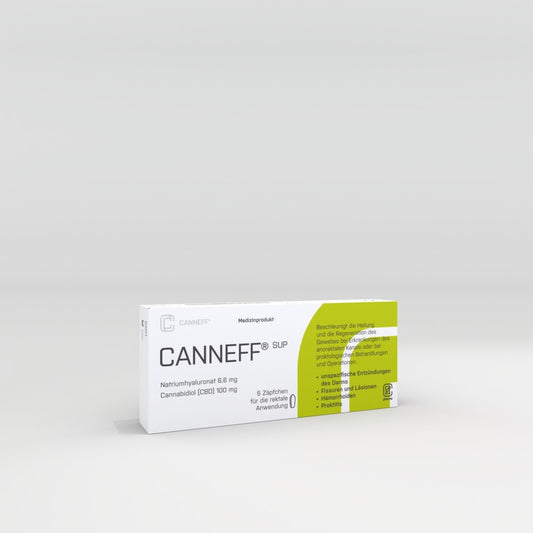
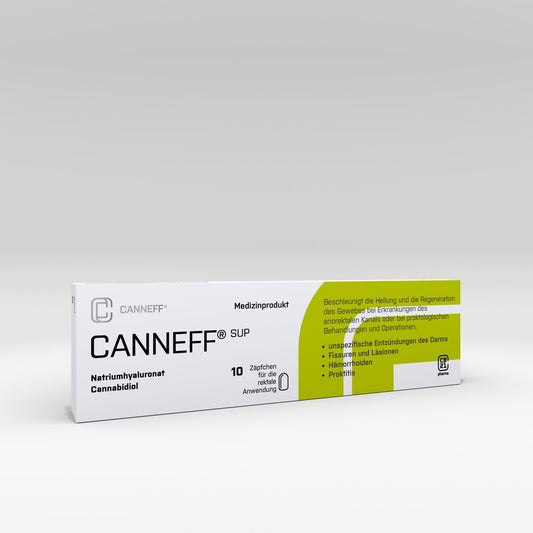
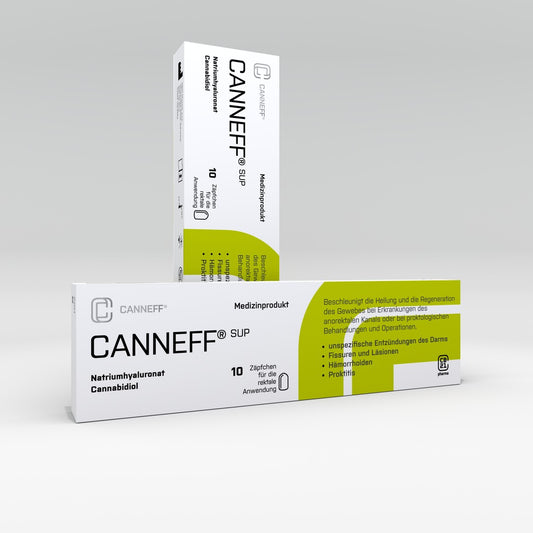
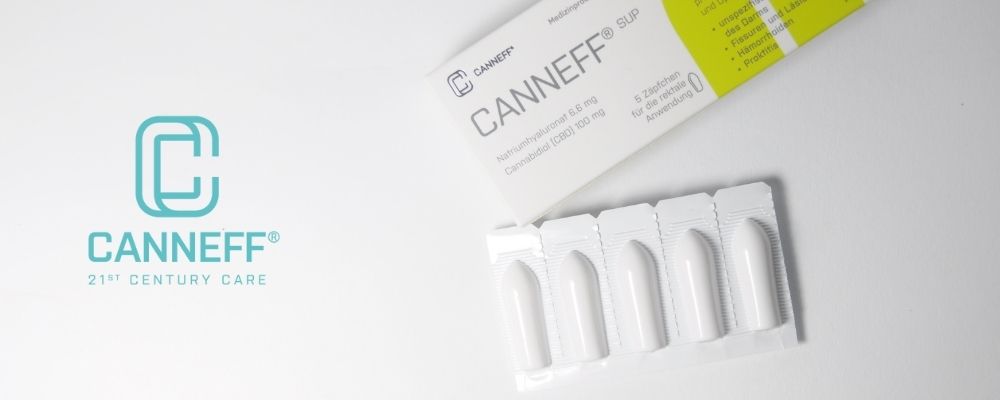
For symptoms of marisken such as anal burning and itching, soothing ointments or special suppositories like CANNEFF® SUP can help promote skin regeneration. These rectal suppositories contain CBD and hyaluronic acid for faster healing and tissue regeneration. They are an innovative medical product that contains cannabidiol alongside hyaluronic acid. It is the first approved medical product with cannabidiol on the European market, and there are no comparable products. If marisken are inflamed and cause pain as well as anal burning or anal itching, or if a surgery to remove the marisken is performed, you can find more information here about the treatment of marisken with suppositories.
Here you can also find further information on home remedies and alternative treatment approaches for marisken, as well as on the herbal treatment of marisken.
Is surgery necessary for marisken?
A marisken surgery is not always necessary but can be an effective solution in some cases, especially for large or severe marisken that cause significant discomfort. It is important to discuss the decision for surgery with a doctor who can assess the patient's individual situation. Find all information about the doctor visit for marisken here.
How does a marisken surgery work?
A Marisken operation, also known as Mariskectomy, is usually performed on an outpatient basis in a doctor's office or surgical center. First, the area around the Mariske is numbed with a local anesthetic to minimize pain during the procedure.
The surgeon then cuts off the Mariske under strictly sterile conditions. The exact technique for removal can vary depending on the size and location of the Mariske. In some cases, the wound is closed with stitches after the Mariske is removed, while in other cases the wound is left open, depending on the individual patient's situation. The removed tissue is examined histologically after the operation to rule out other possible diseases and to determine the type of Mariske.
Since the surgical area is usually outside the anal canal, postoperative pain is generally mild. However, it can happen that an open wound remains, which may discharge fluid for about 1 to 3 weeks. This discharge usually subsides after about 5 days.
Careful aftercare is important to avoid the risk of side effects and to promote healing. The treating doctor provides detailed instructions on wound care and pain relief, which the patient should follow precisely. In most cases, recovery after a Marisken operation proceeds without complications. Most patients can return to their normal activities after a short time. Certain suppositories, such as CANNEFF® SUP rectal suppositories, can also support the healing process of the wound at the anal margin after surgery. Read more here about the treatment of Marisken with suppositories.
After the surgery, side effects may occur, but they are usually only temporary. These include bruising, which typically subsides within a few days, and wound pain, which can be treated with painkillers. Find detailed information here about the procedure of a Marisken operation or about experiences with a Marisken operation.
When is surgical removal of skin tags necessary?
Surgical removal of skin tags is necessary if they cause discomfort, do not respond to conservative treatments, or are cosmetically disturbing. If they become inflamed, thrombosed, or repeatedly cause bleeding, surgical removal may also be required. Read more here about the treatment of skin tags.
How painful is a marisectomy?
The intensity of pain during a marisectomy varies from person to person. However, local anesthesia usually blocks most of the pain during the procedure. After surgery, some patients may experience mild to moderate pain or discomfort, which can be well controlled with pain medication. Find further information here about experiences with a marisectomy.
What should be considered during aftercare?
To support wound healing, you should rinse the anal area with lukewarm water only for two to three weeks, avoiding soap, shower gel, wet wipes, ointments, or disinfectants, as these can irritate the skin. CANNEFF® SUP suppositories can also support the regeneration and healing process of the tissue around the anus after surgery to remove bothersome skin tags at the anal margin. The rectal suppositories with CBD and hyaluronic acid promote faster healing and tissue regeneration after colorectal surgeries, such as a marisectomy. Find more information here about aftercare following a marisectomy or read more about the treatment of skin tags with suppositories.
Some patients tend to clean the wound after the skin tag surgery particularly thoroughly by using disinfectant solutions or rinsing the anal area several times a day. However, these measures are not scientifically proven and could be counterproductive. Leave the fresh wound alone and give it time to heal. Also, avoid showering and bathing until the wound has sufficiently healed to prevent complications. After bowel movements, gentle cleaning with soft, dry toilet paper is recommended to avoid mechanically irritating the skin and wound.
How much does the treatment of skin tags cost?
The costs for the treatment of skin tags can vary depending on the medical practice, the method used, and the individual needs of the patient. Discuss this with your treating physician to get a clear overview of the expected costs.
Do health insurance companies cover the costs?
Basically, the removal of skin tags (Marisken) for purely aesthetic reasons is not a service covered by statutory health insurance. However, if skin tag symptoms such as pain, itching, or burning occur, there is a medical indication, and the costs are usually covered by health insurance.