


The endocannabinoid system (ECS) plays a crucial role in gynecology. This biochemical network regulates physiological processes throughout the body but particularly influences female reproduction. Learn more here about the endocannabinoid system (ECS), the basics and interactions in gynecology, as well as the effects when using cannabinoids such as CBD in gynecological practice.
The endocannabinoid system: What is the focus in gynecology?
The endocannabinoid system (ECS) is an important biochemical network in our body that plays a role in many vital functions. It consists of special molecules that our body produces itself, called endocannabinoids – the best known are anandamide (AEA) and 2-arachidonoylglycerol (2-AG). These molecules interact with special receptors known as CB1 and CB2, as well as with various enzymes.
The ECS has been expanded into a more complex system, the endocannabinoidome (eCBome). This includes a greater variety of molecules and receptors that act similarly in our body. This expanded version of the ECS is very important for understanding and treating mental and neurological disorders.
Research on the ECS began with the study of delta-9-tetrahydrocannabinol (THC), the substance in cannabis that has psychoactive effects. THC activates the CB1 and CB2 receptors in the brain. There are also other plant compounds, such as Cannabidiol (CBD), which also interact with the ECS. These discoveries help develop new treatments for conditions such as anxiety, depression, eating disorders, and schizophrenia.
The ECS and the eCBome are key players in regulating pain, inflammation, mood, and brain functions. The expansion of the ECS to the eCBome, with over 100 different molecules and receptors, opens new ways to better understand and treat health and diseases.
What are the basics of the endocannabinoid system?
The endocannabinoid system (ECS) is a complex cell signaling system present in many mammals, including humans. It plays an important role in regulating a variety of physiological and cognitive processes, including pain perception, mood, appetite, and memory. The system consists of endocannabinoids, which are endogenous lipid-based retrograde neurotransmitters that bind to cannabinoid receptors, as well as the enzymes that synthesize and break down these endocannabinoids.
What role does the endocannabinoid system play in human physiology?
The ECS contributes to homeostasis, the process by which the body maintains its internal environment in balance. It affects various physiological processes, including pain regulation, inflammatory responses, immune function, metabolism, appetite regulation, sleep, and reproductive system function. ECS disorders are associated with a variety of pathologies, including chronic pain conditions, neurological diseases, cardiovascular diseases, and various mental disorders.
How can the endocannabinoid system be influenced?
Through Chemical Interventions:
Phytocannabinoids:
Substances such as THC (tetrahydrocannabinol) and CBD (Cannabidiol) from Cannabis sativa acts on the ECS, with THC primarily acting as a partial agonist at CB1 and CB2 receptors. CBD Interact with a variety of receptors, transporters, and enzymes, thus influencing the ECS.
Endocannabinoids:
Endogenously produced ligands like AEA and 2-AG activate CB1 or CB2 receptors and are broken down by specific enzymes according to their function, thereby influencing the ECS. Their synthesis and degradation can be regulated by various substances.
Synthetic Cannabinoids:
These have been developed to specifically influence components of the ECS, either by activating or inhibiting cannabinoid receptors or by modulating endocannabinoid levels.
Through Non-Chemical Interventions:
Lifestyle Factors:
Nutrition, exercise, and stress management can indirectly affect the ECS. For example, a diet rich in omega-3 fatty acids can increase endocannabinoid levels. Likewise, regular physical activity (e.g., dancing) can positively influence ECS function.
Psychological Therapies:
Stress reduction and relaxation techniques can indirectly influence the ECS by lowering stress hormones. Stress in particular, as well as deep and conscious breathing, is often associated with altered ECS function.
Manual Therapies:
Certain forms of physical therapy, such as massage or osteopathy, might indirectly influence the ECS by affecting tissue hormones and neurotransmitters.
The modulation of the ECS can thus occur in various ways, either through direct chemical interventions targeting the system's molecular components or through non-chemical methods that indirectly affect the ECS by influencing physiological processes interacting with it.
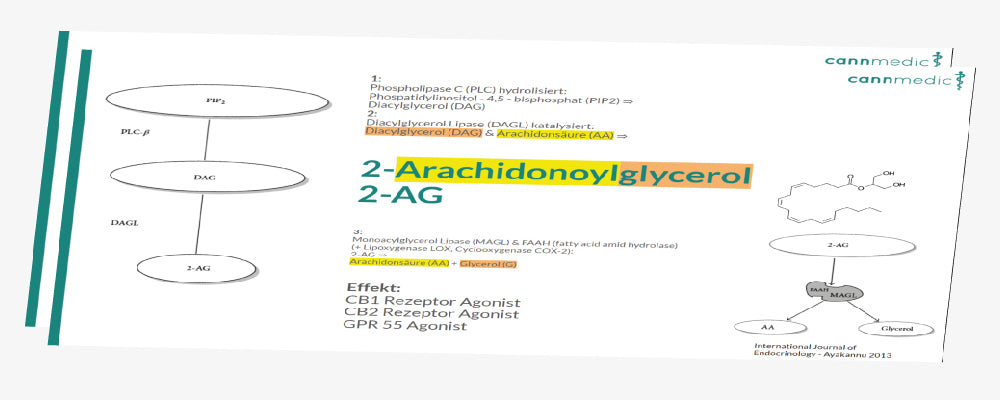
Endocannabinoids and Their Effects in Gynecology
Endocannabinoids, especially anandamide (AEA) and 2-arachidonoylglycerol (2-AG), are natural ligands of cannabinoid, vanilloid, and peroxisome proliferator-activated receptors and play a crucial role in regulating female reproductive processes.
They are important modulators in folliculogenesis, egg maturation, and hormonal secretion of the ovaries. AEA is present in female reproductive fluids and plasma, with high AEA levels required for ovulation, while low AEA levels are necessary for successful implantation. AEA binds to CB or TRPV1 receptors and influences the interaction between sperm and eggs as well as the capacitation process. Similarly, 2-AG plays a role, although its exact function is still under investigation.
CB1 receptors play a crucial role in the female reproductive system. They are involved in reducing sperm fertilization capacity and inhibit the capacitation-induced acrosome reaction. CB1 receptors are also responsible for transporting embryos from the uterus to the fallopian tube. Interestingly, embryonic CB1 contributes to normal embryonic development, and oviductal CB1 receptors guide the timely transport of embryos. CB2 receptors appear to be exclusively involved in embryonic development. They are expressed in embryonic stem cells but not in trophoblast-derived trophoblast stem cells and may play a role in specifying the pluripotent inner cell mass (ICM) during blastocyst formation.
How do endocannabinoids influence gynecological health and diseases?
The endocannabinoid system (ECS), including endocannabinoids like AEA and 2-AG, influences various aspects of gynecological health. It affects embryo transport in the fallopian tube, implantation, uterine decidualization, and placentation. Abnormal ECS activity can impact pregnancies, embryo development, sperm motility, and various female and male reproductive events. A tightly regulated endogenous AEA concentration is associated with successful implantation, while high AEA levels can have harmful effects on a normal pregnancy. Low AEA levels are required for trophoblast growth, differentiation, invasion, and the spontaneous onset of labor.
How does the endocannabinoid system affect the female reproductive cycle?
The endocannabinoid system (ECS) is involved at almost every level of female reproduction, from egg production to birth. It regulates important reproductive processes through ligands that bind to numerous receptors, including the classical cannabinoid receptors (CB1 and CB2), as well as ECS-related receptors.
What are the current and potential therapeutic applications of the endocannabinoid system in gynecology?
The endocannabinoid system (ECS) influences a variety of physiological and pathological processes in the body, including modulation of neuronal functions, microcirculation, and immune cell functions. Therefore, the ECS plays a role in modulating pain and inflammation and may also be involved in regulatory processes during carcinogenesis.
Management of menopausal symptoms:
Cannabinoids can help alleviate various symptoms of Menopausesymptoms such as hot flashes, sleep disturbances, and mood swings.
Treatment of menstrual discomfort and premenstrual syndrome (PMS): Cannabinoids can help relieve pain, cramps, and other symptoms associated with menstrual discomfort and PMS They are also linked to mood stabilization and anxiety reduction.
Management of endometriosis pain:
Cannabinoids have shown effectiveness in some cases for relieving pain associated with endometriosis. They can help relax muscles and reduce inflammation.
Support for fertility problems:
Although caution is necessary because cannabinoids can negatively affect fertility, there is evidence that targeted modulation of the ECS could positively influence the reproductive system.
Treatment of pregnancy-related symptoms:
Some studies suggest that cannabinoids may help treat nausea and vomiting during pregnancy. However, caution is advised as cannabinoids can also have potentially harmful effects on the fetus.
How is the endocannabinoid system involved in gynecological conditions like PCOS and endometriosis?
Dysregulation of the ECS is associated with the development of disorders of the female reproductive tract, including fertility issues such as polycystic ovary syndrome (PCOS), endometriosis, and gynecological cancers. For example, increased concentrations of the endocannabinoids anandamide (AEA) and 2-arachidonoylglycerol (2-AG) have been found in PCOS, suggesting a connection between PCOS pathogenesis and ECS activity.
ECS and gynecological cancers?
The endocannabinoid system (ECS) may play an important role in gynecological cancers. Dysregulation of the ECS is linked to the development of cancers in the female reproductive tract. The ECS influences key bodily functions and may be involved in cancer initiation and progression.
The expression of CB1 receptors varies in human ovarian tumors depending on the tumor grade. Benign ovarian tumors show weak to moderate expression of CB1, while invasive tumors exhibit moderate to strong expression. It is believed that low cannabinoid levels in non-cancerous cells can activate proliferative pathways, whereas higher concentrations in cancerous phenotypes trigger anti-proliferative and apoptotic events. This suggests that CB1 and CB2 receptors could play an important role in the oncology of female reproductive organs.
Cannabinoids open up new treatment options in cancer therapy. In addition to using cannabinoids to treat common side effects of standard cancer treatments such as pain, inflammation, or nausea, they can also be used to address less prominent symptoms such as the treatment of Vaginal dryness can be used. Furthermore, research findings also show the potential of cannabinoids to inhibit the growth of cancer cells. Research in this area is still in its early stages, but the findings suggest that the ECS could be a promising target for future therapies, including for gynecological cancers.
What conclusions can be drawn?
The ECS plays a crucial role at almost all levels of the body and reproduction, from egg production to birth. Dysregulation of the ECS is associated with various disorders of the female reproductive tract, including fertility issues such as PCOS, endometriosis, and gynecological cancers.
It also influences physiological and pathological processes throughout the body that are important for women's health, such as neuronal functions, microcirculation, immune cell functions, and homeostasis. This makes the ECS an important field of research and treatment in gynecology.
The ECS has significant potential for future development in gynecology. Its role in reproductive physiology and in the onset and treatment of gynecological diseases, including cancers, makes it a promising target for further research and therapeutic interventions.
Understanding the complex functions of the ECS in female health and disease can lead to the development of new treatment approaches for a variety of gynecological conditions and help improve women's quality of life.
For further information, we recommend the lecture by Philip Schmiedhofer on the endocannabinoid system from the Endocrine Circle 2022 in Vienna.