

What are the symptoms of fissures and lesions?
The symptoms of fissures and lesions in the intimate area can be very uncomfortable and include pain during urination, pain during intercourse, and pain when sitting. Other symptoms also include discharge, itching, and burning in the intimate area.
What complications of fissures and lesions are possible?
- Infections: If the fissure or lesion is not carefully treated, an infection can occur. Infections can spread and cause serious complications if left untreated, such as vaginitis, cystitis, or anal abscess.
- Pain: Fissures and lesions in the vagina or anal fissures can cause pain, especially if they become inflamed or infected.
- Delayed healing: If a fissure or lesion is not properly treated, it may take longer to heal, leading to pain and discomfort.
- Scarring: Fissures and lesions can leave scars, especially if they are deep or large.
How can fissures and lesions be treated?
It is important to keep the affected area clean and moist to speed up healing and relieve pain. Drink plenty of water to maintain moisture in the body, and consider using moisturizing creams or ointments. It is also recommended to avoid tight clothing and synthetic fabrics to promote skin breathability.
Generally, fissures and lesions in the intimate area are well treatable as long as they are detected early. In many cases, topical creams or ointments containing corticosteroids, antibiotics, or antiseptic agents are recommended for treating fissures and lesions in the intimate area. In severe cases, oral medications may also be necessary.
Treatment of fissures and lesions in the intimate area depends on their type and severity. Possible treatment options include:
- Use of wound dressings: These can help protect the wound and improve the healing process.
- Preparations for rapid regeneration and moisturizing: Hyaluronic acid preparations in the form of ointments, gels, and vaginal suppositories or rectal suppositories.
- Antibiotics: If the fissure or lesion is infected, antibiotics may be prescribed to treat the infection.
- Pain medication: Painkillers can be prescribed to relieve pain.
- Surgery: In some cases, surgical treatment of the fissure or lesion may be necessary.
- Physiotherapy: In certain cases, physiotherapy can help support healing and relieve pain.
Why are suppositories with hyaluronic acid and cannabidiol (CBD) useful for fissures and lesions?
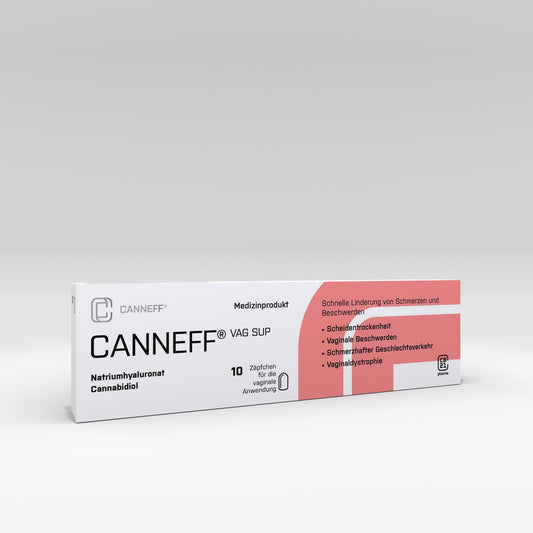
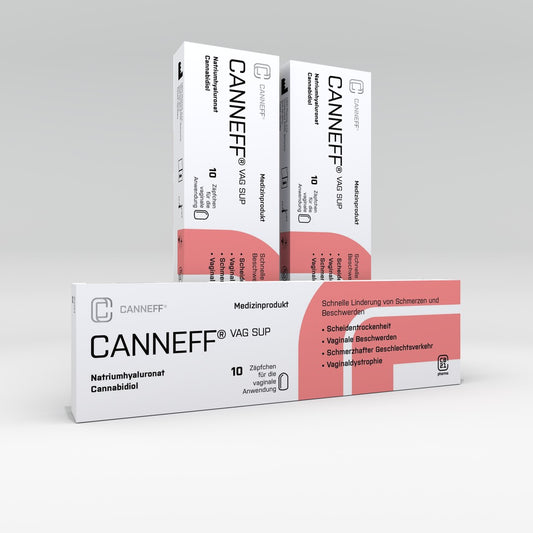
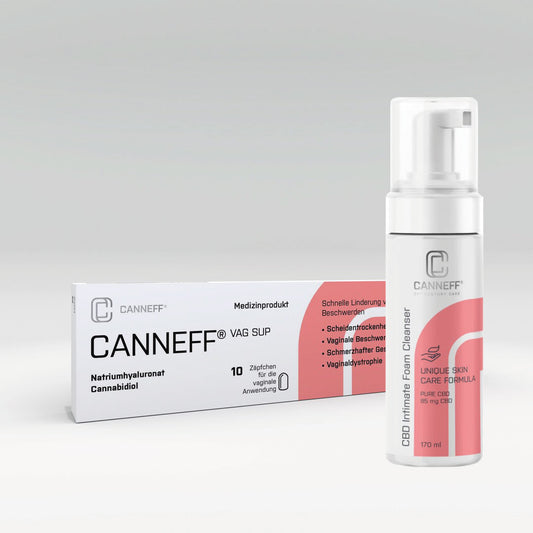
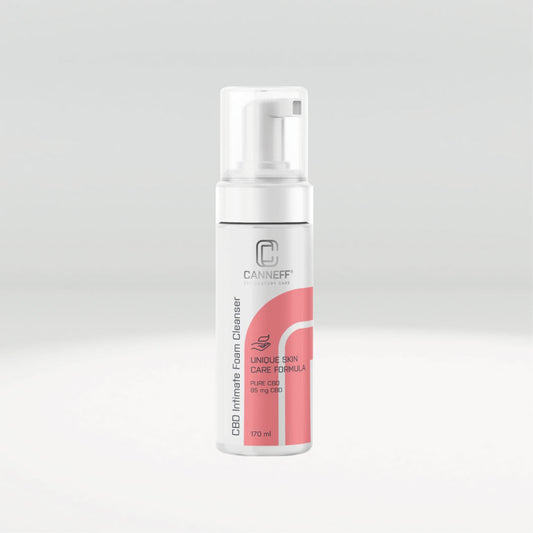
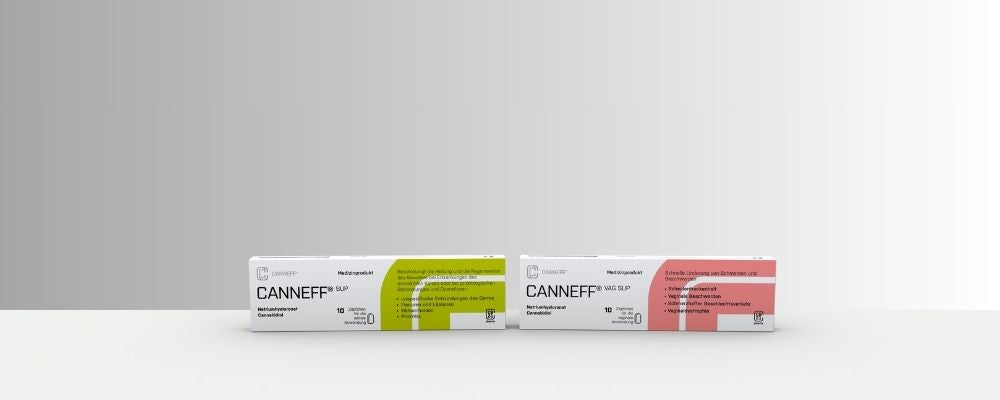
Also, CANNEFF VAG SUP suppositories (vaginal suppositories) and CANNEFF SUP suppositories (rectal suppositories) containing hyaluronic acid and CBD (cannabidiol) are used for the therapy of fissures and lesions in the intimate area. Hyaluronic acid is a substance naturally found in the body that can help bind moisture in the skin, making it more supple. CBD is a component of the cannabis plant that can have anti-inflammatory and pain-relieving effects. Read more here about the effectiveness of this unique combination of hyaluronic acid and cannabidiol.
Treatment of fissures and lesions in the intimate area depends on the cause. In many cases, a plant-based alternative like hyaluronic acid and cannabidiol (CBD) can help relieve pain and discomfort and accelerate healing.
Hyaluronic acid is an important component of mucous membranes and helps maintain the skin's moisture content. It can also help reduce inflammation and speed up wound healing.
CBD is a plant-based cannabinoid derived from cannabis. It has anti-inflammatory properties and can help relieve pain and support the healing of inflammation.
Together, hyaluronic acid and CBD offer a non-hormonal treatment option for fissures and lesions in the intimate area. They are easy to use and available in pharmacies as well as online. Additionally, they are over-the-counter and prescription-free, meaning they can be purchased without a doctor's prescription.
Both hyaluronic acid and CBD are safe and effective alternatives to prescription medications that may have unwanted side effects. They provide a natural way to relieve pain and discomfort in the intimate area.
What alternatives are there to medication for fissures and lesions?
There are several ways to treat fissures and lesions using alternatives to medication. Some examples include:
- Wound dressings: Using wound dressings to protect the wound and speed up the healing process.
- Natural alternatives: There are also a number of natural alternatives that can help treat fissures and lesions in the intimate area. These include aloe vera, tea tree oil, and chamomile, for example.
- Cold packs: Using cold packs can help relieve pain and reduce inflammation.
- Relaxation techniques: Relaxation techniques such as progressive muscle relaxation or yoga can help relieve pain and support the healing process.
- Nutrition: A balanced diet rich in nutrients can help support the healing of fissures and lesions.
It is important to note that these treatment options may not be suitable in all cases and that in some cases it may be necessary to take medication to treat fissures and lesions. It is always best to consult a trusted doctor to determine the treatment that is right for you.
Read more here on the topic of sore vagina, tears in the vagina or anal fissures.