

How effective is CBD against pain?
There are some preclinical data in animal models showing that CBD can reduce pain through the action on glycine receptors. Furthermore, there is a proven anti-inflammatory effect of CBD that can help with inflammatory pain by reducing inflammation, though it does not directly affect pain perception. Due to CBD’s action on TRPV1 receptors, there also seems to be some direct pain-relieving effect. Another important aspect is CBD’s muscle-relaxing effect, which can be helpful for pain caused by cramps by relaxing the muscles. Even here, the polymodal (multiple pathways) effect of CBD against pain is evident.
It is becoming increasingly clear that pure CBD is not suitable as a painkiller, but this does not mean that a combination of CBD with other active ingredients cannot offer additional benefits by enhancing their effects and sometimes even reducing side effects. Another example, besides the well-known synergistic effect of CBD and opioids, is CANNEFF VAG SUP suppositories with CBD and hyaluronic acid. The pain-relieving and anti-inflammatory effects of hyaluronic acid are enhanced by CBD and the Combination are especially useful in gynecology and for treating inflammatory diseases in the intimate area due to the local application, the multimodal effects of CBD, and the polypharmacological use.
Can I make CBD suppositories myself?
There are ways to make CBD suppositories yourself. From a medical perspective, however, the production of CBD suppositories should be carried out by trained professionals either in the pharmaceutical industry or in pharmacies. This is mainly for hygienic reasons, as improper manufacturing can introduce foreign bodies and bacteria directly into the body and cause infections. Another argument against making CBD suppositories yourself is the lack of reproducibility. Innovative products like CANNEFF Suppositories, which are based on a patented emulsion matrix to optimally deliver the active ingredients CBD and hyaluronic acid, cannot be made at home because special machines are required. To achieve consistent effects, constant quality is essential. Therefore, from our perspective as a manufacturer of CANNEFF medical products It is strongly advised against making CBD suppositories at home.
How can I distinguish pain?
As is often the case, the classification of pain is a highly complex matter, and pain should therefore not be generalized. According to medical criteria, the following types of pain exist:
- Physiological pain (acute/nociceptive)
- Neuropathic pain
- Surface pain
- Deep pain
- Visceral pain
- Psychosomatic pain
- Reflex pain
- Ischemic pain
- Arthritis pain
- Breakthrough pain (pain spikes)
To explain a few essential differences, the following descriptions are provided.
Physiological pain occurs when a part of the body tissue is damaged. The person feels this pain immediately when the injury happens. This type of pain has an important function: it warns and protects by causing the person to rest. Pain receptors in the tissue, called nociceptors, then send signals via the nerves and spinal cord to the brain. When the injury heals, the pain usually goes away completely. Sedative medications, such as those used in dental injections, prevent this nerve communication.
Reflex pain is muscle pain caused by tension. Stress and poor posture at work can lead to this. Hard knots form in the muscles, causing pain themselves and triggering further tension. Often, this pain is the cause of back pain, even if the spine itself is not affected.
The deep pain, which is often dull and hard to locate, comes from muscles, joints, bones, or connective tissue. It spreads slowly and lasts longer than pain felt directly on the skin. Headaches and migraines are also examples of such deep pain.
In contrast, there is arthritis pain. In rheumatoid arthritis, the body produces substances due to a faulty immune response that cause pain in the joints.
Can CBD replace painkillers?
CBD actually has the potential for certain types of pain (reflex pain, nociceptive pain), and even more importantly, to enhance the effect of certain medication groups, especially opiates. This can reduce medication but not completely replace it.
As recently reported by the Medical University of Vienna in The Lancet published, CBD as an add-on therapy, i.e., in addition to paracetamol therapy in patients with knee osteoarthritis, could not achieve additional pain relief. Of course, this does not mean that CBD is unsuitable as a painkiller, but only that it makes little sense to use it in addition to paracetamol for joint pain. An essential aspect is also the method of medication application. Oral administration of pure CBD for pain makes little sense according to current knowledge, as too low a plasma level is achieved at the site of action.
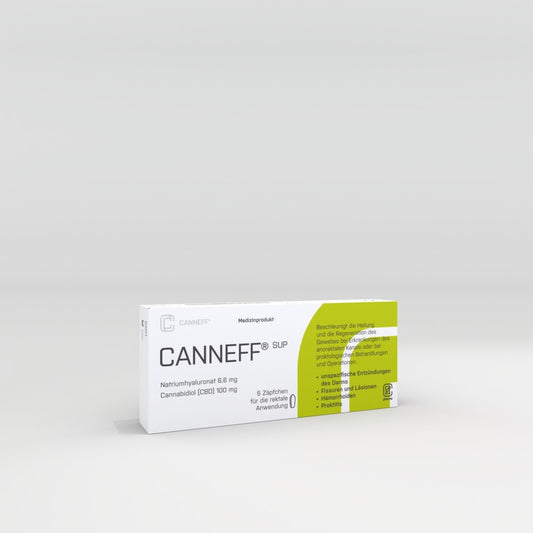
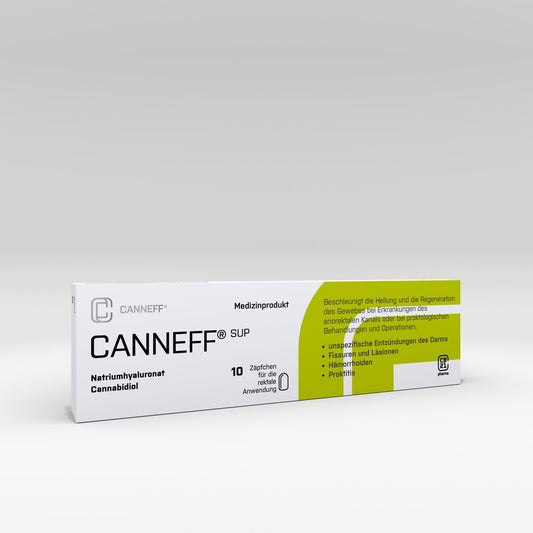
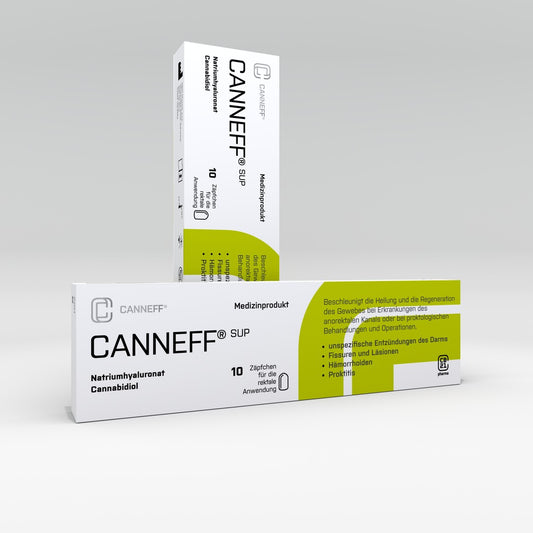
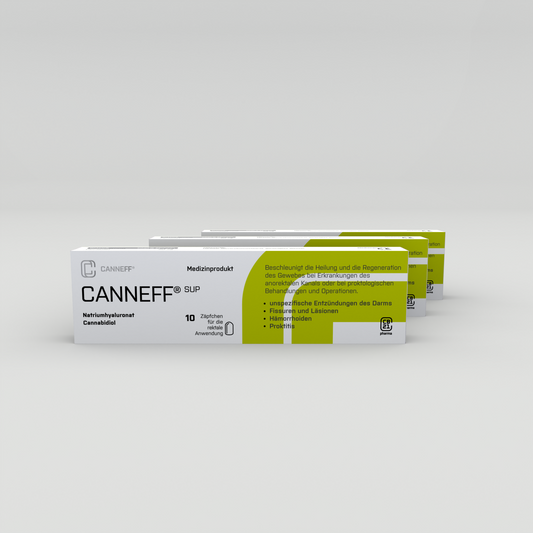
In summary, many clinical data on the pain-relieving effect of CBD are still missing. However, it can be assumed that CBD is not a classic painkiller, and most of the pain-relieving effect of CBD as a pure substance is based on its anti-inflammatory effect. Therefore, the use of CBD for pain is reserved for certain indications such as hemorrhoids or anal fissures. Examples of this can also be CANNEFF SUP CBD suppositories with CBD and hyaluronic acid called that can be used for faster healing, namely for pain, itching, and discomfort due to injuries of the mucous membrane in the vagina and anus.