

Is your vagina sore? What are the symptoms of a sore vagina? How does an irritated vagina feel?
Many women are familiar with the discomfort when vaginal fissures after sex or other causes lead to a sore vagina or vaginal irritation: itching, burning, and pain. The vagina is a very sensitive area of the female body. Infections, overly dry mucous membranes during sex, wrong underwear, or intimate hygiene can cause the vulva to suddenly feel sore, resulting in itching, burning, or even pain. But how and why does vaginal irritation, vaginal wounds, or inflamed labia develop, and how can symptom relief be achieved? How can I speed up or support the healing process? The first step here is to analyze the causes of the vaginal fissure or lesion, i.e., your wound on the vagina, labia, or the fissure or lesion inside the vagina.
What to do about wounds in the intimate area like tears in the vagina?
First, you should generally investigate the causes. Could the soreness be from sex, or have you not had sexual intercourse at all? Have you taken antibiotics for colpitis, i.e., a vaginitis, or do you suffer from another immune deficiency or other signs of menopause?
Many causes can create an unfavorable environment in the intimate area, leading to vaginal dryness or vaginal fissures. Fungi and germs can cause infections in the intimate zone. Therefore, pay attention to good intimate care and intimate cleansing, especially after bowel movements or if there are already injuries in the intimate area and around the anus. Usually, these injuries, such as fine anal fissures, are harmless but can still cause increased itching around the anus, become inflamed, and lead to infections. Mechanical triggers like friction from sports can also cause a sore vagina. Stress and psychological strain can also lead to infection or vaginal dryness or even wounds in the vagina. Likewise, underwear made of synthetic fibers can impair moisture transport and thus be a trigger for infections and wounds in the vagina. Horseback riding, jogging, cycling, or swimming in chlorinated water also often cause sensitive skin areas in the intimate zone. Intimate shaving or waxing can cause fissures or wounds on the labia and clitoris.
Sore vagina after sex?
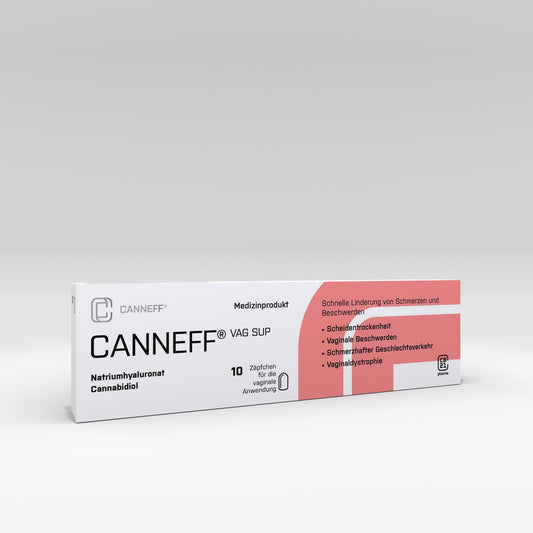
Sexual intercourse is the most common cause of mechanical overstrain and thus also tears or microtears in the vagina or vaginal mucosa, the labia, or the clitoris. If you have prolonged or very intense sex or vaginal intercourse, this can lead to overstimulation of the sensitive mucous membranes in and around the vagina. The vaginal mucous membranes become chafed—especially if they are not sufficiently moist, for example, if vaginal dryness is present due to menopause or other mentioned causes. To prevent discomfort after sexual intercourse or even pain during intercourse, you can always use lubricants or appropriate vaginal suppositories like CANNEFF® VAG SUP suppositories as aids if you are affected by vaginal dryness. Certain factors such as long-term use of the birth control pill or menopause can cause vaginal dryness, making the vaginal mucosa more prone to soreness.
What helps with a sore vagina? How long does a vagina stay sore? What can I do about a sore vagina?
If the cause of the sore vagina is not sufficiently clear, it is better to consult a gynecologist you trust. If your vagina or labia are sore, itchy, red, or if you notice blistering on your vagina, we definitely recommend visiting a gynecological specialist. Only with appropriate medical expertise can it be ruled out whether it is a sexually transmitted disease, cysts, or other vaginal complaints. If you know the cause of your painful vagina, for example, if you noticed during or after sex that you were not moist enough and possibly injured yourself, you can initially try various home remedies such as sitz baths with chamomile or CANNEFF® VAG SUP suppositories. Prepare for a calm, patient healing of your vaginal wound or fissure and protect your intimate area from further overstimulation and thus also from sexual intercourse. If the wound does not improve after a few days, visit the gynecology practice you trust.
How do CANNEFF® VAG SUP vaginal suppositories work in treating a sore vagina or tears in the vagina?
CANNEFF® VAG SUP suppositories for vaginal use can relieve symptoms of vaginal dryness, pain during intercourse, and also accelerate tissue regeneration and healing of vaginal wounds as well as after vaginal surgery. If the vagina is sore, especially with small tears up to deep fissures and lesions in the vagina or on the labia, the suppositories can support the healing process. The ingredients are absorbed by the mucous membrane and distributed in the surrounding tissue. This way, many areas of the vulva, vaginal vestibule, mons pubis, clitoris, outer labia, vagina, inner labia, and the urethral opening can benefit from the pain-relieving and anti-inflammatory effects.

At the same time, the suppositories improve the lubrication properties of the vagina before and during intercourse, making penile penetration easier and less resistant. However, pay attention to the material when using condoms simultaneously, as the suppositories contain fats that can negatively affect the material properties of latex condoms.
Read more here about fissures and lesions.
How do CANNEFF® VAG SUP vaginal suppositories work and how are they dosed?
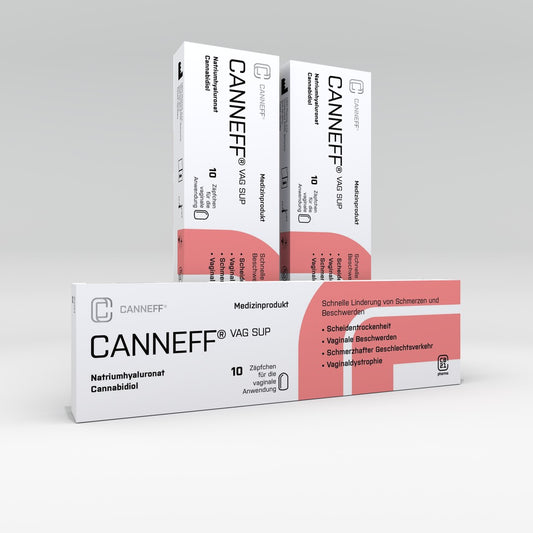
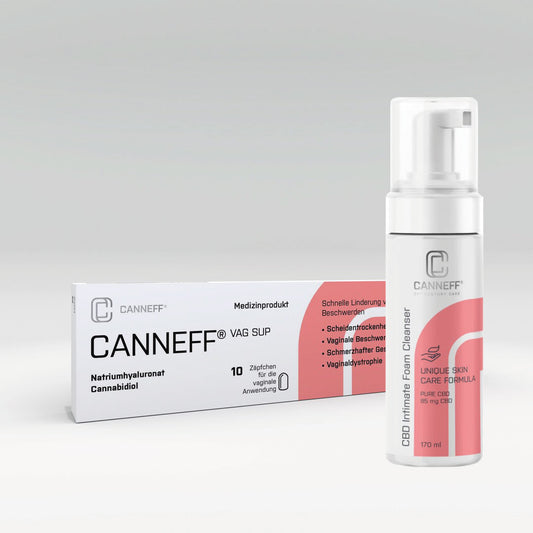
CANNEFF VAG SUP vaginal suppositories combine the active ingredients cannabidiol (CBD) and hyaluronic acid for rapid relief of pain and discomfort in the vaginal area. These suppositories are especially useful for vaginal dryness, vaginal complaints, painful intercourse, and vaginal dystrophy. The unique emulsion matrix ensures maximum effectiveness of both ingredients. CBD, known for its antioxidant and anti-inflammatory properties, supports healing and relieves pain, while hyaluronic acid maintains mucosal moisture and promotes healing. The application of these suppositories is simple, and the effect occurs within 60 minutes, making them an effective option for the mentioned indications. CANNEFF VAG SUP vaginal suppositories are available without a prescription and represent a safe and effective treatment option.
CANNEFF VAG SUP vaginal suppositories are used for various complaints, and the dosage varies depending on the specific application:
Painful intercourse:
Dosage: 1 suppository daily before bedtime for 2-3 days before planned intercourse and 1 suppository one hour before intercourse.
Relief of symptoms of treated vaginal inflammation, infection, or vaginal mycosis:
Dosage: 1 suppository 3 times a week for 30 days. More information about vaginitis can be found in our blog post about vaginal inflammation.
Healing and relief of atrophic or dystrophic vaginal mucosa, also during pelvic radiation therapy or after childbirth:
Dosage: 1 suppository daily before bedtime for 20-30 days. More information about vaginal dryness can be found in our blog post about vaginal dryness.
Relief of vaginal dryness, itching, or complaints due to menopause, birth control, or chemotherapy:
Dosage: 1 suppository daily before bedtime for 20-30 days.
Relief of vaginal dryness, itching, or complaints due to premenstrual syndrome:
Dosage: 1 suppository per day before bedtime for 2-5 days before menstruation. More information about premenstrual syndrome can be found in our blog post about PMS.
Support for healing of injured mucosa after operations, childbirth, conizations, treatment of cervicitis, during and after pelvic radiation therapy:
Dosage: 1 suppository daily before bedtime for 20-30 days.
Relief of other physiological symptoms related to menopause
Dosage: 1 suppository daily before bedtime for 30 days. More information about menopause can be found in our blog post about menopause as well as in the blog post Symptoms of menopause.
Application should follow specific instructions, and it is recommended to wash hands before and after inserting the suppository. The suppositories are designed to provide quick and effective relief, with effects occurring within 60 minutes. The duration of use depends on the development of the condition being treated and should not exceed 30 days unless directed by a doctor.
When to see a doctor for an open wound on the vagina?
If you notice an open or oozing wound on the vulva, in the vagina, or near your vagina, you should observe it closely. In case of inflammation indicated by redness, pain, or swelling, for example, in an area of the intimate region, the labia, or around the vaginal opening, you should immediately see a doctor to examine the injury. Especially wounds on the labia or in the area of the vaginal opening that heal poorly or slowly may require medical treatment with antibiotic or antifungal agents. Infections in the vagina can also affect the urethra and spread further. Furthermore, sexually transmitted diseases should be ruled out to protect yourself and others. Gynecologists are the first point of contact. A visit to general medicine specialists can also be useful.