

What is senile colpitis and how does it develop?
Senile colpitis – also known as atrophic vaginitis or vaginal inflammation in postmenopause – is an inflammatory change of the vaginal mucosa caused by a pronounced estrogen deficiency in older age. The condition typically occurs after the menopause, when the body's own estrogen production in the ovaries significantly decreases.
How does senile colpitis develop?
Estrogens play a central role in the health of the vaginal mucosa. They promote:
- the blood flow and moisture of the vaginal epithelium,
- the production of glycogen, which is broken down into lactic acid by lactobacilli – this ensures an acidic pH as a natural infection defense,
- the elasticity and thickness of the mucosa.
When estrogen levels drop – as in postmenopause – the following changes occur:
- The vaginal mucosa becomes thinner, drier, and less well perfused.
- The protective flora (lactobacilli) decreases, and the pH value rises (often above 5).
This makes the mucosa more susceptible to micro-injuries, irritations, and secondary infections. A non-infectious inflammatory reaction occurs, known as senile colpitis.
Risk factors for development
In addition to the natural hormonal changes during menopause, the following factors can increase the risk:
- Oophorectomy (surgical removal of the ovaries)
- Radiation therapy or chemotherapy
- Anti-estrogen medications (e.g., Tamoxifen for breast cancer)
- Long-term hormone-free menopause
- Conditions of general estrogen deficiency, e.g., underweight or chronic illnesses
What symptoms occur with senile colpitis?
Senile colpitis is accompanied by a variety of symptoms, mainly caused by Thinning and dryness of the vaginal mucosa caused by estrogen deficiency. The symptoms often develop gradually and are initially not recognized by many affected individuals as a medically relevant condition.
|
Symptom |
Description |
|
Often the first sign; caused by reduced secretion production and decreased mucosal moisture. |
|
|
Itching in the vagina |
Due to mucosal atrophy, the skin becomes more sensitive and easily irritated. |
|
Burning sensation in the vagina |
Especially noticeable after urination or when sitting; a result of mucosal lesions. |
|
Occurs due to lack of lubrication and micro-injuries; often the reason for sexual inactivity. |
|
|
Redness and irritation of the vulva |
Visible inflammatory reactions due to friction or infection. |
|
Increased or yellowish discharge |
Occurs when secondary infections (e.g., bacterial vaginosis) develop. |
|
Frequent urination or burning during urination |
Irritation of the introitus or accompanying urinary tract infections possible. |
|
Narrowing or shrinkage of the vagina (stenosis) |
In advanced cases, especially with lack of treatment and sexual inactivity. |
Differentiation from other forms of vaginitis
Unlike infectious vaginitis (bacterial, fungal, parasitic), senile colpitis shows no pronounced pathogen colonization. Symptoms primarily result from atrophy and mechanical irritation – secondary infections may occur.
How is senile colpitis diagnosed?
The diagnosis of senile colpitis is usually made in gynecological practice based on a targeted medical history, clinical examination, and, if necessary, additional microscopic or microbiological swabs to exclude other causes. Early and differentiated diagnosis is crucial as symptoms can be nonspecific and overlap with infectious or neoplastic changes.
Medical history: complaints and life phase
The doctor specifically collects information on:
- Age and menopausal status
- Type, duration, and intensity of symptoms (e.g., itching, burning, dryness, dyspareunia)
- Sexual activity (pain during intercourse, loss of libido)
- Known estrogen deficiency (e.g., after oophorectomy, breast cancer therapy)
- Urinary complaints (e.g., frequent urination, dysuria)
- Previous gynecological treatments or local therapies
Gynecological examination
Clinical inspection shows typical signs of atrophic vaginitis:
- Thin, dull, reddened mucosa
- Loss of vaginal folds (rugation)
- Dry or fragile mucosa with microerosions
- Narrowed vaginal opening (especially in sexually inactive patients)
- Contact bleeding during examination
A speculum is inserted carefully as the mucosa reacts sensitively.
Vaginal swab and pH measurement
- Vaginal pH value: In senile colpitis usually > 5 (normal in reproductive age: 3.8–4.5), indicating loss of lactobacilli.
- Swab to exclude infections (e.g., bacterial vaginosis, Candida, Trichomonads), especially with abnormal discharge.
- Cytological smear (Pap test): If the mucosa appears suspicious, to exclude premalignant or malignant changes.
Differential diagnosis
It is important to differentiate from:
- Infectious vaginitis (e.g., bacterial, mycotic, parasitic)
- Lichen sclerosus or lichen planus
- Neoplasms of the vulva or vagina
- Cervicitis or endometritis in older patients
What are the most common causes of colpitis in old age?
The most common cause of colpitis in older age – especially after the menopause – is the declining estrogen level. This hormonal deficiency leads to atrophy (regression) of the vaginal mucosa and a change in the vaginal environment, making the mucosa more susceptible to irritation, inflammation, and secondary infections. The medical term for this form of vaginal inflammation is senile colpitis.
Estrogen deficiency as the main cause
After menopause, the ovaries produce hardly any more estrogens. This deficiency has several direct effects on the vaginal environment:
- Mucosal atrophy: The vaginal mucosa becomes thinner, drier, and less well perfused.
- Reduced glycogen production: The nutrient base for lactic acid bacteria (lactobacilli) decreases.
- Loss of vaginal flora: Lactobacilli are displaced by less acidic germs.
-
Increase in pH value: The vaginal pH rises to > 5 (instead of 3.8–4.5), making the mucosa more prone to irritation.
Skin atrophy and mucosal changes
Estrogen deficiency-induced mucosal atrophy makes the tissue:
- less elastic,
- sensitive to mechanical friction,
- prone to injury (e.g., microerosions during sexual intercourse or gynecological examination).
These changes promote non-infectious inflammatory processese – even without external irritants or pathogens.
Altered vaginal environment
A disturbed pH value and the decline of lactic acid bacteria promote the growth of pathogenic germs and increase the irritability of the mucous membrane. Although senile colpitis is primarily non-infectious if present, it can be complicated by bacterial secondary infections.
Additional risk factors
In addition to natural menopause, the following factors can further promote the development of colpitis in old age:
|
Risk factor |
Effect on vaginal environment |
|
Oophorectomy (ovary removal) |
Sudden estrogen deficiency |
|
Antihormone therapy (e.g., Tamoxifen) |
Blocks estrogen effect locally |
|
Breast cancer therapy |
Often hormone-suppressing |
|
Radiation therapy in the pelvic area |
Mucosal damage, reduced secretion |
|
Long-term sexual inactivity |
Tissue regression due to lack of stimulation |
|
Chronic diseases or malnutrition |
Enhance hormonal degradation process |
|
Smoking |
Impairs blood circulation and healing |
How does senile colpitis differ from other vaginal inflammations?
Senile colpitis is not primarily an infectious disease but an inflammatory reaction to hormonally induced mucosal changes, especially due to estrogen deficiency. In contrast, other vaginitides (e.g., bacterial vaginosis, mycoses, or cervicitis) are usually caused by infection with pathogenic microorganisms. The distinction is essential as it directly influences therapy decisions.
|
Characteristic |
Senile colpitis |
Bacterial vaginosis |
Vaginal mycosis (Candida) |
Cervicitis (inflammation of the cervix) |
Irritation-induced colpitis (allergic/contact-related) |
|
Cause |
Estrogen deficiency, mucosal atrophy |
Imbalance of vaginal flora (anaerobic germs) |
Usually fungal infection Candida albicans |
Sexually transmitted pathogens (e.g., Chlamydia, HPV) |
Irritants (e.g., intimate sprays, shower gels, condoms) |
|
Typical age |
Postmenopausal |
Reproductive age |
All age groups |
Reproductive age |
Any (mostly younger women) |
|
Vaginal pH value |
↑ (mostly > 5) |
↑ (> 4.5) |
Normal (3.8–4.5) |
Mostly unchanged |
Normal or slightly increased |
|
Discharge |
Slight, possibly yellowish or bloody |
Thin, gray-whitish, "fishy" smelling |
Whitish, crumbly, odorless |
Purulent, mucous, or bloody |
Clear to whitish, irritation-related |
|
Itching |
Possible but not always present |
Rare |
Strong, burning |
Rare |
Possible with persistent irritation |
|
Burning / pain |
Frequent, especially during sex or urination |
Rare |
Frequent |
Occasional |
Possible, especially external |
|
Pain during sex (dyspareunia) |
Very frequent |
Rare |
Occasional |
Occasional |
Rare |
|
Lactobacilli |
Strongly reduced |
Strongly reduced |
Mostly preserved |
Preserved or slightly altered |
Preserved |
|
Pathogen detection |
Negative |
Positive (Gardnerella and others) |
Positive (yeast fungi) |
Positive (Chlamydia, Gonococci, HPV) |
Negative |
|
Findings during gynecological examination |
Thin, reddened, dry mucosa; possibly micro-injuries |
Homogeneous discharge formation, no mucosal changes |
Redness, whitish deposits |
Reddened cervix, possibly contact bleeding |
Irritation of the outer vulva or vagina |
|
Therapy |
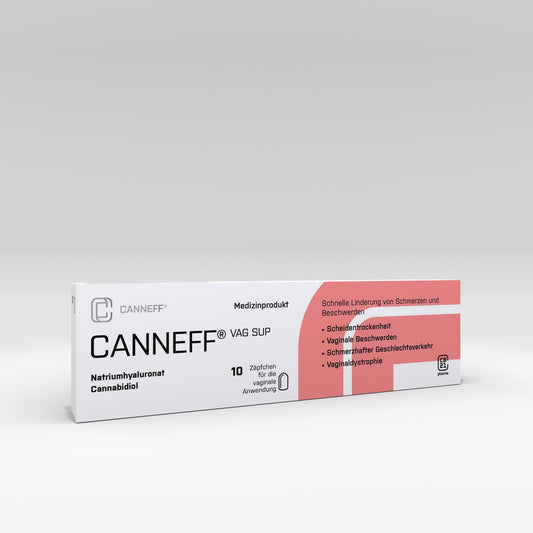
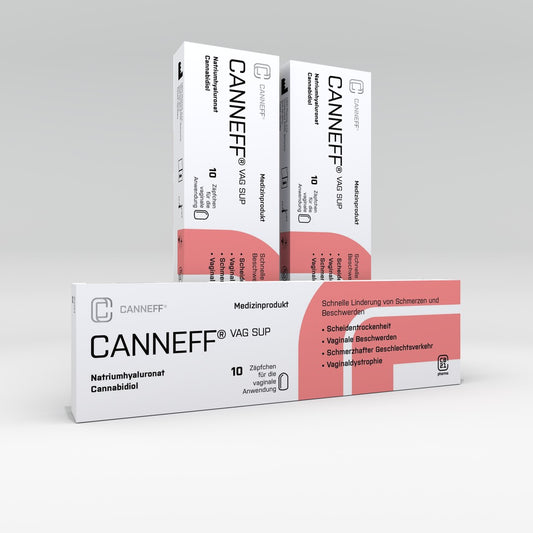
Local estrogens, CANNEFF® Vaginal Suppositories with CBD & Hyaluronic Acid |
Antibiotics (metronidazole, clindamycin) |
Antimycotics (clotrimazole, fluconazole) |
Antibiotics after pathogen detection |
Avoidance of the trigger, caring products |
|
Chronic courses possible? |
Yes, possible long-term if untreated |
Yes, due to persistent dysbiosis |
Yes, especially with immune deficiency or antibiotics |
Yes, risk of fertility problems |
Rare, if the trigger is removed |
|
Special feature |
Hormone-related, not primarily infectious |
Imbalance without classic inflammation |
Immune system- and hormone-dependent |
Possibly associated with ascending infection |
No infection – exclusively irritative |
Which treatment really helps with senile colpitis?
The most effective treatment for senile colpitis aims at regenerating the atrophic vaginal mucosa and restoring the physiological vaginal environment. Since the condition is hormone-related, local estrogen therapy is the primary focus. In cases of contraindications or personal reservations about hormones, hormone-free alternatives are also available—especially modern medical devices like CANNEFF® vaginal suppositories with CBD and hyaluronic acid.
Local therapy with estrogen preparations
The administration of estriol- or estradiol-containing vaginal preparations (e.g., cream, suppositories, vaginal tablets, or rings) is the medically recommended standard therapy because it:
- Promotes thickening of the vaginal mucosa,
- Normalizes pH value (by promoting lactobacilli),
- Effectively relieves symptoms such as dryness, itching, and pain during sex.
Local application leads to minimal systemic hormone absorption and is therefore considered safe for many patients with contraindications. However, medical consultation is essential for breast cancer patients.
CANNEFF® vaginal suppositories with CBD and hyaluronic acid (hormone-free alternative)
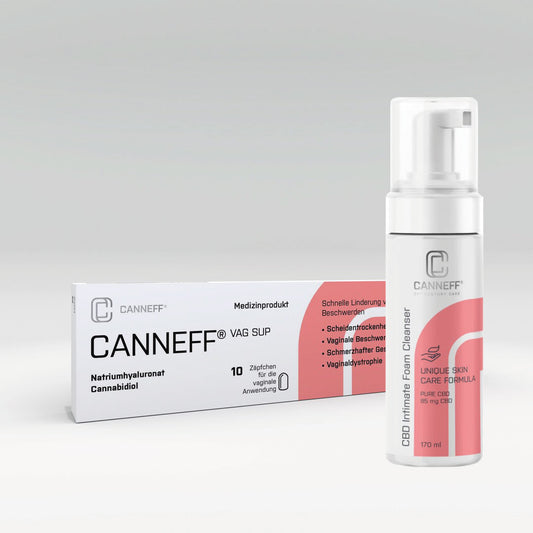
For women who are not allowed or do not wish to use hormones, CANNEFF® vaginal suppositories offer a medically effective option or add-on therapy to hormone treatment. CANNEFF® VAG SUP is a Class IIa approved medical device for vaginal use in cases of dryness, irritation, atrophic mucosa, and pain-related complaints. Studies show good effectiveness for postmenopausal symptoms without hormonal burden.
Supplementary Measures
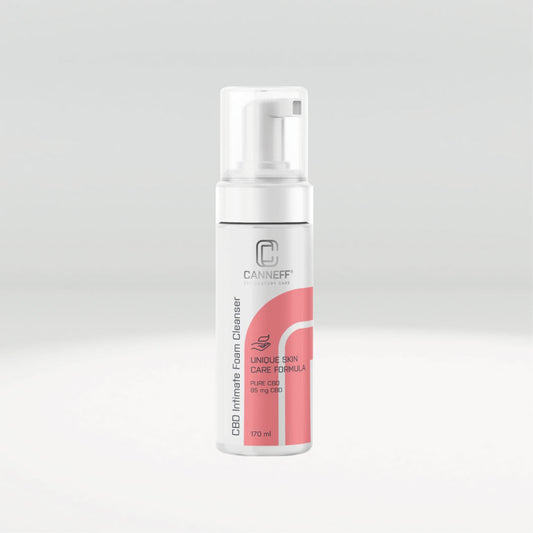
- Intimate care with pH-neutral products (pH 4–5), e.g., CANNEFF intimate care foam
- Regular sexual activity or vaginal training to promote blood circulation and maintain tissue
- Avoid intimate sprays, soaps, and irritating substances
- For secondary infections: targeted antimicrobial therapy
The most effective therapy for senile colpitis is local treatment of the vaginal mucosa—either with estrogens or, in case of contraindications, with hormone-free medical products like CANNEFF® vaginal suppositories with CBD and hyaluronic acid. Both options promote mucosal health, relieve symptoms, and sustainably improve the quality of life of postmenopausal women.
How long does treatment of senile colpitis last?
Treatment of senile colpitis is usually long-term, as it is a chronic recurrent condition promoted by persistent estrogen deficiency in postmenopause. The duration depends on symptom severity, chosen treatment method, and individual risk factors. Permanent symptomatic control is possible but usually not with short-term therapy alone.
Acute phase: initial therapy (4–6 weeks)
The first phase aims to initiate mucosal regeneration and relieve acute symptoms such as dryness, burning, or pain.
|
Therapy type |
Typical initial duration |
|
Local estrogens |
Daily for 2–4 weeks, then reduction |
|
Daily or every other day for 4 weeks |
|
|
Intimate care / supportive measures |
Continuously from the start of therapy |
The goal of this phase is to reverse signs of atrophy and significantly relieve symptoms.
Maintenance phase: long-term therapy for relapse prevention
After successful initial treatment, the regimen is switched to a low-frequency maintenance application to prevent relapse. Without continuation, symptoms return in up to 80% of cases after months.
|
Therapy type |
Maintenance dose |
|
Local estrogens |
1–2× per week |
|
2–3× per week continuously |
This maintenance treatment can be used indefinitely, is well tolerated, and is individually adjusted. Continuous use is especially advisable with hormone-free therapy, as there are no systemic risks.
Risk of relapse
- Without adequate maintenance therapy, the relapse rate is high because estrogen deficiency persists.
- Factors such as sexual inactivity, lack of care, or stress can promote relapses.
- Climacteric fluctuations (e.g., hormonal changes or therapy switches) also increase the risk.
Course and prognosis
- Untreated: increasing symptoms, mucosal narrowing (stenosis), risk of micro-injuries and infections.
- With regular care: good symptom control, restoration of a functional vaginal environment, better quality of life.
- Switching between different therapies (e.g., in case of intolerance) is possible.
Can senile colpitis become dangerous without treatment?
Yes – untreated senile colpitis can lead to serious complications, especially regarding chronic symptoms, increased susceptibility to infections and impairment of quality of life. Even if the disease initially seems harmless, the Long-term consequences of persistent vaginal atrophy becomes medically relevant and should not be underestimated.
chronic nature of the symptoms
-
Without treatment, the atrophic mucosa becoming increasingly thinner, drier, and more vulnerable.
-
Symptoms such as Itching, burning, tightness, or pain when sitting usually increases continuously.
-
The mucosa loses elasticity in the long term and can does not regenerate spontaneously.
-
The disease progresses to a chronic, recurrent course which is harder to treat.
pain during sexual intercourse (dyspareunia)
The reduced moisture and elasticity lead to pain during penetration, micro-injuries and bleeding. Many affected individuals subsequently avoid sexual intercourse, which additionally leads to:
- social withdrawal,
- emotional stress and
-
a further regression of vaginal tissue structures leads to.
Without regular mechanical stimulation (e.g., through sexual intercourse or vaginal trainers), stenosis (narrowing of the vagina) can occur.
Increased risk of infections
The weakened mucosal barrier and loss of lactobacilli lead to an unstable vaginal environment with an increased pH level. This promotes the growth of pathogenic germs:
- Bacterial vaginosis
- Mycoses
- Urinary tract infections
Repeated infections increase the risk of ascending infections, e.g., cystitis or pyelonephritis – especially in older, immunosuppressed patients.
Long-term tissue changes
- In chronic cases, adhesions, shrinkage, or scarring in the vaginal area may occur.
-
These lead to functional limitations, complicate gynecological examinations, and significantly impair quality of life.
Psychosocial effects
-
Many affected individuals find the symptoms embarrassing or taboo and do not talk about them.
- The combination of physical discomfort, withdrawal from sexuality, and insecurity often intensifies psychological burdens, such as depressive moods or loss of partnership intimacy.
If left untreated, senile colpitis can lead to persistent symptoms, pain during intercourse, infections, and irreversible tissue changes. Timely and consistent treatment – e.g., with local estrogens or CANNEFF® vaginal suppositories containing CBD and hyaluronic acid – is therefore medically strongly recommended to avoid late complications and maintain quality of life.
How effective are CANNEFF® vaginal suppositories for senile colpitis?
The CANNEFF® VAG SUP vaginal suppositories combine two medically active substances – cannabidiol (CBD) and hyaluronic acid – for the symptomatic treatment of atrophic, irritated, or dry vaginal mucosa. They represent a hormone-free, evidence-based therapy option, especially suitable for patients with contraindications to estrogens – for example, after breast cancer, hormone avoidance, or a desire for more natural care.
Study situation and clinical data
According to the current study report from CB21 Pharma, manufacturer of CANNEFF® vaginal suppositories, the following results are available:
|
Study |
Results in postmenopausal women with vaginal atrophy |
|
Pilot study (n = 24) |
83% of women reported significantly improved symptoms such as dryness, burning, and pain during sex after 14 days. |
|
RCT (double-blind, placebo-controlled n = 50) |
Significant relief of symptoms compared to the placebo group, without relevant side effects. |
|
Tolerance |
Very good |
Studies show that CANNEFF® VAG SUP effectively relieves the symptoms of senile colpitis, increases mucosal moisture, and improves quality of life – all without hormonal burden. Additionally, other physiological symptoms of menopause such as hot flashes, sleep disturbances, or joint pain were alleviated.