

What is menopause?
Menopause, also known as the climacteric or menopause, is a natural phase in a woman's life characterized by a variety of hormonal changes. During this time, the body can make adjustments that may trigger a range of symptoms such as vaginal dryness, hot flashes, sleep disturbances, and mood swings. However, despite the challenges that can come with menopause, it is important to know that not all women have the same experiences. Some experience only mild symptoms, while others are more severely affected.
Menopause usually begins around middle age, typically around the mid-40s, but it can also occur earlier or later. During this time, the production of the female sex hormone estrogen gradually decreases, which can lead to irregular menstrual cycles until menstruation eventually stops completely. This point is called menopause and marks the end of a woman's fertile phase. Despite the relief of no longer having menstrual discomfort or needing to worry about contraception, menopause can also be associated with mixed feelings for some women. The thought of no longer being "fertile" and the feeling of aging can trigger a variety of emotions and affect mental health.
At what age do they typically begin?
Most women experience menopause between the ages of 40 and 50. The duration of menopause varies, but on average it lasts about five to eight years. Early menopause, which occurs before the age of 40, can have hereditary causes or be caused by illnesses or the removal of the ovaries.
How does a woman's body change during this time?
During menopause, a woman's body undergoes numerous changes that can be both physical and emotional. Typical menopause symptoms include hot flashes, mood swings, and sleep problems. Around the age of 40, ovarian function gradually begins to decline, leading to a decrease in the production of progesterone and estrogen. The number of follicles in the ovaries decreases from birth and continues to decline during puberty and with each ovulation. By the average age of 50, no ovulation-capable follicles remain in the ovaries, leading to menopause.
During menopause, hormone production in the brain also changes as the ovaries produce less estrogen. The brain responds by releasing more hormones from the gonadotropin group, especially follicle-stimulating hormone (FSH). This hormonal imbalance can lead to menopause symptoms such as hot flashes and sweating.
The exact cause of hot flashes is not yet fully understood, but it is believed that the declining estrogen levels lead to fluctuations in the body's temperature regulation. Thus, menopause represents a complex shift in the body's hormonal balance, which can trigger a variety of physical and emotional menopause symptoms.

How do women recognize the beginning of menopause?
The onset of menopause can be identified by various signs and phases.
What phases does the female body go through during menopause?
Menopause is an individual and gradual transition in a woman's life that often takes place over several years and occurs in different phases.
Premenopause
Premenopause marks the beginning of a significant phase in a woman’s life, usually occurring between the ages of 40 and 50. During this time, the functions of the ovaries gradually slow down, leading to a decrease in the production of hormones such as estrogen and progesterone. These changes can cause irregular menstrual cycles characterized by a variety of features, such as heavy or light bleeding, long or short periods, and spotting.
From the age of 40, the body begins to prepare for the end of the fertile phase. This is reflected in the gradual reduction of progesterone and estrogen production, which affects the menstrual cycle and can cause initial irregularities. During this phase, the supply of eggs in the ovaries also slowly decreases as the hormonal balance in the body shifts.
Various signs can indicate that premenopause has started, including increased irritability, mood swings, breast tenderness, water retention, weight gain, joint pain, migraines, and thyroid problems. Although these symptoms can vary in intensity for each woman, they are often the first signs that menopause is beginning.
For many women, coming to terms with the idea of menopause is a challenge, especially if they are just over 40. However, it is important to understand that many women at this age are already entering the premenopause phase. During this phase, menstrual bleeding still occurs but becomes more irregular. If symptoms such as mood swings, irritability, water retention, weight gain, joint pain, or migraines occur alongside the irregular bleeding, it may indicate that the first phase of menopause has begun.
Perimenopause
Perimenopause typically occurs around the age of 50 and marks the transition to menopause. During this time, women experience significant irregularities in their menstrual cycle, with menstruation often becoming irregular and eventually stopping altogether. Typically, the last menstruation occurs at about age 51. Menopause symptoms such as hot flashes and sweating are common during perimenopause and can vary in intensity.

Perimenopause spans a period of one to two years before and up to one year after the last menstruation. During this time, the intervals between the weakening menstrual periods increase, while estrogen production continuously decreases until the ovaries completely stop producing estrogen. Many women experience an increase in symptoms during this time, which can be particularly pronounced. For example, low blood pressure regulated by estrogen can lead to high blood pressure as estrogen levels drop.
The most common symptoms of perimenopause include, in addition to hot flashes and sweating, night sweats and sleep disorders, severe fatigue and lack of drive, concentration problems, inner restlessness and nervousness, palpitations, dizziness and circulatory problems, depressive mood swings, dry skin and mucous membranes, loss of libido, and increased urinary frequency.
The duration of this phase of menopause varies individually. Typically, the time span ranges from six months to four years.
Postmenopause
The postmenopause marks a significant phase in a woman's life, beginning one year after her last period. During this time, the body starts to adjust to a new hormonal balance, and the typical symptoms of menopause may gradually lessen. However, the duration of this phase and the end of the entire menopause period can vary individually and depend on hormonal changes as well as the subjective experience of symptoms.
During postmenopause, the hormonal balance gradually normalizes, often leading to a reduction in typical complaints such as hot flashes and sweating. However, some women may experience new symptoms such as lack of drive or sleep disturbances due to the lower estrogen concentration. Additionally, many women notice that their mucous membranes become drier and their hair thinner. Another common symptom in this phase is back pain, often due to a decrease in muscle strength. Therefore, it is important to specifically train the back muscles during menopause.
During this life phase, which usually spans between the ages of 50 and 65, the risk of diabetes and cardiovascular diseases also increases. This is because estrogen has a positive effect on HDL cholesterol, which dilates blood vessels and promotes blood circulation. As estrogen production declines, this protective effect is lost.
What signs indicate the transition between the phases?
The transition between the different phases of menopause is individual and can be gradual. Typical signs of this transition include changes in the menstrual cycle, hormonal fluctuations, and the appearance of symptoms such as hot flashes, sleep disturbances, mood swings, and vaginal dryness. These signs can develop slowly and vary in intensity from woman to woman. It is important to note that not all women experience all symptoms and that some symptoms may also be due to other health issues. Therefore, it is advisable to consult a doctor if there is uncertainty or severe discomfort. The transitions between phases can alternate several times and last for different lengths of time, with some women experiencing hormonal changes within a few months, while others spend years in the climacteric phase. Ultimately, the female body adapts to the changed hormonal situation and finds a new balance, although the course and effects of this phase can vary from woman to woman.
What symptoms occur during menopause?
Various menopause symptoms can occur during menopause, including:
- Changes in the menstrual cycle, such as shortened or lengthened intervals between bleeding, as well as heavier or lighter bleeding.
- Hot flashes that occur suddenly and can be accompanied by facial redness, sweating, and chills.
- Increased sweating, especially at night, which can disturb sleep.
- Vaginal dryness and thinning of the mucous membranes in the genital area, which can lead to discomfort during sex and an increased risk of urinary tract infections.
- Sleep disturbances, depressive moods, lack of drive, nervousness and inner restlessness.
- Changes in body weight, with fat accumulating more around the abdomen.
- Increased risk of osteoporosis and cardiovascular diseases.
How long do hot flashes last during menopause?
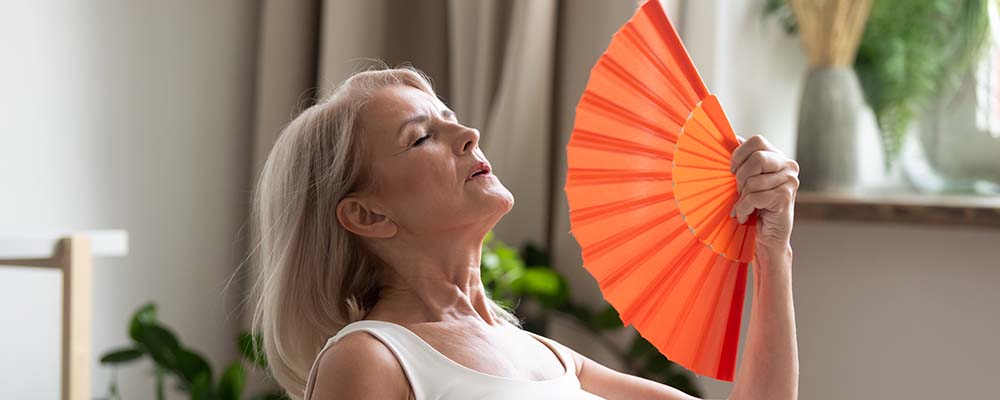
Hot flashes can occur on average for 7 years during menopause, with about 4.5 years occurring after the last menstrual period. However, the duration can vary individually.
What physical changes are typical?
Typical physical changes during menopause, in addition to the symptoms already mentioned, include weight gain, thinner skin, loss of bone density, and changes in the cardiovascular system.
How do menopause affect mental and emotional health?
Menopause can negatively impact mental and emotional health by causing depressive moods, lack of drive, nervousness, and inner restlessness. Sleep disturbances can worsen these symptoms.
How do menopause affect weight, skin, bone health, cardiovascular system, and sexuality?
Menopause can lead to weight gain, thinner skin, loss of bone density, increased risk of cardiovascular diseases, and changes in sexual behavior.
How do women experience menopause differently?
Experiences with menopause can vary from woman to woman. Some women have hardly any symptoms, while others suffer from severe complaints. The duration and intensity of symptoms can also vary.
How is menopause diagnosed?
Menopause is diagnosed in women over 45 years old who experience irregular menstrual cycles and typical symptoms such as hot flashes, mood swings, and sleep disturbances. Careful recording of symptoms and the menstrual cycle, as well as a gynecological examination, can provide initial clues. For a more precise determination, a blood test to analyze hormone levels can be performed to confirm whether menopause has begun.
What treatment options are available to relieve symptoms?
Women with severe menopausal symptoms may temporarily benefit from hormone therapy. It is important to keep the hormone dose as low as possible to minimize potential risks. There are different hormone preparations available in various forms such as tablets, patches, gels, or suppositories. Herbal remedies like red clover or black cohosh are also used to alleviate symptoms. Additionally, a healthy diet, regular exercise, and avoiding nicotine and alcohol can also help improve well-being.
How can an adjusted diet contribute to improving well-being?
A balanced diet rich in fruits, vegetables, whole grains, and lean protein can help provide the body with optimal nutrition and improve well-being during menopause. Regular exercise, such as walking or light strength training, promotes heart and bone health. Relaxation techniques like breathing exercises, meditation, or yoga can also be helpful in reducing stress and enhancing overall well-being.
What essential knowledge is there about the special characteristics of menopause?
How can the signs of the last period be recognized?
Unfortunately, menopause is not always clearly identifiable. The signs of the last period can vary, and there are no fixed rules for exactly when it occurs. On average, menopause occurs around the age of 52, but individual differences are large. Some women have regular periods until shortly before their 60th birthday, while others enter menopause in their 40s. The diagnosis of menopause is made retrospectively after one year without menstruation.
Why are symptoms more severe in some women?
The severity of menopausal symptoms varies from woman to woman. Some women have little or no symptoms, while others struggle with severe symptoms. The transitions between the phases of menopause are gradual and vary individually. While some women go through the phases of menopause within a few months without significant symptoms, others may take years, and the symptoms can significantly affect quality of life.
Are there cases where women experience no menopausal symptoms?
In fact, some women experience no menopausal symptoms at all. About one third of women have no symptoms, another third have only mild symptoms that are not burdensome. Only about one third of women experience symptoms that require medical treatment.
How does menopause affect the possibility of pregnancy and what heart disease risks increase?
Women with regular ovulatory cycles can still become pregnant during menopause. Therefore, reliable contraception is important until about the age of 52. Hormone tests do not provide reliable assurance regarding the need for contraception. As a rule of thumb, contraception is usually no longer necessary after one year without menstruation. The risk of heart disease increases during menopause, so a healthy lifestyle with a balanced diet, regular exercise, and avoiding smoking and excessive alcohol consumption is important to reduce the risk.
How can menopause be approached positively?
Menopause represents a significant turning point for many women, bringing both physical and emotional changes. However, there are ways to shape this phase positively and see it as a time of personal growth. Some women perceive the changes positively and see them as an opportunity to consciously plan for upcoming life stages. Openness and sharing experiences with other women play a crucial role in this.
It is important to address the physical and emotional challenges that can accompany menopause. These can range from fatigue and lack of concentration to memory weakness, especially when worsened by sleep disturbances due to hot flashes. Physical activity and relaxation techniques such as yoga, meditation, or autogenic training can help promote well-being during menopause and reduce stress.
Exchanging experiences with other women in self-help groups or with professional support can also be helpful to clarify questions, reduce fears, and find support. It is important that women do not hesitate to talk about their own experiences, as open dialogue can be a source of strength.
The topic of sexuality and contraception should not be neglected during menopause either. Although menstruation stops, the possibility of pregnancy remains until menopause is fully reached. Women should inform themselves about their contraceptive options and choose the method that suits them best. Menopause thus offers the opportunity to consciously engage with your own body and individual needs and develop a positive attitude toward this phase of life.
How can you prepare for menopause?
Good preparation for menopause can help manage this phase of life better. This includes learning about the possible physical and emotional changes and preparing for them. A healthy lifestyle with a balanced diet, regular physical activity, and sufficient sleep can support well-being during menopause. Additionally, it is important to openly discuss your feelings and concerns and seek professional support if needed.