

What is PMDD and how does it differ from PMS?
Premenstrual dysphoric disorder (PMDD) – also internationally known as Premenstrual Dysphoric Disorder (PMDD) – is a severe, neurobiologically based cycle disorder that causes psychological and sometimes physical symptoms. It typically occurs in the luteal phase, the second half of the cycle after ovulation, and ends with the onset of menstruation or a few days thereafter.
While PMS (premenstrual syndrome) often includes mild to moderate symptoms—such as breast tenderness, mood swings, water retention, or irritability—PMDD is a distinct, medically recognized condition with a clearly defined clinical picture. Since the introduction of DSM-5 (Diagnostic and Statistical Manual of Mental Disorders) and ICD-11 (International Classification of Diseases), PMDD has been classified as a disorder requiring treatment.
Comparison of PMS and PMDD
|
Characteristic |
PMS – Premenstrual Syndrome |
PMDD – Premenstrual Dysphoric Disorder |
|
Occurrence |
Second half of the cycle, a few days before the period |
Second half of the cycle, usually from ovulation to the start of menstruation |
|
Frequency |
Up to 75% of all menstruating women |
About 3–8% of all menstruating women |
|
Symptom profile |
Physical and emotional, usually mild to moderate |
Primarily psychological, strongly pronounced |
|
Psychological symptoms |
Irritability, tearfulness, mood swings |
Depression, anger outbursts, suicidal thoughts, loss of control |
|
Daily life impairment |
Rather mild to moderate |
Significant, often severe impairments in work and private life |
|
Diagnostic status |
No clear clinical diagnosis, rather a collective term |
Official diagnosis according to DSM-5 and ICD-11 |
|
Therapeutic approaches |
Lifestyle, nutrition, herbal remedies |
Additional psychotherapy, hormone therapy, possibly antidepressants |
Summary
PMDD is more than just PMS: it is a severe, cycle-related affective disorder that causes significant psychological distress and often leads to considerable impairments in daily life. While PMS is familiar to many women and can usually be managed with non-medical measures, PMDD often requires specialized medical and psychotherapeutic treatment.
How common is premenstrual dysphoric disorder?
Premenstrual dysphoric disorder (PMDD) is a significantly less frequently diagnosed but clinically important form of cycle-dependent complaints. It mainly affects women of reproductive age and is considered the most severe form of premenstrual syndrome (PMS). Although the disorder has only recently been more thoroughly studied and diagnostically recorded, reliable epidemiological data now exist.
Prevalence in numbers
|
Category |
Estimated proportion of affected women |
|
Mild to moderate PMS symptoms |
Up to 75% of all menstruating women |
|
Clinically relevant PMS |
About 20–30% |
|
Mild form of PMDD |
Approx. 5–8% |
|
Severe form of PMDD |
About 2–5% (diagnosable according to DSM-5) |
|
Worldwide prevalence (estimated) |
Around 3–8% of all menstruating individuals worldwide |
These figures are based on a combination of clinical studies, epidemiological surveys, and experience from gynecological and psychosomatic practices. The exact prevalence varies depending on methodology and the definition of diagnostic criteria.
Reasons for the high number of unreported cases
The actual number of affected women could be significantly higher because PMDD is often:
-
is not recognized,
-
is misdiagnosed (e.g., as a depressive episode),
-
or is not reported by those affected – out of shame, ignorance, or because the symptoms are dismissed as "normal."
Especially in countries where ICD-11 has not yet been widely implemented or where menstrual health is taboo, PMDD often remains unrecognized and untreated.
What causes PMDD?
Premenstrual dysphoric disorder (PMDD) is not imaginary, not a character weakness, and not purely a psychological reaction to stress. It is a neurobiologically based, cycle-dependent affective disorder whose causes arise from a complex interplay of genetic, hormonal, and neurological factors. While the exact mechanisms are not yet fully understood, modern research provides important insights into its development.
Overview of the main causes of PMDD
|
Cause/Factor |
Description |
|
Hormone sensitivity |
Hypersensitive brain response to normal fluctuations of estrogen and progesterone in the second half of the cycle. |
|
Neurotransmitter disorder |
Reduced serotonin activity due to increased transporter density before menstruation – leads to depressive symptoms. |
|
Allopregnanolone |
Progesterone metabolite negatively affects the GABA-A receptor – in PMDD there is increased neuronal sensitivity. |
|
Genetic predisposition |
Studies show a familial clustering. Genetic differences in cellular responses to sex hormones are detectable. |
|
Stress & psychosocial factors |
Chronic stress, stressful life situations, or trauma can worsen the symptoms. |
|
Vulnerability after childbirth |
Hormonal changes after pregnancies often promote the first occurrence of PMDD. |
Neurobiological insights: What happens in the brain?
Recent studies, such as those from the Max Planck Institute Leipzig, show that women with PMDS have an increased density of serotonin transporters in the brain during the second half of the cycle. This results in less serotonin being available at synapses for signal transmission, promoting depressive moods, irritability, and emotional instability.
In addition, the central nervous system of affected women is hypersensitive to allopregnanolone, a neuroactive metabolite of the hormone progesterone that acts via GABA-A receptors. This dysregulation can cause anxiety, loss of control, and irritability – typical PMDS symptoms.
PMDS is not a hormonal disorder – but a disorder of hormone processing
A crucial point: In PMDS, hormone levels (e.g., estrogen, progesterone) are usually within the normal range in laboratory tests. The cause is not a deficiency or excess but an abnormal brain response to these natural fluctuations.
What role does the cycle play in PMDS?
The menstrual cycle phases are the central trigger for the symptoms of premenstrual dysphoric disorder (PMDS). PMDS is strictly cycle-dependent – meaning: the symptoms regularly occur in the second half of the cycle, that is, after ovulation until a few days after the onset of menstruation. After that, they usually subside abruptly until the next cycle begins. This recurring pattern is not only diagnostically indicative but also clearly distinguishes PMDS from other mental illnesses.
Cycle phases and PMDS symptoms
|
Cycle phase |
Hormonal change |
Effect on PMDD |
|
Follicular phase |
Estrogen rises, progesterone low |
Well-being usually stable, symptoms absent |
|
Ovulation |
Sudden drop in estrogen |
First signs possible: irritability, emotional instability |
|
Luteal phase |
Progesterone rises sharply, then falls |
Main phase of PMDS symptoms: depression, anger, anxiety |
|
Menstruation |
Drop in estrogen & progesterone |
Symptoms usually subside or disappear completely |
Why does the brain react so sensitively to the cycle?
Women with PMDS do not react to abnormal hormone levels but to normal hormonal fluctuations in an exaggerated way. In particular:
-
Allopregnanolone, a breakdown product of progesterone, paradoxically negatively affects the GABA-A receptor in sensitive women, promoting anxiety and restlessness.
-
Estrogen affects serotonin metabolism. The drop in estrogen before the period can lead to a functional serotonin deficiency – with depressive consequences.
-
In the luteal phase (approx. day 14–28 of the cycle), this leads to a neurochemical imbalance that triggers PMDS symptoms.
Special feature: Sudden improvement after cycle change
A diagnostic feature of PMDS is the sudden psychological stabilization after the onset of menstruation. Many affected describe this as a "clear head," "like waking up," "finally myself again" – which highlights the discrepancy between the cycle phases especially clearly.
Which symptoms are typical for PMDS?
Premenstrual dysphoric disorder (PMDS) is characterized by a variety of severe, cycle-dependent symptoms – mainly psychological in nature, but also with physical accompanying symptoms. They regularly occur in the second half of the cycle, worsen until shortly before menstruation, and then usually subside abruptly.
Unlike "classic" PMS, where physical complaints such as breast tenderness or water retention predominate, PMDS is dominated by emotional, affective, and behavioral symptoms that can significantly impair daily life, relationships, and work ability.
Overview of typical PMDS symptoms according to DSM-5
|
Symptom category |
Typical symptoms |
|
Affective symptoms |
- Depressive moods - Feelings of hopelessness - Self-esteem problems - Suicidal thoughts |
|
Emotional instability |
- Sudden sadness - Crying without apparent reason - Hypersensitivity to rejection |
|
Irritability & anger |
- Strong irritability - Aggressiveness - Outbursts of anger, even towards close persons |
|
Anxiety & tension |
- Inner restlessness - Nervousness - Excessive fears |
|
Cognitive impairment |
- Concentration difficulties - Feeling mentally overwhelmed - Lack of interest in daily activities and hobbies |
|
Physical symptoms |
- Breast tenderness/pain - Headaches - Muscle/joint pain - Bloating, weight gain |
|
Behavioral changes |
- Social withdrawal - Loss of control - Changes in appetite (cravings, overeating) - Sleep disturbances (insomnia or hypersomnia) |
Diagnostic criteria: How many symptoms must be present?
According to DSM-5, for the diagnosis of PMDS:
-
at least 5 symptoms from the above list occur regularly,
-
at least one of these from the following areas depressive mood, irritability, anxiety or emotional instability originate,
-
specifically in the week before menstruation, with improvement after the onset of bleeding.
These complaints must be documented in more than two cycles (e.g., through a cycle diary) and lead to significant impairment of social and professional life.
Special notes
-
The severity of symptoms can vary from cycle to cycle and is often worsened by stress, lack of sleep, or hormonal changes (e.g., after childbirth, after stopping the pill).
-
Those affected often report a feeling of not being themselves – the "Dr. Jekyll & Mr. Hyde" phenomenon is often used as an apt description.
-
In severe cases, there may be emotional loss of control, such as aggressive behavior towards partners or children.
How is PMDS diagnosed?
Diagnosing premenstrual dysphoric disorder (PMDS) requires care, patience, and systematic observation. Unlike many physical illnesses, PMDS cannot be detected by a blood test or imaging procedures. Instead, diagnosis is based on a defined symptom catalog and the temporal relationship with the menstrual cycle.
Official diagnostic criteria according to DSM-5
The currently applicable diagnostic criteria come from the DSM-5 (Diagnostic and Statistical Manual of Mental Disorders, 5th edition). These are recognized worldwide as the standard for identifying mental and psychosomatic disorders. In the ICD-11, the international diagnostic classification system valid from 2022, PMDS is also recorded for the first time with its own code.
|
Criterion |
Description |
|
A |
At least 5 symptoms must occur during the last week before menstruation and significantly decrease within a few days after bleeding begins. |
|
B |
At least one symptom must come from the areas of depressed mood, irritability, anxiety, or mood lability. |
|
C |
Symptoms cause significant impairment in social, occupational, or academic areas. |
|
D |
Symptoms must not be better explained by another mental disorder (e.g., depression, anxiety disorder). |
|
E |
Symptoms must be documented over at least two menstrual cycles. |
The most important tool: The cycle diary
The diagnosis of PMDS cannot be made retrospectively or based on gut feeling. A cycle diary is absolutely necessary. It documents daily over at least two to three months:
- Mood
- Physical symptoms
- Sleep, energy level, appetite
- Impact on work, relationships, leisure
Special PMDS cycle diaries are available as PDFs or apps – especially recommended are structured templates from gynecological psychosomatics.
|
Advantage |
Benefit for diagnosis and therapy |
|
Objectivity |
Demonstrates cycle-dependent symptom fluctuations |
|
Differentiation |
Helps differentiate PMDS from depression or anxiety disorder |
|
Self-observation |
Promotes self-awareness and strengthens self-competence |
|
Therapy monitoring |
Assesses progress under medication or psychological treatment |
Differentiation from other disorders
A major diagnostic challenge is distinguishing from other mental illnesses, especially:
- Depression or Dysthymia
- Anxiety Disorders
- Borderline Personality Disorder
- Premenstrual Exacerbation (PME) – Worsening of an existing disorder during the luteal phase
Key criterion: In PMDD, there is a complete or nearly complete remission of symptoms during the follicular phase (i.e., after menstruation) – whereas in other disorders, symptoms persist.
How does PMDD progress over the years?
Premenstrual dysphoric disorder (PMDD) shows a highly variable individual course closely linked to hormonal changes, life phases, and psychosocial stressors. While some women develop initial cycle-dependent symptoms shortly after menarche, manifest PMDD often appears years later – often after significant hormonal changes such as pregnancy, childbirth, stopping the pill, or during perimenopause.
Typical course in the life cycle
|
Life phase |
Possible influence on PMDD course |
|
Adolescence / puberty |
First hormonal fluctuations, PMS possible; PMDD rare |
|
20s–30s |
Stabilization or first occurrence, e.g., after stopping the pill |
|
After pregnancy / childbirth |
More frequent onset or worsening of symptoms due to massive hormonal changes |
|
30s–40s |
Most common time for clinically manifest PMDD, often associated with everyday stress |
|
Perimenopause |
Fluctuating symptoms due to unstable hormone levels; often worsening or new onset |
|
Postmenopause |
Usually spontaneous improvement or complete disappearance of PMDD |
Influencing factors on the course
The course of PMDD is not solely biologically controlled. Psychosocial factors, such as chronic stress, lack of recovery time, excessive responsibility (e.g., due to motherhood and work), lack of self-care, or stressful relationships, also play a role in symptom exacerbation.
Additionally, individual physical conditions such as:
- genetic predisposition
- sensitivity to allopregnanolone
- imbalances in serotonin levels
- previous mental illnesses (e.g., depression, trauma)
Prognosis: Chronic condition or temporary disorder?
PMDD is not necessarily a permanent condition. Many women report significant improvement or complete remission:
- after consistent treatment (e.g., antidepressants, extended-cycle pill, behavioral therapy)
- due to changes in lifestyle, self-care, and stress management
- after hormonal changes during menopause
In some cases, however, a relapse can occur, for example:
- high professional or family stress
- insufficient therapy adherence
-
lack of cycle observation or self-regulation
Cycle management as a long-term strategy
Many affected individuals develop an individual understanding of symptoms and self-management over time, allowing them to consciously influence the course of their PMDD – for example through:
- Proactive cycle planning
- Targeted breaks or reduced workload during the luteal phase
- Intermittent or flexible medication
- Proven coping strategies (e.g., yoga, mindfulness, therapy)
What treatment options are available for PMDS?
Treatment of premenstrual dysphoric disorder (PMDS) requires an individually tailored, multimodal therapy concept that addresses both the neurobiological cause and psychosocial stress factors. The goal is to alleviate severe symptoms in the second half of the cycle and sustainably improve the quality of life of those affected.
Since PMDS is not a classic hormonal disorder but an abnormal brain response to normal hormonal fluctuations, its treatment differs from conventional PMS therapy.
Overview of treatment options for PMDS
|
Therapeutic approach |
Method/treatment |
Mechanism/goal |
|
Lifestyle optimization |
Exercise, nutrition, stress reduction, sleep hygiene, mindfulness |
Regulation of hormonal balance, stabilization of the nervous system |
|
Cycle diary & psychoeducation |
Documentation & education by doctors or therapists |
Promotion of self-awareness and active participation in managing one’s own cycle |
|
Hormone therapy |
Use of combination preparations (pill) in long-cycle – without breaks |
Avoidance of cyclical hormone peaks, stabilization of the neuroendocrine system |
|
SSRIs (antidepressants) |
Serotonin reuptake inhibitors such as fluoxetine, sertraline, citalopram (continuous or intermittent) |
Improvement of serotonin availability, reduction of depression & irritability |
|
Psychotherapy |
Behavioral therapy, possibly combined with relaxation techniques (e.g., PMR, mindfulness training) |
Building emotional regulation, learning coping strategies |
|
Phytotherapy & micronutrients |
Chasteberry, turmeric, omega-3 fatty acids, vitamin B6, magnesium |
Supports hormonal balance, anti-inflammatory, mood-enhancing |
|
Combination therapy |
Pill + SSRI, possibly supplemented by behavioral therapy |
Synergistic effect in severe PMDS |
SSRIs for PMDS – continuous or intermittent?
A particularly effective therapeutic approach is SSRIs (selective serotonin reuptake inhibitors). They improve serotonin signaling in the brain and thus counteract depressive and affective symptoms. Studies show:
- continuous administration throughout the entire cycle is especially effective in the acute phase,
- Upon stabilization, it can be switched to intermittent intake (only during the luteal phase),
-
The onset of action often occurs faster than with classic depression – sometimes within a few days.
|
Active ingredient |
Special feature |
|
Fluoxetine |
Specifically approved for PMDD in the USA |
|
Sertraline |
Good tolerability, often first choice |
|
Citalopram |
Low side effect profile |
|
Paroxetine |
Highly effective, but possibly more side effects |
|
Escitalopram |
Easily controllable, also suitable for interval therapy |
When is hormone therapy useful?
Taking hormonal contraceptives in a long cycle, i.e., without a break, can balance cycle-related fluctuations for many women and thus improve PMDD symptoms. Crucial is the careful selection of the preparation considering:
- contraindications (e.g., risk of thrombosis)
- family history
- age & life phase
- individual tolerance
Holistic measures & self-help
In addition to medical treatments, many women also benefit from:
- gentle exercise (e.g., walks, yoga)
- mindful nutrition (blood sugar stabilizing, anti-inflammatory)
- targeted self-care (e.g., rest phases in the luteal phase)
-
Relief in everyday life through more conscious cycle planning
Does the pill help against PMDD?
Yes, the pill can be helpful for PMDD, but not for all affected and not in every form of use. The important thing is: the pill helps not because it supplies hormones, but because – when used correctly – it suppresses the natural cycle and thus avoids the hormonal fluctuations responsible for the symptoms of premenstrual dysphoric disorder (PMDD).
Mechanism of action of the pill in PMDD
In women with PMDD, the brain reacts hypersensitively to hormonal fluctuations, especially to:
- the rise and fall of progesterone,
- the metabolite allopregnanolone,
- and the change in estrogen levels.
By taking hormonal contraceptives – especially combination preparations with estrogen and progestin – the cycle can be artificially stabilized or completely suppressed.
Use in the long cycle: more effective than the classic 21/7 rhythm
To keep hormonal fluctuations as low as possible, a long-cycle intake is recommended for PMDD. This means: the pill is taken continuously without breaks, over several months, without a bleeding interval.
|
Form of administration |
Effect on PMDD |
Recommendation |
|
21/7 rule (classic) |
Hormone drop during the break → symptoms possible |
Not recommended for PMDD |
|
Long cycle (e.g., 3–6 months continuously) |
No fluctuations, stable hormone levels |
Preferred recommendation for PMDD |
|
Continuous cycle (without interruption) |
Maximum stability, no withdrawal bleeding |
Useful for severe PMDD cases |
Study situation & practical experience
- Clinical studies show that pills containing drospirenone (e.g., with ethinylestradiol + drospirenone) have positive effects on mood and irritability.
- The pill does not work for all women – especially if the cause is more neurobiologically based.
- Some women reject hormones or have contraindications (e.g., migraine with aura, increased risk of thrombosis, smoking).
Advantages and limitations of the pill for PMDD
|
Advantages |
Limitations |
|
Hormonal stability |
Not all women respond to hormone therapy |
|
Reduction or avoidance of cycle-dependent symptoms |
Side effects (e.g., mood crashes, loss of libido) possible |
|
Practical form of administration with long-term effect |
Not suitable for those trying to conceive or with certain risk factors |
|
Combination with SSRIs possible |
Effectiveness depends on the preparation and individual response |
When are antidepressants used for PMDD?
Antidepressants are used for PMDD when psychological symptoms – such as depression, irritability, anger, or anxiety – are severe and other measures (e.g., lifestyle changes, hormone therapy) are insufficient. Mainly SSRIs (selective serotonin reuptake inhibitors) like fluoxetine, sertraline, or citalopram are used.
They can either:
- Taken continuously throughout the entire cycle (especially at the beginning of treatment), or
-
Intermittently, meaning only in the second half of the cycle, which reduces side effects.
SSRIs often work faster for PMDD than for classic depression – sometimes within a few days. They are considered the first choice for severe PMDD, especially when depressive moods or loss of control dominate.
Which herbal remedies help with PMDD?
Many people seek herbal alternatives to conventional medications when treating premenstrual dysphoric disorder (PMDD). Some herbal supplements have proven potentially helpful:
Chasteberry (Vitex agnus-castus): This herbal remedy is often used to treat menstrual disorders. Studies suggest that chasteberry can particularly relieve breast tenderness and other PMS symptoms.
St. John's Wort: Known for its antidepressant effects, St. John's Wort is sometimes used to treat mood swings related to PMS and PMDD. However, it can interact with other medications, so its use should be discussed with a doctor.
Evening Primrose Oil: Rich in gamma-linolenic acid, evening primrose oil is used to balance hormonal fluctuations and reduce symptoms such as irritability and breast tenderness.
Saffron: Some studies suggest that saffron may have positive effects on depressive moods and premenstrual symptoms.
Maca and Ashwagandha: These adaptogenic plants are traditionally used to promote hormonal balance and can support both PMS and PMDS symptoms.
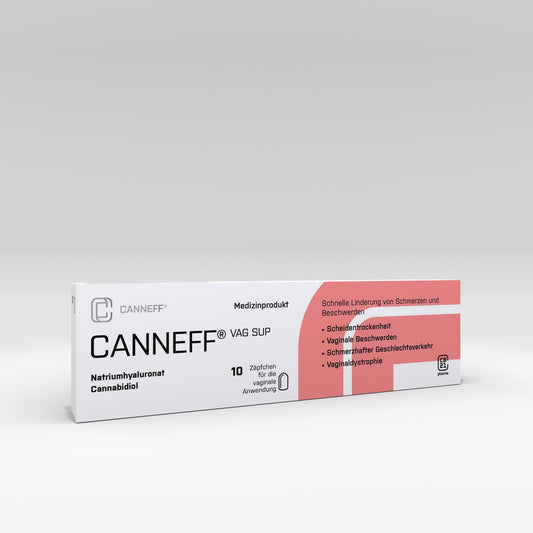
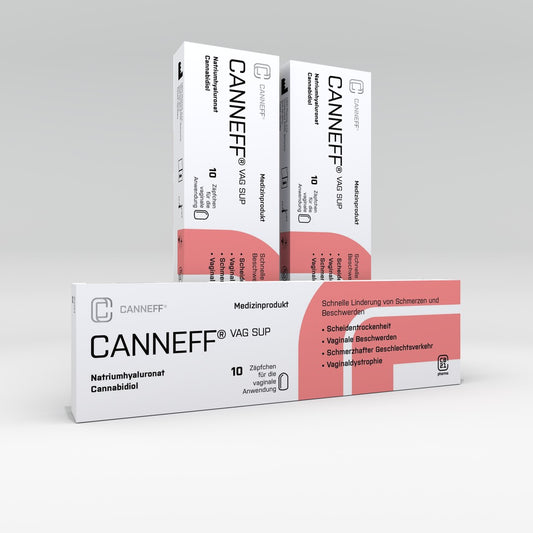
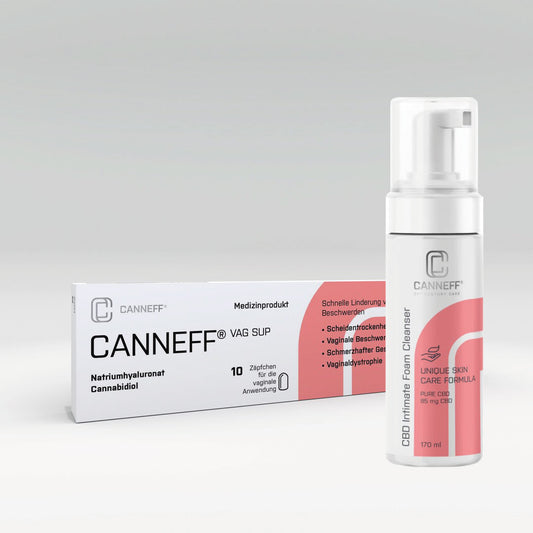
CANNEFF® Suppositories and the Role of CBD
CANNEFF® offers medical products containing cannabidiol (CBD), a non-psychoactive compound from the hemp plant. CBD shows a modulatory effect on the GABA system in studies, which plays a central role in regulating anxiety and stress, especially the extrasynaptic GABAA receptors also modulated by allopregnanolones. Through positive allosteric modulation of certain GABAA receptors, CBD can produce calming effects that may be helpful for those with PMDS. A biologically plausible effective mechanism exists, but clinical evidence is not yet available.
Although many women benefit from herbal preparations, clinical evidence for some of these remedies is limited. Additionally, herbal medicines can interact with other medications or cause side effects. Therefore, it is essential to consult a doctor before taking such preparations to assess individual risks and benefits.
What can those affected do themselves to relieve their symptoms?
Women with PMDS are not powerless – on the contrary: conscious management of their own cycle, targeted lifestyle changes, and supportive measures can significantly help alleviate symptoms. The goal is to reduce emotional strain in the second half of the cycle, strengthen resilience, and better manage daily life. While self-help does not replace medical treatment for severe PMDS, it can be an important complement.
Overview: Self-Help Strategies for PMDS
|
Area |
Recommended Measures |
|
Cycle Awareness |
Keeping a cycle diary to recognize patterns and better plan symptoms |
|
Stress Reduction |
Mindfulness training, meditation, breathing exercises, progressive muscle relaxation |
|
Exercise |
Moderate exercise (e.g., yoga, walks, swimming) – reduces cortisol, stabilizes mood |
|
Nutrition |
Blood sugar-stable diet, omega-3 fatty acids, low sugar, alcohol, caffeine, and highly processed foods |
|
Plant Power |
Chasteberry, turmeric, saffron, magnesium, vitamin B6 – targeted and after consulting professionals |
|
Social Self-Care |
Withdrawal when necessary – but no social isolation; open conversations with partners and family |
|
Daily Structure |
Avoid scheduling critical appointments during the luteal phase if possible; plan buffer times |
|
Resource Care |
Activities that feel good – music, creative hobbies, nature, journaling, wellness rituals |
Cycle-based lifestyle design
A particularly effective self-help approach is so-called cycle-based time management. This involves deliberately scheduling work-intensive phases in the first half of the cycle, while the second half is used specifically for regeneration and reflection. This can help avoid emotional overload and regain a sense of control.
CBD suppositories as a supportive measure
As mentioned in the previous section, CANNEFF® vaginal suppositories with CBD and hyaluronic acid can also be used supportively – especially in the second half of the cycle. CBD modulates the GABAA system, which plays a central role in PMDD, and can have a calming and balancing effect. This plant-based medicinal supplement is available without a prescription but should ideally be part of a holistic strategy. Clinical studies have shown that in menopausal women, CANNEFF CBD suppositories can improve physiological menopause symptoms such as inner restlessness, sleep disorders, or hot flashes and enhance women's quality of life.
Why is PMDD often not recognized or taken seriously?
Despite its clear definition in the international classification systems DSM-5 and ICD-11, premenstrual dysphoric disorder (PMDD) is still often overlooked or trivialized in clinical practice. The reasons are varied – ranging from insufficient professional training and societal taboos to medical misperceptions of cycle-dependent symptoms.
Reasons for the lack of recognition of PMDD
|
Cause |
Impact on diagnosis and treatment |
|
Insufficient medical training |
PMDD is often only briefly covered in medical school and gynecological specialist training. |
|
Outdated diagnostic systems |
In ICD-10, there was no separate PMDD diagnosis – this was only corrected with ICD-11. |
|
Tabooing menstruation |
Menstruation-related complaints are often considered “normal” and trivialized. |
|
Misdiagnoses |
PMDD is often mistakenly diagnosed as depression, anxiety disorder, or personality disorder. |
|
Nonspecific symptoms |
Many symptoms (e.g., irritability, fatigue, concentration problems) initially appear nonspecific. |
|
Cycle connection not recognized |
Without a cycle diary, the timing connection between symptoms and menstruation remains unclear. |
|
Stigmatization of emotional women |
Emotional fluctuations are dismissed as exaggerated or “hysterical” – especially in women. |
Social and psychological aspects
- “That's just how it is with women” – many affected hear this phrase from doctors, partners, or colleagues. This attitude leads to complaints not being taken seriously but rather pathologized or ignored.
- Many women are ashamed to talk about their symptoms – especially when they involve intense anger, suicidal thoughts, or aggression.
- As a result, feelings of isolation and self-doubt develop – even though the cause is biologically based and medically recognized.
Consequences of delayed diagnosis
A long suffering process is typical for many women with PMDD. Often several specialists are consulted before the correct diagnosis is made. During this time:
- relationships and work performance deteriorate,
- secondary psychological burdens arise, such as fear of losing control or depressive episodes,
- trust in medical help and in one's own body decreases.
Which specialists treat PMDD?
The treatment of premenstrual dysphoric disorder (PMDD) lies at the intersection of gynecology, psychosomatics, and psychiatry. Therefore, it is understandable that many affected individuals are unsure whom to turn to. The right point of contact often depends on the severity of symptoms, previous treatment history, and individual life situation.
|
Specialty |
Responsibility and role in PMDD |
|
Gynecologist |
First contact: cycle diagnostics, hormonal treatment (e.g., pill in extended cycle), prescription of herbal preparations |
|
Psychiatrist |
Assessment and prescription of antidepressants (SSRIs) for severe psychological symptoms |
|
Psychotherapist (CBT/Psychodynamic) |
Support with emotional regulation, self-management, stress processing |
|
Psychosomatic medicine |
Combination of psychotherapeutic and medical approach – especially suitable for PMDD |
|
General practitioner |
Entry into care, issuing referrals, basic counseling |
Why gynecologists often (still) hesitate
Although PMDS is clearly linked to the menstrual cycle, many gynecologists feel uncertain about treatment, especially regarding psychological symptoms or prescribing SSRIs. Reasons for this include:
- lack of training in dealing with affective disorders,
- uncertainty in handling psychopharmacological therapy options,
-
outdated diagnostic systems (ICD-10 did not include PMDS as an independent diagnosis).
Interdisciplinary care as the ideal
In severe cases, interdisciplinary collaboration is ideal – for example, between gynecologists, psychotherapists, and psychiatrists. This allows for holistic care that considers hormonal, emotional, and social dimensions.
Specialized centers, such as those for psychosomatic gynecology or women's mental health (e.g., in university hospitals), often offer integrated care for PMDS.
Is there hope for better care for PMDS?
Yes – the care situation for women with PMDS is gradually improving, even though there is still significant catching up to do in many areas. Thanks to medical advances, new classifications, and growing public awareness, premenstrual dysphoric disorder is increasingly recognized as a real, treatable condition – not only by professionals but also socially.
Three key advances in PMDS care
|
Development |
Significance for care |
|
Introduction of PMDS into ICD-11 |
Since 2022, PMDS has been independently classified in the international diagnostic catalog → better coding & billing options |
|
Increase in research and education |
New studies on neurobiology, hormone receptors, and therapy options → more expertise and targeted therapies |
|
Growing public attention |
Media, books, and online platforms address PMDS → breaking the taboo and more self-help options |
Beacons of hope in diagnosis and therapy
- Cycle diaries and specialized apps now help to accurately record symptoms – the basis for a correct diagnosis.
- New SSRI strategies (e.g., intermittent use) enable individually tailored therapies with fewer side effects.
- Increasing gynecological psychosomatics in clinics improves interdisciplinary care.
- Inclusion in guidelines and training programs for doctors promotes understanding of cycle-dependent affective disorders.
Challenges remain – but awareness is growing
Despite these advances, PMDS is:
- still too rarely correctly diagnosed,
- often mistaken for depression or burnout,
-
and perceived by some professionals as "exaggerated."
But that is changing. More and more women are openly sharing their experiences.