

What is an anal fissure and how does it develop?
An anal fissure is a superficial, painful tear of the skin at the anal margin, usually in the transition zone between the outer skin and the inner anal mucosa (the so-called anoderm). The term comes from dermatology and describes a narrow, slit-like skin lesion that often arises from mechanical irritation or dry, brittle skin. The development of an anal fissure is often multifactorial. Typical causes include:
|
Cause |
Description |
|
Dry skin |
Dry skin in the anal area – for example, with neurodermatitis or lack of care |
|
Frequent wiping |
Excessive mechanical irritation after bowel movements due to coarse toilet paper |
|
Irritants |
Aggressive soaps, wet wipes, or intimate hygiene products with fragrances and additives |
|
Frequent bowel movements or diarrhea |
Chronic irritation of the sensitive anal skin |
|
Anal intercourse or mechanical stress |
Friction and small injuries in the perianal area |
|
Skin diseases |
Psoriasis, atopic eczema, lichen sclerosus, or contact dermatitis |
What symptoms does an anal fissure cause?
An anal fissure typically causes local discomfort in the anal area, which sufferers mainly notice during or after bowel movements. The symptoms partly resemble those of other conditions such as anal fissures, hemorrhoids, or eczema – but are usually less severe, though still unpleasant and disruptive to daily life.
|
Symptom |
Description |
|
Itching (pruritus ani) |
Frequent, sometimes distressing itching around the anus |
|
Burning |
Burning sensation, especially after using the toilet or contact with soaps |
|
Feeling of tension |
Feeling of tearing or tension, especially when spreading or wiping |
|
Rare, usually visible as fine traces of blood on toilet paper |
|
|
Weeping or irritation |
Moisture due to inflammatory skin irritation or slight secretion |
|
Pain when wiping |
Pain sensation when rubbing with toilet paper |
In many cases, the fine tear is visible at the anal margin with a hand mirror, especially when the skin is stretched. The rhagade appears as a narrow, elongated tear, sometimes with reddened edges or slight scaling. Unlike deep anal fissures, an anal rhagade does not cause severe cramp-like pain during bowel movements or muscle spasms of the sphincter.
How does an anal rhagade differ from an anal fissure?
An anal rhagade and an anal fissure describe similar but not completely identical conditions in the anal canal area. Both terms are often used synonymously in clinical practice but differ in medical terminology regarding cause, location, and chronicity.
|
Symptom profile |
Anal rhagade |
Anal fissure |
Hemorrhoids |
|
Depth of the tear |
Superficial |
Deep, reaching the mucosa |
No tears, but vascular cushions |
|
Pain during bowel movements |
Mild to moderate |
Severe, stabbing, possibly cramp-like |
Usually no pain, rather a feeling of pressure |
|
Rare, only droplets |
Common, bright red on stool or paper |
Common when wiping, sometimes heavier amounts |
|
|
Itching/burning |
Typical |
Possible |
Very common, especially with moisture |
Which home remedies help with an anal rhagade?
Gentle home remedies can help relieve symptoms, regenerate the skin, and support healing in cases of anal rhagades. The goal is to soothe the sensitive anal skin, avoid irritation, and restore the skin’s natural barrier function—without aggressive or irritating ingredients.
|
Home remedies |
Effect |
Instructions for use |
|
Chamomile sitz baths |
Anti-inflammatory, soothing, antiseptic |
Sit 1–2 times daily for about 10 minutes in lukewarm chamomile infusion |
|
Coconut oil |
Skin nourishing, mildly antibacterial, replenishes fats |
Apply thinly to clean, dry skin |
|
Calendula ointment |
Promotes wound healing, has anti-inflammatory effects |
Apply sparingly after bowel movements |
|
Witch hazel |
Astringent, relieves itching, antibacterial |
Apply diluted tincture to a cotton pad and use locally |
|
Healing earth sitz bath or compress |
Dries weeping areas, has anti-inflammatory and skin-soothing effects |
Only for weeping cracks; do not apply to open, bleeding areas |
|
Zinc ointment (without perfumes) |
Skin protection, mildly antiseptic, promotes skin regeneration |
Apply thinly 1–2 times daily (no long-term use) |
|
Flaxseeds (internal use) |
Softer stool consistency due to swelling agents |
Soak 1 tablespoon of crushed flaxseeds in water and take daily |
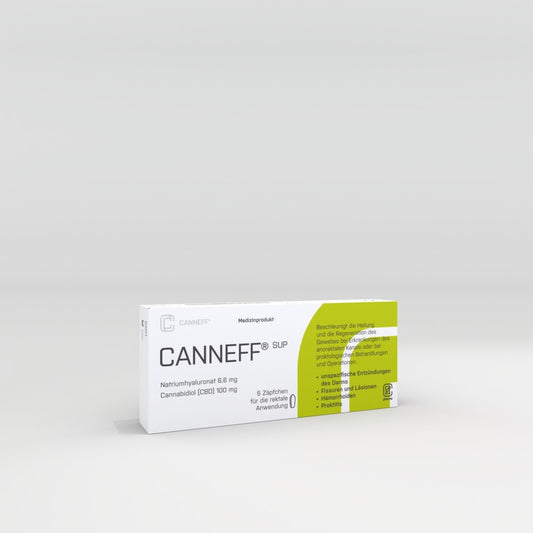
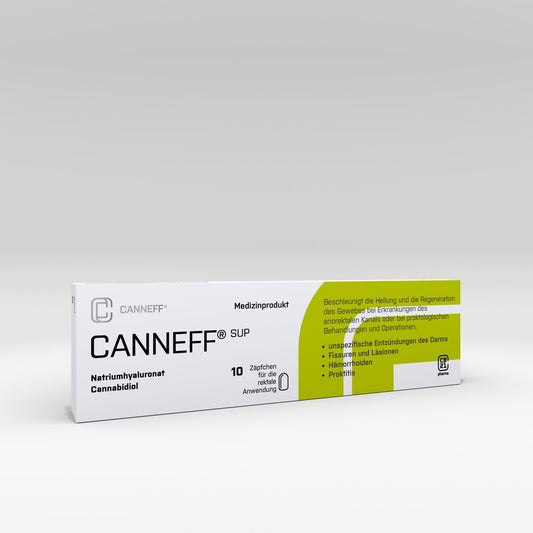
If symptoms do not improve after 5–7 days despite consistent use of home remedies, if pain or bleeding worsens, or if additional symptoms such as fever or severe inflammation occur, a doctor should definitely be consulted. In such cases, a deeper anal fissure may also be present, which requires more targeted treatment. Medical products like CANNEFF® vaginal or rectal suppositories with CBD and hyaluronic acid provide targeted, non-aggressive medical support for irritation, microlesions, and mucous membrane dryness – including in the anal area. They can be a useful complement to home remedies for chronic or recurring anal rhagades.
How is an anal rhagade medically treated?
The medical treatment of an anal rhagade aims to promote healing of the torn skin in the anal area, relieve pain, and prevent recurrences. In most cases, conservative measures are sufficient; surgical interventions are not necessary for anal rhagades. However, an accurate diagnosis by a general practitioner, proctologist, or dermatologist is advisable to exclude other causes such as anal fissures, eczema, or hemorrhoids.
Conservative therapy options for anal rhagade
|
Treatment |
Effect and application |
|
Special wound and healing ointments |
Promote skin regeneration, protect against irritation (e.g., with dexpanthenol, zinc oxide, or witch hazel) |
|
Local cortisone ointments (short-term) |
Anti-inflammatory for severe itching or accompanying dermatitis – only under medical supervision |
|
Antiseptic creams |
Prevention of bacterial superinfections, e.g., with povidone-iodine or octenidine |
|
Medical products with CBD & hyaluronic acid |
CANNEFF® SUP rectal suppositories soothe, regenerate, and protect irritated mucous membranes without irritants |
|
Mucous membrane-protecting suppositories |
Have moisturizing, nourishing, and anti-inflammatory effects – also suitable for nighttime use |
Diagnostics and medical measures
Clinical inspection: The doctor examines the anal area with gentle stretching to assess the lesion and rule out differential diagnoses (e.g., anal fissure, eczema, skin tags).
-
Exclusion of other causes: Skin diseases such as lichen sclerosus, psoriasis, or perianal candidiasis are investigated in cases of recurring rhagades.
- Stool regulation: For hard stool consistency, mild stool softening is recommended (e.g., lactulose, macrogol) to prevent new tears.
- Supportive treatment: In cases of bacterial or fungal superinfection, local antibiotic or antifungal preparations are used.
CANNEFF® SUP as a modern treatment option
CANNEFF® SUP rectal suppositories with CBD and hyaluronic acid are among the innovative, non-hormonal medical products for caring for irritated anal skin. They combine anti-inflammatory, pain-relieving, and regenerative properties without irritating the mucosa. Especially suitable for:
- Recurring anal rhagades
- Pain during bowel movements
- Anal eczema or irritation conditions
- Sensitive skin after healing of a fissure
Prognosis and course
With consistent care and medical treatment, an anal rhagade usually heals within 7–14 days. If irritation persists or the skin is chronically overstrained, the rhagade can become chronic and make the skin more sensitive to further stress. Early therapy prevents complications.
When should you see a doctor for an anal rhagade?
Anal rhagades are harmless in many cases and heal on their own with good care. However, there are situations where a doctor’s visit is urgently recommended – especially if symptoms persist, worsen, or remain unclear. An accurate diagnosis by a general practitioner, proctologist, or dermatologist is important to rule out more serious conditions and provide targeted treatment.
|
Symptom or course |
Reasoning |
|
No improvement after 5–7 days |
Even with careful care, a superficial rhagade should heal within a week |
|
Severe or increasing pain |
Indication of a deeper anal fissure or possible inflammation |
|
Needs to be clarified – possible causes include hemorrhoids or mucosal tears |
|
|
Recurring symptoms (chronic) |
May indicate skin conditions such as psoriasis, lichen sclerosus, or eczema |
|
Suspected infection |
Redness, pus, swelling, or fever indicate bacterial superinfection |
|
Weeping, soreness, or severe itching |
May be a sign of perianal eczema or a fungal infection |
|
Stool retention or fear of using the toilet |
Indicates severe pain or accompanying muscle spasm – possibly already a fissure |
What does the doctor do?
- Clinical inspection: Visual examination of the anal area with targeted search for fissures, cracks, or skin changes.
- Exclusion of other diagnoses: e.g., Anal fistulas, Hemorrhoids, Skin tags, Anal eczema, tumors.
- Targeted therapy recommendation: e.g., medicinal treatment, care products, or special suppositories like CANNEFF® SUP.
Which ointments or suppositories are useful for anal fissures?
For the treatment of anal fissures, nourishing, anti-inflammatory, and skin-regenerating ointments or suppositories have proven effective. The goal is to soothe the damaged skin in the anal area, reduce inflammation, promote the healing process, and prevent renewed irritation. Both classic wound and healing ointments as well as modern medical products with innovative active ingredients like CBD and hyaluronic acid are used.
|
Product type |
Effect |
Note / Special feature |
|
Zinc ointment (e.g., with zinc oxide) |
Dries weeping skin, has anti-inflammatory and mild antiseptic effects |
Suitable for weeping fissures, not for long-term use |
|
Dexpanthenol ointment (e.g., Bepanthen®) |
Promotes wound healing, soothes irritated skin areas |
Well tolerated, ideal for mild fissures |
|
Witch hazel cream (e.g., Hametum®) |
Anti-inflammatory, anti-itch, astringent |
Plant-based, for superficial irritations |
|
Cortisone-containing ointments |
Strongly anti-inflammatory, suppresses itching and irritation |
Use only short-term and under medical supervision |
|
CBD: Anti-inflammatory, anti-itch, pain-relieving Hyaluronic acid: Moisturizing, regenerating |
Medical product specifically for the anal area, ideal for chronic or painful fissures |
How long does it take for an anal fissure to heal?
The healing of an anal fissure usually takes between 5 and 14 days, depending on their depth, cause, individual skin sensitivity, and consistent care. Since it is a superficial skin lesion, it usually heals faster than deeper anal fissures – provided that irritants such as hard stool consistency, frequent wiping, or aggressive hygiene products are consistently avoided.
Typical course
- Day 1–3: First relief through care, itching and burning decrease
- Day 4–7: Visible healing, possibly still slight tension
- Day 8–14: Complete regeneration with consistent relief
- > 14 days: Prolonged healing with irritation exposure, poor skin regeneration, or insufficient treatment
CANNEFF® SUP rectal suppositories with CBD and hyaluronic acid have been proven to promote soothing, moisture supply, and regeneration of the mucous membrane, which can decisively support the healing process in anal fissures – especially in sensitive or dry anal skin.
Can an anal fissure become chronic?
Yes – an anal fissure can become chronic if it is not recognized in time and treated consistently. Although it originally is a superficial skin tear, the mucous membrane can permanently change due to repeated irritation, mechanical stress, or insufficient healing. In such cases, it is called a chronic-recurrent anal fissure, which causes persistent discomfort and is difficult to heal.
Causes of chronicity
|
Factor |
Influence on chronicity |
|
Repeated mechanical irritation |
Due to hard stool, excessive wiping, or anal intercourse |
|
Dry, sensitive skin |
Reduced regenerative capacity, especially in older people or skin diseases |
|
Untreated underlying diseases |
About psoriasis, lichen sclerosus, atopic dermatitis |
|
Insufficient therapy |
No targeted care, wrong ointments, aggressive hygiene products |
Treatment in chronic courses
In chronic anal fissures, an Intensified, dermatologically coordinated therapy necessary, often over several weeks. Proven effective are:
- Special care products with regeneration-promoting active ingredients
- CANNEFF® SUP rectal suppositories with CBD and hyaluronic acid, which specifically relieve mucous membrane irritation, promote healing, and prevent relapses
- Exclusion and treatment of underlying diseases
- Long-term skin protection concepts with re-lipidation, stool regulation, and irritation avoidance