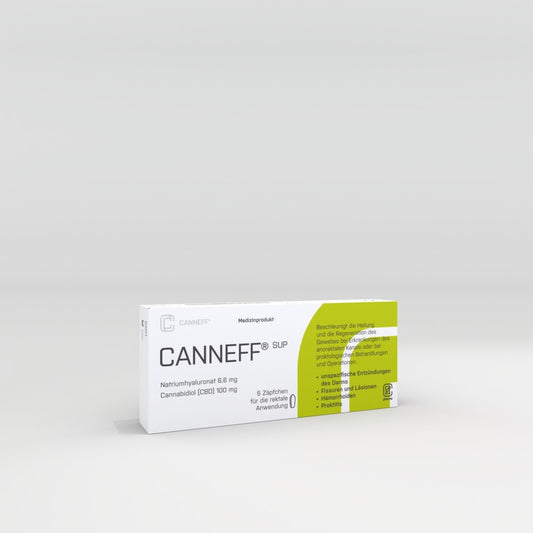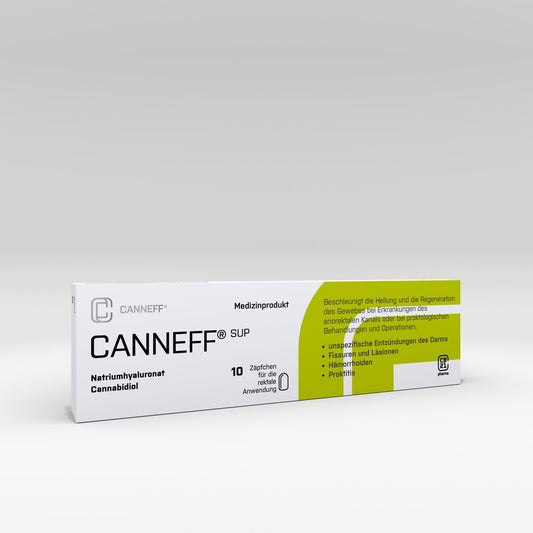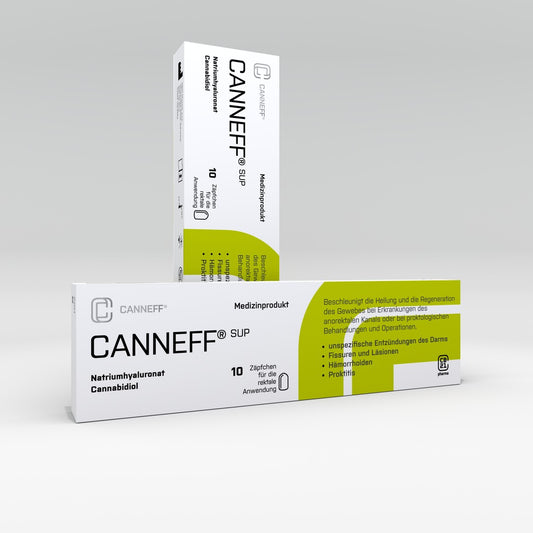


Suppositories with Hyaluronic Acid and Cannabidiol
As natural substances with remarkable abilities, hyaluronic acid and cannabidiol (CBD) play essential roles in many biological processes. Let’s explore the diverse applications, effects, and side effects of these fascinating compounds.
Hyaluronic acid is well known to many women as an active ingredient in anti-aging creams or as a component of aesthetic medicine. Conversely, cannabidiol has gained special recognition in recent years through CBD oil and CBD flowers. However, these versatile molecules offer much more than beauty and relaxation and can be especially beneficial for women during menopause or with vaginal dryness. In this blog post, we explain why hyaluronic acid and cannabidiol in the form of suppositories are a great option for these common female complaints.
What is Hyaluronic Acid?
Hyaluronic acid is a polysaccharide naturally found in the human body. It is mainly present in the skin, bones, cartilage, joint fluid, and the vitreous body of the eye. The molecules of this substance can bind an enormous amount of water, giving them a range of important biological functions. Hyaluronic acid plays a key role in the stability and elasticity of tissues.
One gram of hyaluronic acid can bind up to six liters of water. This impressive water-binding capacity explains many of its physiological roles. For example, the vitreous body of the human eye consists of 98 percent water bound to only two percent hyaluronic acid. The water binding also ensures the elasticity and firmness of the skin and connective tissue.
Cannabidiol (CBD)
Cannabidiol, abbreviated as CBD, is a natural, non-psychoactive cannabinoid from hemp (Cannabis sativa) that has gained increasing importance in the medical field in recent years. The reason is the broad range of applications of cannabidiol. Due to the many binding sites of CBD in our body and its effects, CBD can achieve several well-documented benefits. CBD is particularly anti-inflammatory, antispasmodic, and anxiolytic. Its antiepileptic effect has become so established that there is already an approved medication for children. It is also worth mentioning the good safety profile of cannabidiol, which has shown no serious side effects even in children at high doses (several grams per day).
Why is the Combination of Cannabidiol and Hyaluronic Acid So Effective?
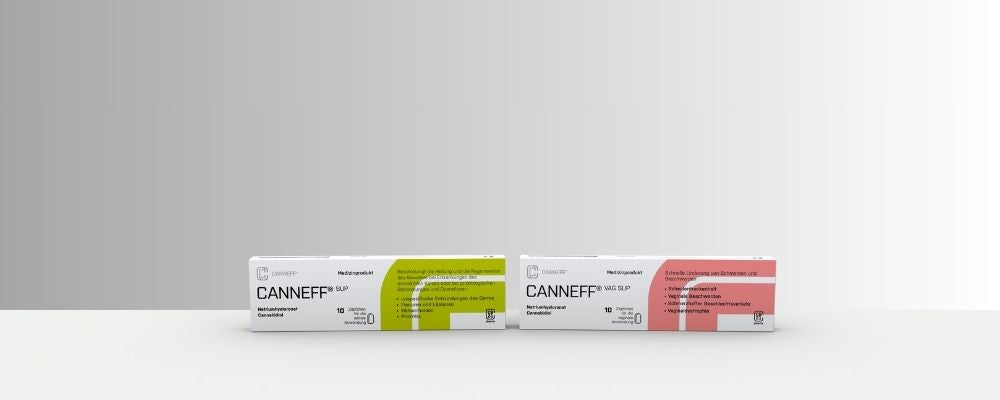
One property, in addition to the effects mentioned above, is the strong antioxidant effect of CBD. This regulates redox homeostasis, the balance between reduction and oxidation processes, and is therefore especially protective for our body’s cells, as this balance is often disrupted during inflammation. This very property of CBD supports the anti-inflammatory effect of hyaluronic acid. In combination, both substances are more effective because cannabidiol optimizes the environment for the action of hyaluronic acid. Conversely, cannabidiol can penetrate deeper into the tissue with the help of hyaluronic acid and exert an even stronger effect. Sodium hyaluronate is an important structural component of extracellular matrices, essential for maintaining hydration, elasticity, and tissue integrity. In CANNEFF® suppositories, it forms a protective bioadhesive layer that reduces friction and mechanical irritation while creating a favorable environment for mucosal restoration. CANNEFF® suppositories contain a patented emulsion matrix that, unlike conventional lipophilic suppositories, enables complete release of sodium hyaluronate within 45 minutes, ensuring rapid hydration and protection. By combining advanced formulation technology with clinically proven ingredients, CANNEFF® suppositories offer a targeted approach to supporting mucosal health and well-being in vaginal and rectal applications.

Treatment of women in menopause with CANNEFF VAG SUP led to a statistically significant reduction in MRS scores in a placebo-controlled study, indicating a clear improvement in menopausal symptoms such as periodic sweating or hot flashes, depression, insomnia, memory problems, nervousness, as well as bone and joint complaints.
CANNEFF® SUP showed clinically significant relief of symptoms of non-bacterial prostatitis and chronic pelvic pain, comparable to systemic treatments such as alpha-blockers, phytotherapeutics, and NSAIDs, while offering a localized, non-systemic approach. These results highlight the need for a larger, controlled study to validate efficacy.
Why Hyaluronic Acid for Vaginal Dryness?
The water-binding properties of hyaluronic acid can also be beneficial in the intimate area. Especially during menopause, the natural moisture content of the vaginal mucosa decreases, often leading to dryness, itching, and discomfort such as pain during intercourse. Due to poorer lubrication of the mucosa, cracks and inflammation can occur. Hyaluronic acid suppositories like CANNEFF VAG SUP can help by increasing mucosal moisture and providing a pleasant feeling. This is exactly where the combination of hyaluronic acid and CBD offers quick relief from pain and discomfort. Read more about vaginal dryness here.
Usage and Benefits
Using hyaluronic acid suppositories like CANNEFF VAG SUP is simple and can be conveniently done at home. The active ingredients are delivered directly to the affected areas, enabling rapid symptom relief. The innovative suppositories CANNEFF VAG SUP and CANNEFF SUP are the first EU-wide approved medical devices and therefore meet the quality standards required for medical products. However, hygiene during use is important. Always wash your hands thoroughly before inserting the suppository to avoid further irritation of the intimate area.
Side Effects and Safety
Since hyaluronic acid is a substance naturally found in the human body, side effects are rare. In very rare cases (e.g., with injections), allergic reactions may occur. However, such reactions are extremely unlikely when used as suppositories. Cannabidiol is also considered very safe. Since cannabidiol passes into breast milk, we do not recommend its use for breastfeeding mothers.