

This blog post covers the versatile effects of cannabidiol (CBD) as well as the application and mechanisms of action of this cannabinoid in medicine and the human body.
Cannabinoids
Cannabinoids are very interesting, polypharmacologically active molecules that occur in various forms: as endogenous cannabinoids (eCBs) produced in the body, as phytocannabinoids (pCBs) from plants like Cannabis sativa, and as synthetic cannabinoids (sCBs). They influence our physiology in different ways. The endocannabinoid system (ECS), consisting of receptors, enzymes, and ligands, plays a crucial role in physiological processes and maintaining homeostasis and is the primary site of action for cannabinoids. The most common plant cannabinoids, cannabidiol (CBD) and tetrahydrocannabinol (Δ9-THC), are also medically useful.
The phytocannabinoids cannabidiol (CBD) and tetrahydrocannabinol (Δ9-THC)
CBD and Δ9-THC are the best-known phytocannabinoids from Cannabis sativa. They interact with a variety of molecular targets, including G-protein-coupled receptors (CB1, CB2, and CB3), serotonin receptors (5-HT1A), adenosine receptors (A1/A2), and opioid receptors, to name a few. CBD is particularly interesting because it acts on more than 80 target structures and, unlike Δ9-THC, does not produce psychotropic effects. Cannabidiol, often simply called CBD, has gained significant popularity in recent years. This phenomenon is largely due to its diverse medical applications and the absence of psychotropic effects. (Izzo et al. 2009, Bih et al. 2015).
What is cannabidiol (CBD)?
CBD is one of many phytocannabinoids found in Cannabis sativa, but quantitatively it is the most important in industrial hemp. It is a lipophilic (fat-soluble) molecule formed from monoterpenoid compounds called aminoalkylindoles. Unlike its well-known relative tetrahydrocannabinol (THC), the psychoactive component of cannabis, CBD has no intoxicating effects.
What is the mechanism of action of CBD?
CBD influences a variety of molecular targets. CBD also acts through the endocannabinoid system (ECS), a complex network of receptors, enzymes, and biochemical pathways that plays a key role in regulating various bodily functions. The ECS is responsible for maintaining homeostasis in the body and influences processes such as pain perception, inflammatory responses, and neural development.
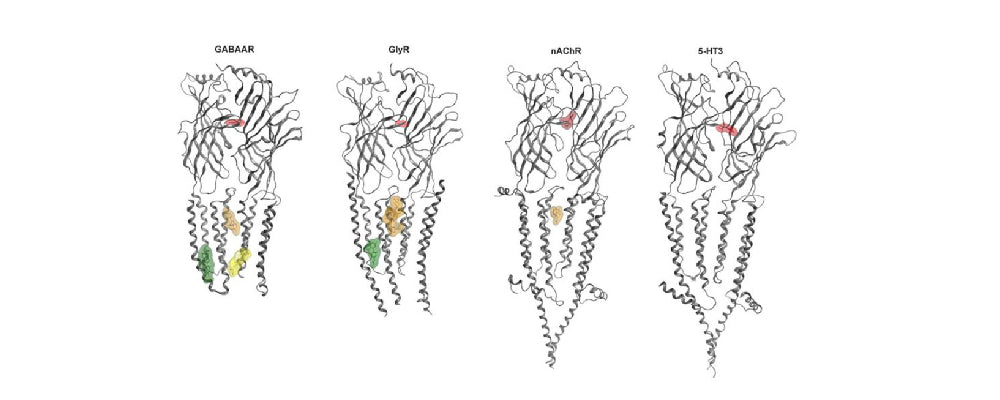
CBD interacts in a complex way with this system and other molecular targets. Among other things, it acts as an antagonist at the GPR55 receptor, also known as the CB3 receptor. CBD affects a variety of targets, including 5-HT1A receptors, glycine receptors (GlyRs), GABAARs, and TRP channels, each responsible for its anxiolytic, antiepileptic, and analgesic effects.
Unlike THC, which acts as a partial agonist at the CB1 and CB2 receptors of the ECS, CBD has a broader and more complex mode of action. Among other things, it binds to GPR55 receptors, sometimes referred to as CB3 receptors, and shows antagonistic effects against CB1/2 receptor agonists. Therefore, it is difficult to describe a single mechanism of action, as CBD exhibits strong polypharmacological properties (Schmiedhofer et al. 2022).
Do cannabinoids have an effect on Cys-loop receptors?
Yes, an important mechanism of action is the interaction of cannabinoids with Cys-loop receptors, which include GABA-A receptors (GABAAR), glycine receptors (GlyR), serotonin type 3 receptors (5-HT3R), and nicotinic acetylcholine receptors (nAChR). These receptors are pentameric ligand-gated ion channels and play an important role as central inhibitory neurotransmitter receptors in the central nervous system. CBD shows modulatory effects on various GABAAR subtypes and enhances GABA-induced currents especially at extrasynaptic GABAA receptors. These effects also play a role in various neurological indications such as epilepsy or PMS (premenstrual syndrome) a role and are the subject of further research. It also has positive modulatory effects on GlyRs, which are relevant for pain treatment (Schmiedhofer et al. 2022).
What are the main medical properties of CBD (cannabidiol)?
- Anti-inflammatory effect
- Antispasmodic and antiepileptic effect
- Anxiolytic and antipsychotic effect
- Antioxidant and cell-protective effect
- Cancer cell-inhibiting effect
- Pain-relieving effect
How can CBD be used therapeutically?
CBD has a broad spectrum of therapeutic potentials. It is known for its anxiolytic and antiepileptic properties, with effects on receptors such as 5-HT1A, GlyRs, and GABAARs, as well as for its analgesic effects via TRP channels. Furthermore, it is being researched for the treatment of chronic pain and various neuropsychiatric disorders (anxiety disorders, schizophrenia, PTSD, depression, and addiction disorders). CBD shows interactions with certain drug groups but is also considered very well tolerated and combinable even in high doses (Elsaid et al. 2019).
What approved medical products with cannabinoids are there?
Cannabinoids are mostly derived from plant sources, but synthetic variants are also widespread. They are used both as recreational substances and for medical purposes. In recent decades, clinical interest in cannabinoids, especially CBD, has increased significantly. CBD is used in various forms, from isolated compounds to whole plant extracts.
Use in medical preparations varies, including tinctures, topical applications, capsules, and medical devices such as suppositories (Suppositories). These preparations are often made individually for patients in pharmacies (magistral preparation). Various cannabinoid-based drugs are approved by authorities such as the FDA, MRHA, or EMA. These include both synthetic derivatives like Nabilone and natural compounds like Δ9-THC (Dronabinol®) and CBD (Epidiolex®).
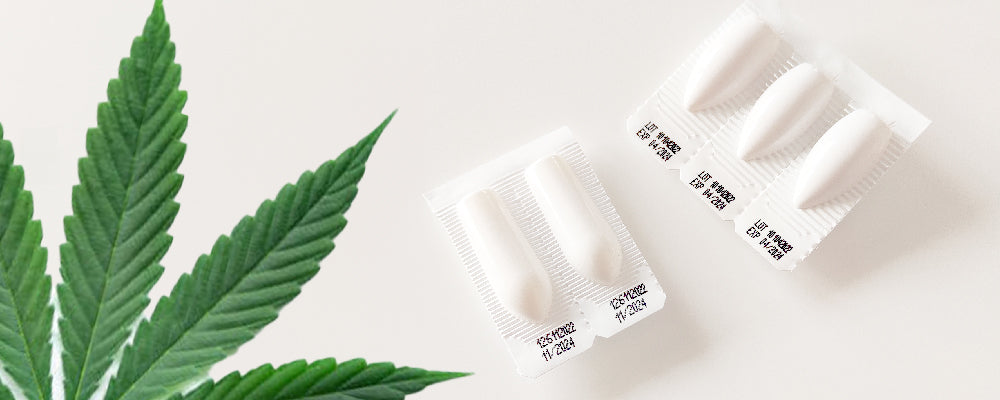
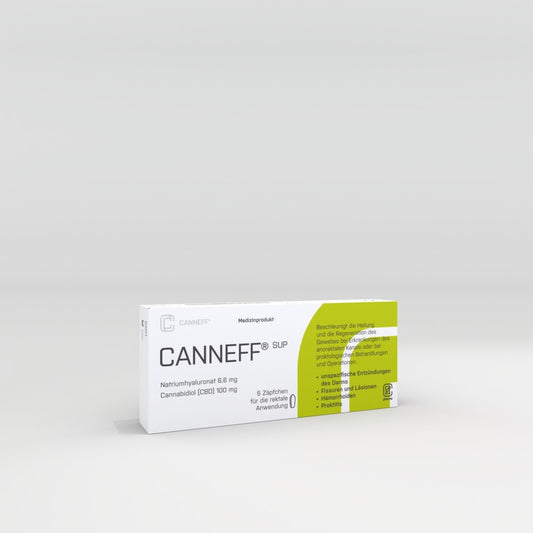
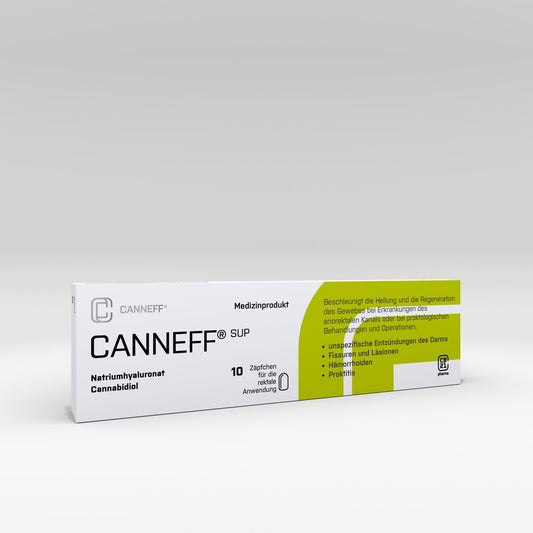
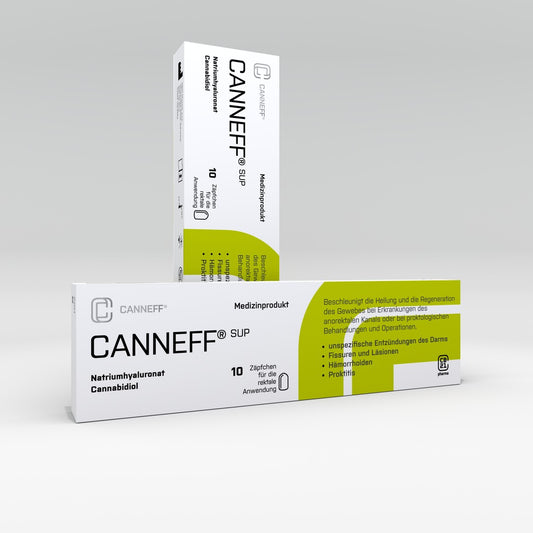
CBD and Δ9-THC are the most frequently studied individual compounds in clinical trials from the group of plant cannabinoids. Various CBD-based pharmaceutical products have already been approved in clinical research and application. These include Epidiolex® for the treatment of seizures associated with Lennox-Gastaut syndrome or Dravet syndrome and Sativex® (Nabiximols®), a combination product of THC and CBD extracts for severe spasticity in multiple sclerosis. With CANNEFF® VAG SUP Vaginal suppositories and CANNEFF® SUP Rectal suppositories are now joined by two over-the-counter medical devices in the list of registered medical products with CBD (Schmiedhofer et al. 2022)Read more here about the unique active ingredient combination of Hyaluronic Acid and CBD.