

Medications for endometriosis – an overview
Medication therapy against endometriosis aims to relieve pain, slow disease progression, and in some cases improve fertility. It can be used alone or alongside surgery.
|
Drug class |
Example preparations |
Mechanism of action |
Special features / limitations |
|
NSAIDs |
Ibuprofen, Naproxen |
Inhibition of inflammatory mediators (prostaglandins) |
Effective acutely, no disease-modifying effect |
|
Progestins |
Dienogest, Norethisterone |
Estrogen antagonist, inhibits endometrial growth |
Suitable for long-term therapy, often well tolerated |
|
Combined contraceptives |
Ethinylestradiol + Levonorgestrel |
Ovulation inhibition, cycle control |
Not for desire to conceive, increased risk of thrombosis |
|
GnRH analogs |
Leuprorelin, Triptorelin |
Hormonal suppression state ("artificial menopause") |
Limited therapy duration, add-back therapy necessary |
|
GnRH antagonists |
Elagolix, Linzagolix (e.g., Yselty®) |
Rapid onset estrogen reduction |
Newer substance class, well controllable, combination therapy recommended |
|
SPRMs (Selective Progesterone Receptor Modulators) |
UPA (not approved for endometriosis) |
Blocking progesterone action |
Research ongoing, no approval for endometriosis treatment |
Note on long-term therapies:
Hormonal preparations are especially suitable for long-term disease control, but therapy should be regularly monitored by a doctor—particularly regarding bone health, cycle behavior, and side effects.
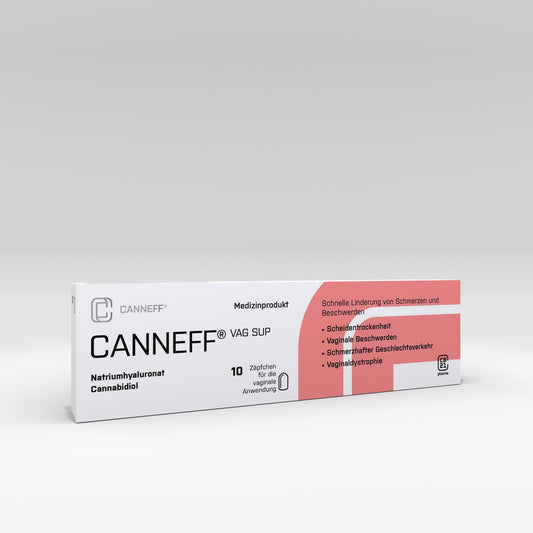
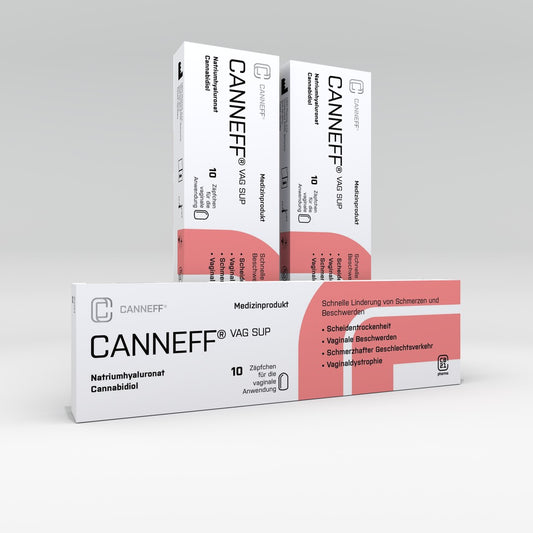
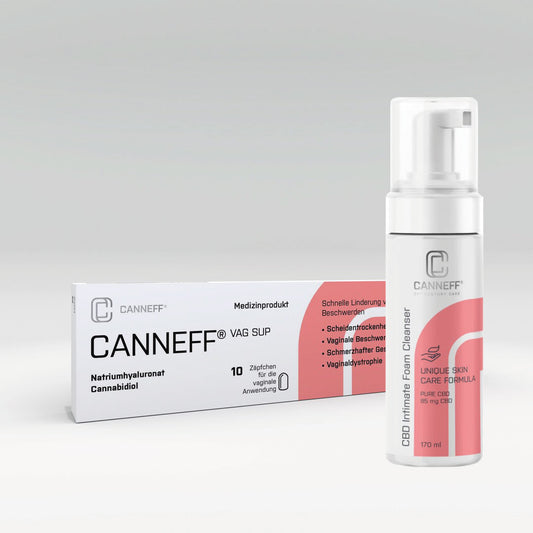
Important: In patients with vaginal mucosal involvement, dryness or painful symptoms in the intimate area, medical products such as CANNEFF® vaginal suppositories with CBD and hyaluronic acid can also be used. These relieve local symptoms and support mucosal regeneration.
Which medications help with endometriosis pain?
To relieve endometriosis pain, nonsteroidal anti-inflammatory drugs (NSAIDs) and hormonal agents are primarily used. While NSAIDs combat acute symptoms, hormonal treatments aim to inhibit the growth of endometriosis lesions and reduce pain in the long term. An individual choice based on pain intensity, cycle dependence, and comorbidities is crucial.
To specifically relieve endometriosis pain, medications are used that affect both acute pain signals and the hormonal activity of the lesions. Selection depends on the pain type: cyclic, chronic, localized, or diffuse.
Differentiation by pain type and medication effect
|
Pain character |
Therapeutic approach |
Suitable substance classes |
|
Cyclic-inflammatory |
Anti-inflammatory, prostaglandin inhibition |
NSAIDs (e.g., naproxen, ibuprofen) |
|
Hormone-dependent |
Suppression of estrogen effect |
Progestins, GnRH analogs/antagonists |
|
Chronic-neuropathic |
Modulation of pain memory |
Off-label: Amitriptyline, Gabapentin (in consultation) |
|
Local-vaginal |
Symptom control for mucous membrane irritation |
Not all pain in endometriosis is hormone-related. In long-term cases, patients can develop centralized pain (chronic pain memory) develop that do not respond sufficiently to NSAIDs or hormone therapy. In such cases, adjusting medication combined with pain psychotherapy is advisable.
Hormonal treatments for endometriosis: effects & side effects
Hormonal treatments are a central pillar of medical endometriosis therapy. They work by altering the hormonal environment to inhibit the growth of endometriosis lesions and reduce inflammation. The goal is artificially induced estrogen suppression—with different mechanisms of action and side effect profiles.
Overview of common hormonal treatments for endometriosis
|
Drug class |
Mode of action |
Example preparations |
Common side effects |
|
Progestins |
Continuous intake suppresses ovulation, lowers estrogen |
Dienogest, Norethisterone |
Spotting, weight gain, mood swings |
|
Combined oral contraceptives |
Cycle suppression through estrogen-progestin combination |
Ethinylestradiol + Levonorgestrel |
Breast tenderness, nausea, slightly increased risk of thrombosis |
|
GnRH analogs |
Blockade of the pituitary hormone axis → "artificial menopause" |
Leuprorelin, Buserelin |
Hot flashes, bone density loss, depressive mood |
|
GnRH antagonists |
Direct inhibition of GnRH receptors |
Relugolix, Linzagolix |
Less severe side effects, but possibly expensive |
|
Intrauterine systems |
Local hormone release into the uterus |
Levonorgestrel IUD (e.g., Mirena®) |
Spotting, irregular cycles at the beginning |
What should be considered when choosing?
- Progestins are considered well tolerated for long-term therapy, especially dienogest.
- GnRH analogs/antagonists are used in severe or therapy-resistant cases – preferably with “add-back therapy” (e.g., low-dose estradiol) to minimize side effects.
- Combined preparations are especially suitable when additional contraception is needed.
- With Desire to have children are contraindicated with hormone preparations, as they temporarily inhibit fertility.
Proper use of painkillers in endometriosis
Painkillers are part of the basic therapy for endometriosis, especially for acute symptoms. They relieve the symptoms but do not treat the cause of the disease. Targeted, responsible use is therefore important – ideally embedded in a holistic treatment concept.
|
Drug group |
Examples |
Effect |
Recommended use |
|
NSAIDs (nonsteroidal anti-inflammatory drugs) |
Ibuprofen, Naproxen, Diclofenac |
Anti-inflammatory, pain-relieving |
First choice for mild to moderate pain; take as early as possible in the cycle |
|
COX-2 inhibitors |
Celecoxib, Etoricoxib |
Selective anti-inflammatory, gentler on the stomach |
Alternative for stomach problems caused by NSAIDs |
|
Paracetamol |
Paracetamol |
Pure pain reduction without anti-inflammatory effect |
Lower effect; rather for intolerance to other drugs |
|
Metamizole (prescription only) |
Novalgin |
Strong pain relief, also antispasmodic |
For severe symptoms under medical supervision |
|
Opioids (only in exceptional cases) |
Tramadol, Tilidine |
Strong analgesic, centrally acting |
Short-term for therapy-resistant pain; not for long-term use |
Instructions for use
- Take early: NSAIDs work better if taken before the onset of pain.
- Do not use permanently: Chronic use can lead to stomach, liver, and kidney damage.
- Dosage under medical supervision: If necessary, rotation of active ingredients can be done to minimize side effects.
- Combine with hormone therapy: Painkillers alone are often not enough – they should be part of an overall treatment plan.
New drugs for endometriosis treatment in development
The treatment of endometriosis is continuously evolving. While classic hormone therapies are often effective but not free of side effects, new drugs specifically target the underlying mechanisms of the disease. The goal is to improve quality of life – with the best possible tolerability and minimal impact on fertility.
|
Active ingredient / approach |
Mechanism of action |
Development status |
Special features |
|
Linzagolix (Yselty®) |
GnRH antagonist: specifically lowers estrogen levels |
EU approval 2024 |
Oral intake, individually dosable |
|
Relugolix |
GnRH antagonist, similar to linzagolix |
In studies for endometriosis |
Already approved for uterine fibroids |
|
BAY2395840 (Bayer) |
Antibody against chemerin receptor |
Clinical phase I |
Specifically inhibits inflammatory processes |
|
4-Hydroxyindole (experimental) |
Microbiome metabolite: reduces lesions in animal model |
Preclinical research |
Microbiome approach for future therapy |
|
Epigenetic modulators |
Regulation of pathological gene expression |
Basic research |
Prospective for personalized therapies |
|
CBD + hyaluronic acid: anti-inflammatory, pain-relieving |
Medical device – clinical study on endometriosis |
Hormone-free, already approved for mucosal irritation & pain |
|
|
Immunomodulators (e.g., anti-TNF) |
Targeted inhibition of pro-inflammatory cytokines |
Early studies |
New option for immunological involvement |
Pill, progestins, GnRH – what suits me?
The choice of the appropriate hormonal preparation for endometriosis treatment depends on the individual symptoms, age, possible contraindications, and especially the desire for children. The goal is to inhibit estrogen effects to stop the growth of endometriosis lesions and relieve pain.
|
Preparation |
Mode of action |
Especially suitable for |
|
Combined pill |
Estrogen + progestin – inhibits ovulation and lining buildup |
Women without desire for children with regular cycles |
|
Progestin monotherapy |
Progestin only – permanent hormonal suppression |
Women with increased risk of thrombosis or estrogen intolerance |
|
GnRH analogs |
Profound estrogen suppression (artificial menopause) |
Severe endometriosis without current desire for children |
|
GnRH antagonists |
Rapid, controlled estrogen reduction |
Modern option for severe symptoms |
Long-term drug therapy for endometriosis
Long-term drug therapy for endometriosis aims to permanently relieve symptoms and prevent relapses after surgery. Mainly progestins or low-dose GnRH antagonists are used. They suppress the hormonal environment that promotes the growth of endometriosis lesions.
Long-term therapies are effective but carry risks of side effects such as cycle disturbances, bone density loss (with GnRH), or mood swings. Therefore, regular medical check-ups are essential. The therapy duration is individually based on symptom progression, tolerance, and desire to have children.
How long should you take medication for endometriosis?
The duration of a drug treatment for endometriosis depends on the medication, symptoms, and individual factors such as age or desire to have children. Usually, hormone therapy is used for several months to years – as long as it is well tolerated and effective.
With GnRH analogs, treatment duration is usually limited to 6 months, often with add-back therapy. Progestins or the birth control pill can be taken long-term, as can non-hormonal painkillers as needed. Regular medical monitoring is essential.
Treating endometriosis without hormones – is it possible?
Yes, a treatment for endometriosis without hormones is possible – especially to relieve pain and improve quality of life. However, it does not replace causal therapy for severe hormone-dependent lesions. Non-hormonal approaches are particularly considered when hormonal therapies are not tolerated or if there is a desire to have children.
Overview of non-hormonal treatment options:
|
Type of therapy |
Area of application |
|
NSAIDs (e.g., ibuprofen, naproxen) |
Acute pain relief for menstrual cramps |
|
Medical products such as CANNEFF® suppositories |
Local anti-inflammatory and pain relief for mucosal irritation (rectal or vaginal) |
|
Physiotherapy |
Pelvic floor tension, movement promotion |
|
Nutritional therapy |
Anti-inflammatory diet, histamine or gluten reduction |
|
Complementary medicine |
Acupuncture, yoga, TENS, osteopathy |
|
Psychological support |
Pain management, coping with chronic illness |