

How is an anal venous thrombosis treated?
Basically, both a conservative treatment approach and surgery are possible for an anal venous thrombosis. The treatment of perianal thrombosis mainly depends on the size of the swelling and the intensity of pain experienced by the patient. Prompt medical evaluation can quickly relieve the symptoms of anal thrombosis and prevent worsening of the condition as well as a prolonged suffering period. Usually, a conservative treatment approach is chosen to reduce the swelling of the lump at the anus and the tissue swelling. This can be achieved through suppositories, ointments with various active ingredients, or orally taken pain medications. The conservative treatment primarily aims to minimize the inflammatory reaction and swelling at the anus and to relieve pain until the perianal thrombosis heals. Even without treatment, anal venous thromboses can resolve on their own within a few days to weeks. However, a doctor’s visit for anal venous thrombosis is always recommended to medically clarify the cause of the perianal thrombosis and to relieve the symptoms of anal venous thrombosis with decongestant measures. Even healed, untreated anal thromboses can lead to skin tags at the anal margin, known as marisks. Small marisks usually do not require further treatment, but larger marisks can make hygiene in the anal area more difficult and thus increase the risk of further proctological diseases.
Conservative treatment with ointments, creams, suppositories for pain relief
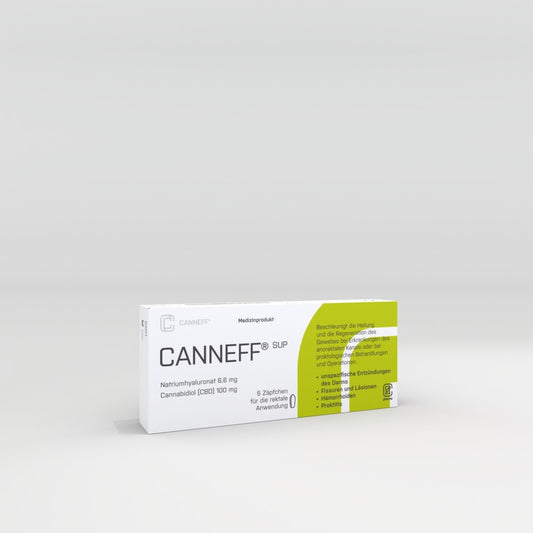
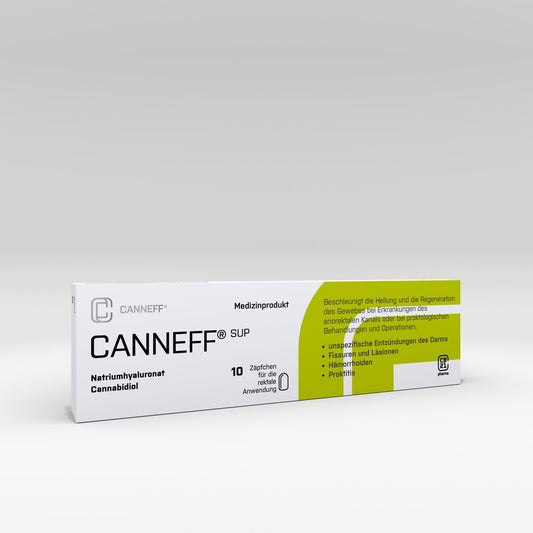
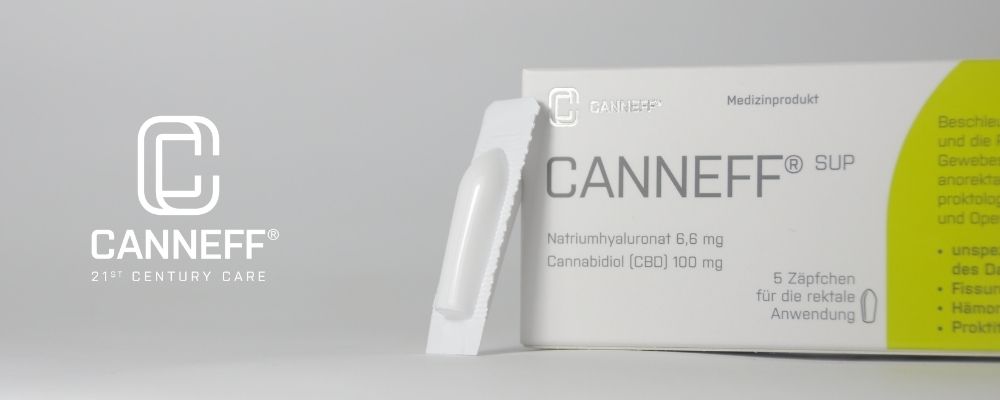
For smaller thromboses at the anus, conservative treatment is often sufficient to support the reduction of swelling in the tissue around the anus. This usually involves anti-inflammatory and pain-relieving medications, suppositories, or creams and ointments, as well as oral pain therapy. Suppositories are considered a proven therapeutic approach and exert their effect directly in the affected anal area. For example, suppositories such as CANNEFF® SUPto support the healing process and tissue regeneration in ulcers, as well as perianal venous thrombosis, and also to accelerate the healing time of the wound at the anus after surgery.
Certain home remedies, such as sitz baths with chamomile or cooling, can relieve pain in perianal thromboses and also promote blood circulation in the anal area. Attempts to reposition are definitely to be avoided with perianal thromboses. This means that additional pressure and friction on the lump should be avoided as much as possible, just as shifting, squeezing, or even puncturing the lump itself must be strictly avoided. Perianal thromboses are not prolapsed hemorrhoidal lumps. Anal thromboses are medically clearly distinguished from hemorrhoids as a proctological disease in the differential diagnosis.
Supportive measures for pain relief and tissue swelling reduction
The main part of conservative treatment is to relieve the pain of perianal thrombosis through measures such as ointments or suppositories that help reduce tissue swelling. The doctor may also recommend some dietary and lifestyle advice to accelerate the regression of the anal thrombosis. There are also some measures you can take to prevent the nodule or lump on the anus from enlarging. If the anal vein thrombosis does not heal or regress on its own within a few days to weeks, a doctor's visit is definitely advised. Read more here about the diagnosis of anal vein thromboses by a doctor.
Regardless of conservative or surgical treatment of the usually bluish-red nodules on the anus, a high-fiber diet combined with adequate fluid intake should be observed in all cases. This promotes soft bowel movements to prevent strain and additional tension on the anus during defecation. Furthermore, gentle anal hygiene is recommended to avoid further irritation of the sensitive skin around the anus. Additionally, you should generally reduce prolonged sitting or use a seat cushion or ring to minimize pressure on the affected area in the anal region.
Surgical treatment for large anal thromboses and ulcers
In cases of very large or painful perianal thromboses, surgery is often performed to eliminate the swelling. There are two approaches to surgery for anal thrombosis: incision to express the thrombus, or excision, meaning the complete removal of the entire perianal thrombosis and the affected vessel. Excision minimizes the risk of postoperative rethrombosis, thereby reducing the likelihood of recurring anal venous thrombosis. Both surgical procedures can be done under local anesthesia and on an outpatient basis; longer or inpatient hospital stays are usually not necessary. The treating physician may also recommend surgery if the anal venous thrombosis does not resolve despite conservative treatment.
Which suppositories are used to treat anal thrombosis?
To relieve certain symptoms of anal venous thrombosis and to support the healing process of ulcers in the rectal area, suppositories are considered a proven approach in treatment. Rectal suppositories act directly in the affected anal area and can thus support the healing and regeneration of tissue after incision and excision of the perianal venous thrombosis and shorten the healing time after surgery.
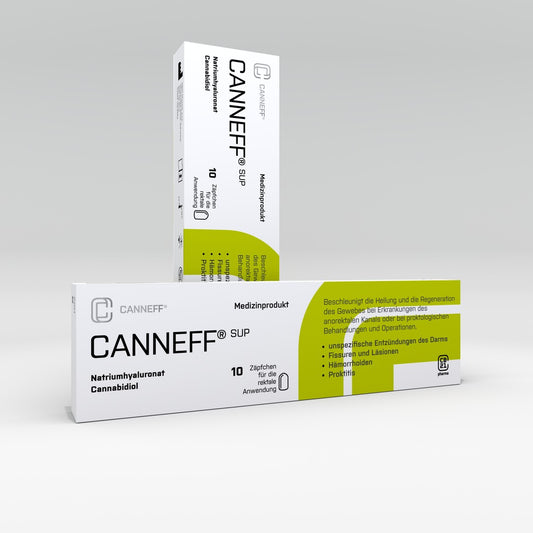
CANNEFF® SUP Suppositories are an innovative medical product that, in addition to hyaluronic acid, also contain medical CBD (cannabidiol). CANNEFF® SUP rectal suppositories can relieve symptoms of nonspecific inflammation in the intestine and also accelerate and support the healing of tissue in anal ulcers as well as after rectal surgeries such as incision or excision of a perianal thrombosis. Read more here about treatment of anal venous thrombosis with suppositories.
Which ointment is used to treat anal venous thrombosis?
For the treatment of anal venous thrombosis, various ointments and creams with different active ingredients are available. Most of these are available over the counter at pharmacies and must be applied externally to the affected area. The range includes locally anesthetic ointments based on lidocaine for pain relief, as well as corticosteroid-containing ointments to suppress painful swelling and inflammatory reactions of the surrounding tissue. There are also different alternative treatment approaches such as healing ointments and oils based on plants, which can also care for the skin in the anal area and have a soothing or decongestant effect on the tissue.
What home remedies are available for treating perianal thrombosis?
To relieve the symptoms of perianal venous thrombosis, various home remedies can also be used. Warm sitz baths with chamomile help reduce pain around the anus and promote blood circulation. Cooling compresses can also help relieve swelling around the anus in cases of perianal thrombosis. A diet rich in fiber combined with adequate fluid intake is important to support softer stools. This reduces pressure in the anal area during bowel movements. Applying natural remedies such as certain plant oils can also have a soothing effect. While home remedies can alleviate the symptoms of anal venous thrombosis, they should not replace professional medical treatment. If symptoms persist or worsen, it is advisable to consult a doctor. Read more here about the diagnosis and examinations of anal venous thrombosis by a doctor.
What treatment options are available for anal venous thrombosis?
Whether a conservative or surgical treatment is used for anal thrombosis depends on the size and severity of the lump on the anus, as well as the intensity of the pain. It also matters when or if the patient consults a doctor during the course of the illness. If the swelling on the anus does not go away on its own, there are generally conservative and surgical treatment approaches for perianal thromboses. While smaller lumps on the anus are primarily treated conservatively to relieve pain by reducing tissue swelling with suppositories or ointments and sitz baths, larger lumps and ulcers on the anus may sometimes require surgery for incision or complete removal of the thrombosis. If the anal venous thrombosis does not go away, it can be opened by the doctor through an incision, or if a perianal thrombosis keeps recurring, the blood clot and affected tissue are surgically removed by excision. Surgery for excision is therefore usually performed in cases of recurrent perianal thromboses. Read more here about the prevention of anal venous thromboses.
Are the costs for treating a perianal vein thrombosis covered by health insurance?
In general, health insurance covers the costs of treating a perianal thrombosis in most cases. However, coverage and co-payments depend on your statutory insurance provider, the severity of the condition, and the chosen treatment method. To be sure, check with your responsible health insurance company about coverage for your individual treatment.
How does an anal thrombosis surgery proceed?
If the invasive, surgical treatment method is chosen, there are two different procedures. The incision, in which the thrombus is opened and drained. This usually provides immediate relief of symptoms and pain. In excision, the entire thrombus, the surrounding tissue, and the supplying vessel are surgically completely removed. The wound at the anus is left open, not sutured, and if necessary, covered with a dressing. Both incision and excision are usually performed on an outpatient basis under local anesthesia. Therefore, a longer hospital stay after anal vein thrombosis surgery is usually not necessary. Excision is the more extensive procedure and is generally perceived by affected patients as significantly more unpleasant and postoperatively more painful. However, the risk of recurrence, i.e., a new or recurring anal thrombosis, is significantly reduced by the excision procedure.
Postoperative care mainly involves pain-relieving and anti-inflammatory medications or suppositories. The wound at the anus should be rinsed with clear water until fully healed, and mechanical irritation of the anal area should be avoided until complete healing. Regardless of the surgical method used for anal venous thrombosis, the wound pain after surgery is significantly less than the stretching or pressure pain initially caused by the anal venous thrombosis.
What is the difference between incision and excision in anal venous thrombosis?
If the anal venous thrombosis does not resolve on its own, an incision can accelerate the healing process. For this, the doctor can carefully open the lump and allow the contents to drain. This provides immediate relief after the treatment. Alternatively, the doctor can surgically remove the lump along with the affected vessel. After this therapy, some wound pain is to be expected for a few days. Both incision and excision can usually be performed on an outpatient basis, mostly under local anesthesia. However, excision is associated with a lower rate of recurring anal thromboses, but is a more invasive procedure compared to incision.
What happens if anal thrombosis is not operated on?
If no treatment or surgery is performed for anal venous thrombosis, the lump can gradually regress, shrink, and possibly harden over time. This is usually accompanied by a reduction in pain around the anus. Over the following weeks, the anal venous thrombosis can completely resolve.
Surgical removal of the thrombus at the anus is rarely necessary. In many cases, conservative treatment with medications such as ointments and suppositories to reduce swelling of the tissue in the anal area is sufficient. Combined with cooling compresses, the symptoms of anal venous thrombosis can be successfully alleviated and the healing process at the anus promoted. If the perianal venous thrombosis perforates or bursts uncontrollably, careful aftercare of the lesion at the anus to support wound healing is strongly recommended. If the pain level becomes unbearable or the anal venous thrombosis does not go away, surgery may be considered. In any case, open wounds at the anus can lead to further complications such as wound healing disorders or infections and consequently also anal abscesses. Read more here about daily measures to prevent recurrent anal venous thrombosis.
After the reduction of the lump at the anus, a hardened fold may also remain, known as the sentinel fold or marisca. A marisca can also be surgically removed if it is bothersome to the affected person. A perianal venous thrombosis is never considered dangerous or malignant, but it should be examined by a proctological specialist for accurate diagnosis and to clarify the cause. Read more about diagnosis and examinations in the blog post Anal Venous Thrombosis Doctor.
How long does healing take after anal vein thrombosis surgery?
When the anal vein thrombosis has been operated on, wound healing at the anus takes about one to two weeks. Heavy physical strain such as strong straining during bowel movements or lifting heavy loads should definitely be avoided after anal vein thrombosis surgery. After the operation, pay attention to thorough anal hygiene as well as careful care and wound management.
How can I speed up healing of the anus after anal vein thrombosis surgery?
After medical consultation, healing after colorectal surgery can be supported with suppositories. CANNEFF® SUP suppositories for rectal use can support healing of lesions in and around the anus as well as in the rectal area. The suppositories contain the unique combination of the two active ingredients CBD and hyaluronic acid. CANNEFF® SUP suppositories promote the healing process of ulcers such as anal vein thrombosis in the rectal area. But even after colorectal surgery, CANNEFF® SUP suppositories can help you support the recovery process after an incision or excision of the thrombosis and minimize discomfort in the anal region. Find more information here about the benefits of suppositories, as well as tips on application, dosage, and treatment of anal vein thrombosis with suppositories.
What complications can occur with anal vein thrombosis or after surgery?
The doctor or specialist usually diagnoses an anal vein thrombosis by visual inspection. However, it is important to best prevent the complications listed below and also to adequately consider differential diagnoses. Many medical laypeople first think of hemorrhoids when experiencing symptoms around the anus. Other proctological diseases can cause symptoms similar to perianal thrombosis or even arise as a subsequent complication of a ruptured anal vein thrombosis. An anal vein thrombosis is not an acute danger because the thrombus is fixed in the branched venous plexus at the anus, so it cannot detach and cause an embolism or infarction. Also, an anal thrombosis is generally not a sign that a blood clotting disorder in the affected person needs to be investigated more closely. In rare cases, surgical intervention for anal vein thrombosis can lead to wound healing disorders and infection, resulting in an anal abscess or an anal fistula.
Rupture of the perianal vein thrombosis and open wound at the anus
When the anal thrombosis bursts and bleeds, persistent bleeding at the anus can occur. However, this is only the blood escaping from the thrombosis, which usually stops on its own after a few days and is not dangerous. Wound hygiene at the anus and hygiene after bowel movements play a central role in wound healing to best prevent further complications such as infections or even the development of an anal abscess or an anal fistula.
Recurrent anal vein thrombosis
If a recurring anal venous thrombosis is detected at the same spot on the anus, a visit to the doctor is also recommended. If the thrombosis keeps recurring, the doctor will advise surgical removal by excision to end this tendency to relapse. After the operation, there is an open wound at the anus that is not sutured. Therefore, special attention and care are given to follow-up and wound care after surgery for recurring anal thrombosis. Even if anal venous thromboses recur irregularly, visiting a proctological specialist is certainly advisable.
Recurring perianal thromboses can be promoted by various factors, such as chronic constipation, prolonged sitting, sitting on cold surfaces, or strong straining during bowel movements. Early treatment of anal thrombosis with suppositories, or pain-relieving or anti-inflammatory ointments, can help reduce tissue swelling and thus relieve pain in the anus.
Hemorrhoids
When there is pressure or burning in the anal area, many first think of hemorrhoids. For this reason, perianal venous thromboses are sometimes mistakenly referred to as "false" hemorrhoids. Although both conditions share their location in the anal region, they can be clearly distinguished from each other. Hemorrhoids are located inside the intestine but can prolapse from the anus when straining or in later stages of the disease. The anal venous thrombosis, on the other hand, is visible in the venous plexus under the skin around the anus.
An anal vein thrombosis is a blood clot that forms in an external vein of the anus. While anal thrombosis occurs suddenly and manifests as a painful, bluish lump, hemorrhoids are swollen blood vessels in the rectal area and can appear internally or externally in later stages. There is a connection between the two conditions, as similar risk factors play a role in their causes. These include chronic constipation, straining during bowel movements, and prolonged sitting.
Anal fissures
Anal fissures are tears in the skin around the anus. They are often caused by hard stools or mechanical strain on the anal canal. Therefore, anal intercourse or childbirth can also lead to tears in the sensitive skin around the anus. Similar to anal vein thrombosis, a sudden pain is one of the symptoms of an anal fissure. However, depending on the cause, this pain usually occurs during bowel movements. The pain from an anal fissure can also persist beyond that and may be accompanied by burning sensations around the anus. In rare cases, anal vein thrombosis and anal fissures can occur together, such as with anal fissures caused by mechanical injury to the anal mucosa.
Marisken
Skin tags are basically harmless, outwardly protruding, loose folds of skin at the anus. Skin tags are excess skin that can form small folds or lobes in the anal region. The cause of their formation can sometimes be anal venous thromboses, which heal but can subsequently also lead to a skin tag. Small skin tags do not require treatment. Larger skin tags make hygiene in the anal area more difficult and can also lead to painful anal eczema. Often, surgery is required for larger skin tags.
Anal Margin Carcinoma
This is a rare malignant skin lesion. At first, it resembles an anal eczema with a reddish, smooth surface. Only later can symptoms such as anal itching, pain, or oozing wounds occur. Possible causes for its development include previous infections with the human papillomavirus, hepatitis infections, and generally a weakened immune system.
Anorectal Melanoma
Anorectal melanoma is a malignant skin tumor that forms in the area of the anus and rectum. This often severely life-shortening disease is very rare. Due to symptoms such as swelling, bleeding, or pain, anorectal melanoma can be mistaken for hemorrhoids or an anal venous thrombosis. However, this is rare. Worldwide, the incidence is only a few hundred cases of anorectal melanoma.
Anal eczema
Anal eczema often occurs in connection with hemorrhoids, skin tags, or a contact allergy. Inadequate anal hygiene can also cause anal eczema. Symptoms include anal itching, anal burning, as well as oozing skin changes or wounds on the buttocks, scaling, and pain in the affected anal area. As with hemorrhoids, the pain usually increases over time rather than appearing suddenly as with anal vein thrombosis. Those affected by anal eczema mainly complain of itching and burning at the anus, but not painful lumps like with anal vein thrombosis. However, both conditions can be indirectly linked. For example, intense rubbing or frequent cleaning of the anal area, as often occurs with anal eczema, can irritate the skin at the anus and increase the risk of anal vein thrombosis due to mechanical pressure or problems with blood congestion.