

What are the differences between an anal fissure and hemorrhoids?
An anal fissure and hemorrhoids are two different diseases of the anal area, which can be distinguished by their causes, location, and course.
Anal fissure
Definition: A long tear in the sensitive mucous membrane of the anal canal, often triggered by mechanical irritation or injury.
Causes: Mostly caused by hard stools, strong straining, or prolonged diarrhea. Increased tension of the sphincter muscle (sphincter hypertonia) can also play a role. Read more here about the causes of an anal fissure.
Course: Acute fissures usually heal within four to six weeks. Without treatment, the injury can become chronic, which makes healing more difficult.
Special features: An acute anal fissure is characterized by pain during bowel movements, while chronic fissures can involve additional complications such as ulcers or anal fistulas.
Hemorrhoids
Definition: Natural vascular cushions in the anal canal that play an important role in sealing the bowel. Symptoms only occur when they are enlarged or inflamed.
Causes: Often caused by chronic constipation, excessive straining, lack of exercise, overweight, or a genetic predisposition. Pregnancy can also be a risk factor. Read more here about the causes of hemorrhoids.
Course: The disease is divided into four stages, ranging from mild symptoms to permanently prolapsed hemorrhoids.
Special features: Complaints such as itching, oozing, or bleeding develop gradually. Pain is atypical in the early stage but can occur with trapped hemorrhoids.
The main difference lies in the location and causes. Anal fissures are injuries to the mucous membrane that usually occur acutely and painfully. Hemorrhoids, on the other hand, are natural structures that only cause discomfort when enlarged, often in the form of itching or bleeding.
Which symptoms indicate an anal fissure or hemorrhoids?
|
Symptom |
Anal fissure |
Hemorrhoids |
|
Pain |
Stabbing or burning, especially during or after bowel movements |
Rare in the early stage, more likely with complications such as incarceration |
|
Bleeding |
Bright red blood traces on toilet paper or stool. Read more here about the symptoms of an anal fissure. |
Bright blood on toilet paper or stool, usually painless. Read more here about bleeding hemorrhoids. |
|
Itching |
Can occur in chronic fissures |
Common, caused by mucus secretions |
|
Oozing |
Possible in chronic fissures |
Typical, often inflamed red skin |
|
Foreign body sensation |
Rare |
Common in advanced stages |
|
Protruding tissue |
None |
Visible or palpable tissue in advanced stages (Hemorrhoids Grade III and Hemorrhoids Grade IV) |
|
Skin changes |
Sentinel fold in chronic fissures |
Not typical |
|
Sphincter muscle |
Cramped sphincter muscle (sphincter hypertonia) |
No direct influence on the sphincter muscle |
Anal fissures are typically painful, especially during bowel movements, while hemorrhoids rarely cause pain in the early stages. Pain from hemorrhoids usually occurs in advanced stages or with complications such as incarceration (strangulation). Read more about the different stages of hemorrhoidal disease here.
How do anal fissures and hemorrhoids develop, and are there connections between the two?
What are the causes of anal fissures?
Anal fissures are tears in the delicate mucous membrane of the anal canal, mainly caused by mechanical stress. Read more about the causes of anal fissures here.
Constipation and hard stools: Straining or passing hard stools can overstretch and tear the delicate mucous membrane.
Chronic diarrhea: Frequent, loose stools irritate the anal mucosa and can promote tears.
Sphincter tension: Increased muscle tone (sphincter hypertonia) can reduce blood flow to the mucous membrane, making it more susceptible to injury.
Mechanical irritations: Anal sex or the insertion of objects into the anal canal can injure the mucous membrane.
Diseases: Chronic inflammatory bowel diseases such as Crohn's disease or infections (e.g., herpes or syphilis) can also promote anal fissures.
Causes of hemorrhoids
Hemorrhoids develop due to enlargement and swelling of the hemorrhoidal cushion, a natural vascular network in the anal canal. Read more about the causes of hemorrhoids here.
Chronic constipation: Straining increases pressure on the vessels in the anal canal and leads to their enlargement.
Prolonged sitting: A sedentary lifestyle can impair blood circulation in the pelvic area and increase the risk of hemorrhoids.
Pregnancy: The growing pressure from the uterus and hormonal changes promote vessel dilation.
Overweight: High abdominal pressure can impair blood flow in the vessels and lead to swelling.
Genetic predisposition: A congenital connective tissue weakness increases the likelihood of developing hemorrhoidal disease.
Connections between anal fissures and hemorrhoids
Both conditions can be triggered by similar risk factors such as constipation and straining. Additionally, hemorrhoids can promote the development of anal fissures if the enlarged hemorrhoidal cushion narrows the anal canal and the mucosa is more stressed during bowel movements. Likewise, an anal fissure can worsen the symptoms of hemorrhoids, as the pain and sphincter cramps make bowel movements difficult and increase straining.
Although they have different causes, anal fissures and hemorrhoids often occur simultaneously. Early diagnosis and targeted treatment can help break the vicious cycle of pain, inflammation, and further tissue damage.
How to effectively treat anal fissures and hemorrhoids?
The treatment of both conditions is based on relieving symptoms, promoting healing, and preventing worsening. Products like CANNEFF® can support both cases, especially through their anti-inflammatory and regenerative properties.
Conservative treatment of anal fissures
Stool regulation:
- Nutrition: High-fiber diet with fruits, vegetables, and whole grains.
- Fluid intake: 1.5–2 liters of water or unsweetened tea daily to keep stools soft.
- Stool softeners: Mild agents like psyllium husks if needed.
Pain relief and healing:
- Local ointments with pain-relieving and healing-promoting ingredients.
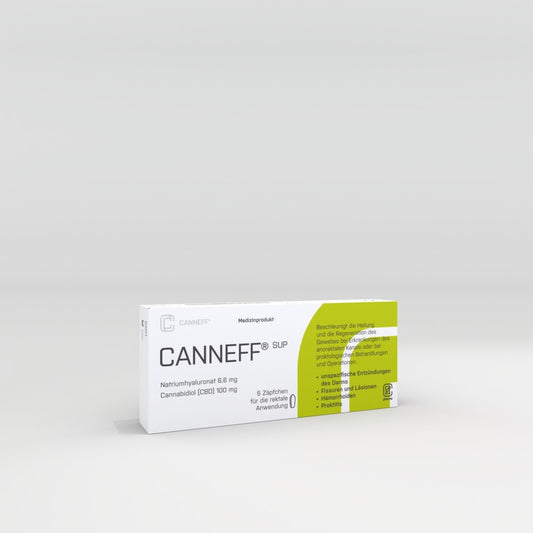
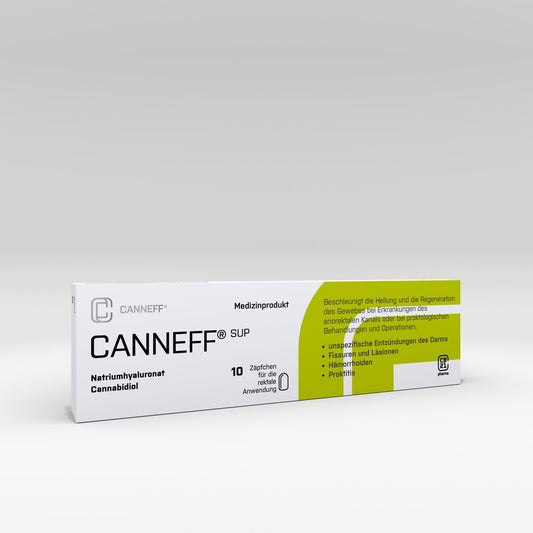
- CANNEFF® SUP suppositories: CANNEFF® SUP suppositories contain CBD and hyaluronic acid to soothe the mucous membrane, reduce inflammation, and promote wound healing.
- Sitz baths with chamomile or oak bark to relieve pain and promote blood circulation.
Read more here about additional measures to accelerate the healing of an anal fissure.
Gentle hygiene:
- Cleaning with lukewarm water, avoiding aggressive cleaning agents.
- Dabbing the area instead of rubbing to protect the sensitive skin.
Medical and surgical measures for chronic anal fissures
Botox injections:
- To relax the sphincter muscle and promote healing.
Surgical removal:
- In severe or non-healing fissures, the damaged tissue is removed. A slight partial incision of the sphincter muscle (sphincterotomy) can accelerate healing.
Find comprehensive information here about the surgery of an anal fissure.
Conservative treatment of Hemorrhoids Grade I–II
Stool regulation:
As with anal fissures.
Local treatment:
- Ointments and suppositories with anti-inflammatory and pain-relieving active ingredients.
- CANNEFF® SUP suppositories: Ideal for soothing the mucous membrane and supporting regeneration. Find more information here about CANNEFF® SUP suppositories and treating hemorrhoids.
- Sitz baths: With anti-inflammatory additives for pain relief.
- Lifestyle changes: Regular exercise and avoiding prolonged sitting.
Medical and surgical measures (Hemorrhoids Grade III–IV)
Minimally invasive methods:
- Rubber band ligation: Tying off the hemorrhoids, which then die off.
- Sclerotherapy: Vessel sclerosis to shrink the tissue.
- Infrared coagulation: Targeted heat treatment to shrink hemorrhoids.
Surgical procedures:
- Hemorrhoidectomy: Surgical removal of severe cases.
- Stapler method: Correction of the mucosa and reduction of hemorrhoids using a stapling device.
- HAL method: Ultrasound-guided ligation of hemorrhoidal arteries.
Read more here about hemorrhoid treatment and various surgical procedures and necessary aftercare of a hemorrhoid surgery.
A fiber-rich diet, adequate fluid intake, and gentle hygiene are essential for both anal fissures and hemorrhoids.
CANNEFF® Products: Thanks to their anti-inflammatory and healing-promoting properties, CANNEFF® SUP suppositories are a useful addition to the treatment of both hemorrhoids and anal fissures.
More information on the treatment of hemorrhoids:
- Treatment of Grade I Hemorrhoids
- Treatment of Grade II Hemorrhoids
- Treatment of Grade III Hemorrhoids
- Treatment of Grade IV Hemorrhoids
What role do nutrition, hygiene, and home remedies play in the prevention and treatment of anal fissures and hemorrhoids?
Nutrition, hygiene, and home remedies play a crucial role in the prevention and treatment of anal fissures and hemorrhoids. A fiber-rich diet with whole grains, fresh fruits, and vegetables supports digestion and ensures a soft stool consistency, which reduces pressure in the anal area. Equally important is adequate fluid intake to keep the stool smooth and prevent constipation.
Hygiene in the anal area should be gentle and effective to avoid irritation and promote healing. After bowel movements, cleaning with lukewarm water and patting dry with a soft cloth is recommended, while harsh cleaning agents or wet wipes containing fragrances or preservatives should be avoided. Regular care with soothing and anti-inflammatory ointments or suppositories, such as CANNEFF® SUP with CBD and hyaluronic acid, can calm the mucous membranes and support regeneration.
Home remedies like sitz baths with chamomile or oak bark have a soothing effect and promote blood circulation in the anal area, which both relieves pain and accelerates healing. Additionally, cooling compresses can help reduce swelling and pain. At the same time, behaviors that could worsen the symptoms, such as prolonged sitting or straining during bowel movements, should be avoided. A combination of a healthy diet, gentle hygiene, and proven home remedies not only supports treatment but also significantly reduces the risk of recurrence.
When should you see a doctor for anal complaints such as pain, bleeding, or itching?
In case of anal complaints such as pain, bleeding, or itching, a doctor should be consulted if the symptoms persist, worsen, or are accompanied by other issues. Particularly alarming are severe bleeding episodes that recur or are accompanied by dark blood, as this could indicate serious conditions like colorectal cancer. Persistent pain that affects daily life, or itching and oozing that do not subside despite careful hygiene, should also be examined, as they may indicate conditions such as hemorrhoids, anal fissures, anal vein thrombosis, or infections. Read more here about bleeding hemorrhoids.
A visit to the doctor is also advisable if there are visible changes in the anal area, such as lumps, swelling, or skin changes, which could indicate anal thrombosis, anal abscesses, or other conditions. If the symptoms do not improve after using home remedies or over-the-counter products such as ointments and suppositories, including CANNEFF® SUP to relieve inflammation and promote healing, medical advice should also be sought.
Symptoms such as fever, severe pressure sensation, unintended weight loss, or mucous discharge could indicate a more serious condition that requires urgent treatment. An early visit to the doctor allows for an accurate diagnosis and prevents complaints from becoming chronic or worsening.
How is the diagnosis of anal fissures or hemorrhoids conducted?
The diagnosis of anal fissures and hemorrhoids begins with a thorough medical history. The doctor asks the patient about symptoms such as pain, itching, bleeding, stool changes, and possible triggers. Information about previous illnesses, dietary habits, and bowel habits is especially important to narrow down the cause of the complaints.
The next step is a physical examination. The anal area is externally inspected to detect visible changes such as tears (anal fissures), nodules (hemorrhoids or analthromboses), or inflamed skin areas (e.g., anal eczema). In anal fissures, longitudinal tears are often visible, while hemorrhoids can appear as bulging vessels or tissue inside or outside the anal canal depending on the severity. Read more here about the different stages of hemorrhoidal disease.
A rectal digital examination is also part of the diagnostics. By gently palpating the anal canal, the doctor checks for tissue changes, nodules, or hardenings. This can be locally anesthetized in case of severe pain, especially with an acute anal fissure.
In unclear cases or when other diseases such as anal abscesses, anal fistulas, or tumors are suspected, a rectal endoscopy (proctoscopy) is performed. This involves examining the anal canal with a small instrument to identify internal hemorrhoids or inflammatory changes. If necessary, a more extensive colonoscopy can also be performed, especially if blood in the stool is a symptom, to rule out serious conditions such as polyps or colon cancer.
Careful diagnostics ensure that the complaints are accurately classified and individually appropriate treatment measures can be initiated. It also provides information on whether accompanying factors such as constipation or infections are present, which need to be specifically treated.