

How can you tell if you have a perianal vein thrombosis?
A perianal vein thrombosis usually presents itself as a sudden, painful swelling, like one or more lumps or nodules, in the anal area. This swelling at the anus is generally easy to feel and feels like a hard lump the size of a pea up to a plum. The affected area is often bluish-red or violet in color, which is due to the clotted blood in the vein near the rectum. Typically, there is also surrounding edema, which contributes to the severe pain in the anus due to tissue tension. The lump at the anus can rupture spontaneously or under pressure, meaning it bursts open, releasing parts of the clot. Often, there are not just one but several lumps or nodules next to each other at the anus. Many affected individuals report severe, stabbing pain, especially when sitting or applying pressure to the affected area. In large perianal vein thromboses, an ulcer can develop and eventually the thrombosis may burst open, leading to an open wound in the anal area.
The pain usually occurs unexpectedly, often after physical exertion, lifting heavy loads, or straining hard during bowel movements. Unlike hemorrhoids, a perianal vein thrombosis rarely causes anal itching or anal burning and usually does not lead to bleeding at the anus. The symptoms and pain from anal thromboses are typically strongest in the first few days and then gradually decrease as the blood clot dissolves or recedes. It often takes about one to two weeks for the symptoms to fully improve and for the palpable bluish lump at the anus or lower part of the rectum to disappear.
Although the pain usually subsides on its own, daily life can be significantly affected in the first few days due to the unpleasant symptoms. Therefore, it is advisable to see a doctor if you suspect a perianal vein thrombosis to get an accurate diagnosis and supportive treatment for anal thrombosis to achieve early relief through appropriate therapy.
What are the symptoms of anal vein thrombosis?
The main symptom of a anal vein thrombosis is sudden, sometimes very severe pain caused by the swelling of the blood clot at the anal margin. This lump or nodule at the anus can be accompanied by anal itching, stabbing pain at the anus, anal burning, or a strong feeling of tension or pressure as well as tenderness. Perianal thromboses appear visually at the anal margin or in the anal canal as bluish-violet-red nodules ranging from the size of a pinhead up to a plum. Sometimes several nodules form side by side at the anus. The symptoms of an anal thrombosis develop very suddenly or within a short time. In some cases, the pain can be so intense that sitting becomes unbearable due to the pressure pain.
In other cases, an anal vein thrombosis occurs without any pain – then the perianal thrombosis can only be diagnosed by the swelling formed at the anus. Affected individuals can almost always feel the swelling at the anus themselves, depending on the exact extent and location of the anal thrombosis, as well as any accompanying swelling or even ulcers.
From the healed lumps or nodules of the anal vein thrombosis, small skin folds can sometimes form at the anus, known as sentinel folds or marisks. Marisks are generally considered harmless. However, larger marisks can significantly complicate anal hygiene and thereby increase susceptibility to certain proctological diseases such as anal eczema.
Is an anal vein thrombosis considered an emergency?
An anal vein thrombosis is a harmless condition that, although usually very bothersome and temporarily painful for those affected, does not pose an acute danger. When spontaneous blood clotting occurs in the veins of the anal area, it is called a thrombosis, but in the perianal region it is generally harmless and should not be compared to thromboses in larger blood vessels in the legs or arms, where there is a life-threatening risk of embolism or infarction. An anal vein thrombosis does not mean there is a higher risk of stroke or heart attack. Perianal vein thromboses are located directly in the veins just under the skin of the anus and are therefore very superficial. It is, of course, recommended to seek medical advice for a suspected proctological condition, especially if there is severe discomfort at the anus, for a precise diagnosis and investigations to clarify the cause of the perianal vein thrombosis. If the anal vein thrombosis does not go away or if an anal vein thrombosis recurs, a doctor’s visit is definitely advisable.
How long does an anal vein thrombosis hurt?
The pain from an anal vein thrombosis is usually strongest in the first few days, especially within the first 48 hours after the clot appears. During this time, the swelling is hard, the lump is easily palpable, and the pain can be described as sharp or pressing, especially when sitting or touching the area.
The acute symptoms usually gradually subside after 3 to 5 days as the blood clot slowly dissolves. In most cases, the pain is significantly reduced or completely gone after about 1 to 2 weeks. However, the exact duration of pain can vary from person to person, depending on the size of the clot and the individual body's response.
If the symptoms of the perianal thrombosis persist longer or are very intense, a doctor may puncture or remove the clot through a minor surgical procedure to provide faster pain relief. Your doctor can also advise you on supportive treatment of an anal vein thrombosis to reduce tissue swelling. Measures such as sitz baths, certain ointments, or suppositories can support the healing process and tissue regeneration in the rectal area. Sometimes small skin folds called sentinel folds or marisks can form from healed lumps.
How do the symptoms of a perianal vein thrombosis differ from a perianal abscess?
The symptoms of a perianal vein thrombosis and a perianal abscess can usually be clearly distinguished from each other.
A perianal vein thrombosis causes sudden, severe, stabbing pain, often accompanied by one or more small bluish nodular swellings at the anus. Fever or pus discharge is not typical here, as a perianal vein thrombosis is not an infection but a venous blood congestion.
In contrast, an anal abscess, also called a perianal abscess, usually develops slowly with increasing throbbing pain at the anus. Both conditions occur perianally, meaning in the area around the anus. The increasing pain of an anal abscess is often accompanied by a red, warm swelling in the anal area. Typical for an anal abscess are also systemic signs of inflammation such as fever and a general feeling of illness, as it is a bacterial infection. Another distinguishing feature between an anal vein thrombosis and an anal abscess is the possible discharge of pus from the perianal abscess. Pus discharge does not occur with an anal thrombosis, as it is not a bacterial-infectious disease. However, a ruptured anal vein thrombosis can lead to the release of the clot and thus blood in the anal area. If a ruptured anal vein thrombosis does not heal well and the wound in the anal area becomes infected by germs or pathogens, an anal abscess can develop. If the perianal abscess spontaneously drains, an anal fistula can also form from the abscess. Therefore, if you experience symptoms related to these conditions, a timely visit to the doctor is always advisable to investigate the cause of your complaints more precisely. Early diagnosis of proctological diseases, including anal abscesses and anal fistulas, usually helps to relieve symptoms of anorectal diseases faster and to treat and eliminate the causes as effectively as possible.
What should I do if my anal thrombosis has burst?
If an anal thrombosis bursts, it is usually not a reason to panic. Small bleedings typically occur, often accompanied by a sudden drop in tissue pressure. The severe pain at the anus also subsides as the tissue swelling decreases.
The first step is to gently clean the affected area. It is best to carefully rinse the anus with water to clean the wound and keep it clean. It is important to gently dry the area to avoid further irritation of the sensitive skin around the anus.
A sterile compress or a clean pad between the buttock folds or in the underwear can help catch any minor bleeding and protect the wound from contamination. Moderate bloody discharge in the following days is normal. However, if the vessels at the affected site do not seal well or if an infection occurs in an open wound at the anus, heavier bleeding may occur that requires surgical treatment. Wounds at the anus or in the intimate area require particularly thorough and careful aftercare to prevent infections and further complications. To promote healing of the burst anal thrombosis and relieve pain, certain suppositories or sitz baths can have a soothing effect. Read more here about the treatment of anal vein thromboses with suppositories.
Despite the spontaneous release of the blood clot, you should see a doctor for safety. The doctor can check whether the wound at the anus is healing well and whether there are no complications such as infections or other proctological diseases. The doctor can also advise you on further wound care or, if necessary, recommend or prescribe a special ointment or suppositories to treat and accelerate healing. It is advisable to closely monitor the healing process of the wound at the anus in the following days. If you notice signs such as severe redness, persistent pain, or pus formation, this could indicate an infection and thus an anal abscess that requires medical treatment. An anal abscess can develop into an anal fistula, so medical evaluation, diagnosis, and further examination are definitely recommended even if the anal thrombosis has burst. Read more about diagnosis and examinations for anal thrombosis in the blog post on Anal Vein Thrombosis Doctor.
What to do if the anal vein thrombosis bleeds?
If pressure is applied to the thrombosis, for example by friction from toilet paper, it can spontaneously open or burst, allowing parts or the entire content of the thrombus to escape externally. The affected person then notices bleeding at the anus. Additionally, the pain immediately decreases because the tissue in the anal area is no longer under tension from the blood clot. The resulting wound usually heals on its own but requires thorough wound care and aftercare. If pathogens enter the wound, the area at the anus can become inflamed and potentially lead to an anal abscess or an anal fistula. Therefore, if the anal vein thrombosis has burst, you should have the wound at the anus examined by a doctor, especially if your symptoms worsen or additional symptoms appear. Anal vein thromboses can also recur, so it makes sense to learn about the causes of perianal thromboses and how to prevent perianal thromboses. Find all information here if the anal vein thrombosis keeps coming back. To speed up healing of the wound at the anus, read our blog post on anal vein thrombosis treatment with suppositories.
Anal vein thromboses can lead to marisks after healing. Experts call these excess skin folds or flaps in the anal region sentinel folds or marisks. Small marisks usually do not require treatment, whereas larger marisks often complicate hygiene in the anal area and can also lead to painful anal eczema.
How can I relieve the symptoms of a perianal vein thrombosis?
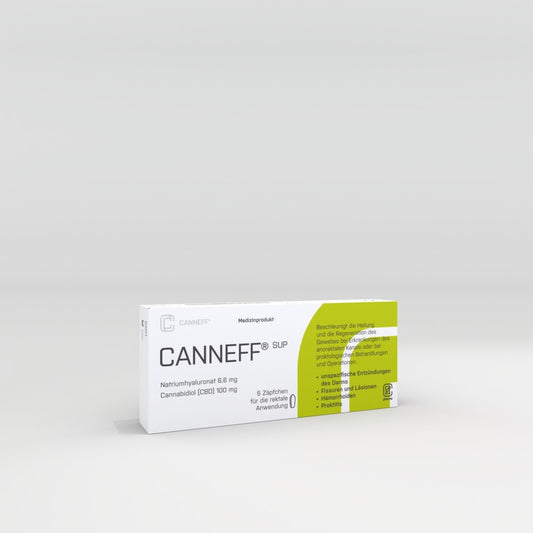
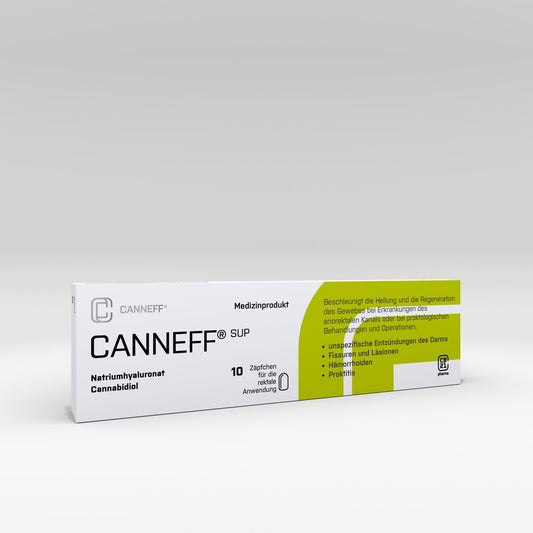
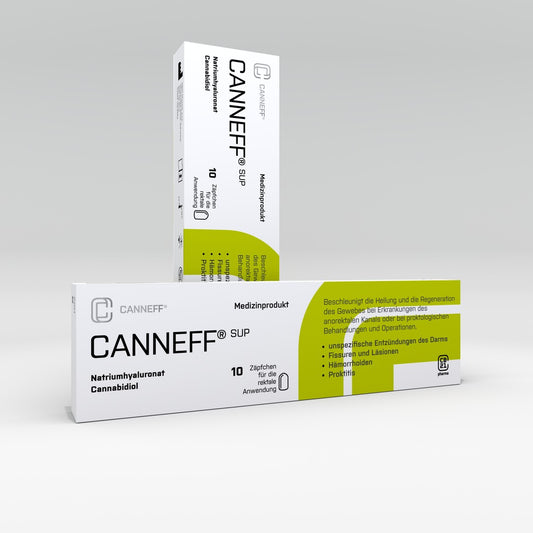
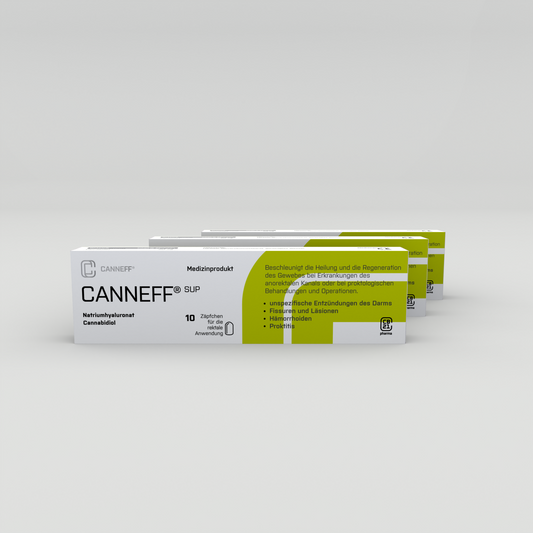
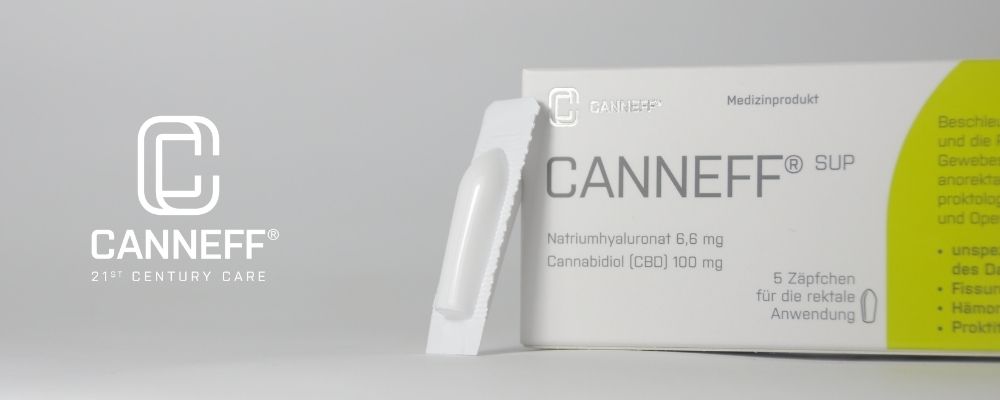
The symptoms of an anal vein thrombosis can be effectively relieved by various measures, even though the discomfort, such as pain at the anus, can be very intense in the first few days. Do not hesitate to seek medical advice for a precise diagnosis and to explore the cause of the anal vein thrombosis. Relief measures can be taken, especially with certain rectal suppositories like CANNEFF® SUP suppositories.
Ointments and suppositories to reduce swelling in the anal area
In some cases, using a special ointment with lidocaine or suppositories can effectively relieve the symptoms of anal vein thrombosis. When tissue swelling is reduced and supported, the pain at the anus can be alleviated. These ointments or suppositories usually contain anti-inflammatory or pain-relieving ingredients and can ease pain or support the healing process. Read more about the treatment of anal vein thromboses with suppositories.
Painkillers such as ibuprofen or paracetamol can also help relieve acute pain. They have both pain-relieving and anti-inflammatory effects and help reduce general discomfort. It is important to follow the correct dosage and consult a doctor if unsure.
Sitz baths with anti-inflammatory additives
Home remedies like warm sitz baths can initially help reduce pain and swelling at the anus. Sitz baths relax the pelvic floor muscles and promote blood circulation in the anal area, which can support healing and regeneration. Adding anti-inflammatory substances like chamomile or oak bark can be especially soothing. However, be aware that home remedies alone are not sufficient for treating proctological diseases, and consulting a general practitioner or proctological specialist is always recommended. Read more about what to expect during diagnosis and examinations at the doctor in the blog post on Anal Vein Thrombosis Doctor.
Careful wound care and cleaning of the anus
Wearing loose clothing and underwear can additionally minimize pressure on the affected area of the anal thrombosis or the wound at the anus. A sterile compress or soft gauze pad in the underwear can help protect irritated skin in the anal area and absorb any discharge of blood or secretions from the wound. Regular, gentle cleaning of the anal area is important to keep the sensitive skin around the anus clean without further irritation. This helps minimize infections, wound healing disorders, and secondary diseases at the anus in most cases.
From healed anal vein thromboses, so-called sentinel folds can develop. Medical experts call this excess skin at the anus marisks. While smaller marisks usually do not require treatment, larger marisks impair hygiene in the anal area and can also lead to painful anal eczema. Read more about marisks.
Stool regulation, diet, and fluid intake
During bowel movements, pay attention to your straining behavior and avoid strong straining due to the anal vein thrombosis, also to avoid further stressing the affected tissue at the anus. A fiber-rich diet combined with adequate fluid intake helps keep stools soft and thus reduces pressure in the pelvic floor and abdominal area during toilet use. Also avoid further mechanical irritation of the anus, such as excessive rubbing with toilet paper after bowel movements or anal intercourse, to prevent further irritation of the swelling at the anus.
If the pain is very severe or the symptoms do not improve after a few days, you should see a doctor. In some cases, a small outpatient procedure can remove the blood clot at the anal margin and quickly relieve the symptoms of the perianal thrombosis. There are various methods for surgery of an anal vein thrombosis. Read more about the treatment of perianal vein thromboses. Here you will find all information about diagnosis and examinations during a doctor’s visit for perianal thrombosis in the blog post Anal Vein Thrombosis Doctor.