

What symptoms occur with an anal thrombosis?
An anal thrombosis, also called perianal thrombosis, is a sudden, painful swelling in the area of the anal margin. It is caused by a blood clot in the superficial veins and is often mistaken for external hemorrhoids. However, unlike these, anal thromboses are usually extremely painful but harmless. The most noticeable symptom is a taut, elastic, bluish-red swelling at the anal margin, accompanied by sudden onset pain. This pain can be so severe that sitting or walking becomes agonizing. Some patients also experience a strong pressure sensation that makes bowel movements uncomfortable. Itching and burning are also possible, especially if the skin is very tense due to the swelling. Find all further information about the symptoms of anal thrombosis here.
Can an anal thrombosis bleed? Causes & significance
Usually, an anal thrombosis does not bleed. The blood clot is located in a closed venous network and remains fixed there. However, there are two situations in which bleeding can occur:
Spontaneous rupture: With very high tension, the skin over the thrombosis can tear, releasing dark, crumbly blood. This often leads to sudden relief as the pressure decreases.
After mechanical irritation: Strong friction, such as from toilet paper or hard sitting, can injure the tense skin and cause minor bleeding.
Bleeding is not dangerous but should be monitored. If heavy or persistent bleeding occurs, a doctor's visit is advisable. Read more here about the doctor's visit for anal thrombosis.
How to recognize an anal vein thrombosis? Difference from hemorrhoids
Many affected people confuse an anal vein thrombosis with hemorrhoids, as both conditions cause lumps in the anal area. But there are clear differences:
|
Feature |
Anal vein thrombosis |
Hemorrhoids |
|
Pain |
Very intense, stabbing |
Usually mild, itching |
|
Color of swelling |
Bluish-red |
Skin-colored or reddish |
|
Location |
Directly at the anus edge |
Internal, visible only later |
|
Bleeding |
Rare, dark blood |
Common, bright red blood |
|
Regression |
After a few weeks |
Can progress, often persists |
A key distinguishing feature is the non-reducibility of an anal vein thrombosis. While hemorrhoids can still be pushed back in early stages, a thrombosis remains fixed in place.
Bluish swelling at the anus – is it an anal vein thrombosis?
A bluish-purple hardening at the edge of the anus is the typical sign of an anal vein thrombosis. It feels taut and elastic, is not movable, and often occurs after sudden strain – such as heavy lifting, straining during bowel movements, or prolonged sitting. If an anal vein thrombosis recurs frequently, medical evaluation is strongly recommended.
Itching, pressure & pain: Are these signs of an anal vein thrombosis?
The most common symptoms of an anal vein thrombosis are sudden pain and a feeling of pressure. Itching occurs less frequently but can appear as a side effect of healing or due to skin irritation.
|
Symptom |
Typical for anal vein thrombosis? |
|
Sudden pain |
Yes, very strong |
|
Pressure sensation in the anus |
Yes, often |
|
Itching |
Rare, more during the healing phase |
|
Burning |
Possible if the skin is irritated |
What size can an anal vein thrombosis reach?
The size of the swelling can range from a few millimeters to plum-sized lumps. The larger the clot, the stronger the pain and pressure sensation usually are. Very large thromboses can stretch the skin significantly, which can lead to tension cracks or spontaneous discharge. Read more here about the treatment of anal vein thrombosis.
Sudden pain in the anus – is it thrombosis or something else?
Sudden pain in the anal area can indicate an anal vein thrombosis. Read more here about the symptoms of anal vein thrombosis, or get an overview here of the causes of perianal thrombosis. However, there are other proctological diseases that cause similar symptoms:
|
Possible cause |
Characteristics |
|
Anal vein thrombosis |
Bluish, tense swelling, severe pain |
|
Hemorrhoids (inflamed) |
Itching, occasional pain, bright red bleeding. More about hemorrhoids |
|
Anal fissure |
Pain especially during bowel movements, bright red blood. More about anal fissures. |
|
Anal abscess |
Swelling, redness, fever possible. More about anal abscesses. |
Can an anal vein thrombosis burst on its own?
Yes, this can happen if the pressure in the tissue becomes too high. In this case, usually a small amount of dark red or black blood is released. After the discharge, the pain often immediately decreases significantly. The wound should be kept clean to avoid infections. If complications occur, or even if the thrombosis heals on its own, so-called sentinel folds or skin tags may form.
Is an anal vein thrombosis dangerous if it bleeds?
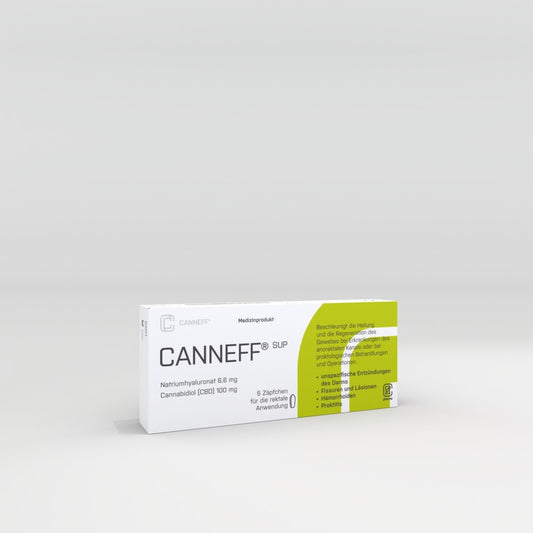
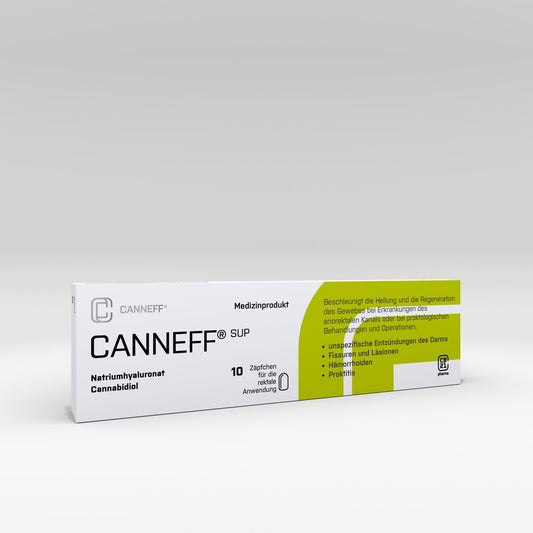
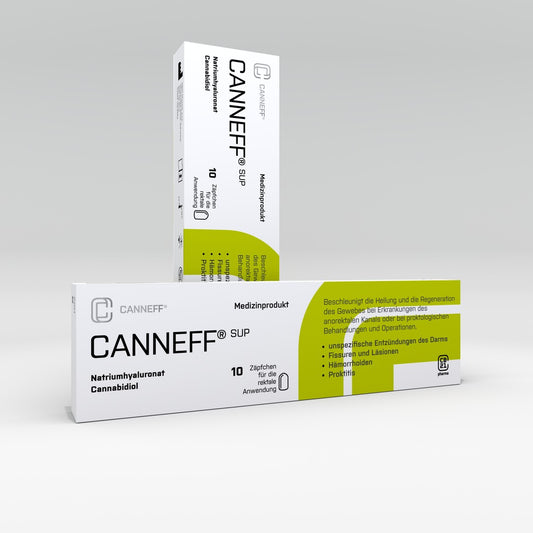
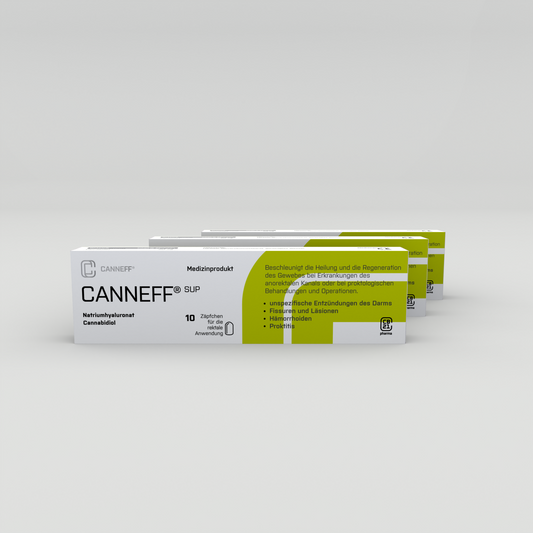
No, a bleeding anal vein thrombosis is usually not dangerous. The blood comes from the clot dissolving and cannot enter the bloodstream. To relieve anal thrombosis symptoms and promote healing, CANNEFF SUP suppositories with anti-inflammatory ingredients can provide supportive effects. They help reduce swelling and speed up the healing process. Read more here about the danger of an anal vein thrombosis, or about the use of suppositories for treating anal thrombosis.
What signs indicate that an anal vein thrombosis is regressing?
The pain noticeably decreases within 3-5 days, while the swelling gradually gets smaller. The skin over the clot relaxes and may take on a slightly reddish discoloration. After about 2-4 weeks, the clot is usually completely broken down. Read more here about the duration of an anal vein thrombosis. Also find information here on all measures to prevent anal vein thrombosis.
|
Healing phase |
Characteristics |
|
1st week |
Severe pain, hard swelling |
|
2nd week |
Pain decreases, swelling reduces |
|
3rd-4th week |
Nodule dissolves, skin relaxes |
|
After 4-6 weeks |
Mostly complete regression |