

Why does anal vein thrombosis occur so frequently after childbirth?
During pregnancy and especially under the strain of childbirth, there are strong pressure changes in the abdominal and pelvic area. The veins around the anus are heavily stressed. Hormonal changes, increased blood clotting tendency, and pushing during delivery can lead to the formation of a blood clot, an anal vein thrombosis, in the superficial veins of the anus.
Which factors during pregnancy and childbirth promote anal vein thrombosis?
Several factors increase the risk of anal vein thrombosis after childbirth:
|
Risk factor |
Impact on the anal veins |
|
Hormonal changes |
Increased vascular permeability, weaker connective tissue |
|
Slowed blood flow |
Higher risk of thrombosis due to congested backflow |
|
Strong pressure during pushing |
Sudden venous congestion in the anal area |
|
Weight gain during pregnancy |
Increased strain on the pelvic and anal veins |
|
Prolonged lying down after childbirth |
Restricted blood flow in the lower body area |
These factors explain why many women suddenly notice a bluish, painful swelling at the edge of the anus after giving birth. If the anal vein thrombosis does not regress, or the perianal thrombosis keeps recurring, it is advisable to see a doctor. For diagnosis and examinations, you can find more information in the blog post about anal vein thrombosis doctor. Here you will also find further information about the causes of anal vein thrombosis.
Is an anal vein thrombosis dangerous for the mother or baby after childbirth?
Although an anal vein thrombosis can be very painful, it is not dangerous – neither for the mother nor the baby. It only affects the superficial veins in the anal area and has no connection to the deep venous system. There is no risk of embolism or serious thrombosis.
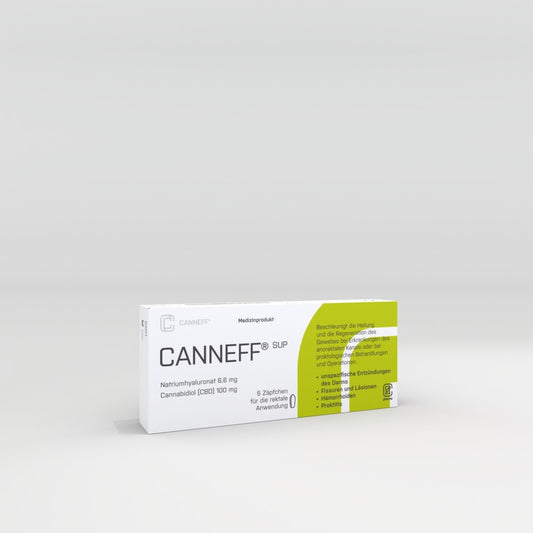
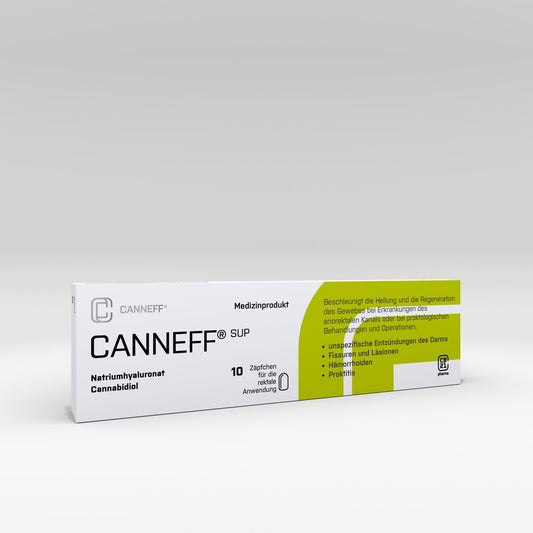
However, the thrombosis can affect the new mother during her recovery phase, especially if it makes sitting or breastfeeding difficult. Pain-relieving measures such as sitz baths and CANNEFF® SUP suppositories help make the healing process more comfortable. Please note that CANNEFF® SUP suppositories are not recommended for breastfeeding mothers. Learn more here about whether anal vein thromboses are dangerous, or read more about the causes of anal vein thromboses, as well as measures for preventing anal vein thromboses.
How long does it take to heal an anal vein thrombosis after childbirth?
The healing duration depends on the size of the thrombosis. Smaller anal vein thromboses often regress within two to three weeks, while larger ones may take up to six weeks. The pain is strongest in the first few days but decreases over time.
|
Healing phase |
Symptoms |
|
1-3 days |
Severe pain, tight skin, hard swelling |
|
4-7 days |
Pain subsides, swelling remains palpable |
|
2-3 weeks |
Thrombosis begins to regress |
|
4-6 weeks |
Mostly complete regression, possibly remaining skin fold (Mariske) |
The healing time can be shortened by anti-inflammatory measures. Especially CANNEFF® SUP suppositories can help as they reduce swelling and support healing. However, note that CANNEFF® SUP suppositories are not recommended for breastfeeding mothers. Read more here about the treatment of anal venous thromboses, or about the duration of treatment for anal thromboses.
What gentle treatment methods are available for new mothers?
The treatment of anal venous thromboses should be gentle and adapted to the special needs of breastfeeding mothers. The following methods help to relieve symptoms:
Sitz baths with chamomile or oak bark: Relieve pain, have anti-inflammatory effects.
CANNEFF SUP suppositories: CANNEFF® SUP reduce swelling and promote healing.
Heparin-containing ointments: Support blood breakdown but must be coordinated with a doctor if breastfeeding.
High-fiber diet & plenty of fluids: Facilitate bowel movements and prevent straining again.
Soft seat cushions: Relieve the anal area and reduce pressure pain.
Read more here about the treatment of anal venous thromboses. Find in-depth information in the blog post on alternative therapy approaches for anal thromboses, or on herbal treatment options for anal venous thromboses.
How can you distinguish an anal venous thrombosis after childbirth from hemorrhoids?
Anal venous thromboses are often confused with hemorrhoids, as both conditions frequently occur after childbirth. However, there are crucial differences:
|
Characteristic |
Anal venous thrombosis |
Hemorrhoids |
|
Pain |
Very intense, stabbing |
Usually mild to moderate, itching |
|
Color of swelling |
Bluish-red |
Skin-colored or reddish |
|
Location |
Directly at the anal margin |
Internal, only visible externally in late stages |
|
Bleeding |
Rare, dark blood |
Frequent, bright red blood |
|
Involution |
After a few weeks |
Can persist or enlarge |
Hemorrhoids are generally less painful, while an anal venous thrombosis is especially painful in the first few days. Read more here about the symptoms of anal venous thrombosis, or about bleeding as a symptom of anal thrombosis.
Learn more here about the key differences between anal thrombosis or hemorrhoids and which treatment is appropriate for each.
Can an anal venous thrombosis affect postpartum recovery?
In most cases, no. It can make sitting or moving uncomfortable but has no direct effect on the involution of the uterus or the pelvic floor. If the pain is severe, mothers should make sure to do their postpartum exercises while lying down.
Which natural healing methods help mothers after childbirth?
In addition to medical treatments, there are proven herbal methods to support healing. Read more here about herbal treatment options for anal venous thrombosis. Here is a brief overview of the most well-known natural remedies:
|
Natural remedies |
Effect |
|
Chamomile sitz baths |
Anti-inflammatory, calming |
|
Aloe vera gel |
Cooling, soothing |
|
Witch hazel ointment |
Supports wound healing |
|
Quark compress |
Reduces swelling, relieves pain |
|
CANNEFF SUP suppositories |
Anti-inflammatory, promotes healing |
How can anal thrombosis be avoided after childbirth?
Preventive measures can help reduce the risk of anal thrombosis after childbirth:
-
Avoiding straining during bowel movements through a high-fiber diet.
-
Adequate fluid intaketo prevent constipation.
-
Gentle exercise already after birth to promote circulation.
-
Elevating the legsto improve venous return.
Find more measures here for preventing anal thrombosis.
Are there special sitz baths or medicinal plants suitable for mothers?
Yes, some sitz baths are especially gentle for new mothers:
|
Ingredient for sitz bath |
Effect |
|
Chamomile |
Soothing, anti-inflammatory |
|
Oak bark |
Astringent, promotes wound healing |
|
Witch hazel |
Stops bleeding, anti-inflammatory |
These natural measures can be used without concern and gently support the healing process. Read more here about treatment of anal thrombosis. Your doctor can advise you on possible preventive measures as well as therapy options for anal thrombosis. Learn more about diagnosis and examinations in the blog post Anal Thrombosis Doctor.
Further information on medicinal plants and home remedies can be found in the blog post on alternative therapy approaches for anal thrombosis, as well as on herbal treatment options for anal thrombosis.