

What to do if the anal vein thrombosis does not go away?
If an anal vein thrombosis does not go away or does not heal on its own, there are several steps that affected individuals should take. First, it is important to see a doctor to clarify the exact cause of the persistent perianal thrombosis. The doctor can best assess whether a conservative treatment of anal vein thrombosis is still possible or sufficient to allow the anal thrombosis to be absorbed and fully heal, or whether a surgical procedure is necessary in your case.
Anal vein thrombosis, which can occur both at the anal margin and in the anal canal, is a blood clot in an anal margin vein. This lump or several lumps at the anus cause painful swelling in the anal region. This nodule can reach sizes from pea to even plum-sized. If the anal vein thrombosis does not subside despite conservative treatment, close medical supervision should be carried out to exclude possible complications and, if necessary, initiate a surgical treatment of anal vein thrombosis. Your proctology specialist can advise you in this situation and initiate treatment appropriate to your disease course and stage.
Conservative treatment for chronic perianal vein thrombosis
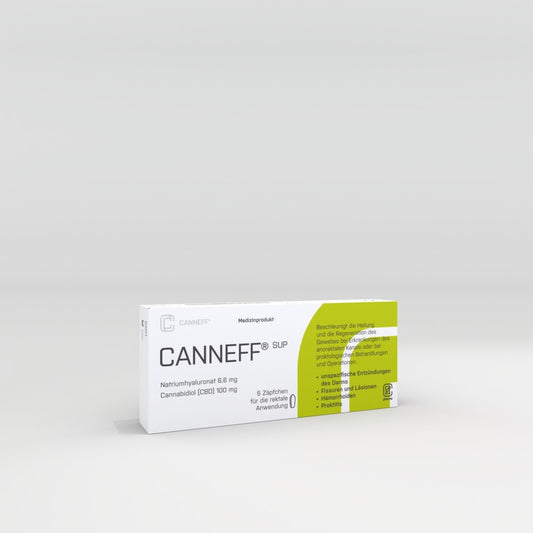
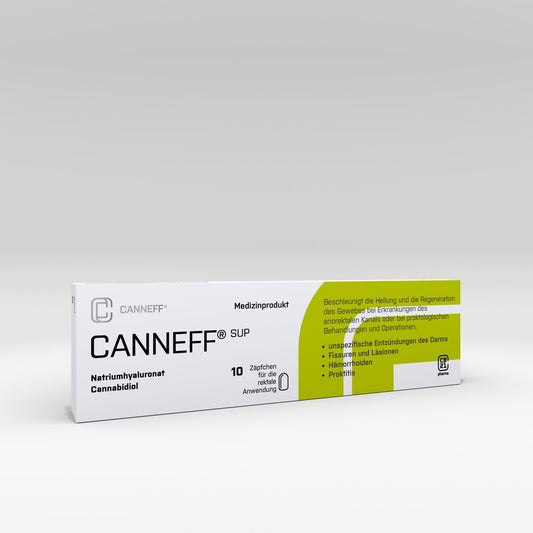
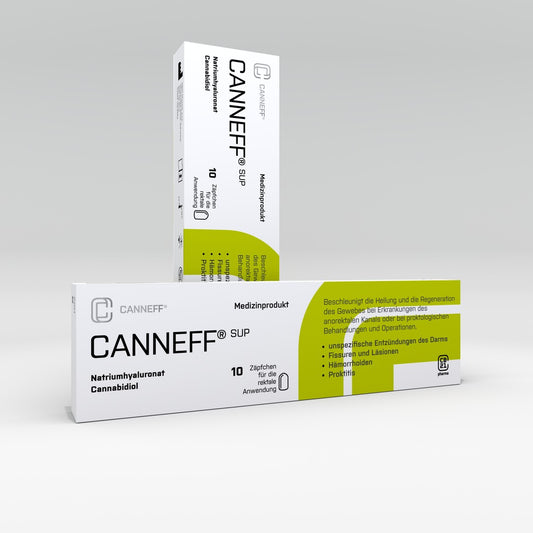
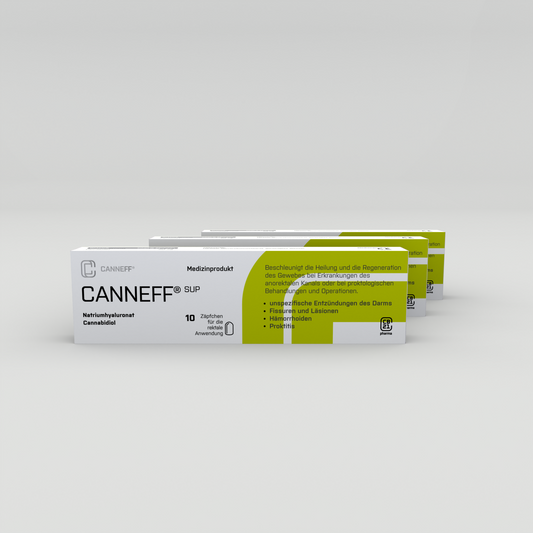
Conservative treatment of anal vein thrombosis is usually carried out with decongestant measures such as CANNEFF® SUP suppositories or certain ointments. These often lead to rapid relief of the painful symptoms of anal vein thrombosis and its regression. Sitz baths with anti-inflammatory additives (e.g., chamomile) can also promote blood circulation and relieve pain at the anus. Certain creams and ointments containing heparin, lidocaine, or corticosteroids can also help dissolve the blood clot faster and reduce inflammation or swelling at the anus.
As part of conservative treatment, adequate fluid intake and a balanced diet with sufficient fiber are also essential pillars to regulate bowel movements and minimize pressure in the anal area as much as possible. Read more here about the general treatment of anal vein thrombosis or find general tips on the use and dosage of suppositories for treating anal thrombosis. Learn about the multifaceted benefits of CANNEFF® SUP suppositories to support the healing process of anal ulcers. Conservative treatment with ointments or suppositories can support the healing process of perianal thrombosis. In severe cases, such as large, very painful thromboses and ulcers at the anus or recurrent anal vein thromboses, surgical intervention may also be necessary.
Surgery for chronic anal vein thrombosis
If the anal vein thrombosis does not heal after several weeks or causes severe symptoms, surgical removal of the thrombus may be considered. This procedure is usually uncomplicated and often performed under local anesthesia. In cases of pronounced, non-healing, or frequently recurrent perianal vein thromboses, surgical intervention may also be necessary. The blood clot is usually opened by incision or completely removed by excision in a short outpatient procedure, depending on the disease course. This procedure is generally done under local anesthesia and can accelerate the healing of the ulcer at the anus. Excision also reduces the risk of new thrombus formation at the anal margin. The wound is not sutured and remains open. Therefore, wound care after surgery plays an important role. Certain suppositories for treating anal vein thrombosis are also suitable to support the healing process after colorectal surgeries such as incision or excision of an anal thrombosis.
Regardless of conservative or surgical treatment of anal thrombosis, you can find more information about CANNEFF® SUP suppositories to support the reduction of swelling of the anal thrombosis and to aid the healing process of the open wound at the anus after surgery for anal vein thrombosis. Find all information here about the treatment of anal vein thrombosis with suppositories.
Prevention of recurrent anal thromboses
To prevent an anal vein thrombosis from recurring, risk factors such as straining during bowel movements, prolonged sitting, or an unbalanced diet should be avoided. Regular exercise, a balanced diet, and adequate fluid intake help regulate bowel movements and reduce pressure on your anal area. Find more information here if the anal vein thrombosis keeps coming back.
Why does an anal vein thrombosis not go away?
An anal vein thrombosis often does not heal if it is particularly large because the body needs more time to break down the coagulated blood. Insufficient blood flow in the affected vein, caused by constant pressure on the anal area, such as from prolonged sitting, overweight, or strong straining during bowel movements, can also slow the healing process, meaning the regression of the perianal thrombosis. Repeated strain, such as lifting heavy objects or strong stress on the anal area, can also cause the thrombosis to persist longer and not fully absorb.
In addition, possible inflammations or infections in the anal area can not only delay healing but also cause additional pain, complications, and other proctological diseases. In some cases, untreated underlying conditions such as chronic venous insufficiency, blood clotting disorders, or metabolic diseases like diabetes can impair wound healing. Furthermore, incorrect self-treatment, such as using unsuitable ointments or home remedies, can negatively affect the healing process. Therefore, a medical examination is recommended to clarify the cause of the perianal thrombosis and consequently initiate targeted and appropriate treatment of anal vein thrombosis.
How large can an anal vein thrombosis become?
When simply palpating the anus, a firm-elastic, well-defined lump or nodule can be felt. The size of an anal vein thrombosis can range from the size of a pinhead to even the size of a plum. Since anal thromboses usually heal on their own or with supportive conservative treatment, the treating doctor will only consider surgery if the pain at the anus cannot be controlled otherwise, the anal vein thrombosis recurs frequently, or the anal thrombosis is very large and does not heal.
Which doctor to see if the anal vein thrombosis does not go away?
If an anal vein thrombosis does not heal, affected individuals should see a specialist in proctology. Proctologists are specialists who focus on diseases of the rectum, anus, and lower digestive tract. They can make an accurate diagnosis and decide whether conservative treatment of anal vein thrombosis is sufficient or if surgical intervention is necessary.
Proctology is thus considered the specialty for the rectum regarding anal vein thrombosis, and corresponding specialists are the ideal contact for you. Read more about diagnosis and examination in the blog post Anal Vein Thrombosis Doctor.
What treatment for anal vein thromboses that do not heal?
If an anal vein thrombosis does not heal, there are various treatment options to support healing. The right treatment essentially depends on the severity of the symptoms of anal vein thrombosis, as well as your course, stage, and personal medical history. Painkillers like ibuprofen can relieve pain at the anus, while suppositories, heparin ointments, or corticosteroid creams help reduce swelling at the anus. In more severe cases, where the thrombus is large or causes very severe pain, surgical opening or removal of the perianal thrombus under local anesthesia may be considered.
Additionally, regular warm sitz baths with chamomile can generally support blood circulation and the healing process. A fiber-rich diet and adequate fluid intake are also crucial to keep stools soft and reduce pressure in the anal area. At the same time, prolonged sitting or strong straining during bowel movements should be avoided. If the anal thrombosis does not regress on its own and symptoms persist, it is advisable to see a doctor to ensure appropriate treatment and prevent further complications.
What complications can occur if the anal vein thrombosis does not go away?
If the anal vein thrombosis does not go away, it can cause various complications, especially if not treated in time. These complications range from chronic complaints such as persistent pain and swelling in the anal area, to scarring, anal fissures, and secondary infections like an anal abscess. Even without any therapy, the body often slowly breaks down the coagulated blood over weeks, leaving a small skin fold called a marisca.
Thus, anal vein thromboses that do not heal can also increase the development of complaints related to hemorrhoids. When the anal vein thrombosis does not go away, it is called chronic anal thrombosis. This occurs when the anal thrombosis, i.e., the blood clot in the anal venous plexus, does not regress or dissolve. In this case, the anal vein thrombosis can cause permanent discomfort at the anus. If you suspect a perianal thrombosis, clarify the symptoms of anal vein thrombosis with your doctor. Read more here about diagnosis and examinations of perianal vein thrombosis by a doctor.
Therefore, we provide a brief overview here of possible complications if an anal vein thrombosis does not go away, as this can also increase the risk of certain proctological secondary diseases.
Chronic anal vein thrombosis
If the anal vein thrombosis does not go away, a chronic form of anal vein thrombosis can develop in some cases. In chronic anal vein thrombosis, the blood clot is not completely dissolved and can thus cause permanent complaints in the anal region.
Chronic complaints at the anus
Frequent anal vein thromboses or an anal vein thrombosis that does not go away can lead to persistent pain, swelling, and a constant feeling of discomfort in the anal area. Read more here about the symptoms of anal vein thrombosis.
Recurrent anal vein thrombosis
In some cases, anal vein thrombosis tends to recur. This refers to the reappearance of anal vein thrombosis after treatment and healing. If the anal vein thrombosis keeps coming back, your specialist will initiate individualized treatment and provide individual recommendations to minimize the risk of recurrent anal vein thromboses.
Marisca
From healed anal vein thromboses, but also after repeated occurrences of perianal vein thromboses, excess skin can form in the anal area. Chronic as well as recurrent anal thromboses impair the elasticity of the tissue in the anal region. Marisca are usually harmless but can, if larger marisca occur, make cleaning the anal area difficult and lead to symptoms such as anal itching. Larger marisca often require surgery for removal.
Anal fissure
Anal vein thromboses that do not go away or heal can also continue to swell or generally irritate the sensitive skin around the anus, thereby causing tears in the anal skin or anal mucosa. Anal fissures are very painful, can cause anal burning, and if wound healing disorders occur, can lead to chronic anal fissures. Read more here about anal fissures and how to accelerate the healing of anal fissures.
Anal abscesses and anal fistulas
Due to irritation or open wounds after surgery for incision of a non-healing anal vein thrombosis, or if the anal thrombosis has burst uncontrollably, secondary infections in the anal area can occur. Such wounds or injuries at the anus can lead to infections, which can consequently result in anal abscesses or anal fistulas.
Hemorrhoids
The persistent venous swelling of the perianal blood vessels can also increase the risk of developing hemorrhoids. Complaints related to hemorrhoids can lead to further symptoms such as anal itching, bleeding, and pain at the anus.
Thus, early and correct treatment of anal vein thrombosis and prevention of various risk factors form the basis to minimize the likelihood of further complications or proctological diseases. Find more tips here for your daily life on how to prevent anal vein thromboses.