

Which doctor to see for treatment of an anal thrombosis?
For the diagnosis and treatment of an anal venous thrombosis, the field of proctology is considered the ideal point of contact. Specialists in proctology are experts in disorders of the rectum, and the condition of anal venous thrombosis is part of their daily practice. General practitioners or dermatologists are often the first point of contact for diagnosis and examination of an anal venous thrombosis. If an anal venous thrombosis occurs during pregnancy, the treating gynecologist is often the primary contact.
In most cases, a visual diagnosis by a doctor is sufficient to identify the lump at the anus as an anal venous thrombosis. Additionally, the doctor often palpates the lump at the anus, a procedure called palpation. If the anal venous thrombosis has been present for a longer time and results in persistent symptoms or very severe pain at the anus, a visit to the doctor is definitely advisable. Often, those affected confuse anal venous thromboses with hemorrhoids or other proctological diseases around the anus. Even if the anal venous thrombosis recurs, or if the perianal thrombosis does not go away, a visit for a more precise diagnosis, examinations, and timely and effective treatment of perianal venous thrombosis by a proctology specialist is definitely recommended.
The first point of contact for perianal pain or suspicion of a perianal thrombosis is often your general practitioner. In cases of very acute and severe pain, a visit to a surgical or proctological outpatient clinic or proctology specialist practice may be advisable. It is certainly sensible to consult a medical specialist to clarify the cause of the anal venous thrombosis more precisely. This allows other differential diagnoses to be excluded and possible secondary diseases or complaints in the anorectal area to be diagnosed more accurately or earlier.
When to see a doctor for anal venous thrombosis?
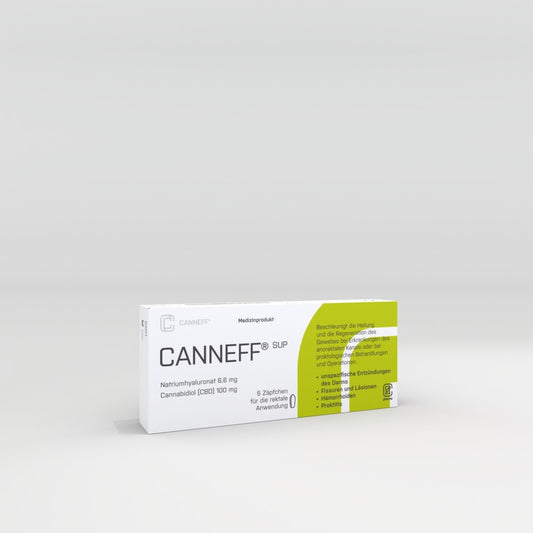
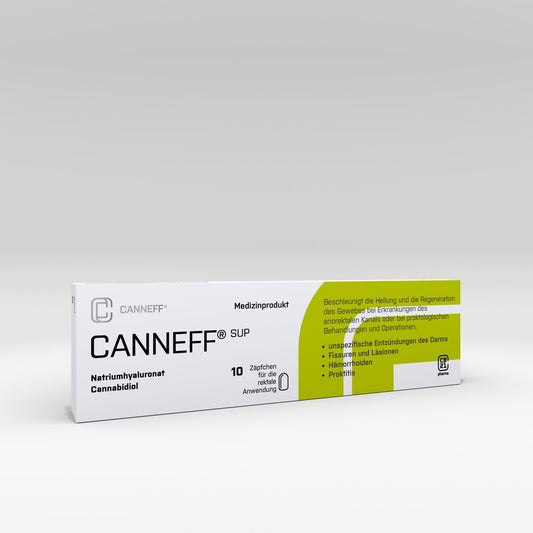
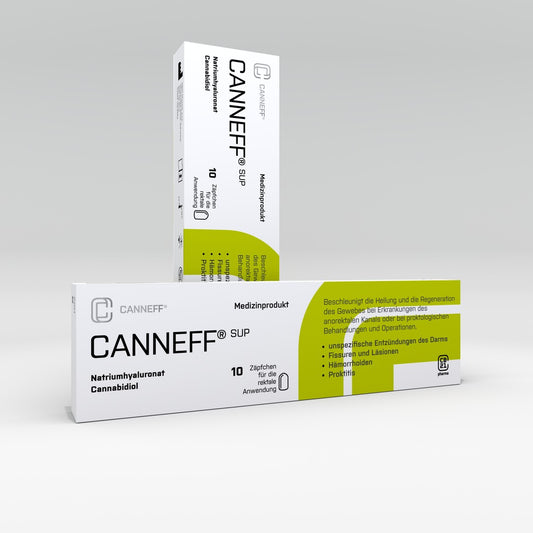
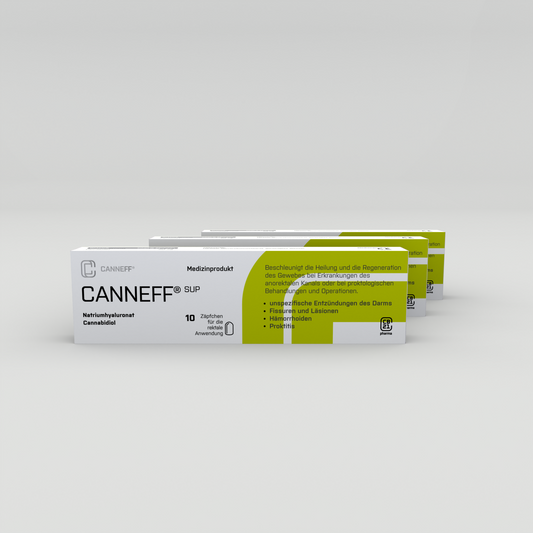
If you suffer from severe symptoms of anal thrombosis, it is advisable to see a doctor. Prompt and appropriate treatment of anal thrombosis can help relieve pain at the anus, as well as anal itching or anal burning, and prevent further proctological diseases as complications. Those affected who suffer from severe pain at the anus due to a perianal thrombosis should consult a proctology specialist. This also applies to anyone whose anal venous thrombosis has not resolved after more than three weeks. If blood appears in the stool or the perianal thrombosis has ruptured, a prompt visit to a specialist for further evaluation is also recommended. In rare cases, the anal venous thrombosis or the wound caused by the rupture can become infected and cause an anal abscess or an anal fistula. The treating doctor can support healing at the anus with the right therapy. Especially patients after rectal surgeries, such as surgery for anal venous thrombosis, can benefit from CANNEFF® SUP suppositories, which help promote tissue healing after surgery. Additionally, CANNEFF® SUP suppositories support the healing of ulcers in the rectal area. Find more information here about the use and treatment of perianal thromboses with suppositories.

How is the diagnosis of an anal venous thrombosis made by the doctor?
The diagnosis of an anal venous thrombosis usually begins with a detailed conversation. During the medical history, those affected by a perianal thrombosis report sudden, severe pain at the anus and the appearance of a painful swelling at the anus. The doctor will then visually inspect the area with the lump at the anus to quickly recognize the typical bluish, hardened swelling at the anus, as this bluish discoloration clearly indicates blood clotting in the veins of the anal area. By gently palpating the affected area, the doctor can determine the exact size and location of the perianal thrombosis. Depending on the severity of the symptoms of the perianal thrombosis, supportive treatment can be recommended and initiated. Even if the anal venous thrombosis does not go away, a visit to the doctor for supportive, conservative treatment is advisable. For patients who suffer repeatedly from anal venous thromboses or whose symptoms persist longer, a more in-depth examination may be necessary to exclude other underlying proctological diseases. Especially in cases of recurrent anal venous thromboses, measures to prevent perianal thromboses are an important part of follow-up care.
What examinations does the proctologist perform for an anal venous thrombosis?
A proctologist begins the examination of an anal venous thrombosis with a thorough inspection of the affected swollen area at the anus. First, the anal area is visually examined carefully, as the thrombosis is usually clearly visible as a bluish, painful, and possibly already hardened swelling. By palpating the area, the doctor can determine the exact location and size of the anal venous thrombosis. To ensure that no other proctological diseases such as hemorrhoids, anal fissures, skin tags, or anal abscesses are present, the proctologist often performs a rectal digital examination. This allows for a closer look at changes within the rectum or deeper problems in the anal canal. In more complex cases, such as when symptoms persist and the anal venous thrombosis does not go away or anal venous thromboses recur, further examinations of the anal canal may be conducted. If there is suspicion of deeper tissue involvement or other complications with the anal venous thrombosis, imaging studies such as rectal endosonography may be considered. This method uses sound waves to provide a detailed view of the deeper layers of the anal canal. This helps to distinguish perianal thromboses from other proctological diseases, such as more complex anal abscesses.
Read more here about the treatment of an anal venous thrombosis, or about the use, dosage, and treatment of perianal thromboses with suppositories.