

What symptoms are typical for internal hemorrhoids?
Internal hemorrhoids often cause no symptoms in the early stages. However, the first signs can be bright red bleeding after bowel movements, as the sensitive mucous membrane over the hemorrhoids is easily injured. As they enlarge, itching, swelling, burning, and a feeling of pressure in the anal canal occur. From hemorrhoids grade II onward, prolapse of the hemorrhoids can occur, which initially retracts on its own.
How do internal and external hemorrhoids differ?
Internal hemorrhoids are located above the dentate line in the rectum and are covered by mucous membrane, while external hemorrhoids lie below this line and are covered by sensitive skin. As a result, external hemorrhoids are often more painful, especially when inflamed or hardened due to thrombosis. Internal hemorrhoids, on the other hand, primarily manifest through bleeding and a feeling of pressure.
|
Feature |
Internal hemorrhoids |
External hemorrhoids |
|
Location |
Above the dentate line |
Below the dentate line |
|
Coating |
Mucous membrane |
Skin |
|
Pain |
Mostly painless |
Often painful |
|
Symptoms |
Bleeding, oozing, feeling of pressure |
Pain, itching, swelling |
|
Visibility |
Initially invisible, later prolapsing |
Palpable or visible from the outside |
What signs indicate internal hemorrhoids?
A typical symptom of hemorrhoids is fresh, bright red blood on the toilet paper or in the toilet. In addition to bleeding, there may be a foreign body sensation or incomplete bowel emptying. Patients also report occasional mucus discharge, which can cause skin irritation around the anus.
Can internal hemorrhoids cause pain?
In the early stage, they usually cause no pain because the mucous membrane in the rectum is not very sensitive to pain. Pain tends to occur in advanced stages when hemorrhoids protrude from the anus and become trapped or inflamed. Read more here about the stages of hemorrhoidal disease.
How can I recognize internal hemorrhoids?
Since they are located in the anal canal, they are not visible without a medical examination. An indirect sign is bleeding or a feeling of pressure in the rectum. In advanced stages, they can prolapse during bowel movements and can then be felt as soft, painless lumps.
Can internal hemorrhoids bleed?
Yes, bleeding is one of the most common symptoms of hemorrhoids. It occurs due to irritation or small injuries to the mucous membrane, especially when hard stools or chronic diarrhea strain the hemorrhoids. The blood is usually bright red and appears after bowel movements.
What treatment options are available for internal hemorrhoids?
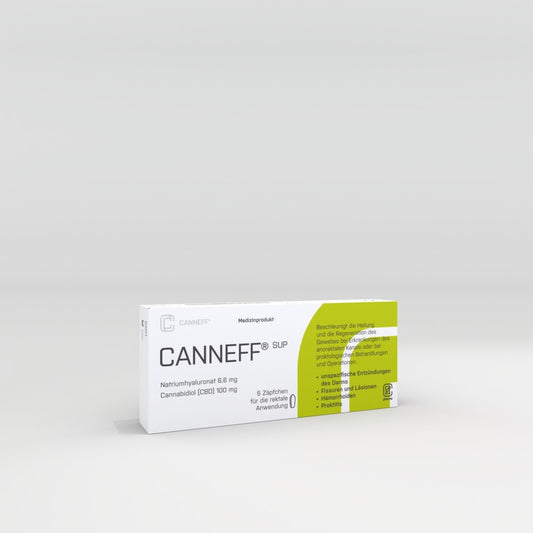
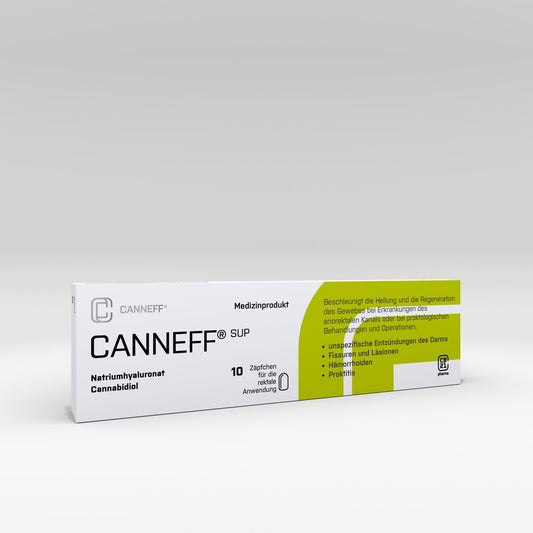
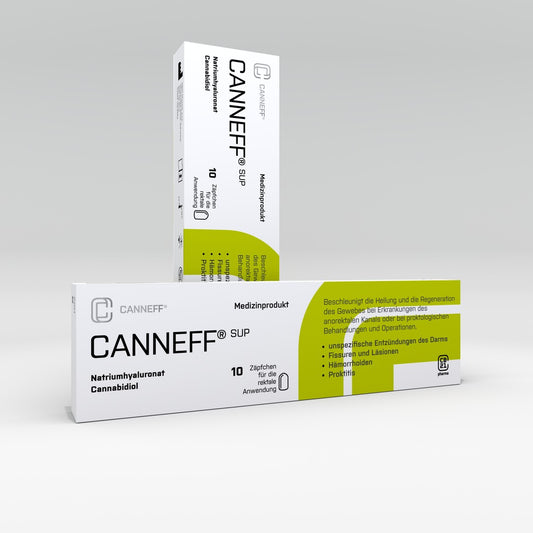
The therapy depends on the severity of the hemorrhoids. In the early stages, dietary changes, increased fluid intake, and sitz baths with anti-inflammatory agents help. CANNEFF® suppositories provide targeted relief for itching and inflammation. In advanced cases, minimally invasive procedures such as sclerotherapy or rubber band ligation are used. Read more here about the medical treatment of hemorrhoids, or directly about the hemorrhoid surgery.
|
Treatment option |
Effect |
Application |
|
Dietary changes |
Regulates bowel movements, prevents constipation |
More fiber, plenty of water |
|
Anti-inflammatory, pain-relieving |
Use 1–2 times daily |
|
|
Sitz baths (chamomile, oak bark) |
Relieves itching, soothes mucous membrane |
10–15 minutes daily |
|
Rubber band ligation |
Interrupts blood supply, hemorrhoid shrinks |
Recommended from grade II |
|
Sclerotherapy |
Scleroses hemorrhoid tissue |
Suitable from grade II |
|
Surgical removal |
Eliminates large, persistent hemorrhoids |
Necessary from grade III or IV |
Can internal hemorrhoids resolve on their own?
Yes, in early stages they can shrink through targeted measures such as dietary changes and stool regulation. However, advanced hemorrhoids no longer retract on their own and require medical treatment. Read more about the treatment of hemorrhoids.
Learn more here about the causes of hemorrhoids, or directly about all the measures with which you can prevent hemorrhoids.
What happens if internal hemorrhoids remain untreated?
If left untreated, they can continue to grow and cause more severe symptoms. In advanced stages, they permanently protrude from the anus, which can lead to inflammation, soiling, and incontinence. Additionally, the risk of anal vein thrombosis or mucosal injuries such as anal fissures increases, which can cause persistent bleeding.
When should you see a doctor for internal hemorrhoids?
A doctor's visit for hemorrhoids is necessary if the symptoms do not subside despite home remedies, severe bleeding occurs, or the hemorrhoids are permanently prolapsed. Medical intervention is advisable at the latest at grade III. Also read more about the treatment of hemorrhoids.