

Is an anal venous thrombosis dangerous or harmless?
Although an anal venous thrombosis can be very painful, it is generally harmless. The clot is located in a superficial venous network that has no direct contact with the deep venous system. Therefore, there is no risk of pulmonary embolism or life-threatening thrombosis. The main complication is usually the severe discomfort caused by pain and pressure, especially in the first few days.
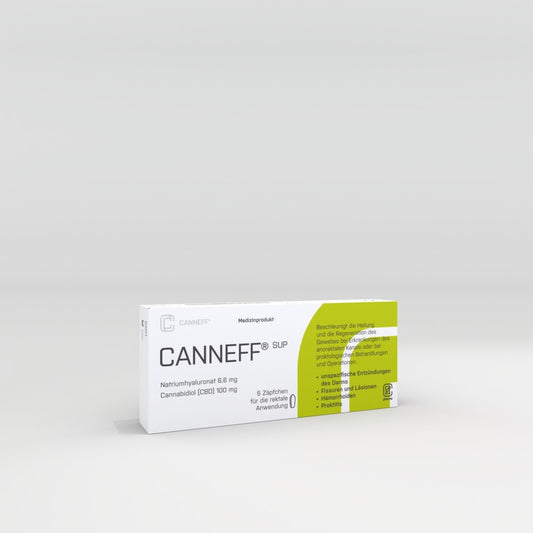
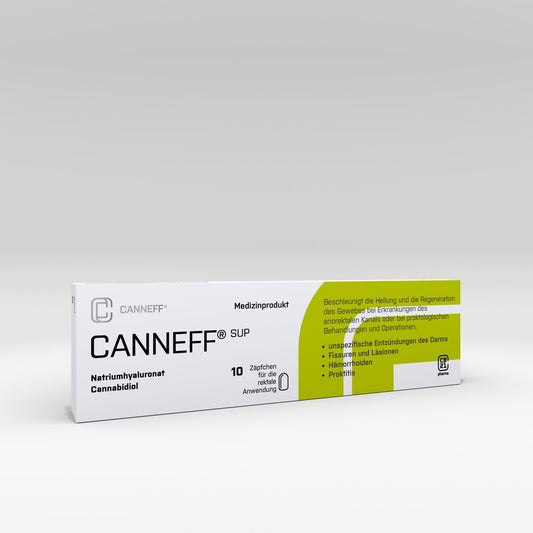
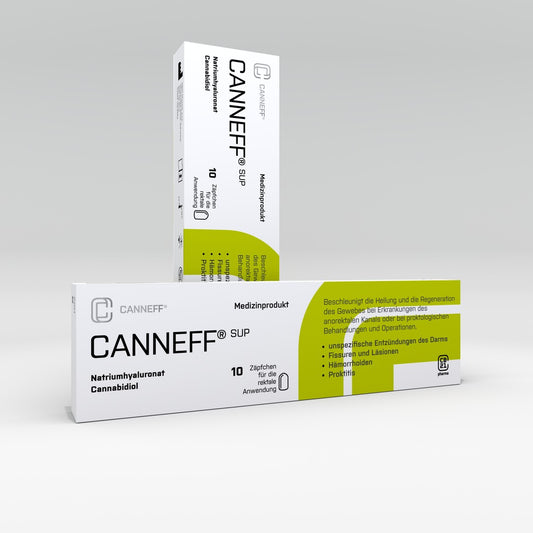
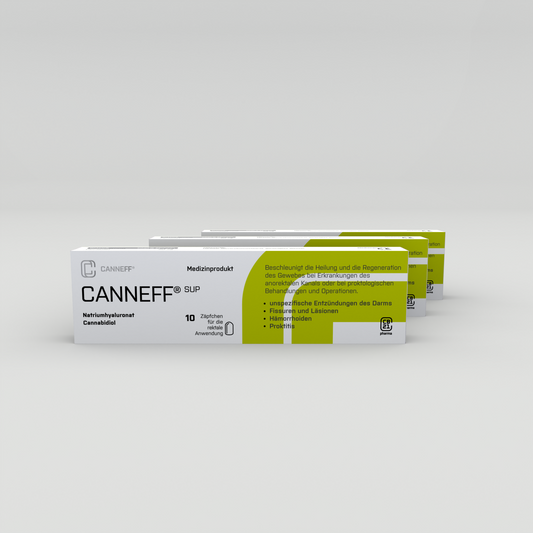
The swelling can subside on its own, but anti-inflammatory measures, sitz baths, and special suppositories like CANNEFF® SUP can help relieve symptoms faster.
Can an anal venous thrombosis cause embolism or thrombosis in the body?
Unlike deep vein thromboses, which can break off in the legs or lungs and enter the bloodstream, an anal venous thrombosis remains localized. It only affects the small veins at the anal margin and has no connection to the deeper blood vessels. Therefore, embolism or dangerous thrombosis is ruled out.
When should you see a doctor for an anal venous thrombosis?
In most cases, a doctor's visit is not strictly necessary, as the thrombosis heals on its own. However, there are situations where medical evaluation may be required:
|
Situation |
Possible cause |
Need for action |
|
Very severe pain |
Large or very tense thrombosis |
Medical pain therapy possible |
|
Bleeding from the thrombosis |
Clot dissolves |
Check-up if bleeding persists |
|
Severe redness & warmth |
Inflamed thrombosis or infection |
Evaluation by a proctologist |
|
Very large swelling |
Unusually large thrombosis |
Possible surgical removal |
|
No improvement after 6 weeks |
Possible misdiagnosis |
Medical examination necessary |
A doctor's visit is also advisable if there is uncertainty about the diagnosis or if other conditions need to be ruled out. Find all the information about the symptoms of an anal venous thrombosis, as well as diagnosis and examinations in the blog post Anal Venous Thrombosis Doctor.
Can an anal vein thrombosis become dangerous if left untreated?
In most cases, an anal vein thrombosis heals without complications. The greatest risks with untreated thromboses are:
- Persistent pain due to a very large or inflamed thrombosis
- Spontaneous bursting with bleeding, which is usually harmless
- Formation of skin tags, where excess skin remains at the anal margin
If severe symptoms occur, anti-inflammatory CANNEFF® SUP suppositories and painkillers can help relieve the symptoms of anal vein thrombosis and support the healing process. Read more here about the treatment of anal vein thrombosis with suppositories. Also find information here about the causes of anal vein thrombosis and all measures on how to prevent anal thrombosis.
Are there serious complications with anal vein thrombosis?
Serious complications are rare. However, in some cases, infection or persistent inflammation can occur, especially if the skin over the thrombosis tears or the clot does not break down properly. Read more here about the treatment of anal vein thrombosis.
|
Possible complication |
Cause |
Treatment |
|
Infection |
Bacterial colonization of the open skin |
Antibiotic ointments, medical supervision |
|
Chronic pain |
Repeated thromboses or large nodules |
Pain therapy, possibly surgical removal |
|
Skin tags (skin flaps) |
Remaining stretched skin - skin tags |
No treatment necessary, possibly removal for cosmetic reasons |
Can an anal vein thrombosis burst on its own? Is it dangerous?
Yes, in some cases an anal vein thrombosis can burst on its own, especially if the pressure in the affected vein is very high. This causes dark, clotted blood to escape, which is often perceived as alarming by those affected.
However, this phenomenon is usually harmless and often even leads to quick pain relief as the pressure decreases. The resulting wound should be kept clean to avoid infections.
How can you distinguish an anal vein thrombosis from a tumor or abscess?

In rare cases, an anal vein thrombosis can be mistaken for other conditions. Especially anal tumors or anal abscesses can cause symptoms similar to those of a thrombosis.
|
Characteristic |
Anal vein thrombosis |
Anal abscess |
Tumor |
|
Pain |
Very intense, stabbing |
Throbbing, pounding |
Mostly painless |
|
Color of the swelling |
Bluish-red |
Reddened, hot |
Skin-colored or dark |
|
Location |
Directly at the anal margin |
Often deeper under the skin |
Can spread |
|
Additional symptoms |
Sensation of tension, pressure |
Fever, chills |
Slow increase in size |
If a thrombosis persists for more than 6 weeks without regression or if additional symptoms of an anal vein thrombosis such as fever or persistent bleeding occur, medical evaluation should be sought. Find all information about diagnosis and examinations in the blog post Anal Vein Thrombosis Doctor, or about the duration of an anal vein thrombosis.
Can an anal vein thrombosis lead to incontinence?
An anal vein thrombosis has no direct impact on sphincter function and does not lead to incontinence. In rare cases, very large or frequently recurring thromboses can cause a temporary impairment of the sensation of tension, which usually subsides after healing.
How can you recognize an infection or inflammation after an anal vein thrombosis?
An infection can occur if the skin over the thrombosis tears or the tissue does not heal properly. When the thrombosis bursts, bleeding as a symptom occurs. Typical signs are:
- Severe redness and warmth in the affected area
- Increasing pain, even after several days
- Pus or foul-smelling discharge
- Fever or general malaise
If these symptoms of anal vein thrombosis occur, it is advisable to see a doctor to treat an infection early. An open wound on the anus can lead to an anal abscess or an anal fistula. Find all information about diagnosis and examinations in the blog post Anal Vein Thrombosis Doctor.
When is surgery necessary for an anal vein thrombosis?
In most cases, surgery for anal vein thrombosis is not necessary. However, removal of the clot is considered if the thrombosis:
- Is extremely large and causes severe pain
- Occurs repeatedly and severely impairs quality of life
- Does not resolve on its own and still causes discomfort after several weeks
A minor surgical procedure can immediately relieve the discomfort. The clot is either removed through a small incision or the affected vein is completely excised. Read more here about recurrent anal vein thromboses. Find more information here about home remedies and alternative treatment approaches for anal thromboses, as well as herbal treatment options for anal vein thromboses.