

How long does it take for an anal vein thrombosis to heal?
The healing time of an anal vein thrombosis depends on the size of the blood clot, individual blood circulation, and the chosen treatment of anal vein thrombosis. Small thromboses often disappear within one to two weeks, while larger nodules can persist for up to six weeks. The pain is strongest in the first few days and then continuously decreases.
|
Healing phase |
Characteristics |
|
1-3 days |
Severe pain, hard swelling, feeling of tension |
|
4-7 days |
Pain decreases, swelling remains palpable, pressure sensation diminishes |
|
2-3 weeks |
Thrombosis begins to regress, slight discoloration possible |
|
4-6 weeks |
Usually complete regression, possibly a small remaining skin fold (marisca) |
The healing time can be shortened by pain-relieving and anti-inflammatory measures.
What treatment options are available for anal vein thrombosis?
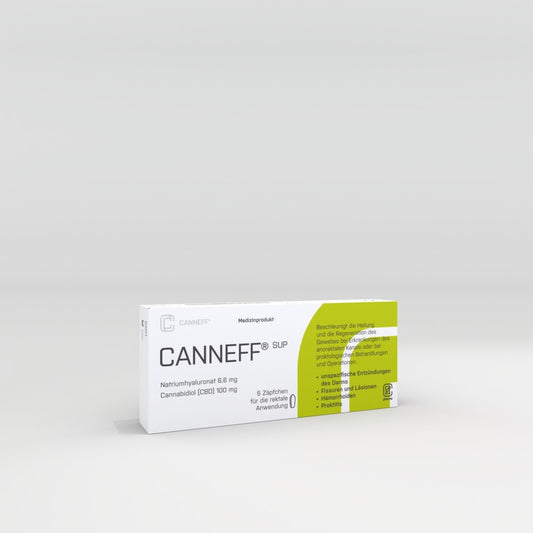
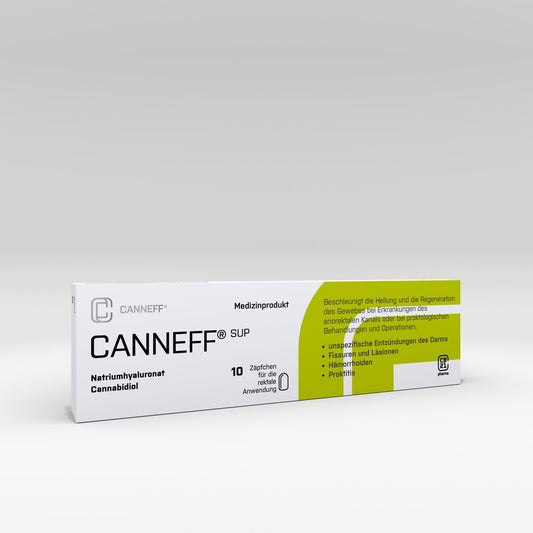
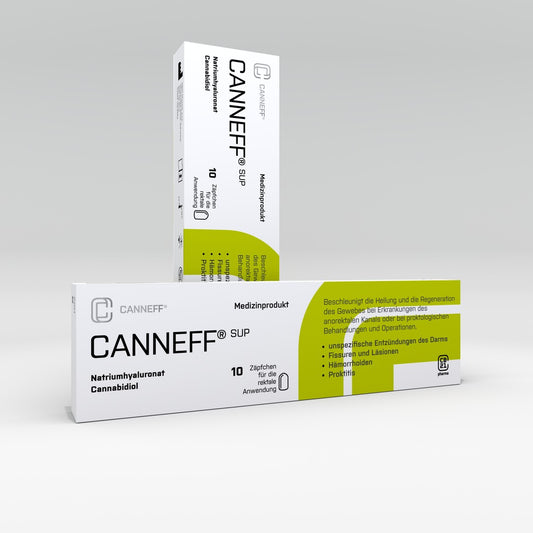
The choice of treatment depends on the size of the thrombosis and the intensity of the pain. In most cases, a conservative therapy, which are made from Painkillers, cooling measures, and anti-inflammatory ointments or suppositories exists. CANNEFF® SUP suppositories can be supportive here, as they contain anti-inflammatory ingredients and promote healing. Read more here about the treatment of anal vein thrombosis with suppositories.
In cases of very large or extremely painful thromboses, a minor surgical procedure may be necessary. The clot is removed or the affected vein is completely excised. In this blog post, you will learn whether an anal vein thrombosis is dangerous.
|
Treatment method |
When is it useful? |
|
Painkillers (ibuprofen, diclofenac) |
For moderate to severe pain |
|
CANNEFF SUP suppositories |
Anti-inflammatory, relieves symptoms, promotes healing |
|
Sitz baths (chamomile, oak bark) |
To relieve itching and tension |
|
Heparin ointments |
Supports the dissolution of the clot |
|
Surgery (excision/incision) |
For very large or recurring anal thromboses |
Does an anal vein thrombosis need surgery or does it heal on its own?
Most anal vein thromboses heal on their own, so surgery is usually not necessary. However, there are cases where surgical intervention may be advisable, especially if the thrombosis is very large or causes extreme pain. Surgery can also be useful if new thromboses occur regularly. After surgical removal, mild wound pain often occurs, but the thrombosis disappears immediately.
How can the healing of an anal vein thrombosis be accelerated?
Healing can be supported by targeted measures. Sitz baths with anti-inflammatory herbs help relax the tissue and relieve pain. CANNEFF® SUP suppositories have anti-inflammatory effects and promote blood circulation, which can accelerate the regression of the thrombosis. A high-fiber diet and adequate fluid intake make bowel movements easier and prevent renewed straining.
|
Measure |
Benefit |
|
Sitz baths (chamomile, oak bark) |
Relaxation of tissue, relief from itching |
|
CANNEFF SUP suppositories |
Anti-inflammatory, pain-relieving |
|
High-fiber diet |
Prevention of constipation |
|
Drink plenty of fluids |
Softening of stool |
Which medications help with an anal vein thrombosis?
For pain relief, nonsteroidal anti-inflammatory drugs (NSAIDs) such as ibuprofen or diclofenac are often used. Local ointments with lidocaine or cortisone can additionally relieve symptoms. Heparin-containing ointments promote blood breakdown, while herbal remedies like witch hazel or arnica have anti-inflammatory effects. Read more here about home remedies and alternative therapy approaches for anal thrombosis, as well as herbal treatment options.
When is a doctor’s visit necessary for an anal vein thrombosis?
A doctor’s visit is necessary if the pain is extremely severe or if the swelling does not subside after more than six weeks. Also, if the skin over the thrombosis becomes red, feels hot, or pus is discharged, an infection may be present. Find further information here on the symptoms of anal thrombosis, as well as examinations and diagnosis in the blog post about anal vein thrombosis doctor.
|
Symptom |
When to see a doctor? |
|
Very severe pain |
Immediately |
|
No improvement after 6 weeks |
Check-up necessary |
|
Redness, warmth, pus |
Suspected infection, medical evaluation |
Can an anal vein thrombosis always be treated conservatively?
In most cases, an anal vein thrombosis can be treated conservatively without the need for surgical intervention. The therapy focuses on pain relief, reducing inflammation, and the natural regression of the blood clot. Measures such as CANNEFF® SUP suppositories, pain-relieving medications, and sitz baths help reduce discomfort and speed up healing. Find all information here on the general treatment of anal vein thrombosis.
However, there are exceptions where surgery should be considered. Particularly large anal vein thromboses that are highly tense and exert significant pressure on the surrounding tissue can cause extreme pain. In such cases, surgical removal of the clot can provide immediate relief.
Surgical intervention should also be considered if an anal vein thrombosis recurs repeatedly. People who suffer from repeated thromboses in the anal area may have chronic venous weakness or a permanently increased strain on the anal region. Recurring thromboses can significantly impair quality of life, which is why surgical removal is considered. This procedure removes not only the clot itself but also the affected blood vessel to minimize the risk of another blockage.
Additionally, surgery may be advisable if the thrombosis does not resolve on its own or if complications such as inflammation or infections develop. In rare cases, a secondary infection or an anal abscess may occur, requiring prompt medical treatment.
The decision for or against surgery should always be made in consultation with a proctologist. While conservative measures are sufficient in most cases, surgical procedures can offer a permanent solution for particularly large, recurring, or complicated anal vein thromboses.
How long do pain symptoms last after an anal vein thrombosis?
The most severe pain lasts for the first three to five days. After that, it gradually decreases. After about two weeks, most affected individuals only feel slight pressure. Healing of an anal vein thrombosis takes between a few days and six weeks, depending on the size of the swelling. Surgery is only necessary in severe cases. Conservative measures such as CANNEFF® SUP suppositories, anti-inflammatory sitz baths, and pain-relieving medications can support the healing process. A doctor's visit is recommended if symptoms persist for more than six weeks or complications such as infections occur. To prevent recurrence, affected individuals should maintain a high-fiber diet and healthy bowel function.
Is a recurrent anal vein thrombosis possible after healing?
Yes, in some cases it occurs Recurring thromboses, especially if risk factors such as prolonged sitting, straining during bowel movements, or impaired circulation persist. A healthy lifestyle with a high-fiber diet and sufficient exercise helps prevent new thromboses. Read more here about the causes of perianal thrombosis and measures on how to prevent anal vein thrombosis.
Can an anal vein thrombosis fully heal without treatment?
Yes, an untreated anal vein thrombosis usually heals on its own. However, symptomatic treatment can speed up the healing process and relieve discomfort. Find all the information about treatment of anal vein thrombosis here.