

Blood – Is an anal fissure the cause?
Blood in the stool can have many causes, ranging from harmless irritations to serious diseases. One of the most common causes of fresh, bright red blood on toilet paper or stool is an anal fissure – a small, painful tear in the anal mucosa.
Typically, the bleeding occurs immediately after bowel movements and is rather minor. Patients often report a sharp or burning pain that starts with the bowel movement and can persist for some time afterward.
However, not every bleeding in the stool is due to an anal fissure. Hemorrhoids, inflammations, or serious diseases such as colon cancer can also cause bleeding. Therefore, it is important to determine the exact cause.
How to recognize bleeding caused by an anal fissure?
Bleeding caused by an anal fissure has some characteristic features:
-
Bright red blood traces On toilet paper or as a fine streak on the stool
-
Small amounts On blood, not mixed with stool
-
Pain during or after bowel movements, usually sharp or burning
-
No blood clots or mucus admixtures
Bleeding mainly occurs when the tear is irritated again by hard stool. If the blood is darker or mixed with mucus, another cause may be present (e.g., inflammation or a chronic bowel disease).
Light vs. dark bleeding: When should you see a doctor?
A doctor's visit for an anal fissure is advisable if the bleeding lasts longer than 10–14 days or is accompanied by other symptoms such as abdominal pain, weight loss, or fever. Read more here about the symptoms of an anal fissure.
The color of the blood can be an important clue to the cause of the anal fissure:
|
Bleeding color |
Possible cause |
Urgency |
|
Bright red, fresh |
Anal fissure, hemorrhoids, mild irritations |
Usually harmless but can become chronic |
|
Dark red |
Inflammations, infections, polyps |
Medical evaluation recommended |
|
Black (tar stool) |
Bleeding in the upper digestive tract (stomach, small intestine) |
Immediate medical examination required |
|
Blood with mucus |
Chronic inflammatory bowel diseases (e.g., Crohn's disease, ulcerative colitis) |
Specialist medical evaluation necessary |
Blood on toilet paper – harmless or serious symptom?
Fresh blood traces on toilet paper are usually harmless and can be caused by mild irritation or small tears in the mucous membrane. But if the bleeding occurs regularly or is accompanied by pain, itching, or swelling, an anal fissure or another condition could be behind it.
Especially recurring bleeding should not be ignored. A medical examination can clarify whether an anal fissure, hemorrhoids, or another condition is the cause. Read more here about the cause of anal fissures.
Anal fissure or hemorrhoids? Differences in bleeding
Anal fissures and hemorrhoids are two common causes of bleeding, but they differ in important ways:
|
Feature |
Anal fissure |
Hemorrhoids |
|
Pain |
Severe, stabbing, especially during bowel movements |
Usually no pain, at most a feeling of pressure |
|
Bleeding color |
Bright red, small amount, usually after bowel movement |
Bright red, often dripping or visible in toilet water |
|
Additional symptoms |
Nodule formation, possible foreign body sensation |
|
|
Localization |
Usually at the back or front of the anal canal |
Inside or outside at the anal margin |
|
Treatment |
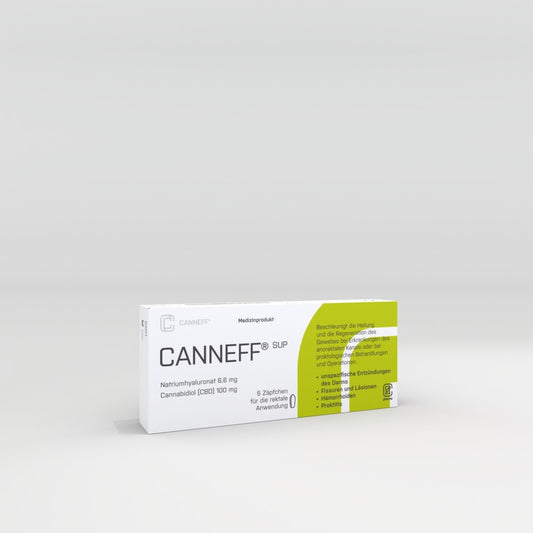
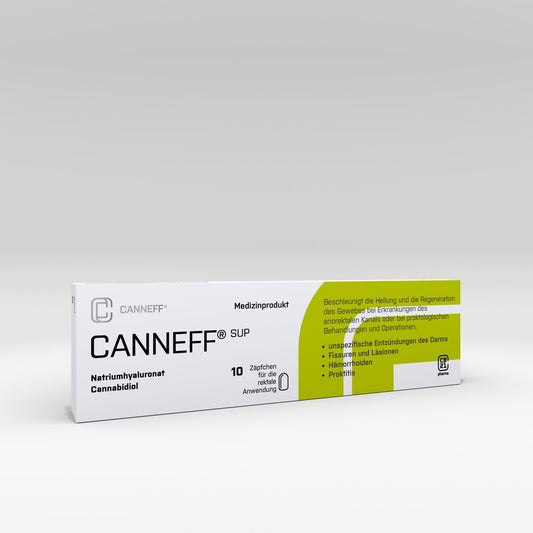
Ointments, sitz baths, suppositories (e.g., CANNEFF® SUP) |
Sclerotherapy, rubber band ligation, or surgery for severe symptoms |
Why does an anal fissure bleed? Causes and mechanisms
An anal fissure bleeds because the mucous membrane in the anal area is very sensitive and highly vascularized. Hard or bulky stool causes small tears that reopen with the next bowel movement. Another factor is the increased muscle tone of the sphincter muscle, which keeps the tear open and worsens blood flow. Here, CANNEFF® SUP with CBD and hyaluronic acid can help by reducing muscle tension and supporting healing.
Treatment of anal fissure bleeding – what really helps?
CANNEFF® SUP can support healing as it has anti-inflammatory, moisturizing, and regenerative effects. The treatment of anal fissures depends on the cause and severity:
-
Acute anal fissures: Sitz baths, soft stool, wound healing creams, possibly suppositories like CANNEFF® SUP. Read more here about the use of suppositories for treating an anal fissure.
-
Chronic anal fissures: Special ointments (nitroglycerin, calcium channel blockers), botulinum toxin, or surgical measures
Which home remedies stop bleeding in anal fissures?
Home remedies can be a valuable addition to medical treatment of anal fissures, especially when it comes to stopping minor bleeding and supporting the healing process. However, they do not replace professional therapy if the bleeding is severe or recurrent.
Effective home remedies for bleeding anal fissures
-
Sitz baths with anti-inflammatory additives
-
Aloe vera gel
-
Coconut oil or olive oil
-
Dietary change for soft stool
-
Natural wound healing with honey
Home remedies for treating an anal fissure can be especially helpful in the early stages of an anal fissure. However, if bleeding persists or worsens over several weeks, medical treatment is required. In such cases, CANNEFF® SUP suppositories can be a useful addition as they protect the mucous membrane and promote wound healing. Read more here about suppositories for treating an anal fissure.
Bleeding from anal fissure: When is surgery necessary?
Surgery should only be considered after all conservative measures have been exhausted and no improvement occurs. Acute anal fissures usually heal within 6 weeks with proper therapy. Chronic fissures lasting over 8 weeks or repeatedly reopening often require invasive treatment.
Indications for surgery in bleeding anal fissure
An anal fissure surgery becomes necessary if:
-
Bleeding is heavy and does not subside despite treatment.
-
The fissure is chronic (lasting longer than 8 weeks).
-
Severe pain significantly affects daily life.
-
Complications may occur, such as anal fistulas, anal abscesses, or scarring.
-
A constant muscle spasm of the sphincter muscle that prevents healing (sphincter hypertonia).
What surgical procedures are available?
Fissurectomy (excision of the fissure): The scarred or inflamed fissure is surgically removed to restart wound healing. Usually, the wound is left open and heals on its own. Healing time: 4–6 weeks.
Lateral sphincterotomy: A small cut in the internal sphincter muscle to reduce muscle tone. Improves blood circulation and facilitates healing. Risk: Rarely, mild fecal incontinence may occur.
Flap plastic surgery (advancement flap): The fissure is removed and covered with healthy mucosa. Used for very stubborn fissures.
For mild to moderate bleeding, it is worth trying conservative therapies with ointments or suppositories (e.g., CANNEFF® SUP) before an anal fissure surgery, as they promote mucosal regeneration. However, if symptoms of an anal fissure persist for months or blood loss leads to anemia, surgery is advisable.
How long does it take for bleeding anal fissures to heal?
The healing duration depends on whether the anal fissure is acute or chronic and which treatment methods are used.
|
Fissure type |
Healing duration |
Treatment |
|
Acute anal fissure (under 6 weeks) |
2–6 weeks |
Sitz baths, dietary changes, suppositories (e.g., CANNEFF® SUP) |
|
Chronic anal fissure (longer than 8 weeks) |
6–12 weeks or longer |
Special ointments (nitroglycerin, diltiazem), Botox injections, surgery |
|
After surgery |
4–8 weeks |
Pain therapy, stool regulation, wound healing promotion |
Factors that can delay healing
-
Hard stools: Fissure keeps reopening → Fiber & stool softeners are important.
-
Sphincter spasm: Muscle tension keeps the wound open → CANNEFF® SUP can help relax the muscles.
-
Infections: Bacterial colonization can slow healing → Good hygiene & sitz baths are necessary.
-
Chronic bowel diseases: Crohn's disease or ulcerative colitis can make the mucous membrane more susceptible.
A consistent treatment regimen with soft stool, anti-inflammatory measures, and gentle anal hygiene can accelerate the healing of an anal fissure. Learn more here about the prevention of an anal fissure.