

What is a marisca surgery and when is it necessary?
A marisca surgery can be an effective solution in some cases, especially for large or pronounced marisca that cause significant and recurring discomfort in the anal region and anus. Marisca usually do not need to be treated unless they cause persistent or recurring symptoms such as itching, burning, and pain in the anal area. Surgery is recommended if the marisca are very nodular, firm, or large. Pressure and friction from the lump or skin flap on the anus can cause inflammation of adjacent or opposite skin areas. Before surgery on a marisca, other proctological diseases of the anal canal must always be ruled out or treated. Any existing inflammation around the marisca should also be treated before surgery to ensure it subsides before the procedure.
It is advisable to discuss the decision for surgery of the marisca with a doctor who can assess your individual situation and medical history accordingly. Marisca are usually harmless skin folds that form around the anal margin. The consistency of marisca is mostly soft, while the size of marisca can vary greatly. The size spectrum of a marisca ranges from the size of a pinhead to that of an olive. Marisca can also appear singly or as a marisca ring that encircles the entire anus. Causes of secondary marisca include chronic anal fissures, healed anal vein thromboses, or previous proctological surgeries such as operations for anal fistulas or hemorrhoids.
If existing skin tags are present, there is a risk of inflammation of the skin tag. This can lead to swelling around the anus, anal itching, anal burning, or pain in the anal area. When symptoms first appear, treatment is usually as minimally invasive and conservative as possible, using ointments, creams, suppositories, or sitz baths. Surgical removal of skin tags is initially not medically necessary. Only if skin tags repeatedly cause symptoms can they usually be removed on an outpatient basis under local anesthesia. After removal of the skin tags, complications such as wound healing disorders, scarring, pain, and abnormal sensations around the anus may occur. Although surgical removal of skin tags is generally rarely medically required, skin tags can still impair anal hygiene and make thorough cleaning of stool from the anus difficult. If this significantly affects the quality of life of the affected person, surgery is possible. Other reasons for removing the skin folds could also be aesthetic considerations. Mariscectomy refers to the surgical procedure in which the skin flaps at the anal margin, the so-called skin tags, are removed.

Can I remove marisken myself or with home remedies?
There is no effective way to remove marisken by yourself or with home remedies. Certain home remedies like sitz baths can relieve symptoms such as anal itching, anal burning, or general irritation in the anal area, but they cannot completely remove the marisken. Attempts to treat marisken with apple cider vinegar will also not be successful. Apple cider vinegar, known for its various mainly culinary uses, has no sufficient effect on the pronounced tissue of the marisken. For treating marisken, the use of certain creams, ointments, or suppositories, or in severe cases, even a marisken surgery for removal, is advisable. Read more here about the treatment of marisken with suppositories.
What should you know about the process of a marisken operation?
A marisken operation is a minor, usually outpatient procedure performed under local anesthesia. First, the affected area is locally anesthetized to make the procedure painless. Then the surgeon removes the marisken either with a scalpel, special scissors, an electrocautery device (cauterization), or with the help of a laser, simultaneously sealing the blood vessels. Depending on the surgical technique, the wound may either be stitched or left open. Due to scarring, the wound in the anal area should ideally not be stressed by sports for 14 days.
The operation usually takes only a few minutes, depending on the extent of the marisken or the marisken crown. The wound is usually loosely covered with a wound dressing, but wound care and aftercare play an important role. The anal region contains countless germs of all kinds, so complications such as infections or anal abscesses can result from an open wound.
After the operation, the patient can usually go home the same day. The healing phase lasts several weeks, during which careful hygiene of the anal area is especially important to prevent or best avoid infections such as anal abscesses. Painkillers, suppositories, or anti-inflammatory ointments can support the healing process. As with any surgical procedure, there are risks such as infections or wound healing disorders, but these complications are quite rare during or after a marisken operation.
The operation can also be accompanied by some side effects, which are usually only temporary. Sometimes a hematoma (bruise) forms after the surgery, but it typically resolves within a few days. Small wounds at the anus usually cause little or no pain. Larger skin injuries can cause more intense and longer-lasting pain. The body needs time to repair the defects. The removed tissue is always examined microscopically by pathologists to determine the type and nature of the cells and to rule out other (more serious) proctological diseases.
Does pain occur after the marisken operation?
After the marisken operation, postoperative pain is usually mild because the surgical procedure is performed outside the anal canal. The removal of the marisken is mostly done under local anesthesia, leaving an open wound at the anus. Mild to moderate pain in the treated area is quite common after a marisken operation, especially in the first few days following the procedure. This pain is caused by wound healing and irritation of the sensitive tissue in the anal area. Patients often report a burning or pulling sensation, particularly when sitting, during bowel movements, or with movement.
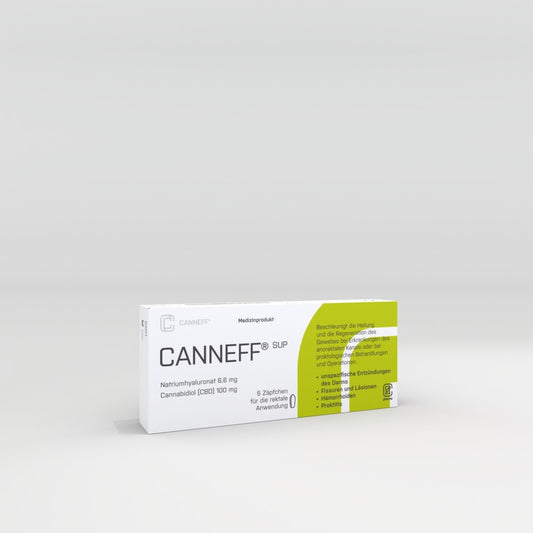
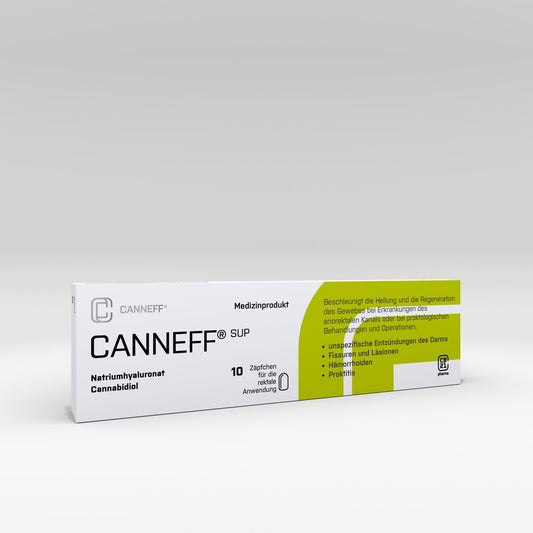
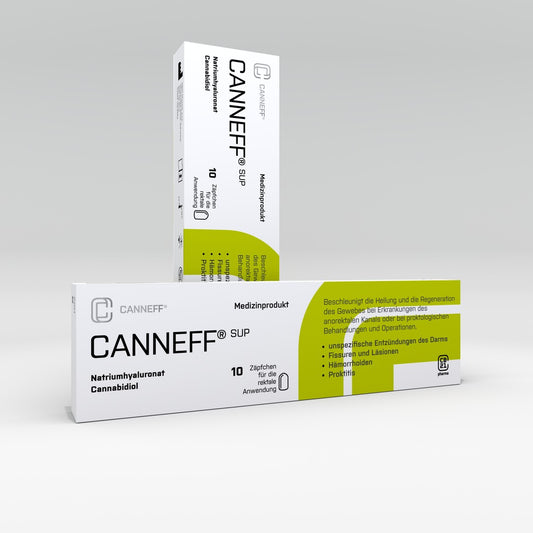
To relieve pain, painkillers such as ibuprofen or paracetamol are usually prescribed. CANNEFF® SUP suppositories with CBD and hyaluronic acid can also contribute to faster healing and tissue regeneration in diseases of the anorectal canal. CANNEFF® SUP suppositories are a popular treatment option to support the healing process of tissue even after colorectal surgeries, such as a marisken operation. CANNEFF® SUP suppositories can help you support the recovery process and minimize discomfort after colorectal surgeries. Read more here about the treatment of marisken with suppositories.
Sitz baths with warm water or chamomile can also have a soothing effect on the anal area and promote blood circulation, thereby supporting the healing process. It is important to keep the anal area clean and dry to avoid infections that could worsen the pain. In most cases, the symptoms significantly decrease within a few days to weeks, provided no postoperative complications such as wound healing disorders occur.
How long am I unable to work and on sick leave after a marisken operation?
After a marisken operation, the duration of work incapacity depends on the size of the procedure and individual healing. Generally, the sick leave lasts about 3 to 10 days. For smaller procedures or if no complications occur, it can be shorter, while for extensive surgeries, such as a marisken crown, or slower wound healing, a longer work incapacity of up to two weeks or even longer is possible.
It is important that the healing process is regularly monitored by a doctor to ensure that no infections or other complications occur that could prolong the healing process. During the first days after surgery, physical exertion should be avoided, especially heavy lifting or prolonged sitting, to not impair healing.
How long does healing take after a marisken operation?
Healing after a marisken operation usually takes about 2 to 4 weeks but can vary depending on the extent of the procedure and individual healing progress. In the first days after surgery, swelling and mild pain usually occur, which gradually subside. During this phase, it is important to keep the anal area clean to avoid infections. Sitz baths and the use of anti-inflammatory ointments can support the healing process.
After about a week, the most severe symptoms usually subside, and after 2 to 3 weeks, the wounds should be mostly healed. In some cases, especially with larger marisken or slower wound healing, it can take up to 6 weeks to achieve complete healing. Follow-up examinations with the doctor are necessary to monitor the healing process and ensure that no complications occur.
After marisken removal, the wound should remain open and be carefully cleaned several times a day as well as after each bowel movement. You can also insert a wound dressing with an ointment into the gluteal fold to prevent secretion buildup in the wound area around the anus. Due to the open wound healing at the anus, fluid discharge can be expected for 1-3 weeks, but it should already decrease after a few days. A diet tailored to the treatment can also optimize stool consistency, thereby preventing pressure in the anal area and pain in the wound area.
How can I promote the healing process after a marisken surgery?
After a marisken surgery, there are several things you can keep in mind and do in your daily life to actively support the healing process, avoid complications, and speed up your recovery. Below you will find an overview of some measures to promote the healing process after a marisken operation.
Wound care and anal hygiene
Wound care plays a central role. The anal area should be kept clean and dry by gently washing it with lukewarm water and then carefully patting it dry. To support wound healing, you should clean the anal region with lukewarm water only for two to three weeks. It is advisable to avoid straining during bowel movements, as this puts pressure on the wound in the anal area. Use soft, dry toilet paper after bowel movements and clean the anal region gently. Avoid vigorous wiping, rubbing, or scrubbing, as this can mechanically irritate the skin and wound. Physical exertion and heavy lifting should be avoided in the first days after surgery to not impair healing.
Suppositories and painkillers to promote the healing process
Also, CANNEFF® SUP suppositories with CBD and hyaluronic acid can contribute to faster healing and tissue regeneration in anorectal canal diseases. CANNEFF® SUP suppositories are a popular treatment option to support tissue healing even after colorectal surgeries, such as the removal or excision of a skin tag. CANNEFF® SUP suppositories can help you support the recovery process and minimize discomfort in the anal area after colorectal surgeries. Read more here about treatment of skin tags with suppositories. Painkillers like ibuprofen, if prescribed by a doctor, can also help relieve pain.
High-fiber diet, fluid intake, and sitz baths
A high-fiber diet and adequate fluid intake are crucial to prevent constipation, as hard stools can delay the healing process and cause pain. Sitz baths with chamomile or antiseptic additives can help prevent inflammation and promote blood circulation, thereby aiding healing.
Medical Monitoring of Wound Healing
Regular follow-up examinations with the doctor ensure that the wound heals well after skin tag surgery and that no complications arise. If unusual symptoms such as severe pain, bleeding, or fever occur, the doctor should be informed immediately. With patience and proper care, the healing process can proceed optimally.
What Complications Can Occur During or After a Skin Tag Surgery?
Although a skin tag removal surgery is generally considered a short and uncomplicated procedure, certain complications can occur as with any proctological surgery. In the following section, you can get an overview of possible complications during or after the removal of a skin tag.
Bleeding of the Surgical Wound in the Anal Area
Immediately after the procedure to remove the skin tag or during the healing process, bleeding or secondary bleeding in the surgical area may occur. These are usually mild and resolve on their own, but in some cases, wound healing disorders may develop, requiring further medical follow-up.
Wound Infection and Anal Abscess
Wound infection is a common complication after surgical procedures. Symptoms such as severe redness, swelling, pus formation, or fever may indicate an infection. Timely treatment with antibiotics can effectively control infections in most cases. Redness, swelling around the anus, and pus formation may indicate an anal abscess. If this anal abscess remains untreated or bursts uncontrollably, it can lead to the formation of an anal fistula. Find more information here about the conservative and surgical treatment of an anal abscess.
Pain in the anal area
Pain in the anal area is common after surgery, especially during or while having a bowel movement. If the pain is unusually severe or persistent, this could indicate a complication. Please discuss any such pain or symptoms promptly with your treating doctor.
Wound healing disorders
In some patients, wound healing after marisken surgery may be delayed. This can lead to a prolonged healing period. Factors such as underlying conditions like diabetes or impaired or poor blood circulation in the anal region can increase the risk of wound healing disorders after marisken surgery.
Scar tissue at the anus
In rare cases, excessive scar tissue can form, hardening the tissue and causing discomfort at the anus. In extreme cases, this can lead to narrowing of the anal canal (anal stenosis), which makes bowel movements difficult. With hard stools or constipation, there is an increased risk of anal fissures in cases of anal stenosis.
Recurrence of a marisken
Although the marisken are completely removed during surgery, there is a risk that new skin tags may form in the anal area. If a marisken reappears after surgery, this is medically referred to as a recurrence, meaning a returning marisken.
Problems with fecal incontinence after surgery
In very rare cases, the procedure to remove the sentinel fold can impair sphincter function, which may lead to temporary or permanent fecal incontinence. Especially surgery on a marisken crown can increase the risk of fecal incontinence, as the procedure can affect sensitive structures in the anal area.
Fine nerves run around the anus that are responsible for controlling stool continence. If these nerves are damaged during surgery, it can lead to reduced sensitivity and control over stool continence. There is also a risk that the internal or external sphincter muscle may be damaged, which can impair the ability to finely control stool and intestinal gases. Scar tissue formation following surgery can also reduce the elasticity and mobility of the sphincter muscle. Furthermore, postoperative complications such as infections or wound healing disorders can disrupt the healing process and even cause long-term fecal incontinence. Therefore, such surgery is usually only performed when there is a clear medical necessity. A skin tag ring generally refers to several skin tags or folds that appear in a ring around the anus. These skin folds often develop due to stretching of the anus or tissue in the anal area, for example with chronic hemorrhoids, anal vein thrombosis, or recurrent anal vein thrombosis, or during pregnancy.
Unlike hemorrhoids, skin tags are not filled with blood vessels and therefore do not tend to bleed. In most cases, they do not require medical treatment unless they cause the mentioned discomfort or there is a desire for removal for aesthetic reasons. Surgical removal should be carefully considered. Surgery for a proctological condition usually carries some risk of complications. Regular follow-up examinations with a doctor help to detect complications early and treat them accordingly. Most of these risks are rare, and the surgery to remove a skin tag usually proceeds without major problems.
How is health insurance coverage regulated for the surgery of a mariske?
The costs for surgery for marisken are usually covered by health insurance, provided the treatment is deemed medically necessary due to symptoms and not purely for aesthetic reasons. The costs for the marisken surgery can vary depending on the cause, type, and surgical technique used. Coverage is especially granted if the mariske causes significant discomfort due to its size, severely affecting the patient's health and quality of life. Typical symptoms of marisken such as pain, anal itching, and anal burning, which cannot be sufficiently relieved or eliminated by conservative treatments like ointments, creams, suppositories, or sitz baths, often justify surgical removal or excision of the mariske. Since the surgery is medically justified in such cases, statutory and private health insurers generally cover the costs of the procedure as well as related pre- and post-treatment. An indication for surgery as a covered service only exists for marisken with the mentioned anal complaints. Purely cosmetic or aesthetic aspects of the mariske and the associated desire for removal often must be paid for privately. Patients should therefore consult their health insurance in advance to ensure all costs are covered or to find out if and to what extent any co-payment may be required.