

Why do hemorrhoids cause bleeding?
Hemorrhoids cause bleeding when the sensitive vascular cushions in the anal canal are injured. This often occurs especially with grade I hemorrhoids and grade II hemorrhoids, as the enlarged vessels are irritated by hard stool or strong straining during bowel movements. These vascular cushions are covered by a thin mucous membrane that can easily tear. The blood is usually bright red because it comes from superficial vessels located near the anal opening.
As the severity of hemorrhoids increases – hemorrhoids grade III and hemorrhoids grade IV – the likelihood of heavier bleeding rises because the tissue is permanently enlarged and often protrudes outward, where it is additionally stressed. Factors such as constipation, prolonged sitting, or a low-fiber diet increase irritation and thus the tendency to bleed. Read more here about the treatment of grade III hemorrhoids or here about the treatment of grade IV hemorrhoids.
How can you recognize bleeding caused by hemorrhoids?
Bleeding caused by hemorrhoids is often easy to recognize and has typical characteristics that distinguish it from other sources of bleeding. It usually occurs during or after bowel movements and appears as bright red, fresh blood. This can be visible on the toilet paper, on the surface of the stool, or in the toilet water.
Bleeding from hemorrhoids is usually painless, especially with internal hemorrhoids (Hemorrhoids Grade I or Hemorrhoids Grade II), because the sensitive vascular cushions are located in the pain-insensitive area of the anal canal. In advanced stages of hemorrhoids (Hemorrhoids Grade III or Hemorrhoids Grade IV), when the hemorrhoids protrude from the anus, bleeding can be more intense and may be accompanied by other symptoms such as itching, moisture, or pain.
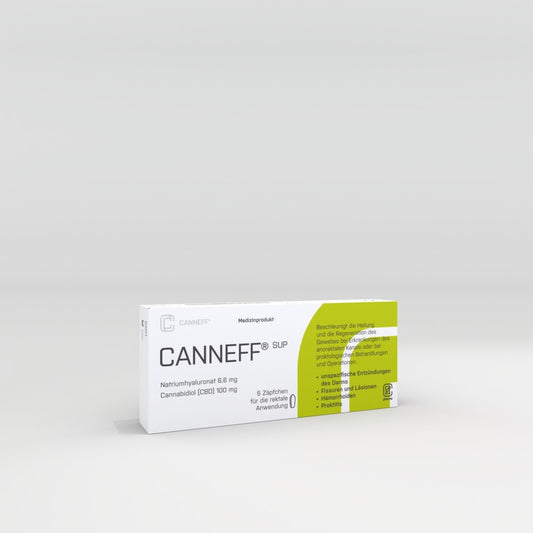
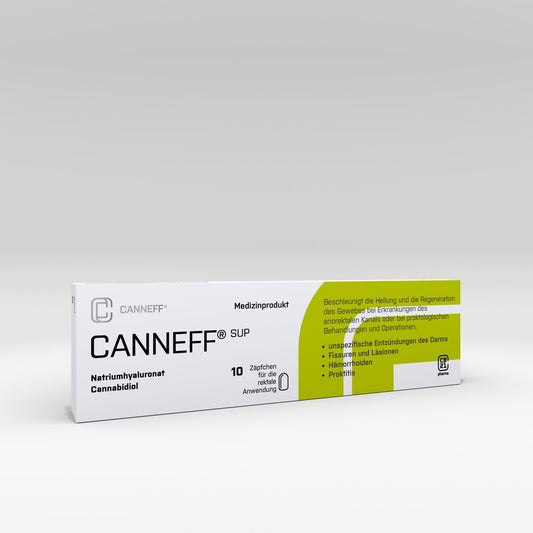
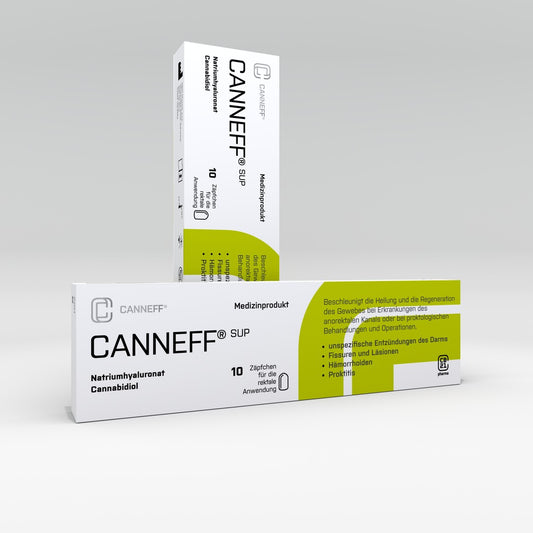
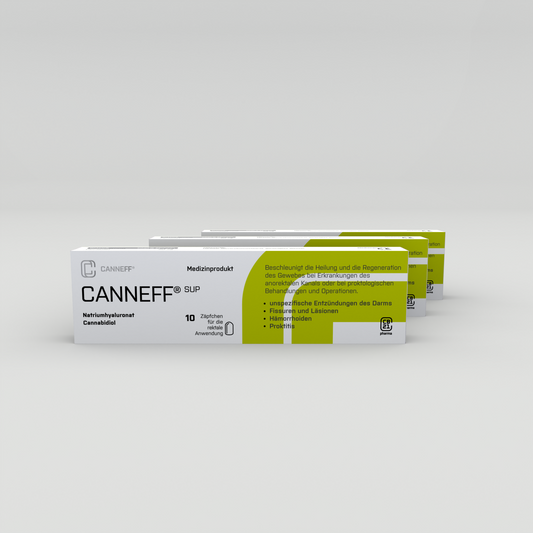
If the bleeding becomes more frequent, heavier, or darker, medical evaluation is important, as other conditions such as anal fissures, colon polyps, or inflammatory bowel diseases can also cause bleeding. To support healing and soothe irritated mucous membranes, products like CANNEFF® SUP suppositories can be used. The combination of cannabidiol (CBD) and hyaluronic acid calms the mucosa, promotes regeneration, and thus reduces the risk of recurring bleeding.
What color is the blood in hemorrhoids?
The blood in hemorrhoids typically has a bright red color. This coloration occurs because the blood comes from superficial vessels near the anal opening and thus has little contact with oxygen. It often appears during or after bowel movements and can be visible on toilet paper, on the surface of the stool, or in the toilet water.
Bright red blood is a characteristic feature, especially in internal hemorrhoids of grades I and II. In more advanced stages of hemorrhoids (hemorrhoids grade III and IV), when hemorrhoids permanently protrude, friction or pressure can also cause bleeding, which can vary in amount and frequency.
If the blood appears darker or mixed with stool, a doctor should be consulted, as this may indicate other causes such as bleeding from deeper parts of the intestine.
Are bleeding caused by hemorrhoids dangerous?
Bleeding caused by hemorrhoids is usually not dangerous but should not be ignored. The blood is typically bright red and appears during bowel movements or wiping, as it comes from the superficial vessels near the anus. Most of the time, this bleeding is minor and painless.
However, regular or heavy bleeding can lead to iron deficiency or even anemia in the long term, especially with untreated hemorrhoidal disease in stage III or stage IV. In addition, bleeding from the anus can also indicate other potentially serious conditions such as anal fissures, polyps, or in rare cases, colon cancer.
If the bleeding occurs regularly, increases in intensity, or is accompanied by other symptoms of hemorrhoids such as pain, weight loss, or dark blood, medical evaluation is urgently recommended. Early examination provides clarity and enables targeted treatment.
At what stage do bleeding occur in hemorrhoids?
Bleeding can occur at any stage of hemorrhoids, but frequency and intensity vary depending on severity. This table provides a clear overview to better understand the stages of hemorrhoids with the corresponding bleeding characteristics:
|
Stage of hemorrhoids |
Characteristics of the bleeding |
Special features |
|
Occasional bright red blood traces on toilet paper or in stool. |
Bleeding occurs due to friction from hard stool on the sensitive mucosa. |
|
|
More frequent bleeding, often during or after bowel movements. |
Blood appears drop by drop as the enlarged vascular cushions protrude during straining. |
|
|
Regular bleeding, which can be more intense. |
Bleeding occurs due to permanently protruding hemorrhoids that become irritated when pushed back. |
|
|
Stronger and persistent bleeding, often accompanied by moisture and pain. |
Bleeding occurs due to injured, permanently prolapsed hemorrhoids and irritated mucosa. |
Bleeding is a common symptom of hemorrhoids and varies depending on the stage. In early stages of hemorrhoids, it is usually minor and painless, while in later stages it becomes more frequent and intense. Regular or heavy bleeding should be medically evaluated to determine the cause and provide targeted treatment.

How do bleedings differ between internal and external hemorrhoids?
Bleeding from internal and external hemorrhoids differs in cause, frequency, and appearance. The following overview clarifies the differences:
|
Characteristics |
Internal hemorrhoids |
External hemorrhoids |
|
Origin |
Bleeding occurs due to friction or pressure on the sensitive mucosa of the internal vascular cushions. |
Bleeding can be caused by injuries to the external hemorrhoids or thrombosed tissue. |
|
Color of the blood |
Bright red because the blood comes from superficial vessels in the anal canal and has little contact with oxygen. |
Also bright red, but less common and often associated with pain or irritation. |
|
Frequency |
More common, especially during bowel movements or heavy straining. |
Less common, usually in advanced complaints or thrombosis. |
|
Accompanying symptoms |
Often painless, accompanied by itching, moisture, or a foreign body sensation. |
Often painful, accompanied by swelling and irritated tissue. |
Bleeding from internal hemorrhoids occurs more frequently and usually painlessly, while external hemorrhoids bleed less often but are often accompanied by pain. Both types should be medically evaluated if bleeding occurs regularly or heavily to ensure targeted treatment.
What causes bleeding in hemorrhoids?
Bleeding in hemorrhoids occurs due to mechanical stress and changes in the sensitive tissue of the vascular cushions. The most common causes are:
Mechanical stress
Hard stool: Hard stool rubs against the sensitive hemorrhoids and injures the mucous membrane, leading to small tears and bleeding.
Straining: Excessive pressure during bowel movements strains the vessels, making them more likely to tear.
Friction: Friction from clothing or toilet paper can irritate the skin and mucous membrane and cause injuries.
Vascular changes
Vessel dilation: Increased pressure on the hemorrhoids causes vascular congestion. This makes the vessels more susceptible to injury.
Thinned mucous membrane: In advanced stages of hemorrhoids (Hemorrhoids Grade III and Hemorrhoids Grade IV), the mucous membrane becomes thinner and more sensitive, increasing the risk of bleeding.
Inflammatory processes
Irritation from moisture: Mucus secretions in hemorrhoids irritate the skin and can promote inflammation, increasing the tendency to bleed.
Chronic irritation: Persistent anal itching and scratching increase the strain on the sensitive skin.
Insufficient anal hygiene
Aggressive cleaning, such as with perfumed wet wipes or vigorous rubbing, can damage the mucous membrane.
Chronic strain
Constipation: Regular hard stools put high pressure on the hemorrhoids.
Diarrhea: Frequent toilet visits and prolonged stool contact irritate the vessels and promote bleeding.
Bleeding from hemorrhoids is usually not dangerous but can indicate a progressing condition. Regular bleeding should be medically evaluated to rule out serious causes.
When should you see a doctor for bleeding hemorrhoids?
Regular or heavy bleeding
Regular or heavy bleeding from hemorrhoids, where bright red blood is often visible on toilet paper, in the stool, or in the toilet bowl, should be taken seriously. If the bleeding intensifies or persists over a longer period, this may indicate advanced hemorrhoids or other complications that require medical examination.
Additional symptoms with bleeding hemorrhoids
If bleeding is accompanied by other symptoms such as pain, swelling, or a strong pressure or foreign body sensation in the anal area, this may indicate that the hemorrhoids are advanced. Oozing or the onset of an inflammatory process, which may manifest as fever or pus formation, makes medical evaluation even more urgent.
Suspected serious conditions
Bleeding that is darker or almost black, or blood mixed with mucus or tissue, may indicate bleeding from higher sections of the intestine. Such signs should not be ignored, as they can point to serious conditions like colon polyps, inflammatory bowel diseases, or in rare cases, colon cancer. In these cases, a thorough medical examination is essential.
How can bleeding from hemorrhoids be stopped?
How can cooling the anal area help with bleeding hemorrhoids?
Applying a cool, clean cloth to the affected area helps constrict blood vessels, which reduces bleeding. At the same time, the cooling relieves swelling and soothes inflamed tissue.
What are the benefits of sitz baths for bleeding hemorrhoids?
Sitz baths in warm water promote healing of irritated mucous membranes and have a soothing effect. Anti-inflammatory additives like chamomile or oak bark can enhance the effect and reduce the risk of further bleeding.
Which products help stop bleeding caused by hemorrhoids?
Suppositories or ointments specially designed for the anal area provide effective support. CANNEFF® SUP suppositories with cannabidiol (CBD) and hyaluronic acid soothe irritated tissue, have anti-inflammatory effects, and promote mucous membrane regeneration. Find the selection of suppositories to treat hemorrhoids here.
How can soft stools prevent bleeding?
A high-fiber diet, sufficient fluid intake, and regular exercise promote soft stool consistency. This reduces pressure on the hemorrhoids, which helps prevent bleeding.
Why is gentle hygiene important for bleeding hemorrhoids?
Gentle cleaning of the anal area with lukewarm water prevents additional irritation. Avoiding harsh soaps or perfumed toilet paper protects the sensitive skin from further irritation.
When should you see a doctor for bleeding hemorrhoids?
Bleeding that persists or worsens despite self-care should be medically evaluated. Unusual signs such as darker blood or mucus discharge also require medical examination.
What treatment options are available for hemorrhoids with bleeding?
Which conservative measures relieve bleeding in hemorrhoids?
Conservative treatments focus on relieving symptoms without surgical intervention. These include a high-fiber diet, adequate fluid intake, and regular exercise to soften stools and minimize irritation of the hemorrhoids. Sitz baths with anti-inflammatory additives like chamomile or oak bark soothe the mucous membrane and promote healing.
When are medication treatments useful for bleeding hemorrhoids?
Various ointments, creams, or rectal suppositories can specifically help with bleeding caused by hemorrhoids. They have anti-inflammatory effects, promote healing, and relieve symptoms such as anal itching or anal burning. CANNEFF® SUP suppositories with CBD and hyaluronic acid support irritated tissue, soothe the mucous membrane, and help reduce bleeding. The combined effect of regeneration and moisture supply makes them a valuable option.

Which minimally invasive procedures are suitable for bleeding hemorrhoids?
If conservative measures are insufficient, minimally invasive procedures such as rubber band ligation or sclerotherapy are options. In rubber band ligation, the hemorrhoids are tied off so that they regress. Sclerotherapy seals the blood vessels supplying the hemorrhoids, thereby reducing bleeding.
When are surgical procedures necessary for bleeding hemorrhoids?
In advanced stages of hemorrhoids (Hemorrhoids Grade III and Hemorrhoids Grade IV) or in cases of severe bleeding, surgical treatment may be necessary. Procedures such as the Milligan-Morgan method or stapled hemorrhoidopexy aim to completely remove or reposition enlarged hemorrhoids. These interventions are usually required for severe symptoms of hemorrhoids when other hemorrhoid treatments do not provide sufficient relief. Read more here about the surgery for treating hemorrhoids.
What role does follow-up care play in bleeding hemorrhoids?
After every treatment for hemorrhoids, targeted aftercare is crucial. Measures such as sitz baths, gentle hygiene, and the use of products like CANNEFF® SUP suppositories promote healing and reduce the risk of relapse. The healing process should be closely monitored by a doctor, especially after surgical procedures.
How long does bleeding from hemorrhoids last?
The duration of bleeding from hemorrhoids depends on the stage of the disease, individual circumstances, and the chosen treatment.
In the early stages of hemorrhoids (Hemorrhoids Grade I or Hemorrhoids Grade II), bleeding is often only temporary and usually occurs during or immediately after bowel movements. It can subside within a few days, especially if measures such as a high-fiber diet and gentle anal hygiene are implemented.
In advanced stages of hemorrhoids (Hemorrhoids Grade III and Hemorrhoids Grade IV), bleeding can occur more frequently and intensely and may last for weeks, especially with repeated irritation from hard stools or straining. Without treatment, they can become chronic and increase the risk of complications such as anemia.
Proper care and targeted treatment, such as sitz baths or the use of products like CANNEFF® SUP suppositories, which soothe and regenerate the mucous membrane, can promote healing and stop bleeding more quickly. However, if bleeding persists or increases significantly, a doctor should definitely be consulted.
Can bleeding from hemorrhoids lead to anemia?
Yes, persistent or frequent bleeding from hemorrhoids can, in rare cases, lead to anemia. This mainly occurs when blood is lost regularly over a long period, overwhelming the production of new red blood cells. People with advanced hemorrhoids (grade III hemorrhoids and grade IV hemorrhoids) are particularly affected, as bleeding can be more intense and frequent.
Anemia manifests through symptoms such as fatigue, paleness, dizziness, and reduced performance. It can develop if hemorrhoids remain untreated and blood loss is not stopped in time.
To avoid this, it is important to take bleeding from hemorrhoids seriously and treat it promptly. In addition to conservative measures such as a high-fiber diet, targeted products like CANNEFF® SUP suppositories can help soothe the irritated mucous membrane and reduce bleeding. However, in cases of severe or persistent bleeding, a doctor should definitely be consulted to clarify the cause and initiate appropriate therapy.
Which home remedies help with bleeding hemorrhoids and how can I treat them myself?
For bleeding hemorrhoids, home remedies can relieve symptoms and support the healing process. These methods are especially suitable for hemorrhoids in stages I and II, where symptoms are still mild. Read more here about the treatment of grade I hemorrhoids as well as the treatment of grade II hemorrhoids.
Sitz baths for bleeding hemorrhoids
A sitz bath with warm water and additives such as chamomile, oak bark, or witch hazel soothes irritated skin and reduces inflammation. The antiseptic effect of these additives can also help prevent infections. Sitz baths should be taken for about 10–15 minutes.
Cooling for bleeding hemorrhoids
Cool compresses or ice packs wrapped in a soft cloth can reduce swelling and constrict blood vessels, which alleviates bleeding. The application should not last longer than 10 minutes to avoid irritating the skin.
Fiber-rich diet for bleeding hemorrhoids
Home remedies such as consuming psyllium husks, flaxseeds, or oat bran promote a soft stool consistency that reduces pressure on hemorrhoids. A balanced diet rich in fruits, vegetables, and whole grains also helps prevent constipation.
Adequate fluid intake for bleeding hemorrhoids
Plenty of water or unsweetened herbal teas support digestion and prevent stools from becoming too hard. This reduces the strain on the sensitive vascular cushions.
Natural ointments for bleeding hemorrhoids
Aloe vera gel or coconut oil can be applied locally to soothe the skin and promote healing. These natural substances have moisturizing and anti-inflammatory effects.
Hygiene for bleeding hemorrhoids
Gentle cleansing of the anal area after bowel movements with lukewarm water and soft cloths protects against irritation. Harsh soaps or perfumed toilet paper should be avoided.
Although home remedies often help, a doctor’s visit is essential for persistent bleeding, severe pain, or advanced hemorrhoids. They can form the basis of comprehensive treatment but should be supplemented with medical products or professional care if symptoms do not improve.
What role does diet play in bleeding hemorrhoids?
Diet plays a crucial role in the development and relief of symptoms in bleeding hemorrhoids. Targeted dietary adjustments can help reduce pressure on the sensitive vascular cushions in the anal canal, thereby preventing bleeding and irritation.
Promoting soft stool consistency in bleeding hemorrhoids
A fiber-rich diet is essential to keep stools soft and easy to pass. Foods such as whole grains, fruits, vegetables, legumes, and seeds like flaxseed or psyllium husks promote digestion and reduce the need to strain. This lessens the pressure on hemorrhoids and minimizes the risk of further bleeding.
Preventing constipation in bleeding hemorrhoids
An insufficient intake of fiber and fluids can lead to constipation, which worsens the symptoms of hemorrhoids. Regular meals with fiber-rich foods and drinking at least 1.5 to 2 liters of water per day support digestive health and effectively prevent constipation.
Anti-inflammatory foods for bleeding hemorrhoids
Foods with anti-inflammatory properties such as berries, green leafy vegetables, walnuts, and fatty fish (e.g., salmon, mackerel) can promote the healing of irritated tissue. These foods help reduce inflammation in the body and support the healing process.
Avoidance of irritating substances with bleeding hemorrhoids
Certain foods can worsen the symptoms of hemorrhoids. Spicy seasonings, highly processed foods, alcohol, and caffeinated beverages can irritate the bowel and exacerbate symptoms. A balanced and gentle diet is therefore recommended.
Additional support for bleeding hemorrhoids
Products like CANNEFF® SUP suppositories can complement the benefits of a high-fiber diet. The combination of cannabidiol (CBD) and hyaluronic acid has anti-inflammatory effects and promotes moisture supply to the mucous membrane. This can support healing and relieve symptoms of bleeding hemorrhoids.
A conscious diet can not only reduce the symptoms of hemorrhoids but also prevent the progression of the condition. A balanced and gut-friendly diet should therefore be an integral part of any prevention and treatment strategy.
What to do if bleeding from hemorrhoids worsens?
Heavier bleeding from hemorrhoids may indicate an advanced condition. Initial measures such as gentle pressure with a cold compress or a sitz bath with chamomile help to relieve the bleeding. If the bleeding persists, occurs regularly, or is accompanied by pain and swelling, a doctor should be consulted to rule out complications or to initiate surgical treatment of the hemorrhoids.
Prevention through a high-fiber diet, adequate fluid intake, and gentle anal hygiene can prevent further bleeding. Products like CANNEFF® SUP suppositories support the regeneration of the mucous membrane and effectively reduce inflammation.
How can CANNEFF® SUP suppositories help with bleeding hemorrhoids?
CANNEFF® SUP suppositories soothe irritated mucous membranes through the combination of cannabidiol (CBD) and hyaluronic acid. This combination has anti-inflammatory effects, promotes healing, and simultaneously supports moisture supply and regeneration of the affected tissue, which can reduce the risk of further bleeding.
What preventive measures help against bleeding caused by hemorrhoids?
A fiber-rich diet with fruits, vegetables, and whole grains ensures soft stool and prevents excessive straining. Adequate fluid intake and regular exercise promote bowel health. Avoid prolonged sitting on the toilet and practice gentle anal hygiene.
Can bleeding from hemorrhoids indicate other diseases, and how can I distinguish them?
Bleeding from hemorrhoids is typically bright red, painless, and occurs after bowel movements. However, similar symptoms can indicate other conditions such as anal fissures, inflammatory bowel diseases, or even colon cancer. Darker, chestnut-brown blood or mixed blood in the stool suggests problems in the upper intestinal tract, such as colitis or diverticulitis. Black, tarry stool (melena) indicates bleeding in the stomach or duodenum.
To rule out serious causes, a doctor's visit is necessary for unusual bleeding, pain, or other symptoms such as weight loss or fatigue. An accurate diagnosis through proctoscopy or colonoscopy can clarify the cause and ensure appropriate treatment. Read more here about the symptoms of hemorrhoids or the different stages of hemorrhoids.