

What are the first signs of colorectal cancer, and why are they often overlooked?
The early signs of colorectal cancer are usually nonspecific and can easily be confused with other, less serious conditions. These include:
Changed bowel habits: Frequent alternation between constipation and diarrhea or sudden changes without obvious cause.
Blood in stool: Either visible or hidden (occult). However, blood in the stool is often mistakenly attributed to hemorrhoids.
Abdominal pain and bloating: Cramping or dull pain, often associated with involuntary stool passage or unusual bowel sounds.
Unclear symptoms: Fatigue, weakness, weight loss, or reduced performance that may indicate blood loss due to the tumor.

Why are the signs often overlooked?
Nonspecific symptoms: Many early signs, such as abdominal pain or fatigue, can easily be attributed to other, more harmless issues like stress, digestive problems, or dietary changes.
Taboo: Symptoms like blood in the stool or changed bowel habits are uncomfortable for many people, so they rarely discuss them directly with doctors.
Misinterpretation: Visible blood is often associated with hemorrhoids, which can delay serious investigation.
Late symptoms: Colorectal cancer often develops slowly and remains symptom-free for years until the tumor reaches a size that causes discomfort.
The subtle nature of the first signs makes it crucial to take symptoms seriously and seek medical advice early. Regular screenings such as colonoscopy can help detect cancer at a curable stage, even if no symptoms are present yet.
What role does blood in the stool play in the early detection of colorectal cancer?
Blood in the stool is one of the most important warning signs and a key part of early detection of colorectal cancer. It can appear visibly or invisibly (occult) and indicates possible changes in the gastrointestinal tract, including tumors. Its significance lies in the following points:
Early Warning Sign in Tumors
Blood in stool is often the first and only sign of early-stage colon cancer. While visible blood is easier to detect, occult blood can only be found through special tests. Both forms require immediate medical evaluation.
Clues about the bleeding source
Bright blood: Indicates bleeding in the lower gastrointestinal tract, such as the anal canal or lower colon. This is often mistaken for hemorrhoids or anal fissures.
Dark or black blood (tarry stool): Indicates bleeding in the upper digestive tract, such as in the stomach or small intestine.
Mixed forms: Can indicate bleeding in the middle colon or multiple areas of the digestive tract.
Early detection through stool tests
Modern tests like the immunological fecal occult blood test (iFOBT) can detect even the smallest amounts of occult blood in stool. This test is an essential part of colon cancer screening and is regularly recommended from a certain age. A positive result requires a colonoscopy for further investigation.
Limitations of blood in stool as a symptom
-
Blood in stool is not always visible and can be overlooked.
-
Not all tumors bleed continuously, so repeated tests may be necessary.
-
Blood in stool can also be caused by other conditions such as hemorrhoids, intestinal infections, or polyps, which can complicate diagnosis.
Blood in stool is a crucial indicator for the early detection of colon cancer but should never be considered in isolation. A thorough examination by specialists, ideally through a colonoscopy, is essential to clarify the cause. Regular stool tests and preventive check-ups are indispensable to diagnose colon cancer early and maximize chances of cure.
Why is the color of blood in stool important, and what does it reveal about the cause?
|
Blood color |
Characteristics |
Possible causes |
|
Bright, fresh blood |
Red, often visible on stool or toilet paper |
Hemorrhoids, anal fissures, tumors in the lower bowel, inflammatory bowel diseases |
|
Dark red blood |
Evenly distributed in stool or jelly-like |
Bleeding in the middle colon, polyps, diverticular bleeding, tumors |
|
Black blood (tarry stool) |
Dark shiny, tarry consistency |
Bleeding in the upper digestive tract (stomach, duodenum), stomach ulcers |
|
Occult blood |
Not visible, only detectable by tests |
Early stage of tumors, polyps, mucosal changes |
Why is the color of blood in the stool important?
The color of blood in the stool provides important clues about the location of the bleeding source in the digestive tract. The digestive system has different sections that affect blood differently depending on the location and cause of injury or disease.
Bright, fresh blood: Blood that appears bright red usually comes from the lower digestive tract, especially the anal canal or lower colon. This is often the case with hemorrhoids or anal fissures, but tumors or inflammatory bowel diseases like Crohn's disease can also cause these bleedings.
Dark red blood: If the blood is darker and evenly distributed in the stool, the source is often in the middle colon. Causes can be polyps, diverticula, or bleeding from tumors. This form should always be medically evaluated as it may indicate serious diseases.
Black blood (tarry stool): Blood that appears black and tarry indicates bleeding in the upper digestive tract, for example in the stomach or duodenum. Stomach acid and digestive enzymes break down the blood and darken its color. Typical causes are stomach ulcers or tumors in the upper sections of the digestive tract.
Occult blood: Blood that is not visible to the naked eye is called occult blood. It can be a sign of early tumors, polyps, or other mucosal changes and is detected using special tests such as the immunological stool test.
Careful observation of blood color and stool changes is an important step in diagnosing possible diseases in the gastrointestinal tract. Early medical evaluation helps to detect serious causes such as colon cancer in time and treat them effectively.
How do colorectal cancer symptoms differ between early and late stages?
Colorectal cancer usually develops slowly, causing symptoms to change over the course of the disease. While the early stage often remains inconspicuous, clear and sometimes life-threatening complaints occur in the late stage.
Symptoms in the early stage
In the early stage, colorectal cancer often shows nonspecific and mild symptoms that can be easily overlooked or attributed to other diseases:
Changed bowel habits: Constipation, diarrhea, or alternating between both without an obvious cause.
Blood in stool: Often only in small amounts, frequently occult (not visible to the naked eye).
Bloating and bowel sounds: Noticeably loud or unusual.
Abdominal cramps: Occasional pain, usually perceived as harmless.
General complaints: Fatigue, decreased performance, or weakness due to possible mild blood loss.
These symptoms are often nonspecific and can also occur with less serious conditions like hemorrhoids or digestive disorders, making early detection difficult.
Symptoms in the late stage
As the disease progresses, clear and severe symptoms appear:
Visible blood in stool: Often dark red or black, a sign of extensive bleeding.
Bowel obstruction: Intestinal blockage caused by the growing tumor, recognizable by severe abdominal pain, nausea, and vomiting.
Pencil-thin stool: Very thin-shaped stool due to narrowing of the intestine.
Unintentional weight loss: Indicates the body's progressive metabolic breakdown.
Persistent fatigue and paleness: Caused by anemia due to chronic bleeding.
Pain: Cramp-like abdominal pain and pain during bowel movements.
Metastasis symptoms: Complaints in other organs, e.g., liver or lungs, due to cancer spread.
Overview of differences
|
Symptom category |
Early stage |
Late stage |
|
Bowel habits |
Mild changes |
Bowel obstruction, pencil-thin stool |
|
Blood in stool |
Occult or barely visible |
Visible, often dark red or black |
|
General condition |
Fatigue, weakness |
Severe exhaustion, paleness, weight loss |
|
Pain |
Rare or mild |
Severe abdominal and bowel movement pain |
|
Other organs |
None |
Symptoms caused by metastases (e.g., liver) |
The differences between early and late stages highlight the importance of early detection. Regular screenings such as colonoscopy can help diagnose colorectal cancer in the symptom-poor early phase before serious complications occur.
Which risk factors promote the development of colorectal cancer?
The development of colorectal cancer is promoted by a combination of genetic, lifestyle-related, and health factors. While some risk factors like genetic predisposition cannot be influenced, others can be reduced through conscious lifestyle choices.
Genetic and familial factors
Family history: People whose first-degree relatives have colorectal cancer have a significantly increased risk.
Hereditary syndromes: Diseases like familial adenomatous polyposis (FAP) or Lynch syndrome (HNPCC) increase the likelihood of developing colorectal cancer at a young age.
Genetic mutations: Certain mutations, such as in the MUTYH gene, increase the risk of colorectal carcinomas.
Lifestyle and nutrition
High-fat and low-fiber diet: A diet high in red meat, processed meat (e.g., sausage), and animal fats, along with low intake of vegetables, fruits, and whole grains, promotes the development of colorectal cancer.
Alcohol consumption: Regular and excessive alcohol consumption increases risk, especially in combination with other factors.
Smoking: Nicotine damages the intestinal lining and promotes the development of polyps that can turn into cancer.
Lack of exercise: Low physical activity contributes to overweight and slows bowel function, increasing the risk of colorectal cancer.
Health factors
Chronic inflammatory bowel diseases: Diseases like Crohn’s disease or ulcerative colitis involve long-term inflammation of the intestinal lining and increase cancer risk.
Obesity: Overweight, especially with a BMI over 30, is considered a significant risk factor.
Type 2 diabetes mellitus: People with diabetes have an increased risk due to insulin resistance and chronic inflammatory processes.
Age
The risk of colorectal cancer increases with age. Most diagnoses occur from age 50, which is why screenings are recommended starting at this age.
Summary of risk factors
|
Category |
Examples |
|
Genetic factors |
Family history, Lynch syndrome, familial adenomatous polyposis |
|
Nutrition |
Red and processed meat, high-fat and low-fiber diet |
|
Lifestyle |
Smoking, alcohol consumption, lack of exercise |
|
Health risks |
Chronic inflammatory bowel diseases, obesity, diabetes |
|
Age |
Risk increases from age 50 |
The risk of colorectal cancer can be significantly reduced through healthy lifestyle habits and regular screenings. A balanced diet, exercise, and avoiding alcohol and nicotine help minimize the likelihood of developing the disease. For people with a genetic predisposition, close medical monitoring is crucial.
How is colorectal cancer diagnosed, and why is colonoscopy the gold standard?
Colorectal cancer is diagnosed through a combination of medical history, physical examination, imaging techniques, and especially colonoscopy. Colonoscopy is considered the gold standard because it not only allows direct inspection of the entire colon but also immediate removal of suspicious changes like polyps or tumors or taking tissue samples. No other method offers such high accuracy along with therapeutic possibilities. Positive results from stool tests or imaging often require colonoscopy for definitive clarification.
What treatment options are available for colorectal cancer, and how do they improve chances of cure?
What treatment options are available for colorectal cancer, and how do they improve chances of cure?
Treatment of colorectal cancer depends on the stage of the disease, tumor location, and the patient’s overall health. The goal is to completely remove the cancer, combat metastases, and prevent recurrence. The main options are:
Surgery
Surgical removal of the tumor is the main treatment. The affected section of the bowel and nearby lymph nodes are removed.
Early stage: The tumor can often be completely removed, offering high chances of cure.
Later stages: Surgery relieves symptoms such as bowel obstructions and paves the way for further therapies.
Chemotherapy
Chemotherapy is often used in addition to surgery to destroy remaining cancer cells and prevent recurrence.
Adjuvant chemotherapy: After surgery, to eliminate micrometastases.
Neoadjuvant chemotherapy: Before surgery, to shrink the tumor and facilitate the operation.
Radiation therapy
Radiation therapy is especially used for rectal cancer, often combined with chemotherapy.
Before surgery: To shrink the tumor.
After surgery: To reduce the risk of recurrence.
Targeted therapies
Biological drugs like antibodies (e.g., Bevacizumab) block specific processes that promote tumor growth. This therapy is mainly used in advanced colorectal cancer, often combined with chemotherapy.
Immunotherapy
In some cases, such as genetically caused colorectal cancer (e.g., Lynch syndrome), immunotherapies can activate the immune system to fight the cancer.
Palliative treatments
In advanced stages, therapy often focuses on improving quality of life and relieving symptoms, for example through stent placement or targeted radiation therapy.
How do therapies improve chances of cure?
Early detection: Early-stage tumors are often completely curable through surgery (up to 100%).
Combined approaches: The combination of surgery, chemotherapy, and radiation therapy increases survival rates.
Individual therapy: Targeted and immunotherapies offer new possibilities to slow disease progression, even in advanced stages.
Early diagnosis and targeted therapy enable high chances of cure. Modern treatment approaches ensure that even in advanced colorectal cancer, quality of life is maintained and life expectancy can be extended.
How can CANNEFF® suppositories help with blood in stool caused by colorectal cancer or side effects of cancer therapies?
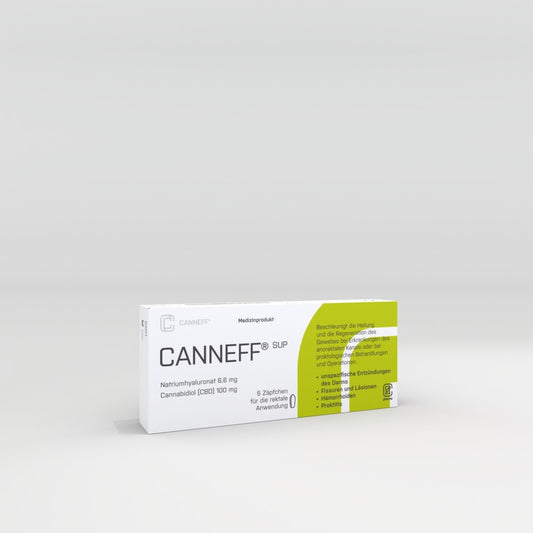
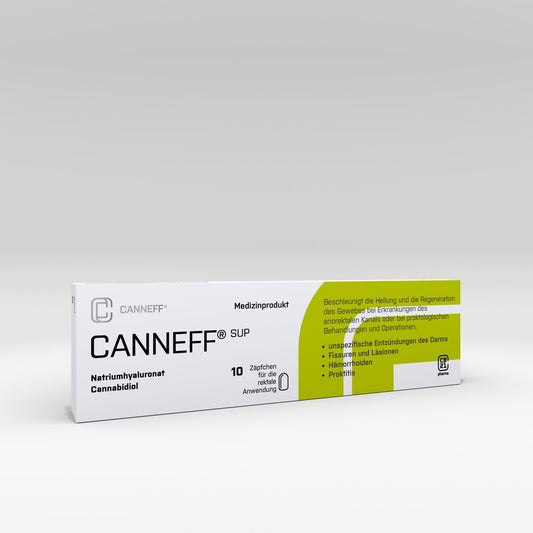
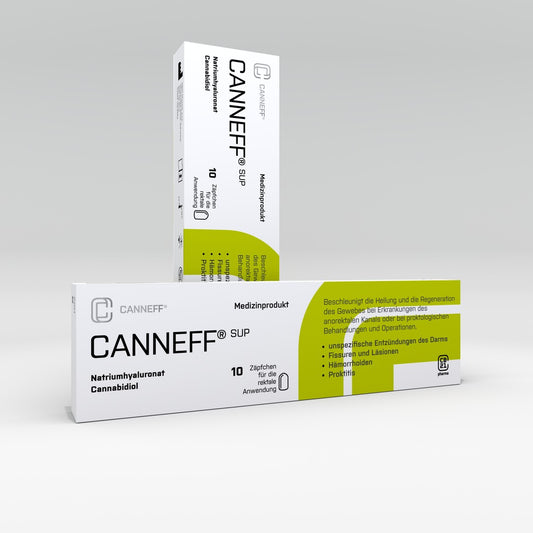
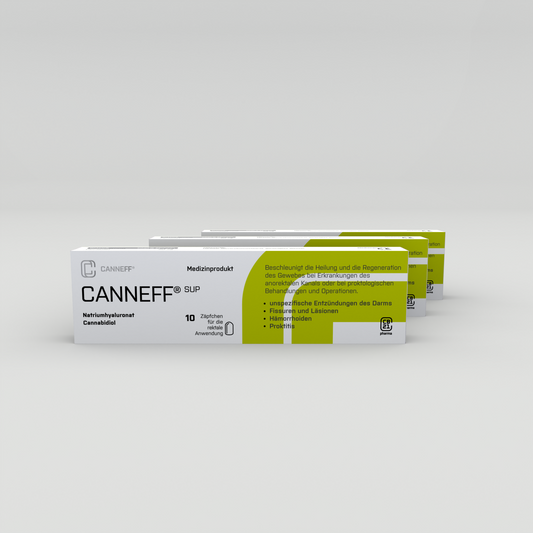
The CANNEFF® suppositories, both in the rectal (CANNEFF® SUP) and vaginal (CANNEFF® VAG SUP) versions, offer targeted relief and support for various complaints and side effects through the active ingredients cannabidiol (CBD) and hyaluronic acid. Both products combine anti-inflammatory, pain-relieving, and regenerative properties that can be a valuable addition to therapy in specific situations.
Support for rectal complaints and blood in stool
CANNEFF® SUP rectal suppositories help you with:
Symptom relief for blood in stool: Inflammations, fissures, or hemorrhoids that cause bleeding can be alleviated.
Supportive treatment for hemorrhoids: They reduce pain, itching, and swelling in internal and external hemorrhoids. Also read more here about hemorrhoid treatment.
Healing of anal fissures and lesions: Supports the regeneration of minor and deeper injuries in the anal canal. Also read more here about anal fissures.
Treatment of proctitis and cryptitis: Relieves inflammation symptoms and promotes healing. Read more here about proctitis or cryptitis.
Regeneration after colorectal surgery: Promotes tissue repair and relieves postoperative discomfort.
Support for anal fistulas and ulcers: Speeds up healing and relieves discomfort. Find more information here about anal fistulas.
Symptom relief for non-bacterial proctitis: Relieves local symptoms such as pain. Read more here about proctitis.
Support during side effects of cancer therapies
CANNEFF® Suppositories can help you with colon cancer treatments or after colorectal procedures:
Tissue regeneration after surgeries: They promote healing and relieve pain and discomfort.
Relief of symptoms from radiation therapy: Inflammations and wounds in the rectal area caused by radiation can be treated.
Reduction of itching and pain: Inflammation-related complaints are reduced by CANNEFF® Suppositories.
Healing of specific vaginal lesions: Injuries and wounds caused by radiation therapy or surgeries are supported. Read more here about fissures and lesions in the intimate area.
Relief of hormonally induced complaints: Relief from vaginal dryness and mucous membrane itching in the intimate area caused by hormonal treatments, e.g., in estrogen-sensitive tumors like breast cancer.
Support for general complaints
Wound healing and regeneration: Both suppositories promote tissue healing, whether in the anal canal, vagina, or after surgical procedures.
Pain relief: CANNEFF® Suppositories provide pain relief for various complaints, including lesions, inflammations, or post-surgery.
Reduction of discomfort: Symptoms such as itching, pain, and irritation are effectively reduced.
CANNEFF® Suppositories are versatile and offer effective support in healing and symptom relief for colon cancer, blood in stool, and the side effects of cancer therapies through their combination of cannabidiol and hyaluronic acid. Their indications cover a wide range, making them a valuable addition for rectal and vaginal complaints as well as in the aftercare of cancer patients.
What distinguishes rectal cancer from other tumors in the colon?
Colorectal cancer in the rectum (rectal carcinoma) differs from other tumors in the colon by its location and treatment strategy. Rectal cancer is located in the last section of the bowel, near the anus, which presents special challenges in therapy. It often requires a combination of radiation and chemotherapy before surgery (neoadjuvant therapy) to shrink tumors and prevent recurrence. Additionally, the risk of local recurrence is higher, so planning is especially careful. In colon cancer, surgery is usually the primary treatment without prior therapy.
What role does screening play in preventing colorectal cancer?
Screening examinations are crucial to detect colorectal cancer early or even prevent it. Colonoscopy, as the gold standard, allows identification and direct removal of colon polyps—the precursors of cancer—before they become malignant. Additionally, stool tests can detect hidden bleeding that may indicate early tumors. Regular screening from age 50 (earlier for risk groups) significantly increases chances of cure and actively prevents the development of colorectal cancer.
How do diet and lifestyle affect the risk of colorectal cancer?
A high-fiber diet rich in fruits, vegetables, and whole grains lowers the risk of colorectal cancer, while a high-fat, meat-heavy diet, especially with red and processed meats, increases the risk. Excessive alcohol consumption, smoking, lack of exercise, and overweight further promote the development of colorectal cancer. A healthy lifestyle with a balanced diet, regular physical activity, and avoidance of risk factors significantly contributes to prevention.
What alternatives are there to colonoscopy, and when are they appropriate?
Alternatives to colonoscopy include the immunological fecal occult blood test (iFOBT), which detects hidden blood in the stool, and sigmoidoscopy, a smaller examination of the lower colon. Imaging methods such as capsule endoscopy or virtual colonoscopy (CT colonography) can also be used. These methods are useful when a colonoscopy is medically not possible or refused by patients. However, they do not offer the diagnostic accuracy and therapeutic options of colonoscopy. A positive result in these tests still requires a full colonoscopy for further evaluation.
How can patients with colorectal cancer improve their quality of life during treatment?
Patients can improve their quality of life through targeted measures such as a balanced diet, regular exercise to strengthen the body, and stress management through relaxation exercises or professional support. Symptom-oriented therapies, such as pain management and skin care for colostomies, also help alleviate side effects. Sharing experiences in self-help groups or talking with psycho-oncologists promotes mental health and resilience. Close collaboration with the treatment team ensures that individual needs are taken into account. Read more in the blog post on blood in stool doctor.
What should those affected do if they notice symptoms like blood in the stool?
Those affected should seek medical advice immediately if they notice blood in the stool, regardless of whether the blood is bright, dark, or invisible (occult). A general practitioner or gastroenterologist can clarify the cause and, if necessary, arrange further examinations such as a colonoscopy. Early action is crucial to detect serious diseases like colorectal cancer in time and maximize the chances of cure. Read more about the causes of blood in stool, or learn more about examinations and diagnosis in the blog post on blood in stool doctor.
Why is early detection crucial for the chances of curing colorectal cancer?
Early detection allows for the diagnosis of colorectal cancer before symptoms appear and the tumor spreads. In early stages, the cancer is often completely curable, with cure rates of up to 90%. Screening tests such as colonoscopy can also remove precursors like polyps before they become malignant. The later the diagnosis, the lower the chances of cure, as advanced cancer often forms metastases and is more difficult to treat.
Are there differences in the treatment and prevention of colorectal cancer between women and men?
The treatment of colorectal cancer does not fundamentally differ between women and men, as it is based on the tumor stage and individual health factors. However, there are slight differences in prevention: men have a higher risk of developing colorectal cancer earlier, which is why screening is especially important for them from the age of 50. For women, the risk increases again from the age of 75, so regular screenings are also recommended at an older age. Hormones can also slightly influence the effectiveness of therapies.