

Can hemorrhoids simply be pushed back by oneself?
Pushing back hemorrhoids is a common method to relieve discomfort when they bulge outward after bowel movements or physical strain. This primarily concerns hemorrhoids of grade 2 and 3, which can either retract on their own or be gently pushed back into the anal canal. For grade 4 hemorrhoids, this is no longer possible as they have prolapsed permanently and often require medical treatment.
Is pushing hemorrhoids back painful?
Whether pushing back is painful depends on several factors, including:
-
Size of the hemorrhoids: Smaller lumps are often easier to push back than significantly enlarged ones.
-
Degree of inflammation: If the hemorrhoids are irritated or inflamed, pushing them back can be uncomfortable or painful.
-
Method of repositioning: With careful handling, the procedure can usually be done painlessly.
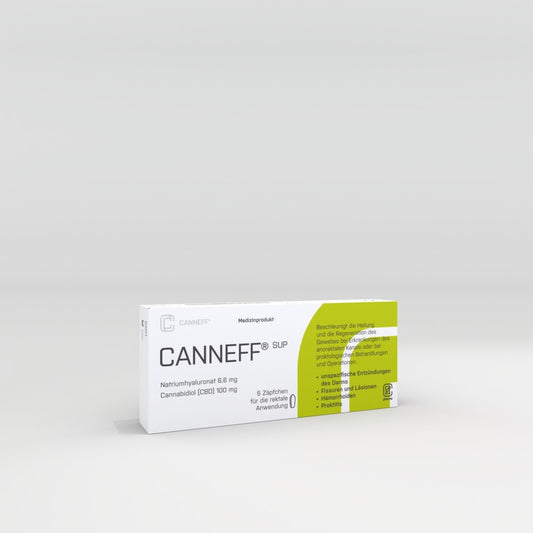
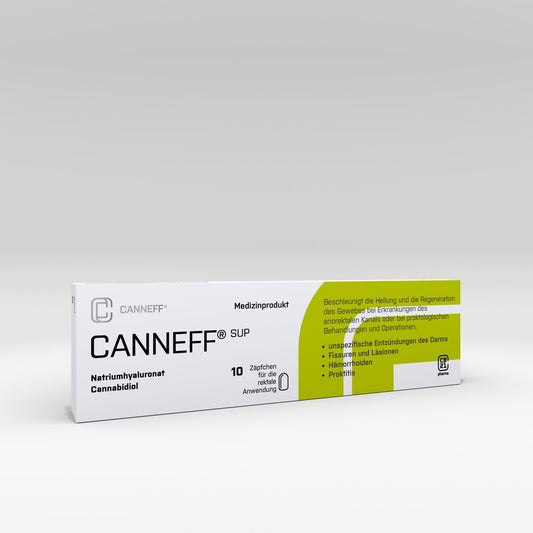
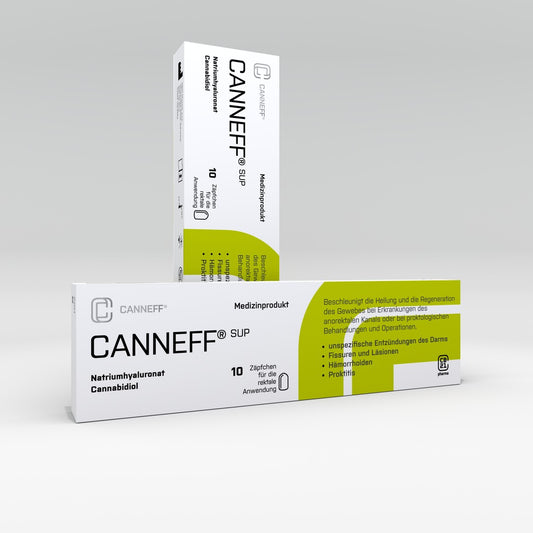
To reduce pain, soothing ointments with lidocaine or herbal remedies like witch hazel ointments or CANNEFF® suppositories can be used before pushing back.
When is it no longer possible to push hemorrhoids back?
In the following cases, pushing hemorrhoids back is no longer possible or advisable:
|
Situation |
Why pushing back is no longer possible |
|
Grade 4 hemorrhoids |
They remain permanently outside the anus. |
|
Severe swelling or thrombosis |
The tissue is too enlarged or hardened. |
|
Severe pain or bleeding |
Repositioning could worsen the discomfort. |
|
Strangulated hemorrhoids |
There is a risk of circulatory disorders and tissue damage. |
If any of these factors occur, medical advice should be sought instead.
What methods are there to gently push hemorrhoids back?
The repositioning should be done carefully and hygienically. A step-by-step approach helps to avoid injuries and pain:
-
Wash hands thoroughly and put on sterile gloves (optional).
-
Lubricant or a soothing ointment apply to the finger.
-
Assume a comfortable position, e.g., standing in a squat or slightly bent forward.
-
Apply gentle, even pressure, to slowly guide the hemorrhoid back into the anal canal.
-
Lie down for a few minutes or take a relaxed sitting position after repositioningto prevent recurrence.
A sitz bath with chamomile or oak bark before repositioning can relax the tissue and ease the procedure.
Can repositioning hemorrhoids cause complications?
In rare cases, repositioning can lead to the following problems:
-
Injuries to the anal mucosa due to improper handling
-
Increased irritation or inflammation due to excessive straining
-
Thrombosis or blood congestion when hemorrhoids are trapped
If severe pain or persistent bleeding occurs after repositioning, a doctor should be consulted immediately.
How can you prevent hemorrhoids from recurring?
After successful repositioning, it is important to take measures to prevent recurrence:
|
Measure |
Why it helps |
|
High-fiber diet |
Prevents hard stool and excessive straining. |
|
Regular exercise |
Promotes blood circulation in the pelvic area. |
|
Gentle stool regulation |
Psyllium husks or flaxseed oil keep stool soft. |
|
Ergonomic sitting posture |
A toilet stool can facilitate bowel movements. |
|
Pelvic floor training |
Strengthens the muscles and prevents hemorrhoids. |
These measures are essential to reduce symptoms in the long term.
Is long-term healing possible through repositioning?
Repositioning alone is not a permanent solution but only serves to relieve acute symptoms. Hemorrhoids grade 2 and grade 3 can be temporarily repositioned, but without lifestyle changes, there is a risk they will recur. Therefore, it is important to focus on long-term bowel health, exercise, and hygiene.
Which aids can make repositioning easier?
The following remedies can be helpful for support:
-
Hemorrhoid ointments with anti-inflammatory ingredients (e.g., witch hazel or lidocaine)
-
CANNEFF® suppositoriesto calm the tissue and promote healing
-
Sitzbäder with soothing additives to prepare for repositioning
-
Disposable gloves or lubricantto make repositioning more hygienic and comfortable
Those who regularly have problems with prolapsed hemorrhoids should consider medical treatment.
When should medical treatment be considered instead?
A doctor visit is advisable if:
-
Hemorrhoids repeatedly protrude despite being pushed back
-
Severe pain or bleeding occurs
-
Persistent itching or moisture is present
-
There are signs of an infection or thrombosis
In such cases, medical therapy, such as sclerotherapy or rubber band ligation, may be advisable.
Can targeted exercises promote the retraction of hemorrhoids?
Yes, certain exercises can help strengthen the pelvic floor and support the regression of hemorrhoids:
|
Exercise |
Effect |
|
Pelvic floor training (Kegel exercises) |
Strengthens the muscles in the anal area |
|
Yoga exercises (e.g., the "Child's Pose") |
Promotes blood circulation and relaxes the bowel |
|
Gentle squats |
Supports blood circulation in the pelvis |
|
Daily walks |
Stimulates digestion and relieves the bowel |
These exercises can reduce the risk of a recurrent prolapse and contribute to long-term improvement. Pushing hemorrhoids back can help temporarily but is not a permanent solution. While Grade 2 and Grade 3 hemorrhoids can often be repositioned, this is no longer possible with Grade 4. A healthy diet, regular exercise, and targeted preventive measures are crucial to avoid symptoms in the long term. If hemorrhoids recur or are painful, a doctor should be consulted.