

What are the four stages of hemorrhoids, and how do they differ?
Hemorrhoids are classified into four stages (grades) depending on their severity, each with different symptoms and characteristics. This classification helps to understand the condition, correctly categorize the symptoms of hemorrhoids, and consequently take appropriate measures for the treatment of hemorrhoids:
Hemorrhoids Grade I: In this early stage, the hemorrhoids are enlarged but remain completely inside the anal canal and are not visible from the outside. Those affected usually notice no or only minor discomfort. Typical symptoms can include bright red blood traces after bowel movements, slight itching, or burning in the anal area. Often, Hemorrhoids Grade I are discovered incidentally during medical examinations.
Hemorrhoids Grade II: In Hemorrhoids Grade II, the vascular cushions are more enlarged and protrude from the anal canal during strain such as bowel movements or physical exertion. However, they retract on their own. Symptoms like itching, burning, moisture, and occasional bleeding are common. This stage is often accompanied by a foreign body sensation or slight pressure in the anal area.
Hemorrhoids Grade III: In this advanced stage, the hemorrhoids are so enlarged that they protrude externally during strain (e.g., bowel movements) and no longer retract on their own. They must be manually pushed back into the anal canal. Those affected by Hemorrhoids Grade III often suffer from more severe symptoms such as persistent moisture, bleeding, pain, and itching. This stage can significantly impact daily life.
Hemorrhoids Grade IV: The most severe stage is characterized by permanently prolapsed hemorrhoids that can no longer be pushed back. They are visible from the outside and can cause severe symptoms such as pain, bleeding, inflammation, and mucosal prolapse (anal prolapse). Stage Grade IV hemorrhoids often requires intensive medical treatment to avoid complications.

How to recognize hemorrhoids in the early stage (Grade I)?
Hemorrhoids in the early stage (Grade I) are often difficult to detect because they usually cause no severe discomfort at this early stage and remain hidden in the anal canal. Nevertheless, there are some typical signs that may indicate Grade I hemorrhoids.
Typical symptoms of Grade I hemorrhoids
Mild bleeding: Small amounts of bright red blood often appear on the toilet paper or in the stool. This occurs when hard stool injures the sensitive vascular cushions. Read more here about bleeding hemorrhoids.
Itching and burning: Occasionally, affected individuals report mild itching or burning in the anal area. This is often due to irritation of the mucous membrane.
Feeling of incomplete emptying: There may be a subjective feeling that the bowel is not completely emptied after using the toilet.
No visible changes: From the outside, Grade I hemorrhoids are not visible because the enlarged vascular cushions remain completely inside the anal canal.
What signs indicate Grade II hemorrhoids?
Grade II hemorrhoids are characterized by clear symptoms that often occur during or after bowel movements. At this stage, the enlarged vascular cushions temporarily protrude from the anal canal but retract on their own. Typical signs include.
Characteristic symptoms of Grade II hemorrhoids
Temporary protrusion of hemorrhoids: The hemorrhoids protrude from the anal canal when straining, for example during bowel movements, but retract on their own after emptying.
Bleeding: Bright red bleeding, visible on toilet paper or in the stool, occurs more frequently. This is caused by friction of the stool against the sensitive vascular cushions. Read more about bleeding hemorrhoids here.
Itching and burning: The mucous membrane of the temporarily protruding hemorrhoids can be irritated, leading to anal itching or anal burning.
Moisture and mucus secretion: Moisture in the anal area or mucus discharge may occur, which can further irritate the skin and complicate anal hygiene.
Foreign body sensation: Many affected individuals report a feeling of pressure or a foreign body sensation in the anus, especially after bowel movements.
Characteristics of Grade II Hemorrhoids
The temporary protrusion of hemorrhoids is a clear distinguishing feature from Grade I. Unlike Grade III, however, at this stage the hemorrhoids still retract on their own.
When should a doctor be consulted?
If symptoms persist or worsen despite hygienic and dietary measures, a doctor should be consulted. Especially in cases of repeated bleeding or significant discomfort, medical evaluation is important to rule out other causes such as anal fissures or polyps.
What happens with Grade III hemorrhoids, and why must they be manually pushed back?
Hemorrhoids Grade III represent an advanced stage of hemorrhoidal disease, where the vascular cushions are so enlarged that they permanently protrude from the anal canal during bowel movements or physical exertion. Unlike Hemorrhoids Grade II, at this stage the hemorrhoids no longer retract on their own and must be manually pushed back.
Typical characteristics of Grade III hemorrhoids
Permanent protrusion: The hemorrhoids not only protrude during strong straining but can also become visible during everyday activities such as walking, sitting, or lifting loads.
Manual repositioning required: Since the natural return to the anal canal no longer occurs, affected individuals must carefully push the prolapsed vascular cushions back with their fingers to relieve pressure and discomfort.
Pain and itching: Friction and constant contact with clothing can cause pain, irritation, and an unpleasant itching sensation.
Bleeding: Frequent bright red bleeding occurs because the mucosa of the hemorrhoids is sensitive and easily injured. Read more about bleeding hemorrhoids here.
Moisture and mucus secretion: Moisture or mucus discharge in the anal area can lead to skin irritation and make hygiene difficult.
Pressure and foreign body sensation: Affected individuals often feel a constant pressure sensation perceived as a foreign body in the anal area.
Why do Grade III hemorrhoids need to be manually pushed back?
Manual repositioning of the hemorrhoids is necessary to alleviate symptoms and avoid complications.
Relief of the tissue: If the hemorrhoids remain outside, reduced blood flow can cause swelling or painful strangulation.
Prevention of tissue damage: Pushing them back prevents the sensitive mucosa of the hemorrhoids from being further damaged by friction.
Relief of pressure sensation: By pushing the hemorrhoids back into the anal canal, the unpleasant feeling of pressure and foreign body sensation subsides.
When is an anal prolapse (Grade IV) diagnosed in hemorrhoids?
An anal prolapse is diagnosed in Grade IV hemorrhoids when the enlarged vascular cushions permanently protrude from the anal canal and cannot be pushed back either spontaneously or manually. This advanced stage of hemorrhoidal disease is characterized by a pronounced bulge in the anal area, which is also visible from the outside. Often, part of the anal mucosa has also prolapsed.
Characteristics of an anal prolapse in Grade IV
Permanent protrusion: The hemorrhoids remain permanently outside the anal canal and can no longer be pushed back even with fingers.
Additional mucosal prolapse: In addition to the hemorrhoids, often a part of the anal mucosa also protrudes outward, worsening the condition.
Severe symptoms: Patients often complain of persistent pain, itching, moisture, and a strong feeling of pressure or a foreign body.
Bleeding: Repeated bleeding caused by friction and the sensitive mucosa is common. The blood is usually bright red and appears during bowel movements or physical exertion. Read more about hemorrhoid bleeding here.
Risk of complications: In Grade IV, the risk of tissue inflammation, infections, and thrombosis (blood clots in the hemorrhoids) increases. Additionally, tissue damage up to necrosis (tissue death) can occur if blood supply is restricted.
Why is it called an anal prolapse?
The term "prolapse" means the protrusion of tissue from its normal anatomical position. In Grade IV hemorrhoids, anal prolapse refers to the irreversible bulging of the hemorrhoids and anal mucosa, which can no longer be pushed back into the anal canal. This indicates that the connective tissue and support structure in the anal area are severely weakened. An anal prolapse in Grade IV hemorrhoids is the most severe stage of hemorrhoidal disease and requires urgent medical treatment. The permanent bulging of the hemorrhoids is associated with significant discomfort and an increased risk of complications. Usually, surgical intervention is necessary to treat the hemorrhoids and mucosal prolapse and to improve the quality of life for those affected. Read more here about surgery for hemorrhoid treatment.
At which stage do itching, burning, and bleeding occur?
Hemorrhoids are a common health problem divided into four stages. Each stage is characterized by specific symptoms and severity levels, allowing those affected to better understand the progression of the condition. The following table provides a clear overview of the individual stages, including typical complaints and physical changes. This classification helps to better assess the condition and recognize when medical advice might be necessary. Read more here about hemorrhoid bleeding.
|
Stage |
Frequency of itching and burning |
Bleeding |
Special features |
|---|---|---|---|
|
Rare or mild, often only when irritated by hard stool |
Occasionally, bright red blood on toilet paper |
Symptoms usually occur due to straining or constipation. |
|
|
More frequent and intense, especially after bowel movements |
Regularly, often dripping |
Hemorrhoids prolapse temporarily but retract on their own. |
|
|
Severe, accompanied by moisture and pain |
Frequent, even during the day |
Manual repositioning of the hemorrhoids is necessary. |
|
|
Permanently present and very intense |
Frequent and more severe, mucosa is easily injured |
Hemorrhoids remain permanently prolapsed and irritate surrounding tissue. |
What does it mean when hemorrhoids prolapse permanently?
When hemorrhoids prolapse permanently, it is called Grade IV hemorrhoids, the most severe stage of hemorrhoidal disease. In this condition, the hemorrhoids are so enlarged and swollen that they protrude from the anal canal and cannot be pushed back either spontaneously or manually. This permanent prolapse is often referred to as anal prolapse, especially when a piece of the anal mucosa is also visible.
Permanently prolapsed hemorrhoids can cause significant discomfort, including:
- Severe pain caused by irritated or inflamed tissue.
- Persistent oozing and mucus discharge, leading to skin irritation.
- Bright red bleeding because the sensitive mucous membrane is easily injured.
- Anal itching and anal burning due to constant friction and moisture.
- A foreign body sensation that makes sitting and walking uncomfortable.
A permanent prolapse usually requires surgical treatment, as conservative and minimally invasive measures are no longer sufficient at this stage to resolve the hemorrhoids. An early visit to the doctor is essential to avoid complications such as infections or tissue damage and to improve quality of life.
How do hemorrhoids develop from Grade I to Grade IV?
The progression from Grade I to Grade IV is often a gradual process, promoted by untreated complaints and aggravating factors such as straining, overweight, or a sedentary lifestyle. Early measures like a high-fiber diet, sufficient exercise, and targeted treatment can prevent progression and relieve symptoms. Hemorrhoids typically undergo a stepwise worsening if no appropriate treatment is given. The development from Grade I to Grade IV shows increasing strain on the vascular cushions and worsening symptoms.
What symptoms are typical for advanced hemorrhoids?
Hemorrhoids occur in various stages, which differ in the severity of symptoms and the type of changes. From mild discomfort such as itching and occasional bleeding to permanently prolapsed hemorrhoids causing intense pain, the condition worsens with each progression. A clear overview of the stages helps to better understand the symptoms and, if necessary, seek medical help early. The following table summarizes the four stages of hemorrhoids and describes their typical characteristics.
|
Stage |
Description |
Typical symptoms |
|
Enlarged hemorrhoids remain in the anal canal and are not visible from outside. |
Occasional bright red bleeding during bowel movements Mild itching or burning in the anal area |
|
|
Hemorrhoids prolapse during bowel movements or physical strain but retract on their own. |
More frequent bleeding Increased itching, burning, and moisture Pressure or foreign body sensation |
|
|
Hemorrhoids prolapse during bowel movements or strain and must be manually pushed back. |
Pain during bowel movements Frequent moisture and mucus discharge Increased bleeding |
|
|
Hemorrhoids are permanently prolapsed and can no longer be pushed back (anal prolapse). |
Severe pain Frequent bleeding Moisture, mucus discharge Foreign body sensation |
This overview shows the gradual worsening of hemorrhoids and highlights the importance of early diagnosis and treatment to prevent progression.
How common are hemorrhoids of the different stages?
The stages of hemorrhoids differ not only in symptom intensity but also in frequency and typical risk groups. This table summarizes the key information to provide a quick overview of how often each stage occurs and which groups are particularly affected.
|
Stage |
Frequency |
Typical symptoms |
Particularly affected |
|
Very common, especially in early stages |
Mild bleeding, occasional itching or burning |
People with sedentary lifestyles, low-fiber diets |
|
|
Common, especially in adults over 40 |
Bleeding, itching, temporary prolapse of hemorrhoids |
People with chronic constipation or strong straining |
|
|
Moderate, about 10–20% of those affected |
Painful, hemorrhoids permanently prolapse and must be manually pushed back |
People who ignore or delay their symptoms |
|
|
Rare, less than 5% |
Permanently prolapsed hemorrhoids, pain, moisture, anal prolapse |
Elderly people or individuals with untreated chronic constipation |
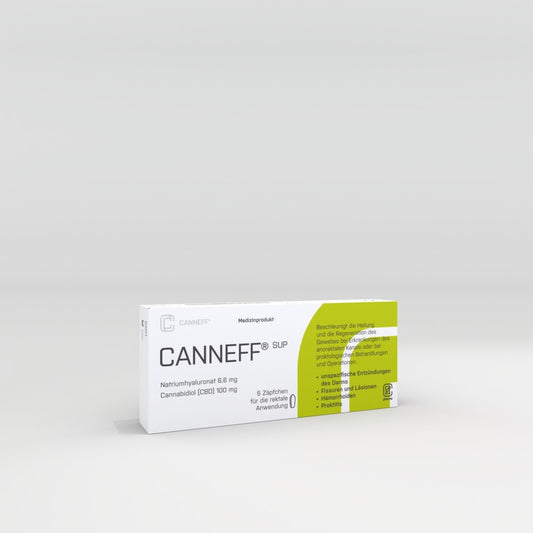
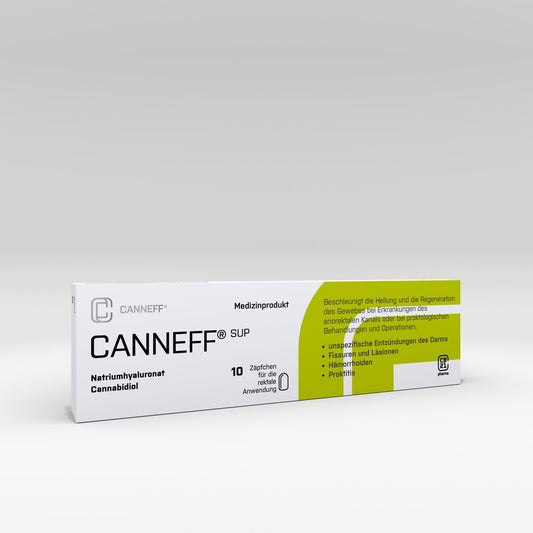
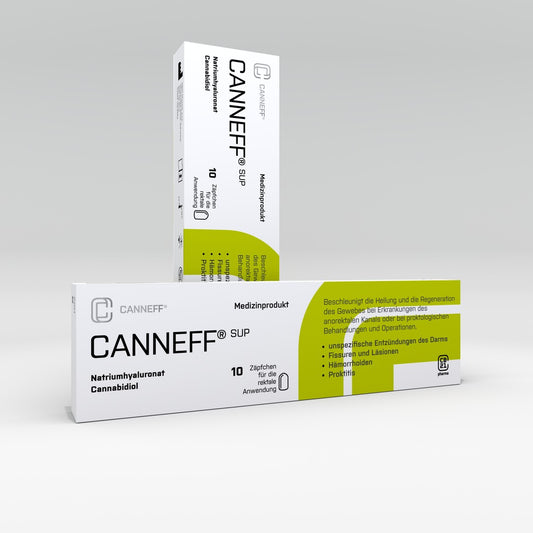
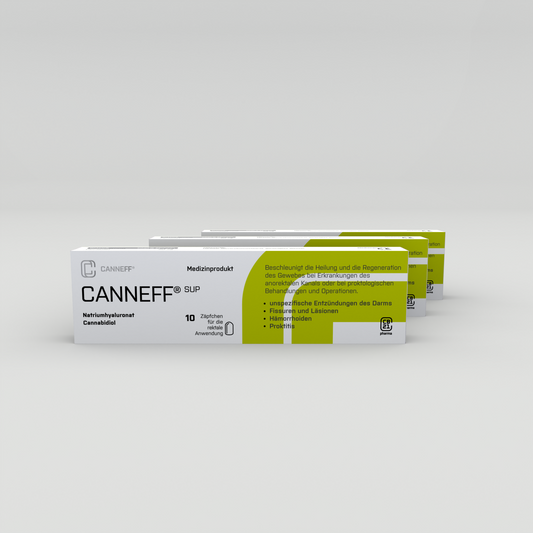
Find here the CANNEFF® SUP Suppositories. All variations of the medical product can be found here: Treat Hemorrhoids.
Find more detailed information here about the treatment of each stage of hemorrhoidal disease:
Hemorrhoids Grade II Treatment
Hemorrhoids Grade III Treatment
Hemorrhoids Grade IV Treatment