

What causes Hemorrhoids Grade III?
Hemorrhoids Grade III belong to the advanced stages of hemorrhoidal disease. At this stage, the enlarged vascular cushions protrude from the anal canal during bowel movements or physical exertion and must be manually pushed back. The symptoms of hemorrhoids such as anal itching, anal burning, pain, bleeding, and moisture can significantly affect daily life. Targeted treatment is essential to relieve symptoms and prevent the progression of the disease. The main causes of Hemorrhoids Grade III are similar to those of the earlier stages of hemorrhoidal disease, but the strain increases over time. Chronic constipation, straining during bowel movements, low-fiber diet, lack of exercise, and prolonged sitting, especially on the toilet, are the most common triggers. Overweight, pregnancy, or a genetic connective tissue weakness can also increase the risk. Untreated Grade I hemorrhoids or Grade II hemorrhoids can progress to Hemorrhoids Grade III due to persistent pressure and strain.

How can Grade III hemorrhoids be treated conservatively?
For Grade III, purely conservative measures are often not enough but can significantly relieve symptoms. A high-fiber diet, supplemented with whole grains, fruits, vegetables, and legumes, is essential to soften stool and reduce pressure on the hemorrhoids. Adequate fluid intake, ideally 1.5 to 2 liters of water per day, supports digestion and prevents constipation.
Regular exercise such as yoga, walking, or swimming promotes bowel activity and helps relieve pressure on the vascular cushions. Gentle toilet habits are also important: straining and prolonged sitting should be avoided, and bowel movements should be done calmly and without rush.
Which ointments, suppositories, and home remedies help with Grade III?
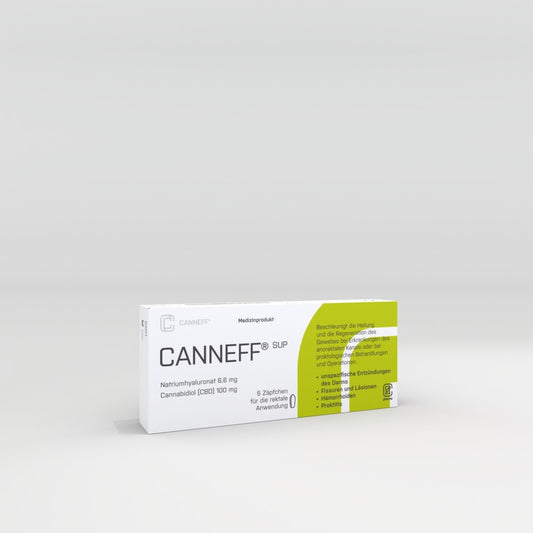
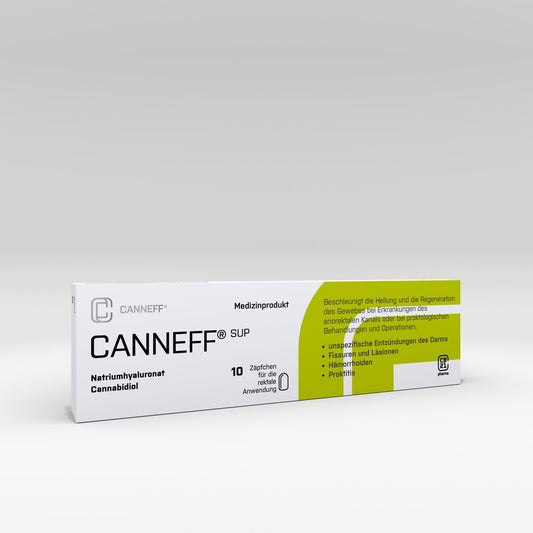
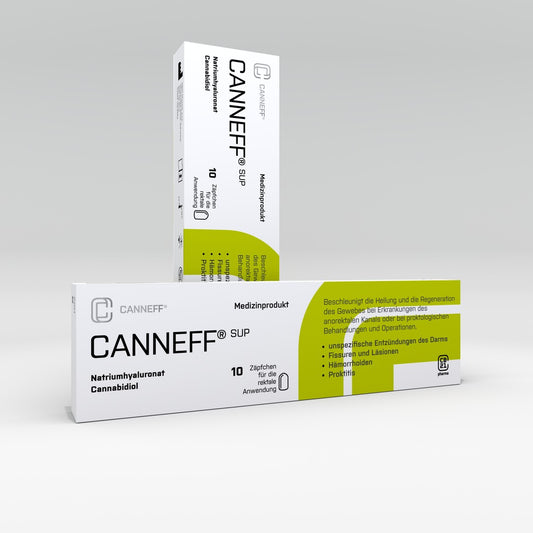
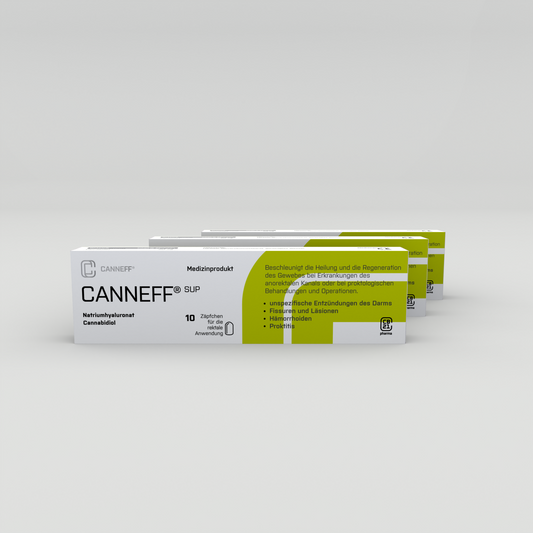
For symptomatic relief, ointments, creams, and suppositories can be helpful. CANNEFF SUP suppositories offer a modern solution for those affected by Hemorrhoids Grade III. The combination of Cannabidiol (CBD) and Hyaluronic Acid reduces inflammation, relieves pain, and promotes mucous membrane regeneration. Additionally, preparations with witch hazel, zinc, or aloe vera have a soothing effect on irritated skin. Sitz baths with anti-inflammatory additives like chamomile or oak bark relieve symptoms such as itching and burning and support blood circulation. Cooling compresses can reduce swelling, while aloe vera gel soothes irritated skin.

When is a doctor's visit essential for Grade III hemorrhoids?
A doctor's visit for Grade III hemorrhoids is essential if the symptoms are severe or worsen. Typical signs that require a doctor's visit include:
Permanent protrusion of hemorrhoids: If the hemorrhoids remain permanently outside the anal canal and can no longer be pushed back by themselves or only with difficulty, medical advice should be sought. This indicates an advanced condition that often requires targeted treatment.
Severe bleeding: Bright red bleeding during or after bowel movements is common with Grade III hemorrhoids. If this bleeding is heavy or occurs regularly, medical evaluation is necessary to rule out other potentially serious causes such as anal fissures or bowel diseases.
Persistent pain: In case of intense or stabbing pain, especially when sitting or during bowel movements, a doctor's visit is advisable. Pain may indicate thrombosis or inflammation that needs treatment.
Oozing and mucus discharge: These symptoms can not only be uncomfortable but also increase the risk of skin irritation and infections in the anal area. A doctor can recommend targeted measures to relieve these complaints.
Limited quality of life: If daily life is severely affected by itching, burning, pressure sensation, or bleeding, medical help should be sought to improve quality of life.
No improvement through self-treatment: If conservative measures such as diet, sitz baths, or over-the-counter ointments and suppositories do not provide relief, medical evaluation is necessary. The doctor can consider additional or alternative treatment options such as minimally invasive procedures or surgery. Read more here about surgery for hemorrhoids.
Suspected complications: Symptoms such as fever, severe swelling, purulent discharge, or unexplained pain may indicate infections, anal thrombosis, or other complications that require immediate treatment.
A timely visit to the doctor can help relieve the symptoms of hemorrhoids, avoid complications, and initiate targeted therapy. Especially with Grade III hemorrhoids, working with a proctologist is important to assess the severity of the condition and ensure the best possible treatment.
Which minimally invasive procedures are used for Grade III hemorrhoids?
Hemorrhoids Grade III often require minimally invasive procedures to sustainably relieve symptoms. Rubber band ligation is a commonly used method where a rubber ring is placed around the base of the hemorrhoids. This cuts off the blood supply, causing the tissue to die and fall off. Another procedure is sclerotherapy, where a sclerosing substance is injected into the hemorrhoids to shrink them.
A more advanced method is the Hemorrhoidal artery ligation (HAL), in which the arteries supplying blood are identified and tied off using ultrasound. This reduces blood flow and causes the hemorrhoids to shrink. These procedures are usually outpatient, minimally painful, and require a short recovery time.
When is surgery necessary?
If the hemorrhoids no longer respond to minimally invasive measures or the symptoms are severe, surgery is the most effective solution:
Milligan-Morgan method: The hemorrhoids are completely removed, leaving the wound open. The Milligan-Morgan method is a proven surgical technique in which the hemorrhoids are fully excised.
Ferguson method: Similar to the Milligan-Morgan method, but with wound closure.
Stapler hemorrhoidopexy (Longo method): Stapler hemorrhoidopexy (Longo method) is a more modern, less painful alternative. Excess mucosa is removed, which pulls the hemorrhoids back to their original position. The hemorrhoids are repositioned with a stapling device and the blood supply is reduced.
Laser hemorrhoidoplasty: A modern, minimally painful method that treats the tissue precisely while preserving it.
Find more information here about surgery for hemorrhoids,
What complications can occur with grade III hemorrhoids if left untreated?
Untreated Grade III hemorrhoids can lead to a range of complications that both worsen symptoms and significantly impair quality of life. The most common complications are listed below:
Anal thromboses: Disrupted blood flow in enlarged hemorrhoids can cause blood clots (thromboses) to form. These often cause severe pain, swelling, and a pronounced feeling of pressure in the anal area. Thromboses can occur acutely and often require medical intervention.
Chronic bleeding: Repeated bright red bleeding during bowel movements can lead to chronic blood loss if untreated. This increases the risk of anemia, which causes symptoms such as fatigue, weakness, and paleness. Additionally, bleeding can significantly impact daily life and cause psychological stress. Read more here about bleeding hemorrhoids.
Inflammations and infections: The mucous membrane of the prolapsed hemorrhoids is sensitive and can be easily irritated or injured. Persistent oozing and mucus secretions keep the area moist, creating an ideal environment for bacterial infections. These can lead to inflammation, redness, and purulent discharge.
Anal eczema: Oozing and mucus secretions irritate the skin around the anus. This can lead to anal eczema, which manifests as itching, redness, and oozing skin changes. Without treatment, the condition can worsen and permanently damage the skin barrier.
Anal fissures: Straining hard or having hard stools can cause tears in the sensitive mucous membrane of the anal canal. These so-called anal fissures are painful and often bleed. They also increase the risk of infections and inflammations in the anal area.
Pinching of hemorrhoids: If the prolapsed hemorrhoids can no longer be pushed back, there is a risk they may become strangulated. This can interrupt blood flow, damaging the tissue and causing extreme pain. In severe cases, necrosis (tissue death) can occur, requiring emergency surgical intervention.
Soiling: Due to the prolapsed hemorrhoids, the sphincter muscle can no longer close completely, leading to involuntary soiling. This is not only unpleasant but also increases the risk of skin irritation and infections in the anal area.
Impairment of quality of life: Persistent itching, burning, oozing, pain, and bleeding can severely impact daily life. Those affected may avoid social activities, have difficulty sitting, and develop psychological burdens such as shame or anxiety.
Progression to Grade IV: Without treatment, Grade III hemorrhoids can progress to the advanced stage of Grade IV hemorrhoids. At this stage, the hemorrhoids remain permanently prolapsed and can no longer be pushed back. This increases discomfort and usually requires a much more complex surgical treatment. Read more here about hemorrhoid surgery or the treatment of Grade IV hemorrhoids.
How long does treatment and recovery from Grade III hemorrhoids take?
The recovery time varies depending on the chosen treatment method. For minimally invasive procedures like rubber band ligation or sclerotherapy, the recovery period usually lasts only one to two weeks. Surgical procedures such as the Milligan-Morgan method typically require four to six weeks of healing time. Using CANNEFF SUP suppositories can accelerate healing by promoting mucous membrane regeneration and relieving symptoms of hemorrhoids such as pain and itching.
What role does aftercare play following treatment for Grade III hemorrhoids?
Consistent aftercare is crucial for successful healing:
Anal hygiene: Gentle cleansing with lukewarm water, avoid using irritating products.
Diet and exercise: A high-fiber diet and regular exercise promote bowel health.
Pain relief: Sitz baths, CANNEFF SUP suppositories, and, if necessary, painkillers help minimize discomfort.
What measures promote healing in Grade III hemorrhoids?
After treatment, proper aftercare is crucial. Gentle anal hygiene with lukewarm water and avoiding irritating products are essential. A high-fiber diet and adequate fluid intake prevent constipation and promote healing. Light exercise such as walking supports blood circulation and minimizes the risk of recurring issues. Products like CANNEFF SUP suppositories can additionally support the healing process by regenerating the mucous membrane and reducing inflammation. Find the right product here to treat hemorrhoids.