

What alternative treatment options are there for an anal abscess?
In the treatment of an anal abscess, besides classical medical therapy, there are also alternative approaches that can support healing and relieve symptoms. These methods are mainly suitable as a complement to medical treatment, as deeper or large abscesses usually require surgical drainage. The alternative options include:
Herbal Remedies
Sitz baths: Sitz baths with anti-inflammatory additives such as chamomile, oak bark, or tea tree oil relieve pain, promote blood circulation, and soothe irritated tissue.
Aloe Vera: The gel has a soothing, anti-inflammatory effect and supports tissue regeneration.
Tea tree oil: Due to its antibacterial properties, diluted tea tree oil can help contain infections.
Dietary Changes
A fiber-rich diet with whole grains, fruits, and vegetables facilitates bowel movements and reduces pressure on the anal area.
Adequate fluid intake ensures soft stools and minimizes the risk of anal fissures, which can promote abscess formation.
Anti-inflammatory Suppositories
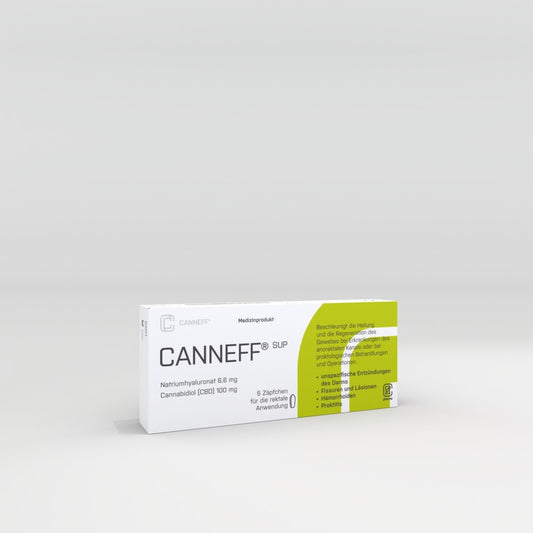
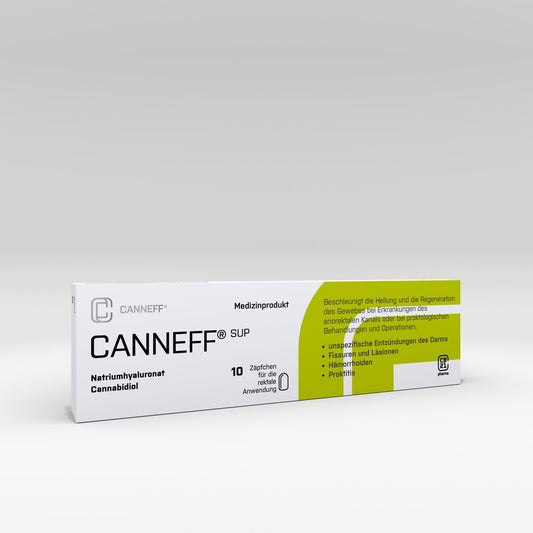
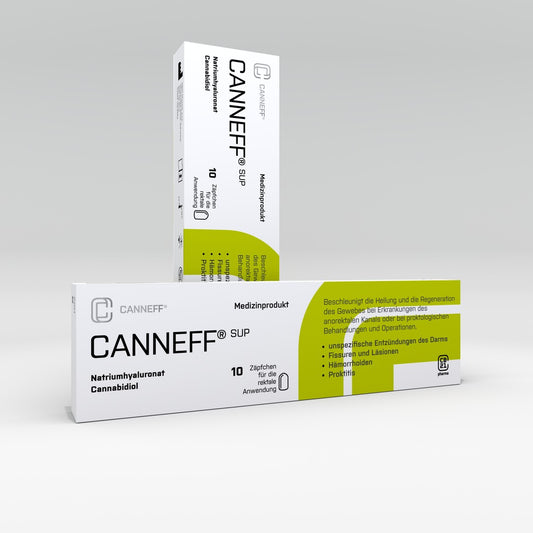
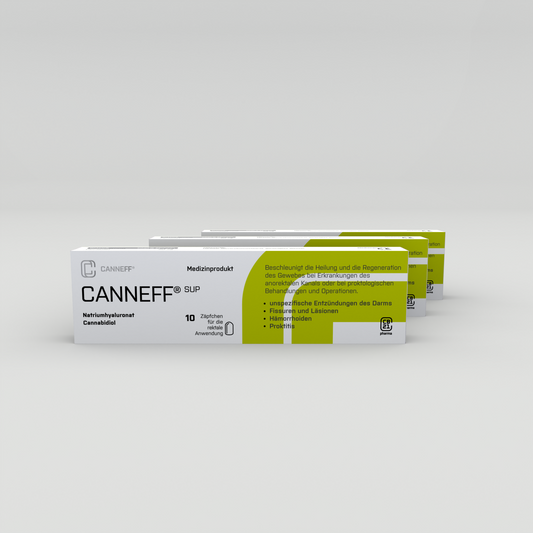
Suppositories like CANNEFF® SUP contain active ingredients that reduce inflammation, relieve pain, and promote healing. They act directly at the site of inflammation.
Warm Compresses
Warm compresses applied to the affected area promote blood circulation and can help soften the abscess and relieve discomfort.
Probiotics
Regular consumption of probiotic foods such as yogurt or fermented products strengthens the gut flora and reduces the risk of infections.
Homeopathy and Naturopathy
Homeopathic remedies like Silicea or Hepar sulfuris are often used in naturopathy to promote healing. However, their effectiveness is not scientifically proven and should be used with caution.
These alternative treatment methods can support healing but do not replace medical diagnosis and therapy. In cases of severe symptoms of an anal abscess such as fever, increasing swelling, or persistent pain, a doctor should be consulted immediately, as untreated abscesses can cause serious complications like anal fistulas or sepsis.
How can herbal remedies promote the healing of anal abscesses?
Herbal remedies can naturally support the healing of anal abscesses by reducing inflammation, promoting wound healing, and alleviating symptoms such as pain or swelling. They mainly work locally and are well suited as a complement to medical treatment. Here are some of the key mechanisms and applications:
Anti-Inflammatory Effect
Many plants contain active substances such as flavonoids, tannins, or essential oils that have anti-inflammatory effects. These reduce swelling and prevent the spread of infection.
Chamomile: Often used in sitz baths to calm inflammatory processes and promote blood circulation.
Oak bark: Has an astringent effect, relieves irritation, and supports skin regeneration.
Promotion of wound healing
Certain plants stimulate cell renewal and tissue healing, which is especially helpful after surgical drainage of the abscess. Read more here about surgery for anal abscesses.
Aloe Vera: The plant's gel soothes irritated skin, supports healing, and reduces skin irritations.
Calendula: Used in ointments to accelerate wound healing.
Antibacterial Effect
Plant-based active ingredients can help prevent further bacteria from entering the affected area, thus preventing complications.
Tea tree oil: In diluted form, it acts antiseptically and reduces the risk of reinfection.
Honey: Especially medical honey has antibacterial properties and can be applied directly.
Pain Relief and Soothing
Herbal remedies have soothing and cooling properties that reduce pain and tension in the anal area. Read more here about herbal treatment of anal abscesses.
Coconut Oil: Moisturizes, soothes irritated skin, and has antibacterial effects.
Witch Hazel: Reduces swelling and relieves itching.
Application options
Sitz baths: Sitz baths with chamomile, oak bark, or tea tree oil are a simple way to relieve inflammation and gently cleanse the wound.
Ointments and creams: Products with calendula, aloe vera, or witch hazel promote healing and soothe the skin.
Herbal suppositories: Suppositories like CANNEFF® SUP contain anti-inflammatory agents that act directly in the anal area and promote healing.
Limitations of herbal remedies
Although herbal remedies can support healing, they do not replace medical treatment. Larger or deeper anal abscesses often require surgical drainage. If symptoms such as fever, severe pain, or worsening swelling occur, a doctor should be consulted immediately.
Herbal remedies like chamomile, aloe vera, or tea tree oil can effectively promote the healing of anal abscesses by reducing inflammation, relieving pain, and supporting regeneration. Their use is especially suitable as a complement to medical treatment.
Are sitz baths an effective alternative in the treatment of anal abscesses?
Sitz baths are a proven method to relieve symptoms of anal abscesses and can support the healing process, but they are not a complete alternative to medical treatment. They mainly work symptomatically by relieving pain, promoting blood circulation, and reducing inflammation. Sitz baths can be helpful for small or superficial abscesses, but larger or deeper abscesses usually require surgical drainage.
Effects of sitz baths
Pain relief: The warm water relaxes the muscles and reduces pain as well as tension in the anal area.
Promotion of blood circulation: The warmth improves blood circulation, which helps inflammation heal better.
Cleansing: Sitz baths gently cleanse the affected area and prevent the infection from spreading.
Anti-inflammatory: Herbal additives like chamomile or oak bark have a soothing effect and reduce swelling.
Recommended additives for sitz baths
Chamomile: Anti-inflammatory and soothing.
Oak bark: Astringent and healing-promoting.
Tea tree oil: Antiseptic and germ-reducing (use only diluted).
Salt: Supports cleansing and promotes wound healing.
Application
Sitz baths should be taken 2–3 times daily for about 10–15 minutes. The water temperature should be comfortably warm (approx. 37–39 °C) to avoid irritating the sensitive skin.
Limitations of sitz baths
Not a substitute for surgical drainage: For larger or deeper abscesses, the effect of sitz baths alone is not sufficient to eliminate the infection.
Symptomatic effect: Sitz baths relieve symptoms but do not address the cause of the infection.
Supplement, not an alternative: They are well suited as a supportive measure before and after medical procedures but not as a sole therapy.
Sitz baths are an effective supplement in the treatment of anal abscesses to relieve pain and inflammation. However, they are not a complete alternative to medical treatment, especially for larger or complicated abscesses. Medical evaluation is therefore essential to ensure appropriate therapy.
How can suppositories like CANNEFF® SUP help in alternative treatment?
Suppositories like CANNEFF® SUP offer an effective way to support the treatment of anal abscesses. They act directly in the affected area and can be both anti-inflammatory and pain-relieving. Their use is particularly suitable for smaller abscesses or as a supplement after surgical procedures to promote healing and prevent complications.
Benefits of CANNEFF® SUP suppositories
Targeted action at the site of inflammation: Suppositories are applied rectally, allowing the active ingredients to reach the site of inflammation directly. This provides fast and targeted relief of symptoms.
Anti-inflammatory properties: The active ingredients reduce swelling, inhibit inflammation, and prevent the spread of infection. This helps lower pressure in the tissue and speeds up the healing process.
Pain relief: CANNEFF® SUP suppositories contain soothing and pain-relieving ingredients that alleviate irritation and tension in the anal area. This is especially helpful after surgery or in cases of inflammation-related anal burning.
Promotion of wound healing: The regenerative properties of the suppositories support the healing of the affected tissue and strengthen the mucous membrane barrier to prevent recurrent infections.
Supportive effect after surgical procedures: After surgical drainage of an abscess, the suppositories promote healing of the open wound and minimize the risk of wound healing disorders or recurrent abscess formation.
Application of CANNEFF® SUP suppositories
The CANNEFF® SUP suppositories are applied once daily in the evening. Before use, the anal area should be gently cleaned to ensure hygienic insertion. They dissolve in the rectum and evenly distribute their active ingredients in the affected area.
Supplement to other treatments
After surgery: They promote regeneration and relieve postoperative discomfort.
In combination with sitz baths: The suppositories support anti-inflammatory sitz baths with chamomile or oak bark.
For prevention: For recurring problems, they can help keep the mucous membrane healthy and reduce susceptibility to infections.
CANNEFF® SUP suppositories are a valuable addition to the treatment of anal abscesses. They provide targeted relief from pain and inflammation and promote wound healing. Especially in combination with medical or alternative approaches, such as sitz baths or a high-fiber diet, they help accelerate the healing process and prevent complications. Despite their effectiveness, suppositories should always be part of a comprehensive treatment plan and not used as the sole therapy for severe anal abscesses.
Can an anal abscess be treated without surgery?
Treatment of an anal abscess without surgery is possible in certain cases, but only for small, superficial abscesses or in very early stages of the disease. Usually, an anal abscess requires surgical drainage because the pus collection lies deep in the tissue and cannot fully heal without drainage. However, there are conservative treatment options that can be successfully used in specific cases.
When is non-surgical treatment possible?
Small, superficial abscesses: These can be treated with anti-inflammatory medications or suppositories.
Early stages: If the infection is detected early and the abscess is not yet severely swollen or painful.
Spontaneous perforation: If the abscess drains spontaneously, non-surgical follow-up treatment may be sufficient.
Conservative treatment methods
Antibiotics: Antibiotics can be used for smaller abscesses or to contain the infection, especially in patients with weakened immune systems or comorbidities such as diabetes. They prevent the spread of infection but are often not sufficient alone.
Anti-inflammatory suppositories: Suppositories like CANNEFF® SUP reduce inflammation, decrease swelling, and promote healing in the affected area. They are especially helpful in early stages or after spontaneous drainage of the abscess.
Sitz baths: Regular sitz baths with chamomile or oak bark have anti-inflammatory effects, promote blood circulation, and gently cleanse the wound. They can relieve symptoms and support the healing process.
Pain and anti-inflammatory medications: Painkillers like ibuprofen or paracetamol help relieve pain and reduce inflammatory processes.
High-fiber diet: A high-fiber diet ensures soft stools and reduces pressure on the anal area, which promotes healing.
Risks of conservative treatment alone
Incomplete healing: Without surgical drainage, pus cannot fully drain, which can lead to chronic infection or the formation of an anal fistula.
Spread of infection: An untreated abscess can spread to surrounding tissue and cause serious complications such as sepsis.
Recurring abscesses: Without complete removal of the abscess, the risk of recurrence increases.
An anal abscess can, in exceptional cases, be treated without surgery, especially if it is small, superficial, or in a very early stage. However, in most cases, surgical drainage is necessary to completely eliminate the infection and avoid complications. Medical evaluation is essential to determine the appropriate treatment method. Conservative approaches such as anti-inflammatory suppositories, sitz baths, and antibiotics can support the healing process but are often not sufficient as sole therapy.
What role does nutrition play in the alternative treatment of an anal abscess?
Nutrition plays a central role in the alternative treatment of an anal abscess by regulating bowel movements, minimizing stress on the anal region, and supporting the healing process. Targeted dietary adjustments can offer significant benefits both preventively and during the treatment of an anal abscess.
Promoting soft stools
High-fiber diet: Foods such as whole grains, fruits, vegetables, and legumes ensure soft, regular stools. This reduces pressure on the anal region and prevents further irritation or injury.
Adequate fluid intake: At least 1.5–2 liters of water daily support digestion and prevent hard stools that could hinder healing.
Reducing constipation
Constipation increases pressure in the anal area and can worsen existing abscesses. A high-fiber diet combined with sufficient fluids facilitates bowel emptying and protects the anal region.
Support for wound healing
Vitamins and minerals: Foods with vitamin C (e.g., citrus fruits, bell peppers) and zinc (e.g., nuts, seeds, whole grains) promote tissue regeneration and strengthen the immune system.
Probiotics: Fermented foods such as yogurt, sauerkraut, or kefir promote a healthy gut flora, which reduces the risk of infections and supports healing.
Prevention of inflammatory processes
Foods rich in antioxidants: Berries, green leafy vegetables, and nuts contain anti-inflammatory substances that strengthen the immune system and reduce inflammation in the body.
Avoidance of irritating foods: Spicy foods, alcohol, and excessively fatty foods should be avoided as they can irritate the intestines and promote inflammatory processes.
Additional measures
Mild laxatives: If constipation occurs despite a high-fiber diet, mild laxatives can be used in consultation with a doctor to ease bowel movements.
Meal planning: Regular meals promote regulated digestion and prevent digestive problems.
A targeted dietary adjustment significantly contributes to the alternative treatment of an anal abscess by easing bowel movements, reducing inflammatory processes, and supporting wound healing. Combined with other measures such as sitz baths and anti-inflammatory suppositories, nutrition can help accelerate the healing process and relieve discomfort.
Which natural supplements have anti-inflammatory effects on anal abscesses?
Natural additives can be effective in the treatment of anal abscesses as they possess anti-inflammatory, pain-relieving, and healing-promoting properties. They are especially suitable as complementary therapy to support healing and alleviate symptoms.
Chamomile
Effect: Chamomile contains essential oils and flavonoids that have anti-inflammatory, soothing, and antiseptic effects.
Usage: Sitz baths with chamomile extract or tea gently cleanse the anal area and relieve swelling and pain.
Oak Bark
Effect: The tannins in oak bark have astringent (contracting) and anti-inflammatory effects. They promote wound healing and reduce skin irritation.
Usage: Sitz baths or compresses with oak bark extract are especially helpful for irritated tissue.
Tea Tree Oil
Effect: Tea tree oil has strong antiseptic and anti-inflammatory properties that help fight infections and reduce inflammation.
Usage: Dilute a few drops of tea tree oil in warm water and use as a sitz bath or compress. Undiluted tea tree oil should not be applied directly to the skin due to its irritating effects.
Aloe Vera
Effect: Aloe vera gel has a cooling, anti-inflammatory effect and supports tissue regeneration.
Usage: Apply fresh aloe vera gel directly to the affected area to reduce swelling and pain.
Calendula (Marigold)
Effect: Calendula has anti-inflammatory, wound-healing, and antibacterial properties.
Usage: Apply as an ointment, cream, or compress to the anal area to support healing.
Honey (especially medical honey)
Effect: Honey has antiseptic and anti-inflammatory properties. It promotes wound healing and prevents bacterial growth.
Usage: Apply a thin layer of honey to the affected area or use it as an additive for compresses.
Coconut Oil
Effect: Coconut oil is soothing, antibacterial, and anti-inflammatory. It moisturizes and reduces irritation.
Usage: Warm the oil slightly and gently apply it to the affected area.
Turmeric
Effect: Turmeric contains curcumin, which has anti-inflammatory and antibacterial properties.
Usage: Make a paste from turmeric powder and water and gently apply it to the anal area. Alternatively, incorporate turmeric into your diet to promote healing from within.
Witch Hazel (Hamamelis)
Effect: Witch hazel has anti-inflammatory, astringent, and soothing effects.
Usage: Apply in the form of creams, ointments, or compresses to the affected area to reduce swelling and irritation.
Read more here about the herbal treatment of anal abscesses.
When should a doctor be consulted despite alternative approaches?
Despite using alternative treatments such as herbal remedies or home remedies, a doctor should be consulted if certain symptoms or warning signs occur. Anal abscesses can cause serious complications like anal fistulas or sepsis without professional medical treatment.
Warning signs that require a doctor's visit
Increasing pain: If the pain persists or worsens despite alternative approaches, especially when sitting, walking, or during bowel movements.
Growing swelling or redness: Increasing swelling or spreading redness suggests that the inflammation is advancing.
Pus or blood discharge: Persistent or increasing pus discharge, especially when combined with blood, may indicate a progressing infection or fistula formation.
Fever and chills: These systemic symptoms indicate an advanced infection that may be spreading throughout the body (risk of sepsis).
Spontaneous bursting of the abscess: If the abscess bursts on its own, incomplete drainage may occur, requiring professional follow-up treatment.
No progress after several days: If there is no improvement despite alternative treatments, a medical examination is necessary.
Recurring abscesses: In cases of frequently recurring anal abscesses, a thorough medical evaluation should be conducted to rule out underlying conditions such as Crohn's disease.
Weakened immune system: Patients with diabetes, HIV, cancer, or other immune deficiencies should see a doctor immediately at the first signs of an anal abscess.
Why is a doctor's visit important?
Diagnosis: A doctor can precisely locate the abscess and determine its severity through a physical examination and, if necessary, imaging techniques (e.g., ultrasound or MRI).
Avoiding complications: Early medical treatment prevents the formation of an anal fistula, which often requires complex surgery. Read more here about the treatment of anal fistulas.
Surgical treatment: Deeper or larger anal abscesses require drainage, which is usually only possible surgically.
Systemic therapy: In severe cases, antibiotics or other medications may be required to fight the infection.
A doctor should be consulted if alternative approaches do not bring improvement, symptoms worsen, or warning signs such as fever, severe pain, or pus discharge occur. Early medical treatment is crucial to avoid serious complications and ensure complete healing. Alternative methods are a valuable addition but should never replace necessary medical care.
How can alternative methods and medical treatments be combined?
The combination of alternative methods and medical treatments can be very effective in treating an anal abscess. While medical procedures such as surgical drainage are often necessary, alternative approaches can promote healing, relieve discomfort, and speed up recovery. This complementary approach offers a holistic solution to optimize the healing process.
Support after surgical drainage
Sitz baths: After a surgical abscess drainage, sitz baths with chamomile or oak bark promote wound healing, reduce inflammation, and cleanse the affected area.
Herbal suppositories: Suppositories like CANNEFF® SUP can have anti-inflammatory effects, support tissue regeneration, and relieve postoperative discomfort such as postoperative burning. Read more here about the treatment of anal abscesses with suppositories.
Symptom relief with conservative therapy
Anti-inflammatory ointments: Products with natural ingredients like aloe vera or witch hazel can be applied locally to soothe the skin and reduce swelling.
Warm compresses: Compresses with chamomile or tea tree oil extracts promote blood circulation and relieve pain.
Prevention of complications
High-fiber diet: In combination with medical treatments, a high-fiber diet (e.g., whole grains, fruits, and vegetables) supports soft stools, minimizing pressure on the wound and reducing the risk of fissures.
Probiotics: Fermented foods or dietary supplements promote a healthy gut flora and can prevent infections.
Promotion of wound healing
Aloe vera and honey: Aloe vera gel or medical honey can support wound healing after surgery as they have antibacterial and anti-inflammatory effects.
Sitz baths for cleansing: In addition to medical wound care, regular sitz baths keep the anal area clean and promote healing.
Prevention of relapses
Regular exercise: Exercise promotes blood circulation and prevents pressure on the anal area from prolonged sitting, which can lead to renewed inflammation.
Herbal preparations to strengthen the mucous membrane: Preparations with anti-inflammatory plant extracts such as marigold or oak bark strengthen the mucous membrane and prevent recurrent abscesses.
Combination in practice
After surgical treatment: Medical interventions such as drainage can be supplemented by sitz baths, anti-inflammatory suppositories, and an adapted diet to promote healing.
For smaller abscesses: Alternative methods such as sitz baths, ointments, and anti-inflammatory preparations can have a supportive effect while the doctor regularly monitors the progress.
Important notes
Alternative methods do not replace medical diagnosis and treatment, especially for larger or deeper abscesses.
Close cooperation with the treating physician is essential to ensure that alternative approaches meaningfully complement and do not hinder medical therapy.
The combination of alternative methods and medical treatments offers a comprehensive solution for the therapy of anal abscesses. While medical measures specifically combat the infection, alternative approaches such as sitz baths, herbal suppositories, and a healthy diet promote healing and prevent relapses. A balanced treatment plan, coordinated with the doctor, is crucial for a successful recovery.