

Why can PMS also occur during menopause?
Many women assume that PMS only occurs during the fertile years. However, even in perimenopause, the transition phase to the menopause, premenstrual symptoms can continue or even intensify. The reason for this is the irregular hormone levels that fluctuate greatly during this phase. Progesterone especially decreases, while estrogen is still produced in waves at first. These hormonal irregularities can intensify PMS symptoms such as irritability, breast tenderness, and water retention until the cycle eventually stops altogether.
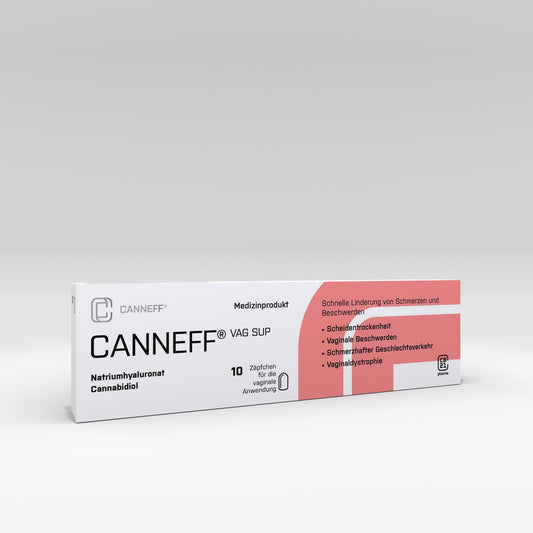
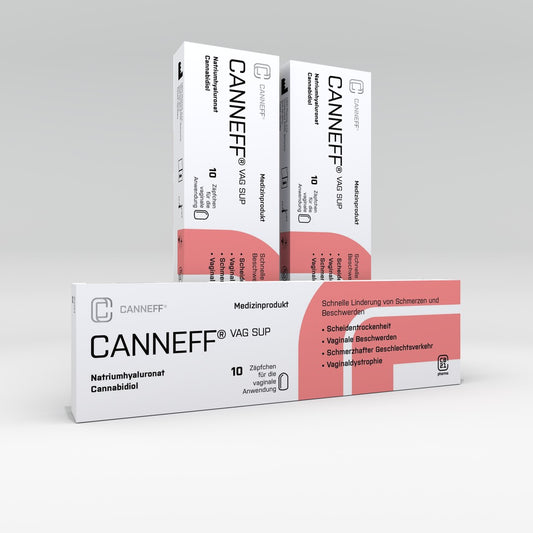
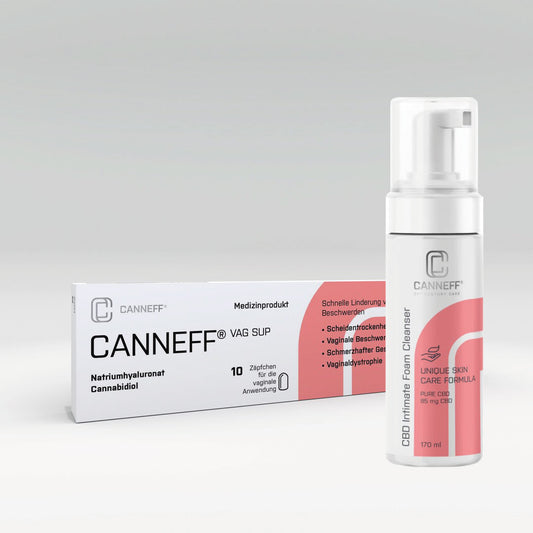
CANNEFF Suppositories have been shown in studies to significantly reduce physiological menopause symptoms such as vaginal dryness, hot flashes and night sweats, sleep problems, depressive moods, joint complaints, and inner restlessness. The quality of life of women who took CANNEFF Suppositories daily improved.
How does the cycle and PMS change during perimenopause?
During perimenopause, the menstrual cycle changes significantly. Ovulation becomes more irregular, and the second half of the cycle, which is normally dominated by progesterone, shortens. This leads to an imbalance between estrogen and progesterone, which can intensify PMS symptoms. Additionally, cycle fluctuations occur, with long phases without ovulation alternating with phases of particularly high estrogen levels. This uneven hormone production can trigger both physical and psychological complaints, including mood swings, headaches, and sleep problems.
Is there a difference between PMS and menopause symptoms?
PMS and menopause symptoms can resemble each other in many symptoms, yet there are clear differences in their origin and duration. While PMS is cycle-dependent and occurs shortly before the period, menopause symptoms are often persistent and no longer linked to the menstrual cycle.
|
Characteristic |
PMS |
Menopause symptoms |
|
Timing |
3-10 days before the period |
Independent of the cycle |
|
Duration |
Ends with the onset of menstruation |
Can occur over years |
|
Hormonal cause |
Fluctuations of estrogen and progesterone |
General hormone decline |
|
Typical symptoms |
Breast tenderness, water retention, irritability |
Those suffering from persistent symptoms that are no longer cycle-dependent should discuss with a doctor whether menopause counseling is advisable.
Why are PMS symptoms often stronger during menopause?
Many women report that their PMS symptoms worsen during perimenopause. The reason is hormonal imbalance. During a normal cycle, progesterone balances estrogen. However, in perimenopause, progesterone decreases faster than estrogen, leading to a relative excess of estrogen. This can increase water retention, headaches, and severe mood swings. Additionally, many women become more sensitive to stress during this phase, which can further worsen the symptoms.
Can hormone therapy relieve PMS during menopause?
Hormone therapy (HRT) can help reduce PMS-like symptoms during menopause by balancing the declining progesterone and estrogen levels. Especially women suffering from severe mood swings or sleep problems can benefit from individually tailored hormone therapy.
|
Hormonal treatment |
Effect on PMS symptoms |
|
Estrogen therapy |
Can relieve hot flashes and sleep problems |
|
Progesterone therapy |
Stabilizes mood, reduces water retention |
|
Combined HRT |
Balances both hormone levels |
However, hormone therapy is not suitable for every woman. It should always be done in consultation with a doctor, as it can increase risks such as thrombosis or breast cancer.
How does a declining progesterone level affect PMS during menopause?
Progesterone is the body's "calming hormone." It relaxes the nervous system, stabilizes mood, and promotes restful sleep. However, during menopause, progesterone levels drop rapidly while estrogen often fluctuates. This creates a hormonal imbalance that can worsen PMS-like symptoms such as irritability, restlessness, and water retention.
Women suffering from severe symptoms can consider natural alternatives like chasteberry or bioidentical hormone therapy.
Which natural remedies help against PMS and menopause symptoms?
Many women seek herbal alternatives to relieve PMS and menopause symptoms. Certain medicinal plants and micronutrients can help balance hormonal fluctuations:
|
Natural remedy |
Effect |
|
Chasteberry |
Regulates progesterone levels, relieves mood swings |
|
St. John's Wort |
Supports emotional stability |
|
Soy isoflavones |
Contain phytoestrogens that can compensate for estrogen deficiency |
|
Omega-3 fatty acids |
Have anti-inflammatory effects and support hormone balance |
|
Magnesium |
Reduces cramps and improves sleep |
Those trying herbal alternatives should note that these often only show noticeable effects after several weeks.
Why do PMS-like symptoms suddenly appear during menopause?
During menopause, women may experience PMS-like symptoms even if they never had PMS before. This is due to the significant hormonal changes. The body tries to adjust to fluctuating estrogen and progesterone levels, which can lead to symptoms like breast tenderness, bloating, or mood swings.
PMS or menopause: How to tell the difference?
PMS symptoms occur cyclically, while menopausal symptoms occur independently of the cycle and often last for months.
If unsure, one can have a hormone profile done by a doctor. This measures estrogen, progesterone, and FSH levels to determine whether it is PMS or menopausal symptoms.
What role does stress play in PMS symptoms during menopause?
Stress worsens hormonal imbalances and can significantly aggravate PMS-like symptoms during menopause. Chronic stress leads to increased cortisol release, which in turn can inhibit progesterone production.
Relaxation techniques such as yoga, meditation, or targeted breathing exercises can help calm the nervous system and reduce PMS symptoms during menopause. PMS-like symptoms during menopause are not uncommon. Hormonal fluctuations in perimenopause can significantly affect physical and emotional well-being. Those suffering from severe symptoms should consult a doctor about possible treatment options—whether hormone therapy, herbal alternatives, or dietary changes.