

Which symptoms of prostatitis require a doctor’s visit?
With prostatitis, there are clear warning signs that make a doctor’s visit necessary. Especially with acute symptoms, quick action is important to avoid complications. Read more here about prostatitis symptoms.
Which acute symptoms should be urgently evaluated?
Severe pain: In the perineum, lower abdomen, or pelvic area, occurring suddenly.
Fever and chills: These indicate acute bacterial prostatitis and possible sepsis.
Problems urinating: Acute urinary retention or burning pain (dysuria) are warning signs.
Blood in urine or semen: This symptom should always be examined by a doctor.
Which chronic symptoms require medical evaluation?
Persistent pelvic pain: Pain in the perineal area or lower abdomen lasting longer than three months.
Painful ejaculation: Persistent discomfort during ejaculation that limits sexual activity.
Frequent urge to urinate: In combination with a weak urine stream or feeling of residual urine.
Read more here about prostatitis symptoms.
Why is a doctor’s visit important?
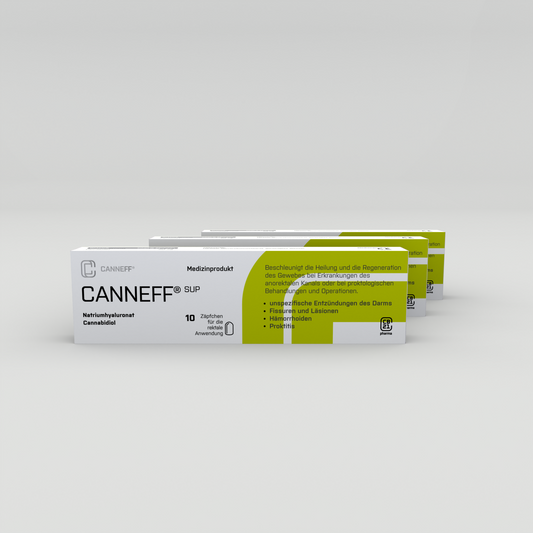
Untreated prostatitis can lead to complications such as a prostate abscess or chronic pain. Bacterial forms diagnosed early can be effectively treated with antibiotics. In chronic abacterial prostatitis (CPPS), complementary measures like CANNEFF® SUP suppositories can help relieve pain and soothe the mucous membranes. A doctor’s visit is also crucial to rule out other conditions such as hemorrhoids, bladder infections, or prostate cancer.
How do you prepare for the appointment with the urologist?
Good preparation for the urologist appointment helps to facilitate diagnosis and start treatment as quickly as possible. Here are the key steps.
How should I record the symptoms?
Describe exactly which symptoms occur, how long they have been present, and how severe they are. Typical complaints such as pain (perineal, pelvic, or lower abdominal area), urgency, burning urination, or problems with ejaculation should be mentioned. Read more here about the symptoms of prostatitis or the causes of prostatitis.
What questions should I prepare for the doctor?
- What could be the causes of my complaints?
- What examinations are performed?
- What treatment options are available, especially for chronic prostatitis?
Which medications and pre-existing conditions should I document for the doctor?
Note current medications, supplements, and known allergies. Inform the doctor about previous urinary tract infections or surgeries in the urological area.
How can I prepare for the urine sample?
A urine sample is often required. Drink enough water to be able to provide the sample. Ask when making the appointment if any special preparations are necessary.
What lifestyle habits should I consider?
Inform the doctor about lifestyle habits such as sitting times, sports, stress levels, and dietary habits that could affect the prostate. Find more information here on how to prevent prostatitis.
Are there complaints when sitting or in the pelvic floor area?
If chronic abacterial prostatitis (CPPS) is suspected, you should also report muscle tension, stress, or similar complaints.
What examinations does a doctor perform if prostatitis is suspected?
If prostatitis is suspected, the doctor performs several examinations to confirm the diagnosis and determine the type of prostatitis. The process includes physical, laboratory-based, and imaging procedures.
Medical History
During the consultation, the doctor asks about the symptoms, their duration and intensity, as well as possible risk factors such as urinary tract infections, stress, or previous procedures. Important questions include:
- Do you have pain in the pelvic, perineal, or lower abdominal area?
- Are there problems with urination or ejaculation?
- Is there a fever or general feeling of illness?
Physical Examination
Digital rectal examination (DRE): The doctor palpates the prostate through the rectum to detect swelling, tenderness, or hardening. In acute prostatitis, the prostate is often very painful and swollen.
Urine examination
Urine sample: A urine analysis (initial and midstream urine) shows possible signs of inflammation or bacteria.
Four-glass test: A special method in which urine is examined before and after prostate massage to detect pathogens.
Blood test
Inflammation markers: Elevated CRP and leukocyte levels indicate an acute bacterial inflammation.
PSA level: The prostate-specific antigen level can be temporarily elevated in prostatitis.
Semen and prostatic secretion analysis
An examination of the ejaculate or prostatic secretion helps identify pathogens and inflammatory cells.
Imaging procedures
Ultrasound (TRUS): A transrectal ultrasound provides images of the prostate and shows possible abscesses or enlargements.
MRI of the prostate: In unclear cases, MRI allows a more precise visualization of the prostate and its structures.
Additional tests
Uroflowmetry: Measures urine flow and detects possible bladder emptying disorders.
Cystoscopy: A cystoscopy is performed in special cases to examine the urethra and bladder.
What is a four-glass test and how is it performed?
The four-glass test is a special diagnostic procedure to differentiate the various forms of prostatitis. It allows targeted localization of inflammation or bacterial infections and distinguishes the prostate from other urinary tract infections.
The examination consists of collecting and analyzing four urine or secretion samples, obtained one after the other:
|
Cup |
Content |
Purpose |
|
1st cup |
Initial urine (the first 10 ml of urine) |
Detection of bacteria in the urethra. |
|
2nd cup |
Midstream urine (after approx. 50 ml) |
Detection of infections in the bladder. |
|
3rd cup |
Prostatic secretion (after prostate massage) |
Detection of inflammation or bacteria in the prostate. |
|
4th cup |
Urine after massage |
Checking whether bacteria or inflammatory cells from the prostate have entered the urethra. |
Step-by-step procedure
Collection of the first sample (initial urine): The patient urinates the first 10 ml into the 1st cup. This shows possible bacteria in the urethra.
Collection of the second sample (midstream urine): After the first portion is released, the urine flow is interrupted. The midstream urine is collected in the 2nd cup to detect bacteria in the bladder.
Prostate massage: The doctor performs a digital rectal examination (DRE) and gently massages the prostate. The prostatic secretion is released into the urethra.
Collection of the third sample (prostate secretion): If secretion can be obtained directly, it is examined separately. Otherwise, the secretion is collected during the subsequent urination.
Collection of the fourth sample (post-massage urine): Immediately after prostate massage, the patient urinates the first 10 ml into the 4th sample container. This serves to check whether prostate secretion has entered the urethra.
What is the significance of the results?
The samples are examined under a microscope for bacteria and inflammatory cells (leukocytes). The location of the pathogens allows differentiation between the following diagnoses:
Acute bacterial prostatitis: High number of bacteria and inflammatory cells in the 3rd and 4th samples.
Chronic bacterial prostatitis: Detection of bacteria in prostate secretion or post-massage urine.
Urinary tract infections: Bacteria primarily in the 1st and 2nd samples.
Chronic abacterial prostatitis (CPPS): Signs of inflammation in prostate secretion, but without detectable bacteria.
When is a PSA test useful?
A PSA test measures the concentration of prostate-specific antigen (PSA) in the blood. PSA is a protein produced by the prostate that can enter the blood in increased amounts during prostate diseases or changes. A PSA test is useful in the following cases:
How does early detection of prostate cancer work?
The PSA test can help detect prostate cancer early, even before symptoms appear. It is especially recommended for:
- Men aged 45 and over with an increased family risk (e.g., prostate cancer in close relatives).
- Men aged 50 and over who want regular preventive check-ups.
How is the evaluation of complaints carried out?
In cases of symptoms indicating prostate diseases, the PSA test is an important part of the diagnosis. These include:
- Problems with urination (weak urine flow, frequent urination)
- Pain in the pelvic area or perineum
- Blood in urine or semen
- Painful ejaculation
These symptoms can occur in prostatitis, benign prostatic hyperplasia (BPH), and prostate cancer. Read more here about the symptoms of prostatitis.
How is the monitoring of prostate diseases carried out?
The PSA test is used to monitor the progression of prostate diseases, such as:
Prostatitis: An increase in PSA levels can indicate inflammation. After successful treatment, the value usually normalizes.
Benign prostatic hyperplasia (BPH): An enlarged prostate can also lead to elevated PSA levels.
After prostate cancer treatment: The PSA level is used to monitor whether there is a relapse or progression of the disease.
How is supplementary diagnosis for prostatitis conducted?
In acute or chronic prostatitis, the PSA level is often elevated. A PSA test helps detect inflammation but should be repeated after symptoms subside to check for normalization.
What important instructions are there for conducting the test?
A PSA test should not be performed during acute prostatitis or after a prostate massage, as this can distort the results. Physical exertion or sexual activity should be avoided before the test, as these can also cause an increase.
When is a referral to a specialized clinic necessary?
A referral to a specialized clinic is necessary if prostatitis is severe or does not respond to standard therapy. In cases of acute bacterial prostatitis with complications such as abscess formation, sepsis, or urinary retention, specialized care is required. For chronic bacterial prostatitis or chronic abacterial prostatitis (CPPS) that persists despite comprehensive treatment, targeted diagnostics and therapy at a specialized clinic may also be beneficial.
Specialized clinics offer modern procedures such as TULSA-Pro treatment or specialized physiotherapy programs for pelvic floor relaxation. They also provide interdisciplinary approaches combining urology, pain therapy, and psychotherapy. Additionally, CANNEFF® SUP suppositories can be used to relieve symptoms, as they have anti-inflammatory effects and relax the muscles. A referral ensures comprehensive care when conventional measures are insufficient. Read more here about treatment of prostatitis or about treatment of prostatitis with suppositories.