

When is surgery for hemorrhoids necessary?
Surgery for hemorrhoids becomes necessary when conservative and minimally invasive treatments such as sclerotherapy or rubber band ligation no longer provide sufficient relief or when hemorrhoids are in an advanced stage. In general, the following reasons justify surgical treatment:
- In advanced stages of hemorrhoids (Grade III and Grade IV)
- In cases of chronic and severe symptoms
- When complications occur (e.g., strangulation or inflammation as well as anal thrombosis)
- Insufficient success of non-surgical therapies
- Prolapse and functional impairments
Surgery for hemorrhoids becomes necessary when severe symptoms, complications, or an advanced stage are present. The procedure aims to provide lasting symptom relief and improve quality of life. An experienced proctologist will recommend the appropriate method based on the severity and individual needs of the patient.
Which stages of hemorrhoids usually require surgical intervention?
The stages of hemorrhoids that usually require surgical intervention are Grade III and Grade IV:
Grade III: At this stage, hemorrhoids protrude during bowel movements or physical strain and do not retract on their own. They must be manually pushed back into the anal canal. If conservative treatments or minimally invasive procedures like rubber band ligation do not provide sufficient relief, surgical intervention is considered. Read more here about Grade III hemorrhoids.
Grade IV: At this advanced stage, the hemorrhoids remain permanently outside the anal canal and can no longer be pushed back. Symptoms are usually severe and include bleeding, itching, moisture, and pain. In such cases, surgery is almost always necessary to relieve symptoms and prevent complications. Read more here about Grade IV hemorrhoids.
The decision for surgery depends on the severity of the hemorrhoid symptoms and the patient’s overall health. An experienced proctologist assesses this individually.

Why is early treatment of advanced hemorrhoids advisable?
Early treatment of advanced hemorrhoids (Grade III and Grade IV) is advisable for several reasons:
To avoid complications: Untreated advanced hemorrhoids can cause complications such as bleeding, thrombosis, infections, or anal fissures. These conditions can be very painful and significantly reduce quality of life.
To relieve severe symptoms: In advanced stages, hemorrhoids are often associated with severe symptoms such as chronic moisture, pain, itching, and a foreign body sensation. Early treatment can quickly and sustainably relieve these symptoms.
To protect the surrounding tissues: Prolonged symptoms can lead to mucosal damage or inflammatory changes in the anal canal. Early treatment prevents such secondary damage and promotes healing.
To improve quality of life: Early treatment minimizes everyday limitations such as pain when sitting or walking. It also reduces the risk of soiling or bleeding.
To avoid more complex interventions: If advanced hemorrhoids remain untreated for too long, more extensive and invasive surgeries may become necessary. Early intervention often allows for less burdensome procedures and shorter recovery times.
Timely intervention not only ensures rapid symptom relief but also prevents long-term health problems.
What surgical procedures are available for the treatment of hemorrhoids?
There are various surgical procedures for the treatment of hemorrhoids, which are applied depending on the severity and individual circumstances of the affected persons.
Milligan-Morgan Method: A proven method is the Milligan-Morgan technique, in which the enlarged hemorrhoids are completely removed. The resulting wounds are left open to promote natural healing and minimize the risk of infections or suture complications.
Ferguson method: In contrast, the Ferguson method involves suturing the wound after removal of the hemorrhoids, which often leads to faster healing but carries a slightly higher risk of suture complications.
Stapled hemorrhoidopexy (Longo method): Stapled hemorrhoidopexy, also known as the Longo method, offers a less painful alternative. A ring of excess mucosa above the hemorrhoids is removed, pulling the prolapsed tissue back into its original position. This procedure is especially suitable for hemorrhoids with prolapse, as it preserves the natural function of the hemorrhoids.
Hemorrhoidal artery ligation (HAL/RAR): Another minimally invasive procedure is hemorrhoidal artery ligation (HAL), often combined with recto-anal repair (RAR). Using an ultrasound device, the arteries supplying the hemorrhoidal tissue are located and tied off to cut off blood flow. This leads to the shrinkage of hemorrhoids and can be complemented by additional tightening of the mucosa.
Laser hemorrhoidoplasty: Laser hemorrhoidoplasty is a modern procedure that uses a precise laser to cauterize the hemorrhoidal tissue. This method is gentle, causes minimal pain, and promotes rapid healing.
Thrombectomy: In cases of thrombosed hemorrhoids or acute symptoms, a thrombectomy is often performed. This involves removing blood clots from the affected vessels to quickly relieve pain and swelling.
How does the Milligan-Morgan method work?
The Milligan-Morgan method is a classic surgical procedure for treating hemorrhoids, mainly used in advanced stages (Grade III and Grade IV). It aims to completely remove the enlarged hemorrhoids and thus provide lasting relief from symptoms.
Procedure of the Milligan-Morgan method
The procedure is usually performed under general or regional anesthesia. The patient is positioned to facilitate access to the anal canal (e.g., lithotomy position). Using a scalpel, electrocautery, or laser, the enlarged hemorrhoidal tissue is removed at several sites. The affected nodes along with their blood supply are completely excised. Removal is done segmentally, leaving healthy tissue sections between operated areas to preserve normal anal canal function. After removing the hemorrhoids, the resulting wounds remain open. These open wounds heal naturally as tissue gradually grows from the inside out. Avoiding sutures minimizes the risk of suture-related complications such as infections or bruising.
Advantages of the Milligan-Morgan method
- Effective and complete removal of hemorrhoids.
- Lower risk of suture problems since the wounds remain open.
- Suitable for severe and extensive hemorrhoidal disease.
Disadvantages and aftercare
Longer healing time: The open wounds require more time to heal, which can lead to prolonged discomfort for patients.
Postoperative pain: Pain in the anal area and during bowel movements is common and can be relieved with painkillers.
Regular follow-up care: To prevent infections and promote healing, thorough anal hygiene is essential. Sitz baths and soft stool consistency can support the healing process.
The Milligan-Morgan method is a proven technique that offers long-term results, especially in more complex cases. However, it requires a longer recovery time and careful aftercare.
What distinguishes the Ferguson method?
The Ferguson method is a surgical technique for treating hemorrhoids, differing from the Milligan-Morgan method mainly in wound management. While the Milligan-Morgan method leaves wounds open after hemorrhoid removal, the Ferguson method fully sutures them. It is especially used for hemorrhoids of Grade III and Grade IV when complete removal of enlarged vascular nodes is necessary. It is a good choice for patients seeking faster healing and less postoperative discomfort.
Procedure of the Ferguson method
The procedure is usually performed under general or regional anesthesia.
The patient is positioned to facilitate access to the anal canal, usually in the lithotomy position. Enlarged hemorrhoidal nodes are completely removed similarly to the Milligan-Morgan method using a scalpel, electrocautery, or laser.
Care is taken to remove only the affected vascular nodes to preserve the function of the anal canal. After tissue removal, the wound edges are sutured with absorbable material, closing the open areas. This ensures closed healing, which generally leads to faster recovery.
Advantages of the Ferguson method
Faster healing: Wound closure accelerates the healing process, and postoperative discomfort is usually reduced.
Less pain: Patients often find closed wounds less painful compared to open wounds.
Lower risk of infection: Wound closure minimizes the risk of infections compared to open wounds.
Disadvantages and possible risks
Suture complications: Wound closure can lead to complications such as bruising, suture irritation, or infections.
Scar formation: In rare cases, the suturing can lead to anal canal stenosis, which may impair sphincter function.
Increased technical demands: The Ferguson method requires precise surgical technique to minimize complications.
The Ferguson method is a proven procedure that offers benefits in healing and patient comfort through wound closure. However, it requires careful aftercare to avoid possible complications.
What is stapled hemorrhoidopexy (Longo operation), and when is it used?
Stapled hemorrhoidopexy, also known as the Longo operation, is a modern, minimally invasive procedure for the treatment of hemorrhoids, especially for grade III and IV hemorrhoids accompanied by mucosal prolapse. This method differs from other surgical techniques because the hemorrhoidal nodes are not removed but repositioned and fixed in their natural position.
How does stapled hemorrhoidopexy work?
Using a special stapling device (stapler), a circular ring of excess mucosa above the hemorrhoids is removed. This pulls the prolapsed tissue back into the anal canal and fixes it in place. The procedure cuts off the blood supply to the enlarged hemorrhoidal nodes, causing them to shrink. The operation is performed above the sensitive part of the anal canal, which usually results in less postoperative pain.
Advantages of stapled hemorrhoidopexy
Low pain: Because the fixation is done in a less pain-sensitive area of the anal canal, discomfort after the operation is often significantly less than with conventional procedures.
Short recovery time: Patients can usually resume their daily activities quickly, often after just a few days.
Preservation of hemorrhoid function: Since the hemorrhoids are not removed but only repositioned, their natural function as a cushion to seal the anal canal is preserved.
When is stapled hemorrhoidopexy used?
Hemorrhoids Grade III: For hemorrhoids that protrude during bowel movements or physical strain and need to be manually pushed back, the Longo method is an effective and low-pain solution.
Hemorrhoids Grade IV: In cases where the tissue has prolapsed permanently but the surrounding structures are intact, stapled hemorrhoidopexy can also be applied.
In cases of multiple hemorrhoidal nodes: This method is particularly suitable when hemorrhoids are present in multiple locations, as it allows for uniform treatment.
Limits and restrictions
For Grade I hemorrhoids and Grade II hemorrhoids, less invasive procedures such as rubber band ligation or sclerotherapy are sufficient. In cases of irreparable tissue damage or complications like thrombosis, other surgical methods such as the Milligan-Morgan technique are more appropriate. Stapled hemorrhoidopexy is an effective, modern procedure especially suitable for patients with Grade III and IV hemorrhoids who want a gentle treatment with quick recovery. It offers an alternative to traditional hemorrhoid surgeries by repositioning the hemorrhoidal nodes and preserving their function.
How is hemorrhoidal artery ligation (HAL) performed, and who is it suitable for?
The hemorrhoidal artery ligation (HAL) is a modern, minimally invasive procedure for the treatment of hemorrhoids, primarily used for symptoms of Grade II hemorrhoids and Grade III hemorrhoids. The goal of the method is to selectively block the blood supply to the enlarged hemorrhoids, causing the nodes to shrink and symptoms to be relieved. A specially developed proctoscope with an integrated ultrasound probe is inserted into the anal canal. Using the ultrasound probe, the doctor precisely identifies the arteries supplying blood to the hemorrhoids. These arteries are then ligated with a thread, reducing blood flow and relieving the tissue.
A major advantage of HAL is that it is performed in a less pain-sensitive area of the anal canal, making the procedure generally low in pain. Additionally, it is a minimally invasive procedure that preserves the tissue. This maintains the natural function of the hemorrhoids as cushions to seal the anal canal. Recovery time is short, and many patients can resume their daily activities just a few days after treatment. Complications such as infections or bleeding are rare with this procedure.
HAL is particularly suitable for patients with regularly protruding hemorrhoids that can still retract on their own or manually. It also provides an effective alternative for symptoms such as persistent bleeding or itching that cannot be sufficiently relieved by conservative measures. However, it is less suitable for severely prolapsed grade IV hemorrhoids or complications such as acute thrombosis. In such cases, classic surgical procedures like the Milligan-Morgan or stapler method are often used.
What advantages does laser hemorrhoidoplasty offer compared to other methods?
Laser hemorrhoidoplasty is a minimally invasive method characterized by precision and tissue preservation. Compared to traditional surgical procedures, this technique targets only the affected hemorrhoidal tissue, leaving the surrounding healthy tissue intact. This high accuracy reduces the risk of injury and scarring in the anal canal.
Another advantage of laser hemorrhoidoplasty is the low pain burden after the procedure. Since no large cuts or open wounds are created, postoperative discomfort is significantly less than with conventional methods like the Milligan-Morgan or Ferguson methods. At the same time, the laser seals the blood vessels during treatment, minimizing the risk of bleeding. This makes the method particularly suitable for patients with an increased tendency to bleed.
The recovery time after laser hemorrhoidoplasty is comparatively short. Many patients can resume their usual activities just a few days after the procedure. Additionally, the treatment can often be performed on an outpatient basis, eliminating longer hospital stays. Complications such as infections or wound healing problems occur less frequently because the wound area is minimal and the tissue shrinks naturally.
This method is particularly effective for Grade II hemorrhoids and Grade III hemorrhoids. In advanced stages such as Grade IV hemorrhoids or extensive tissue damage, however, laser hemorrhoidoplasty may reach its limits, making more invasive procedures like stapled hemorrhoidopexy or the Milligan-Morgan method necessary. Overall, laser hemorrhoidoplasty offers a gentle and effective alternative to traditional surgical methods. It impresses with a quick recovery, a low risk of complications, and high patient satisfaction, especially in moderately advanced hemorrhoids.
What role does Recto-Anal-Repair (HAL-RAR) play in surgical treatment?
If there is a mucosal prolapse, the HAL method can be supplemented by the so-called Recto-Anal-Repair (RAR). In this procedure, the mucosa is fixed with additional sutures and pulled back into the anal canal. This extension provides additional stabilization and relief of symptoms.
What possible risks and complications can be expected after hemorrhoid surgery?
After hemorrhoid surgery, various risks and complications can occur depending on the chosen procedure and individual healing process. Postoperative pain is one of the most common complaints, especially with open surgical methods such as the Milligan-Morgan or Ferguson techniques. This pain usually occurs during bowel movements or when sitting and can be alleviated with painkillers and sitz baths. Bleeding, which is usually mild to moderate, can occur during the healing phase, especially with open wounds or after suture sites have healed. More severe bleeding is rare but requires medical evaluation.
Another possible issue is urinary retention, which can be caused by swelling in the surgical area or the effects of anesthesia. In rare cases, catheterization may be necessary. Wound healing problems and infections in the surgical area also pose a risk, which can be minimized through careful hygiene and follow-up care. Occasionally, difficulties with bowel movements occur, such as constipation, which can be worsened by fear of pain. A high-fiber diet and stool softeners can help here. In rare cases, incontinence may occur, especially if the sphincter muscle has been injured.
A rare but possible complication is the formation of anal stenosis, which is a narrowing of the anal canal caused by scar tissue. This can be treated if necessary with stretching exercises using so-called anal dilators or through another procedure. Blood clots (anal thromboses) can also develop in the tissue after surgery, leading to painful swelling. These usually resolve on their own or can be medically treated. In the long term, there is a risk of recurrence, meaning the reappearance of hemorrhoids, especially if risk factors such as constipation or excessive straining persist.
Psychological stress can also occur during the healing process, as pain and limitations in daily life can be burdensome. Comprehensive education and regular follow-up care help minimize fears and uncertainties. Although serious complications are rare, it is important to consult a doctor immediately if unusual symptoms such as severe bleeding, persistent pain, or fever occur. Careful aftercare, a fiber-rich diet, adequate fluid intake, and appropriate exercise can support the healing process and significantly reduce the risk of complications.
When is a minimally invasive surgery preferable to a classical method?
Minimally invasive surgeries are preferred when the condition of the hemorrhoids and the individual needs of the patient allow for a gentle treatment. These procedures offer less strain, faster healing, and shorter downtime compared to classical methods. They are especially suitable for hemorrhoids of grades I to III, where less tissue is affected and extensive tissue removal is not required. Examples include hemorrhoidal artery ligation (HAL), laser hemorrhoidoplasty, or rubber band ligation.
Classical methods such as the Milligan-Morgan or Ferguson operation, on the other hand, are necessary for advanced hemorrhoids (Hemorrhoids Grade III or Hemorrhoids Grade IV), especially when the tissue is severely damaged or permanently prolapsed. These procedures allow for complete removal of the hemorrhoids and are more effective in the long term for severe cases, but often involve longer healing times and more intense postoperative discomfort.
The choice of method also depends on the patient’s overall health condition. Minimally invasive procedures are ideal for patients who want to recover quickly or have a higher risk of complications with open wounds. Classic procedures are used when minimally invasive options are insufficient to achieve lasting relief.
What should patients keep in mind after hemorrhoid surgery?
After hemorrhoid surgery, careful aftercare is crucial to promote the healing process and avoid complications. Patients should follow a high-fiber diet to keep stools soft and prevent constipation. Foods like whole grains, fruits, vegetables, and legumes are ideal. Adequate fluid intake of at least 1.5 to 2 liters daily also supports regular digestion.
Gentle toilet habits are also important. Avoid prolonged sitting and straining, as this could impair wound healing. Going to the toilet should be unhurried, and aids such as squat supports can help facilitate bowel movements.
Hygiene in the anal area is especially important. The area should be cleaned with lukewarm water and gently patted dry after each toilet visit to prevent infections. Sitz baths with anti-inflammatory additives such as chamomile or oak bark can also help relieve pain and promote healing.
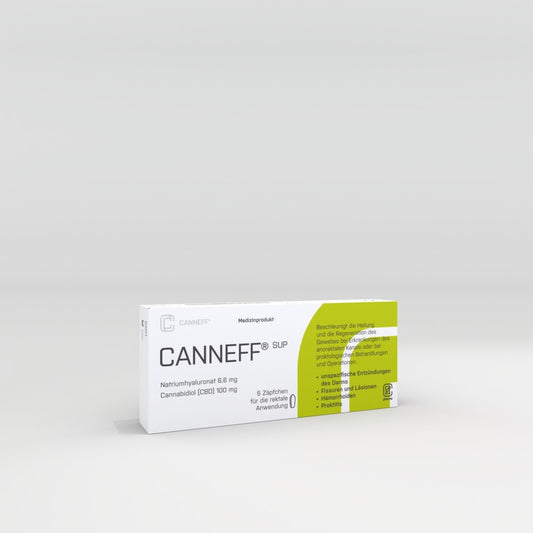
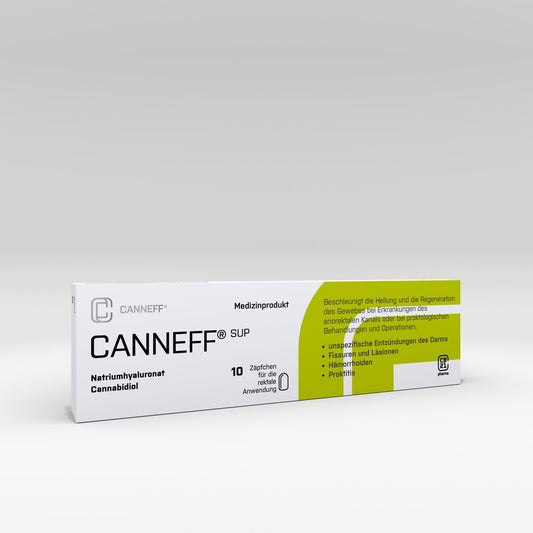
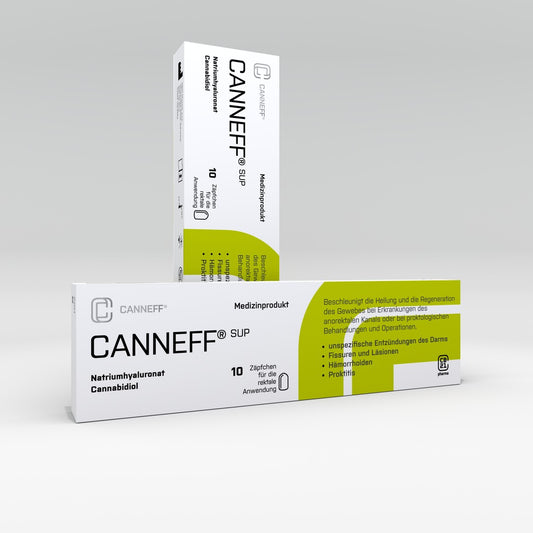
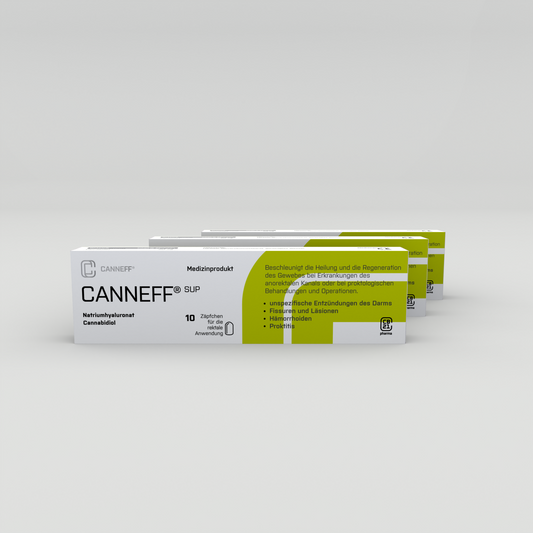
Painkillers can be taken but should only be used after consulting a doctor. If needed, CANNEFF SUP suppositories containing cannabidiol (CBD) and hyaluronic acid can be used to support tissue regeneration and relieve inflammation and pain. These suppositories promote wound healing and are excellent for use after proctological procedures.
During the first weeks after surgery, heavy physical activities should be avoided. Instead, light movements such as walking are advisable as they promote blood circulation and prevent constipation. Regular follow-up appointments with the doctor help monitor the healing process and detect any problems early. If persistent pain, fever, or bleeding occur, medical advice should be sought immediately.
What measures promote healing after a surgical procedure?
After a surgical procedure for the treatment of hemorrhoids, targeted measures are crucial to promote healing and minimize discomfort. A fiber-rich diet is essential as it softens the stool and prevents constipation. Foods such as whole grains, fruits, vegetables, and legumes should be included in the diet. Additionally, it is important to drink at least 1.5 to 2 liters of fluids daily to support digestion.
Sitz baths with lukewarm water, possibly supplemented with anti-inflammatory additives such as chamomile or oak bark, can relieve pain and promote tissue healing. However, they should only be used after consultation with the treating physician. Hygiene in the anal area also plays a major role: the area should be gently cleaned with water and softly patted dry after each toilet visit to avoid irritation and infections.
Painkillers can be taken as needed, but only under medical supervision. To support wound healing and reduce inflammation, CANNEFF SUP suppositories containing cannabidiol (CBD) and hyaluronic acid can be used. These suppositories promote tissue regeneration and improve moisture supply to the mucous membrane.
Light physical activity such as walking stimulates blood circulation and supports healing. Strenuous activities and heavy lifting should be avoided in the first few weeks. Regular follow-up appointments with the doctor are important to monitor the healing process and detect possible complications early. If unexpected symptoms such as persistent pain, severe bleeding, or fever occur, medical advice should be sought immediately.
How do CANNEFF SUP suppositories help with regeneration after hemorrhoid surgery?
CANNEFF SUP suppositories have been specially developed to support the healing and regeneration of the mucous membrane, for example after hemorrhoid surgery. Their innovative formula combines cannabidiol (CBD) and hyaluronic acid, two active ingredients that specifically address the needs of the sensitive tissue in the anal canal.
Cannabidiol (CBD) supports the anti-inflammatory effect of hyaluronic acid and acts as an antioxidant, reducing swelling and promoting cell regeneration. The antioxidant properties of CBD neutralize reactive oxygen species and help stabilize the healing process. Hyaluronic acid is known for its excellent ability to bind moisture and keep tissue hydrated. In the CANNEFF SUP suppositories, it is present in a patented emulsion matrix that enables five times better active ingredient delivery. This promotes the regeneration of the mucous membrane and supports the formation of new, healthy skin and mucous membrane cells. The combination of CBD and hyaluronic acid also helps relieve pain and itching, which often occur after surgical procedures.
The use of the suppositories is simple. They are preferably inserted in the evening before going to bed so that the active ingredients can work effectively overnight. Regular use over a period of 5 to 30 days, depending on the doctor’s instructions, helps not only to relieve pain but also to accelerate the healing process. CANNEFF SUP suppositories are available over the counter in Austria and by prescription in Germany and represent a modern, clinically tested option for aftercare following hemorrhoid surgery.

How long does recovery take after the various surgical procedures?
The duration of recovery after hemorrhoid surgery varies depending on the method used and individual factors such as the patient’s overall health. With the classic Milligan-Morgan method, where the wounds are left open, healing can take up to six weeks. During this time, pain during bowel movements is common but can be alleviated with painkillers. The Ferguson method, where the wounds are sutured, allows for faster recovery, usually within two to four weeks, as the closed wounds are less prone to irritation.
Minimally invasive procedures such as stapler hemorrhoidopexy (Longo method) and hemorrhoidal artery ligation (HAL/RAR) are characterized by a significantly shorter recovery time. Patients can often return to their normal activities within one to two weeks, as these methods cause less tissue damage and are less painful. The same applies to laser hemorrhoidoplasty, which enables rapid recovery through precise tissue treatment and minimal postoperative discomfort.
In acute procedures such as thrombectomy, where only a blood clot is removed, the healing time usually lasts only a few days to a week. Overall, the healing process strongly depends on how carefully the aftercare is carried out. Measures such as a high-fiber diet, adequate fluid intake, sitz baths, and the use of regenerative products like CANNEFF SUP suppositories can significantly support the healing process and reduce discomfort.