

Why does lower abdominal pain occur before the period?
Lower abdominal pain before menstruation is usually due to hormonal changes. Prostaglandins, hormone-like messengers, promote uterine contractions to shed the lining. If these contractions are particularly strong, they can cause cramp-like pain. Additionally, the decreasing progesterone level means the muscles no longer relax, which intensifies the pain. Other factors such as bloating, digestive issues, or water retention can also create pressure in the lower abdomen, which is perceived as painful.
|
Hormone |
Effect on the uterus |
Changes in PMS |
|
Prostaglandins |
Promote contractions, trigger cramps |
Increase, intensify pain |
|
Progesterone |
Relaxes the uterine muscles |
Decreases, leading to increased cramps |
|
Estrogen |
Supports blood flow and stabilizes tissue |
Fluctuates, can intensify pain |
PMS or endometriosis? When lower abdominal pain should be evaluated
Lower abdominal pain is typical for PMS but can also be a sign of endometriosis, a condition where tissue similar to the uterine lining grows outside the uterus. While PMS pain usually occurs shortly before the period and subsides with its onset, endometriosis pain is often independent of the cycle and particularly severe during menstruation. If the pain is chronic, unusually severe, or accompanied by other symptoms such as pain during sex or heavy bleeding, medical evaluation should be sought.
|
Characteristic |
PMS |
Endometriosis |
|
Timing of the pain |
Shortly before the period |
Can occur independently of the cycle |
|
Pain intensity |
Moderate to severe |
Often very intense |
|
Accompanying symptoms |
Pain during sex, heavy bleeding |
Which pain relievers work best for PMS-related lower abdominal pain?
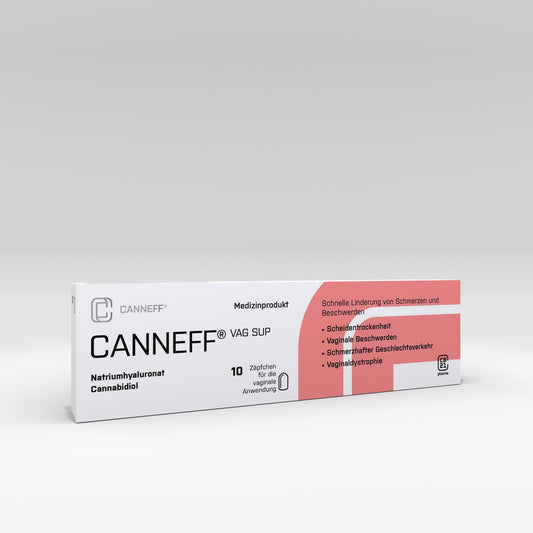
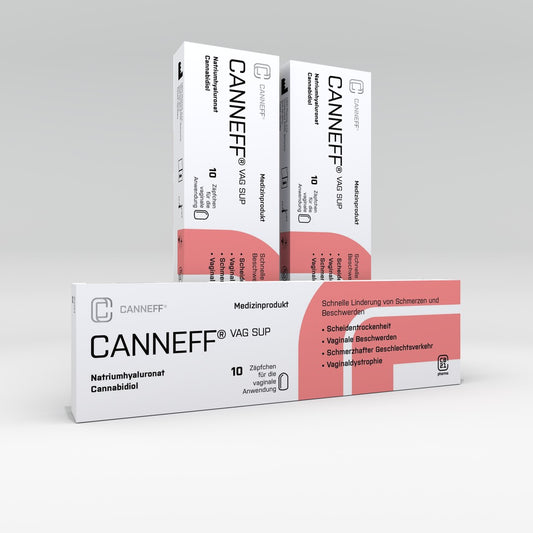
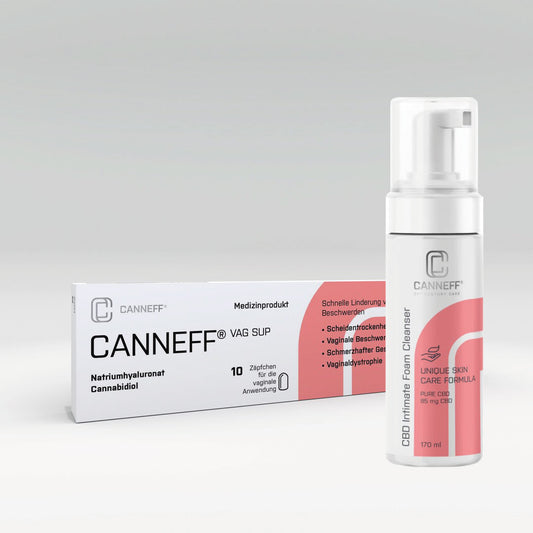
Nonsteroidal anti-inflammatory drugs (NSAIDs) like ibuprofen and diclofenac are the most common pain relievers for treating PMS-related lower abdominal pain. They inhibit prostaglandin production, thereby reducing the intensity of cramps. Paracetamol can also be helpful but is less effective against the cause of the pain. Those seeking a natural alternative can use CANNEFF® vaginal suppositories, which have anti-inflammatory effects and relax the muscles.
|
Painkillers |
Effect |
Use in PMS |
|
Ibuprofen |
Inhibits prostaglandins, relieves cramps |
Take 1-2 days before the period |
|
Diclofenac |
Anti-inflammatory, pain-relieving |
Suitable for severe pain |
|
Relaxes muscles, reduces pain |
Apply directly before the period |
PMS and cramp-like lower abdominal pain: causes and solutions
Cramp-like pain is due to increased prostaglandin production, which leads to excessive uterine contractions. These contractions can cause not only lower abdominal pain but also radiate to the back or legs. A combination of heat applications, gentle exercise, and magnesium can help relax the muscles. Herbal remedies like chasteberry or St. John's wort can also provide support.
Heat or exercise? The best methods against PMS-related lower abdominal pain
Both heat and exercise can relieve PMS lower abdominal pain. Heat relaxes the uterine muscles and improves blood circulation, reducing cramps. Exercise releases endorphins, which have a pain-relieving effect. Especially gentle exercises like yoga or light walks are recommended.
|
Method |
Effect |
|
Heating pad |
Promotes blood circulation, relaxes muscles |
|
Light exercise |
Relieves tension, releases endorphins |
|
Has anti-inflammatory and muscle-relaxing effects |
Which hormones cause PMS lower abdominal pain?
PMS lower abdominal pain is mainly triggered by hormonal fluctuations in the second half of the cycle. Especially Prostaglandins, progesterone, and estrogen play a crucial role.
|
Hormone |
Function |
Effect in PMS |
|
Prostaglandins |
Regulate inflammation and trigger uterine contractions |
Increased levels intensify cramps and lower abdominal pain |
|
Progesterone |
Relaxes the uterine muscles and has a calming effect |
Drops sharply just before the period, causing contractions to increase |
|
Estrogen |
Promotes cycle stability and influences serotonin levels |
A drop can increase pain sensitivity |
Prostaglandins are particularly important because they control the contractions of the uterus to shed the lining. When the level is too high, the contractions become more painful and intense. Women with severe PMS lower abdominal pain often have increased prostaglandin production.
The drop in progesterone further intensifies the symptoms. This hormone normally relaxes muscles, but just before menstruation, it rapidly decreases, causing the uterus to react more strongly.
Also Estrogen plays an indirect role, as it is linked to serotonin levels. A low estrogen level can Pain sensitivity increase and intensify PMS symptoms.
PMS or pregnancy? How to correctly interpret lower abdominal pain
Lower abdominal pain can be a sign of both PMS and early pregnancy. While PMS pain usually starts a few days before the period and disappears with its onset, pregnancy symptoms are often milder but can last longer. Other signs like morning nausea or sensitive breasts can help distinguish the cause. A pregnancy test can provide definitive clarity.
|
Characteristic |
PMS |
Pregnancy |
|
Timing of the pain |
Before the period |
Possible at any time |
|
Accompanying symptoms |
Bloating, mood swings |
Nausea, breast tenderness |
|
Menstruation is absent |
No |
Yes |
Can dietary changes reduce PMS lower abdominal pain?
A tailored diet can alleviate PMS lower abdominal pain. Magnesium-rich foods like bananas, nuts, and spinach help relax muscles. Omega-3 fatty acids from salmon or flaxseed have anti-inflammatory effects. Sugar, alcohol, and caffeine should be reduced as they can worsen water retention and cramps.
Are there herbal remedies for PMS lower abdominal pain?
Herbal remedies like chasteberry can regulate hormone levels and relieve PMS symptoms. Lady's mantle tea has antispasmodic effects and can serve as natural support. CANNEFF® vaginal suppositories offer an effective way to relieve lower abdominal pain by targeting inflammation.
How long do PMS lower abdominal pains usually last?
The duration of PMS-related lower abdominal pain can vary. Typically, it occurs one to three days before the period and subsides once bleeding begins. In some women, the pain lasts until the second or third day of menstruation. If the pain persists beyond this period or is accompanied by unusually severe symptoms, a gynecological examination is advisable.