

What does chronic cervicitis mean?
The chronic cervicitis is a long-lasting or recurring inflammation of the cervix that can extend over weeks, months, or even years. Unlike the acute form, chronic cervicitis is usually less symptomatic but therapeutically more challenging and associated with a higher risk of structural tissue changes connected.
Medical definition
Chronic cervicitis is diagnosed when Signs of inflammation on the cervical mucosa lasting at least four weeks or occur repeatedly without complete healing. It can manifest both as Consequence of an incompletely healed acute infection as well as primarily through non-infectious irritants arise – e.g., hormonal imbalances, mechanical stress, or mucosal atrophy.
Characteristics of chronic cervicitis
- Slow progression with periodic intensification of symptoms
- Often subtle or nonspecific symptoms such as discharge, irritation, or pressure sensation
- Often negative microbiological tests, as no acute pathogen is detectable anymore
- Histological changes of the cervical mucosa, e.g., increased leukocyte infiltration or epithelial changes
Possible courses
|
Type |
Description |
|
Persistent cervicitis |
Inflammation does not fully heal after the acute phase |
|
Recurrent cervicitis |
Recurring inflammatory episodes with symptom-free intervals |
|
Atrophic cervicitis |
Mucosal changes triggered by hormone deficiency (especially in postmenopause) |
|
Irritative-mechanical cervicitis |
Chronic irritation caused by foreign bodies, IUDs, pessaries, or intimate hygiene products |
Pathophysiology: Why does the cervix not heal?
In chronic cervicitis, there is a disturbed balance between irritation and repair of the cervical mucosa. The following factors can play a role:
- Persistence of biofilms or hard-to-detect pathogens (e.g., Mycoplasma genitalium)
- Dysbiosis – a disturbed vaginal flora prevents regeneration
- Lack of mucosal resistance – for example, due to estrogen deficiency in menopause
- Mechanical microtraumas – due to frequent gynecological manipulations or sexual intercourse
Why is chronic cervicitis significant?
Although it often does not progress dramatically, chronic cervicitis can in the long term:
- the defense capability of the cervix weaken
- the Risk of ascending infections (e.g., endometritis, salpingitis) increase
- to Tissue changes such as cervical ectropion or dysplasias
- the Affect fertility, e.g., through altered cervical mucus
How does it differ from the acute form?
Distinguishing between acute and chronic cervicitis is essential for correct diagnosis, therapy, and prognosis assessment. While the acute form usually progresses quickly and symptomatically, chronic cervicitis tends to be insidious, persistent, and often less noticeable – but often therapy-resistant or recurrent.
Fundamental differences in course and pathogenesis
|
Criterion |
Acute cervicitis |
Chronic cervicitis |
|
Course |
Sudden onset inflammation, usually infectious in origin |
Slow, lasting weeks to months, often without acute pathogen detection |
|
Complaints |
Clear symptoms: discharge, pain, bleeding |
Irritation symptoms, feeling of pressure, often subtle or nonspecific |
|
Common pathogens |
Chlamydia, gonococci, trichomonads |
Persistent pathogens, mixed infections, non-infectious irritation causes |
|
Microbiological detection |
Usually positive, clear pathogen diagnosis |
Often negative or only nonspecific flora |
|
Therapeutic approach |
Targeted anti-infective therapy |
Regeneration, mucosal care, possibly hormone or immunotherapy |
|
Risk of complications |
Risk of ascending infections in untreated cases |
Chronic mucosal changes, recurrences, fertility disorders |
|
Partner treatment |
Necessary in sexually transmitted infections |
Rarely necessary, except in persistent STIs |
Pathophysiological differences
Acute cervicitis is usually the direct reaction to pathogen contact. The immune response is pronounced, leading to acute symptoms such as purulent discharge or contact bleeding.
Chronic cervicitis on the other hand, is often the result of an incompletely healed acute phase or persistent irritation – e.g., from a mechanical pessary, hormonally induced atrophy, or a disturbed vaginal environment. The mucosa becomes more sensitive, and the inflammation persists at a low level.
Clinical relevance
Acute cervicitis is well treatableif detected early. Chronic cervicitis requires multilayered therapy conceptsbecause it:
- often has no clearly identifiable cause,
- recurs even after primary therapy,
- often does not respond to antibiotics,
- can weaken the mucosal barrier in the long term.
Special features in therapy
- Acute: antibiotics, antifungals, antivirals – depending on the pathogen
- Chronic: regeneration, irritation avoidance, stabilization of the vaginal ecosystem
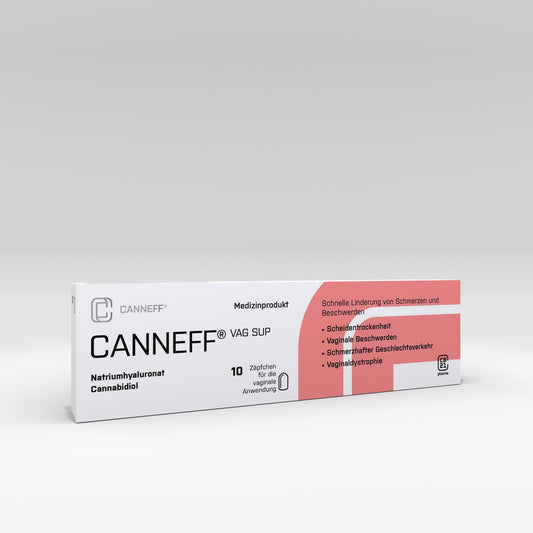
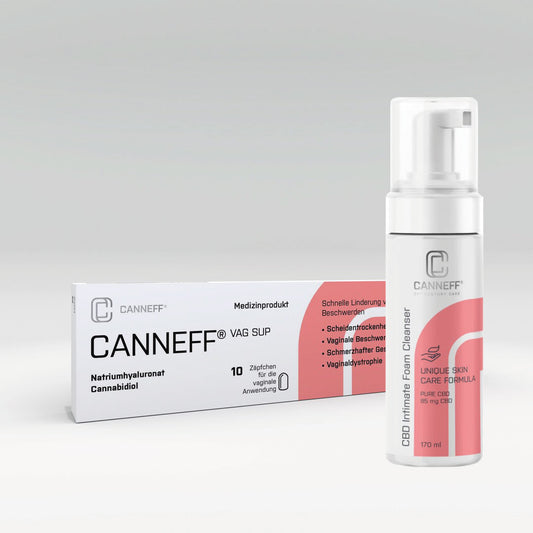
Especially in chronic cases, a supportive mucosal care with regenerating active ingredients. Here, CANNEFF® vaginal suppositories to, which anti-inflammatory CBD with moisturizing hyaluronic acid combine. They promote mucosal stability and relieve typical symptoms such as burning, dryness, or a feeling of pressure – even in postmenopausal atrophy.
causes of chronic cervicitis
The chronic cervicitis is the result of persistent irritation or inadequately treated infection of the cervix. While the acute form is usually caused by typical sexually transmitted pathogens, chronic cervicitis is multifactorial. The cause cannot always be clearly determined – often it is a combination of various infectious, mechanical, chemical, or hormonal factors occur.
|
Cause group |
Examples |
Mechanism |
|
Persistent infections |
Chlamydia trachomatis, Mycoplasma genitalium, HPV |
Pathogens remain in the cervix, often difficult to detect |
|
Incompletely treated acute infection |
Premature therapy discontinuation, inadequate medication |
Residual infection below detection limit |
|
Microbial dysbiosis |
Imbalance of vaginal flora, bacterial vaginosis |
Pathogens displace lactobacilli, favor chronic irritation |
|
Mechanical irritation |
IUD (intrauterine device), pessary, diaphragm, frequent gynecological procedures |
Microtraumas of the mucous membrane, chronic inflammatory stimulus |
|
Chemical irritation |
Intimate sprays, perfumed hygiene products, spermicides |
Allergic or toxic reaction to mucous membrane |
|
Hormonal influences |
Estrogen deficiency in postmenopause |
Mucosal atrophy, reduced defense, increased susceptibility to irritation |
|
Immunological factors |
Local immune weakness, chronic inflammatory readiness |
Misregulated immune response prevents healing |
Infectious factors
- Chronically persistent pathogens such as Mycoplasma genitalium or Chlamydia trachomatis can nest in the cervix and be difficult to detect.
- Also Human papillomavirus (HPV) can lead to a chronic inflammatory reaction, especially in immunosuppressed patients. These pathogens often do not cause acute symptoms but cause persistent irritation and structural changes of the mucous membrane.
Mechanical and chemical irritants
- The chronic use of Intrauterine devices, diaphragms, or menstrual cups can lead to micro-injuries over a longer period.
- Intimate care products with fragrances or aggressive cleansers disrupt the vaginal environment and irritate the mucous membrane.
-
Chronic microtraumas from sexual intercourse on sensitive mucous membranes favor the course.
Hormonal causes
In the Postmenopause the vaginal and cervical mucosa is often atrophic – that is, thinner, drier, and more sensitive to irritations. The natural protection by lactobacilli is reduced, which causes a barrier-weakened mucous membrane results.
This form of chronic cervicitis often runs non-infectiously but manifests similarly with discharge, burning, and bleeding.
mucosal dysfunction and immune status
Some women show a chronic inflammatory readiness characterized by an excessive or misregulated immune response. These include:
- Post-infectious irritation
- Histologically detectable infiltrations without current infection
- Cervical dysplasias in the context of HPV infections
Role of multiple causes combined
In many cases it is not a single cause but rather a chain reaction:
- An acute infection weakens the mucosa
- Mechanical irritation (e.g., IUD) disrupts healing
- Hormonal weakness prevents regeneration
The result: a chronic, often difficult-to-treat condition with fluctuating symptoms.
Symptoms indicating chronic inflammation
Chronic cervicitis usually runs milder than the acute form but shows typical, persistent irritation symptoms. Clear signs of inflammation are often missing, making diagnosis difficult.
Typical symptoms:
-
Persistent vaginal discharge
(mostly mucous, clear to yellowish, rarely purulent) -
Recurring spotting or contact bleeding
(e.g., after intercourse or tampon use) -
Mild burning or itching
(especially in the vaginal entrance area) -
Pressure or pulling sensation in the lower abdomen
(nonspecific, rather dull than painful) -
Dryness or irritation of the mucosa
(often with hormone-related mucosal atrophy) -
Pain during intercourse (dyspareunia)
(especially with mechanical irritation of the inflamed cervix)
Chronic cervicitis can be symptom-free for a long time – symptoms are often mild but persistent and resistant to treatment.
Consequences of prolonged cervicitis
A chronic cervicitis rarely remains without consequences – especially if untreated or inadequately treated for months or years. The inflammation can not only lead to local mucosal changes not only lead to, but also spread to adjacent genital organs and impair reproductive health in the long term.
Overview of possible complications
|
Consequence |
Description |
|
Cervical ectopy/cervical ectropion |
Displacement of the cervical mucosa outward, visibly reddened and prone to bleeding |
|
Cervical scarring |
Narrowing or deformation of the cervix due to chronic irritation |
|
Altered cervical mucus |
Impaired sperm passage – affects fertility |
|
Ascending infection (PID) |
Spread to uterus, fallopian tubes, ovaries – can lead to endometritis or salpingitis |
|
Tubal infertility |
Adhesion or blockage of the fallopian tubes after silent chlamydia infection |
|
Chronic pelvic pain |
Result of inflammatory adhesions or recurrent irritation processes |
|
Cervical dysplasias |
HPV-associated cellular changes in chronic inflammation |
|
Increased risk of cervical cancer |
Especially with simultaneous persistent HPV infection |
Fertility disorders due to chronic cervicitis
A crucial problem is Impaired sperm uptake through the cervix. Chronic inflammations change the quality and composition of cervical mucus:
- Thick, inflammatory mucus is less permeable to sperm
- Chronically irritated mucosa can inhibit sperm motility
- Ascending infection threatens fallopian tube damage and tubal infertility
➡ Women with unfulfilled desire to have children and unclear causes should always be examined for chronic cervicitis.
Long-term mucosal damage
The cervical mucosa in chronic inflammation is often:
- atrophic (thinned)
- fragile (prone to bleeding)
- susceptible to recurrent infections
Especially in postmenopause, this is further intensified by hormonal deficits. It can lead to Vicious cycle of irritation, inflammation, and impaired regeneration arise.
How is the diagnosis of chronic cervicitis made?
The diagnosis of chronic cervicitis is more challenging than in the acute form, as the symptoms are often nonspecific or only mild. A purely symptom-oriented approach is often insufficient. Instead, clarification requires a combination of clinical examination, microbiological diagnostics, cytological assessment and, if necessary, imaging procedures.
Stepwise diagnostics overview
|
Diagnostic step |
Goal |
|
Medical history |
Recording duration, frequency, risk factors |
|
Gynecological examination |
Examination of discharge, mucosal changes, contact bleeding |
|
Cervical smear (microbiological) |
Detection (or exclusion) of specific pathogens |
|
Cytology (Pap test) |
Detection of cellular changes, especially in suspected HPV cases |
|
PCR testing (e.g., for chlamydia, mycoplasma) |
Identification of persistent pathogens |
|
colposcopy |
Enlarged examination of the cervix in case of abnormal findings |
|
HPV test |
Clarification in case of prolonged inflammation or dysplasias |
|
Ultrasound |
In case of suspected ascending infection or chronic changes in the pelvic area |
medical history and physical examination
An important initial tool is targeted conversation:
- How long have the symptoms lasted?
- Have there been previous acute inflammations?
- Is there a connection with sexual intercourse, menstrual cycle, or hygiene products?
- Are there hormonal changes (e.g., menopause)?
In the examined with a speculum can be
- Changes in the mucosa (redness, fragility)
- Cervical discharge (amount, color, consistency)
- Mild bleeding on contact (contact bleeding)
detect.
Microbiological diagnostics
The Cervical smear are central. They serve to detect (or exclude) the following pathogens:
- Chlamydia trachomatis
- Neisseria gonorrhoeae
- Mycoplasma genitalium
- Trichomonas vaginalis
- Gardnerella vaginalis
-
Candida spp.
Modern methods such as PCR diagnostics are more sensitive than culture methods and should be preferred in chronic cervicitis.
Cytological and colposcopic clarification
Especially in chronic cervicitis and HPV risk factors cytological smear (Pap test) is important to exclude precancerous changes.
In case of abnormal Pap results or persistent inflammation, a colposcopy are performed – that is, microscopic inspection of the cervix. Targeted biopsy samples are taken.
imaging
If symptoms such as lower abdominal pain, pressure sensation or chronic discharge exists, a vaginal sonography may be useful for assessing the uterus, endometrium, and adnexa – especially to exclude ascending infection (PID) or adhesions.
Special features in postmenopausal cervicitis
In women in menopause or postmenopause, a atrophic mucosa often the cause of symptoms – even without acute infection. Here, the Differential diagnosis to atypical endometrial changes or dysplasia in the foreground.
Treatment options without antibiotics?
While acute forms of cervicitis are usually anti-infective with antibiotics, antifungals, or antivirals are treated, arises in chronic or non-infectious courses the question of alternative therapy options – especially when:
- no infectious pathogen is detectable
- the mucosa is atrophic or hormonally altered (e.g., during menopause)
- patients do not tolerate or refuse antibiotics
- recurrent inflammations despite antibiotic treatment occur
Goal of non-antibiotic therapy
The treatment without antibiotics focuses on:
- Soothing of the mucosa
- Regeneration of the cervical mucosa
- Stabilization of the vaginal microbiome
- Reduction of local irritants
|
Therapy pillar |
Goal / effect |
Examples / preparations |
|
Local mucosal care |
Moisturizing, regeneration, irritation relief |
|
|
pH value stabilization |
Promotion of an acidic, protective vaginal environment |
Vaginal suppositories with lactic acid or ascorbic acid |
|
Probiotic treatment |
Restoration of physiological flora |
Lactobacillus preparations (e.g., oral or vaginal) |
|
Hormonal local therapy |
Regeneration in atrophic mucosa (only if indicated) |
Local estrogens (e.g., estriol cream, suppositories) |
|
Phytotherapy / herbal remedies |
Anti-inflammatory, irritation relief (supportive) |
Witch hazel, calendula, myrrh – e.g., in rinses |
|
Avoidance of mechanical irritation |
Breaking the cycle of irritation |
Pause during intercourse, removal of IUD/pessary |
|
Immunomodulation (if needed) |
Stabilization in recurrent infections (medically prescribed) |
e.g., Isoprinosine, immunostimulants |
CANNEFF® as a central measure in chronic cervicitis
CANNEFF® VAG SUP suppositories contains two active ingredients with an ideal combination for non-antibiotic therapy:
-
CANNEFF® moisturizes, promotes mucosal healing, reduces microtears
-
CANNEFF® has anti-inflammatory, antioxidant, and soothing effects on cervical tissue
Advantages in chronic cervicitis:
- Relief of burning, itching, discharge, and irritation
- Improvement of mucosal elasticity – especially in hormone-related atrophy
- Strengthening the local defense barrier against renewed infections
- Well tolerated, hormone-free, and free of perfume or preservatives
➡ Usage recommendation:
1 suppository daily in the evening for 2–4 weeks – possibly repeatable in case of relapse tendency or as maintenance therapy.
When is a non-antibiotic treatment useful?
- In case of negative pathogen detection
- In case of Irritation conditions without active infection
- For Recurrence prevention after successful pathogen elimination
- In case of Patients with antibiotic intolerance
- In the Postmenopause, in hormone-related mucosal atrophy
- In combination with probiotic measures to stabilize the microbiome
Important: Combination instead of exclusion
Non-antibiotic measures do not replace anti-infective therapy in proven infection – however, they are in chronic or atypical courses essential part of the long-term strategy and important addition after antibiotic pretreatment.
Role of hormonal changes in chronic cervicitis
Hormonal changes, especially a Estrogen deficiency, play a central role in the development and maintenance of chronic cervicitis – especially in menopause and the Postmenopause.
Main effects of hormonal changes
-
Mucosal atrophy
→ The cervical and vaginal mucosa becomes thinner, drier, and more vulnerable -
Rreduced blood flow
→ Less nutrients and defense cells in the tissue
-
disruption of the vaginal microbiome
→ fewer lactobacilli, higher pH, reduced infection protection
-
increased mucous membrane irritability
→ burning, itching, discharge, even without acute infection
A weakened mucous membrane is more susceptible to chronic irritation conditions, recurring micro-injuries and non-infectious inflammations – often without clear pathogen detection.
therapeutic approach
In addition to hormonal local therapy when indicated, CANNEFF® vaginal suppositories with CBD and hyaluronic acid as hormone-free care option proven – ideal for mucous membrane regeneration and relief of hormonally induced complaints.
chronic cervicitis during menopause
In the menopause due to the declining estrogen levels particularly susceptible to chronic inflammations. The mucous membrane becomes thinner (atrophy), drier, and more vulnerable – even minor irritations (tampons, intercourse, intimate care products) can cause persistent irritation conditions lead to.
typical features
- irritation without detectable infection
- contact bleeding, burning, discharge, dyspareunia
- Often no positive pathogen detection
- chronic recurrent courses
treatment
In addition to gentle local therapy, targeted mucous membrane care central. Particularly proven is CANNEFF® VAG SUP, which through hyaluronic acid (moisturizing, restorative) and CBD (anti-inflammatory, soothing) promotes regeneration – ideal for women with sensitive or hormonally weakened mucous membranes. CANNEFF® VAG SUP vaginal suppositories provide targeted relief for menopausal symptoms such as vaginal dryness, itching, and pain during intercourse. The combination of moisturizing hyaluronic acid and anti-inflammatory cannabidiol (CBD) works synergistically to regenerate the vaginal mucosa and relieve discomfort. Clinical studies show significant improvements in symptoms like hot flashes, sleep disturbances, and inner restlessness, leading to an enhanced quality of life. The application is simple: one suppository daily before bedtime is recommended for a period of 20–30 days. This hormone-free therapy is especially suitable for women who prefer a local treatment without systemic side effects.
CANNEFF® for chronic cervicitis – how does it help?
CANNEFF® VAG SUP vaginal suppositories offer effective, hormone-free support for chronic cervicitis, especially for women in menopause. The combination of hyaluronic acid and cannabidiol (CBD) has anti-inflammatory, moisturizing, and regenerating effects on the sensitive vaginal and cervical mucosa. These properties help relieve irritation and stabilize the mucosal barrier.
During menopause, the declining estrogen levels often lead to mucosal atrophy, increasing susceptibility to chronic inflammations like cervicitis. CANNEFF® suppositories specifically address this issue by moisturizing the mucosa and promoting its regeneration. Clinical studies show that using these suppositories can significantly reduce symptoms such as vaginal dryness, itching, and pain during intercourse. The recommended use for chronic cervicitis, especially in the context of menopause, is one suppository daily before bedtime for a period of 20 to 30 days. This therapy can be used alongside medical treatment or during the recovery phase to sustainably support mucosal health.
In addition to local effects, CANNEFF® suppositories can also positively influence systemic symptoms of menopause, such as hot flashes and sleep disturbances, by improving overall well-being. Overall, CANNEFF® VAG SUP represents a promising option for women suffering from chronic cervicitis, especially when hormonal changes during menopause play a role.