

Which therapies are suitable for cervicitis?
The treatment of cervicitis depends on the cause, the course (acute or chronic), and individual circumstances (e.g., pregnancy, menopause, recurrent infections). The goal is targeted treatment of the trigger, calming the mucosa, and restoring a stable vaginal environment.
Infectious cervicitis usually requires specific anti-infective therapy; non-infectious or hormonally caused forms benefit from regenerative and caring local therapies.
|
Therapy pillar |
Objective |
Examples |
|
Antibiotics |
Eradication of bacterial pathogens |
Doxycycline, azithromycin, ceftriaxone |
|
Antimycotics |
Treatment of yeast infections |
Clotrimazole, fluconazole |
|
Antivirals |
Control of viral infections (e.g., HSV) |
Aciclovir, valaciclovir |
|
Local therapy (suppositories) |
Mucosal care and regeneration |
|
|
pH value regulation |
Stabilization of the acidic vaginal environment |
Lactic acid suppositories |
|
Probiotics (oral or vaginal) |
Rebuilding the physiological flora |
Lactobacillus preparations |
|
Hormonal local therapy |
Regeneration of atrophic mucosa |
Estriol creams or suppositories (if indicated) |
|
Phytotherapy (complementary) |
Anti-inflammatory, soothing |
Chamomile, witch hazel, myrrh |
When is local treatment sufficient?
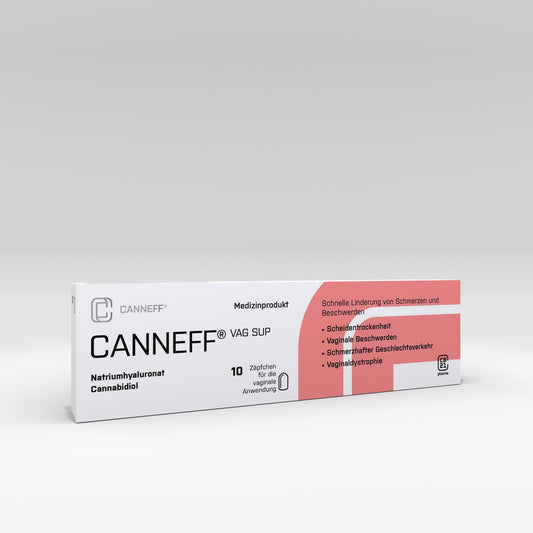
In non-infectious, hormonally caused, or post-infectious cervicitis, local treatment alone can be useful. Suppositories with regenerative properties – such as CANNEFF® VAG SUP – promote mucosal healing, reduce irritation symptoms like burning or dryness, and simultaneously have anti-inflammatory effects. Especially during menopause, this therapy offers a hormone-free and well-tolerated alternative.
Combination therapies possible
In chronic or recurrent cases, the combination of anti-infective treatment and local mucosal care can be crucial to achieve complete healing and prevent relapses. Partner treatments and hygienic measures should also be considered in sexually transmitted causes.
When is antibiotic therapy necessary?
Antibiotic therapy is always necessary when bacterial cervicitis is present. This is often a sexually transmitted infection, especially with Chlamydia trachomatis, Neisseria gonorrhoeae, Mycoplasma genitalium or less commonly Ureaplasma urealyticum. Mixed infections with Gardnerella vaginalis (bacterial vaginosis) can cause cervicitis and may require antibiotic treatment.
Early antibiotic therapy is important to prevent ascending infection to prevent spread into the uterine cavity and fallopian tubes. Otherwise, there is a risk of Pelvic Inflammatory Disease (PID) with risk of infertility.
Indications for antibiotic therapy
- Positive pathogen detection in the swab (PCR or culture)
- Typical symptoms with justified suspicion, e.g., purulent discharge, contact bleeding, lower abdominal pain
- Partner infection with chlamydia or gonococci
- Pregnancy with positive bacterial detection – even in asymptomatic cases
Commonly used antibiotics
|
Pathogens |
Recommended therapy |
|
Chlamydia trachomatis |
Doxycycline 100 mg 2×/day for 7 days or azithromycin 1 g as a single dose |
|
Neisseria gonorrhoeae |
Ceftriaxone 500 mg i.m. + azithromycin 1 g orally |
|
Mycoplasma genitalium |
Doxycycline followed by azithromycin or moxifloxacin |
|
Gardnerella vaginalis |
Metronidazole 500 mg 2×/day for 7 days |
Important: The choice of antibiotic depends on the pathogen spectrum and resistance profile – especially with gonococci, resistance is common.
Special considerations for partner treatment
For sexually transmitted pathogens such as chlamydia or gonococci, the sexual partner(s) should always be treated as well should be treated even if no symptoms are present. This is the only way to prevent reinfection.
What to do if no pathogens are detectable?
If no pathogen is found despite symptoms, empirical antibiotic treatment not always advisable. In these cases, it should first be clarified whether it is a:
- non-infectious irritation (e.g., from IUD, intimate hygiene)
- hormonal mucosal atrophy
- chronic post-infectious irritation conditions
is involved.
Antiviral medications for viral cervicitis
Viral cervicitis typically arises from infection with certain viruses that inflame the mucous membrane of the cervix. The most common viral causes include:
- Herpes simplex virus type 2 (HSV-2)
- Human papillomavirus (HPV)
These two virus groups require different diagnostic and therapeutic approaches, with antiviral drugs primarily used for Herpes infections should be used. In HPV, the focus is instead on monitoring the course and cytological surveillance.
When is antiviral therapy necessary?
Antiviral therapy is generally used only for active herpes infections (HSV-2) used with typical symptoms:
- pain in the genital area
- blistering or ulcerations on the cervix
- pronounced signs of cervical inflammation
- possible contact bleeding
Antiviral treatment during pregnancy is especially important to prevent perinatal transmission to the newborn.
Medications and dosages for HSV-related cervicitis
|
Active ingredient |
Standard dosage |
Duration |
|
Acyclovir |
400 mg orally 3× daily |
5–10 days |
|
Valacyclovir |
500 mg orally 2× daily |
5–10 days |
|
Famciclovir |
250 mg orally 3× daily |
5–10 days |
In cases of recurrent course can cause a Long-term therapy over several months may be necessary, e.g., aciclovir 400 mg twice daily for 6 months for relapse prophylaxis.
What should be considered with HPV-related cervicitis?
HPV infections often do not cause acute inflammation but lead to chronic cellular changes (dysplasias) on the cervix. There is no antiviral therapy for this. Instead, the following is done:
- regular Pap checks (cytology)
- HPV testing
- possibly colposcopy and biopsy
- in cases of high-grade dysplasia: surgical therapy (e.g., conization)
HPV can, however, make more sensitive to additional inflammatory stimuli, so that a secondary, non-infectious cervicitis occurs.
How long does the treatment last?
The duration of treatment for cervicitis depends largely on the Cause, the course of the disease (acute or chronic), the pathogen type as well as the individual Response to therapy While acute, uncomplicated forms can usually be successfully treated within a few days, therapy for chronic or recurrent courses requires significantly more time and patience.
Average treatment duration by cause
|
Cause / form of cervicitis |
Type of therapy |
Duration of treatment |
|
Bacterial cervicitis |
Antibiotics (e.g., doxycycline, azithromycin) |
7–10 days (single dose possible) |
|
Gonorrhea-related |
Ceftriaxone + azithromycin |
Single injection + 1 day |
|
Trichomonads |
Oral metronidazole |
5–7 days |
|
Candida-associated |
Local antifungals |
3–6 days |
|
Herpes cervicitis (HSV-2) |
Antiviral therapy (acyclovir, etc.) |
5–10 days (possibly longer with recurrences) |
|
HPV-associated changes |
Course monitoring (Pap test, colposcopy) |
Months to years, depending on the course |
|
Chronic cervicitis |
Local mucous membrane care, avoidance of irritation |
4–6 weeks, possibly repeated cycles |
Acute vs. chronic courses
- Acute cervicitis usually heals within 1 to 2 weeks if therapy is started early and targeted.
- Chronic cervicitis requires significantly longer treatment periods. Often, multi-week regeneration therapy is necessary – especially with mucous membrane damage, hormonal atrophy, or therapy-resistant symptoms.
Mucous membrane regeneration after infection
Regardless of the pathogen type, the mucous membrane can be affected after having had cervicitis inflammatorily altered, irritated, or atrophic remain. In these cases, a subsequent convalescence phase, e.g., with:
- Local moisture and regeneration therapy
- Probiotic stabilization of the vaginal environment
- Hormone-free mucous membrane care
CANNEFF® VAG SUP suppositories have proven particularly effective in this phase:
- Application: 1 suppository daily before bedtime for 20–30 days
- Ideal for support of healing, relief of irritation and Prevention of relapses
Local therapy vs. systemic therapy – which is better?
The decision between local or systemic therapy in cervicitis depends on the origin of the inflammation, the course of the disease (acute vs. chronic) as well as the general health condition of the patientBoth approaches have their justification – patients often benefit from a combination of both treatment forms.
-
Systemic therapy: Active ingredients are distributed through the bloodstream, e.g., via tablets, injections. They act throughout the body.
- Local therapy: Preparations act directly at the site of inflammation, e.g., through suppositories, creams, rinses – preferred for genital complaints.
|
Criterion |
Local therapy |
Systemic therapy |
|
Site of action |
Directly at the cervix/vagina |
Whole body (via bloodstream) |
|
Typical applications |
Suppositories, creams, rinses |
Tablets, capsules, injections |
|
Goal |
Regeneration, moisture, environmental protection |
Systemically combat infectious pathogens |
|
Side effects |
Low, locally limited |
Possible systemic side effects |
|
Areas of application |
Chronic cervicitis, mucosal atrophy |
Acute bacterial or viral cervicitis |
|
Examples |
CANNEFF® VAG SUP, lactic acid suppositories |
Doxycycline, azithromycin, acyclovir |
When is local therapy appropriate?
- In cases of non-infectious cervicitis (e.g., hormonally induced, mechanically irritated)
- In postmenopause in mucosal atrophy
- As Care after antibiotic therapyto support mucosal regeneration
- In cases of recurring irritation conditions, burning, dryness or dyspareunia
- CANNEFF® vaginal suppositories combine CBD with hyaluronic acid and act locally as anti-inflammatory, moisturizing, and healing-promoting – ideal for chronic mucosal irritation.
When is systemic therapy necessary?
- In cases of confirmed infection with bacterial or viral pathogens (e.g., chlamydia, gonorrhea, herpes)
- When the inflammation does not respond to local measures
- In cases of ascending infection or suspicion of involvement of the internal genital organs (e.g., PID)
- In cases of systemic accompanying symptoms such as fever, severe lower abdominal pain
Suppositories for Cervicitis – Benefits and Usage
Vaginal suppositories are a proven form of local therapy for cervicitis. They act specifically on the inflamed mucous membrane of the cervix without burdening the entire body. Especially in chronic, non-infectious, or hormonally induced forms of cervicitis, suppositories have established themselves as an effective and well-tolerated option.
Advantages of vaginal suppositories for cervicitis
- Direct effect at the site of inflammation: The active ingredients are released where they are needed – on the mucosa of the vagina and cervix.
- Rapid symptom relief: Suppositories can quickly relieve symptoms such as burning, dryness, or discharge.
- Gentle and locally limited: Unlike systemic therapies, hardly any side effects occur because the active ingredient barely enters the bloodstream.
- Promoting mucosal healing: Many suppositories contain regenerative, moisturizing, or anti-inflammatory ingredients.
- Ideal therapy for hormonal changes: Especially in postmenopause, when the mucosa is atrophic, suppositories show good effectiveness.
Application
The suppository is inserted deep into the vagina in the evening before going to bed.
- Body heat melts the suppository, releasing the active ingredient.
- It is recommended to remain upright after application (ideally lying down).
- The therapy duration is about 7 to 30 days depending on the preparation and symptoms.
Areas of use
After infections: for mucosal regeneration
- In chronic cervicitis: to relieve irritation symptoms
- For hormonally induced dryness: for moisturizing and mucosal care
- For prevention of recurrences: as maintenance therapy after antibiotic treatment
Example: CANNEFF® Vaginal Suppositories
These suppositories contain cannabidiol (CBD) and hyaluronic acid – a combination with strong regenerative, moisturizing, and anti-inflammatory effects. They are especially suitable for chronic cervicitis, mucosal atrophy, and complaints during menopause. The application is straightforward, and the effectiveness has been clinically confirmed in studies.
CANNEFF® Vaginal Suppositories: Support for Mucosal Healing
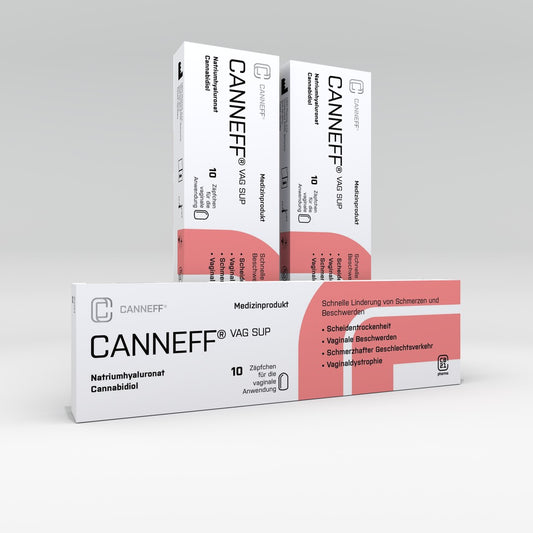
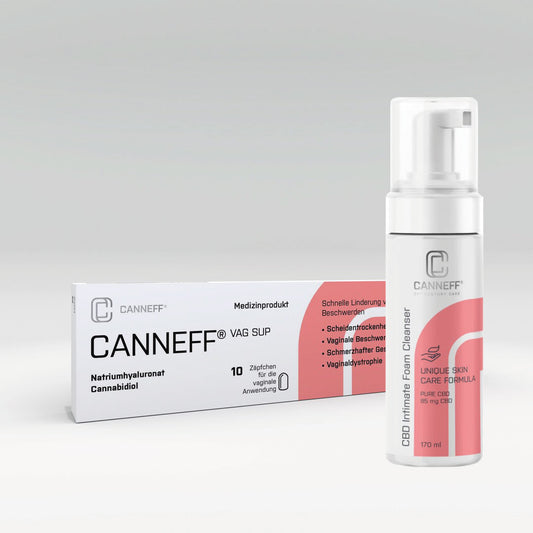
CANNEFF® VAG SUP Vaginal Suppositories were specially developed to regenerate the vaginal and cervical mucosa in cases of inflammatory, irritative, and hormonally induced complaints. They combine two medically relevant ingredients: cannabidiol (CBD) and hyaluronic acid in a patented emulsion matrix that guarantees the release of the active ingredients. This combination enables targeted, hormone-free, and well-tolerated support for cervicitis – especially in chronic or postmenopausal cases.
Mechanisms of action
- CANNEFF® VAG SUP provides intensive moisture, improves mucosal elasticity, and supports the natural healing process of microtears and irritations.
- CANNEFF® VAG SUP acts anti-inflammatory, antioxidant, and pain-relieving. It soothes sensitive tissue, reduces irritation, and helps restore a balanced environment.
Areas of use for cervicitis
- Chronic cervicitis, especially with mucosal atrophy
- Irritative conditions without acute pathogen detection
- Adjunct therapy after antibiotic treatment, to stabilize the mucosa
- Postmenopausal complaints, for symptoms like dryness, itching, or contact bleeding
Recommended use
- 1 suppository daily, preferably in the evening before bedtime
- Duration of use: At least 20–30 days, repeatable as maintenance therapy depending on clinical assessment
- No additional applicator needed – the suppository is inserted deep into the vagina with clean hands
Advantages at a glance
- Hormone-free and without known systemic side effects
- No impairment of the natural microbiome
- Clinically proven effectiveness, even for menopausal symptoms
- Also suitable for long-term mucosal care.
CANNEFF® Vaginal Suppositories are an effective, scientifically proven, and low side-effect option to support mucosal healing in cervicitis. They are ideal as a complementary or sole measure in chronic cases, hormonally induced dryness, or irritative complaints in the intimate area.
What to do in case of relapses?
Relapses in cervicitis – especially in the chronic or recurrent form – are not uncommon and pose a particular challenge in gynecological practice. Successful treatment depends not only on acute symptom control but also on consistent follow-up care and prevention of new inflammation episodes.
Cause analysis
Before any renewed therapy, the cause of the relapse should be examined. Possible reasons are:
- Incomplete pathogen elimination (e.g., persistent chlamydia)
- Biofilm formation that bypasses standard antibiotics
- Reinfection from untreated partner
- Mucosal damage due to hormonal deficits or mechanical irritation
- Imbalance of vaginal flora (dysbiosis)
Repeat diagnostics
A comprehensive re-evaluation should be done with every relapse:
- Cervical smear with microbiological examination (including PCR)
- HPV test in case of chronic inflammation
- If necessary, colposcopy for cervical cell changes
- Examination of the partner, especially if STI is suspected
Long-term strategies for relapse prevention
|
Measure |
Goal |
|
Consistent partner treatment |
Prevention of reinfections |
|
Mucosal care, inflammation reduction, microbiome stabilization |
|
|
Probiotic therapy (oral/vaginal) |
Restoration of lactobacillus flora |
|
Hormonal local therapy |
Rebuilding atrophic mucosa (if indicated) |
|
Avoidance of irritative influences |
No intimate douching, use irritation-free hygiene products |
Lifestyle and hygiene measures
- Wear cotton underwear, avoid synthetic materials
- No excessive intimate hygiene or perfumed products
- Use of condoms for infection prevention with changing partners
- Gynecological routine check-ups at least once a year
Continuous mucosal care
After successful acute therapy, regular use of CANNEFF® suppositories can help prevent relapses. CANNEFF® stabilizes the mucosal barrier while acting anti-inflammatory. Women in perimenopause or with sensitive mucosa especially benefit from this regenerative, hormone-free adjunct therapy.
When is partner treatment required?
Partner treatment is a central aspect in the therapy of infectious cervicitis, especially in sexually transmitted infections (STIs). The goal is to prevent reinfections and ensure complete healing in both partners. An untreated infection in the partner can not only lead to repeated relapses in the patient but also promote the spread within the population.
When is partner treatment absolutely necessary?
Partner treatment is indicated if the following pathogens have been detected in the patient:
|
Pathogens |
Partner treatment recommended? |
Justification |
|
Chlamydia trachomatis |
Yes |
High transmission rate, often asymptomatic |
|
Neisseria gonorrhoeae |
Yes |
Highly infectious, high reinfection rate |
|
Trichomonas vaginalis |
Yes |
Often asymptomatic in men, high relapse risk |
|
Mycoplasma genitalium |
Yes |
Prolonged course, high relapse potential |
|
Herpes simplex virus |
Only with symptoms |
Reactivation possible, transmission during activity |
|
Candida albicans |
Usually not necessary |
Low transmission probability |
|
Bacterial vaginosis/dysbiosis |
No |
No STI, but hygiene measures advisable |
How is partner treatment carried out?
- In bacterial infections, treatment is usually with the same antibiotics (e.g., azithromycin for chlamydia).
- Partners should be treated even if they have no symptoms.
- During treatment and for at least seven days after therapy begins, sexual intercourse should be avoided.
- Medical consultation of the partner – including urological – is advisable to exclude co-infections.
When is partner treatment not necessary?
- If no sexually transmitted cause is detectable (e.g., in hormonally induced or irritative cervicitis).
- If the inflammation was caused by mechanical irritation or mucosal atrophy.
- In fungal infections, partner treatment is only useful if both partners show symptoms or the infection recurs.
Importance of partner diagnostics
Especially in repeated or chronic cases, an undetected infection in the partner can be key to understanding the condition. Targeted partner diagnostics are therefore important not only therapeutically but also preventively.
What should be considered after treatment?
After treating cervicitis, it is important to ensure complete healing of the mucosa and prevent relapses. The following measures are advisable:
- Follow-up check at the gynecologist about 4 weeks after therapy completion, especially if pathogens were previously detected.
- No sexual intercourse for at least 7 days after the end of treatment (for STIs) to avoid reinfections.
- Partner treatment to be done if sexually transmitted pathogens have been diagnosed.
- Mucosal care support – e.g., with CANNEFF® vaginal suppositories for regeneration and moisture supply.
- Avoid irritants, e.g., aggressive intimate care products, tight clothing, or frequent mechanical stress.
- Gynecological check-up Attend regularly – especially with chronic or recurring symptoms.
These measures help restore the mucosal barrier, minimize the risk of relapse, and stabilize vaginal health in the long term.