

What are Grade IV hemorrhoids, and how do they develop?
Grade IV hemorrhoids develop due to chronic strain on the vascular cushions, which can be triggered by factors such as heavy straining, chronic constipation, overweight, or pregnancy. Over time, the supporting structures in the anal canal weaken so much that the hemorrhoids permanently protrude from the anus. Additionally, prolapse of the anal mucosa, known as anal prolapse, often occurs. Grade IV hemorrhoids are the most advanced form of hemorrhoidal disease and usually require intensive medical treatment. At this stage, the enlarged vascular cushions remain permanently prolapsed and can no longer be manually pushed back. This condition leads to significant discomfort and carries the risk of serious complications.

What symptoms are typical for Grade IV hemorrhoids?
The symptoms of Grade IV hemorrhoids are intense and significantly impair quality of life. Read more here about the symptoms of hemorrhoids. The following table shows the typical symptoms of Grade IV hemorrhoids:
|
Symptom |
Description |
|
Permanent prolapse |
Hemorrhoids remain outside the anal canal and cannot be pushed back. |
|
Severe pain |
Especially when sitting or during bowel movements due to irritated and damaged tissue. |
|
Bleeding |
Frequent and heavier bright red bleeding due to friction and mucosal injuries. Read more here about bleeding hemorrhoids. |
|
Moisture and mucus |
Discharge of mucus that makes anal hygiene difficult and leads to skin irritation. |
|
Foreign body sensation |
Constant pressure sensation in the anal area, which is perceived as extremely uncomfortable. |
Why are Grade IV hemorrhoids dangerous?
If untreated, Grade IV hemorrhoids can lead to serious complications. These include the following complications.
Inflammation and infections: Permanently prolapsed tissue is more susceptible to bacterial infections.
Thrombosis: Blood clots can form in the hemorrhoids and cause severe pain cause.
Tissue damage: Strangulated hemorrhoids can lead to reduced blood flow and tissue necrosis.
Blood loss: Chronic bleeding can cause anemia (low blood count).
Read more about the different stages of hemorrhoids here.
What treatment options are available for Grade IV hemorrhoids?
In most cases, surgical treatment is unavoidable to relieve symptoms and prevent complications. Read more about hemorrhoid surgery here. The following table provides an overview of common procedures:
|
Treatment Method |
Description |
Special Features |
|
Milligan-Morgan Method |
Complete removal of hemorrhoids; wounds remain open. |
Suitable for severely enlarged hemorrhoids. |
|
Ferguson Method |
Removal of hemorrhoids with wound closure. |
Faster healing, but higher risk of infection. |
|
Stapler Hemorrhoidopexy |
Repositioning hemorrhoids with a stapler device. |
Less pain, but not suitable for all patients. |
|
Laser Hemorrhoidoplasty |
Shrinking hemorrhoids through targeted laser treatment. |
Minimally invasive and fast recovery. |
Learn more about the treatment of grade IV hemorrhoids.
How can CANNEFF® SUP suppositories support recovery after surgery?
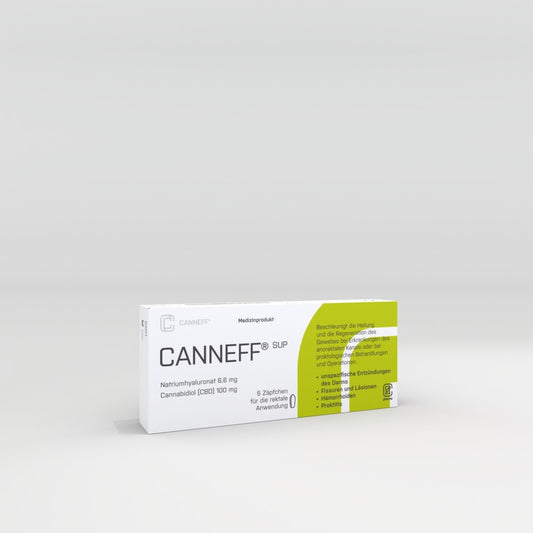
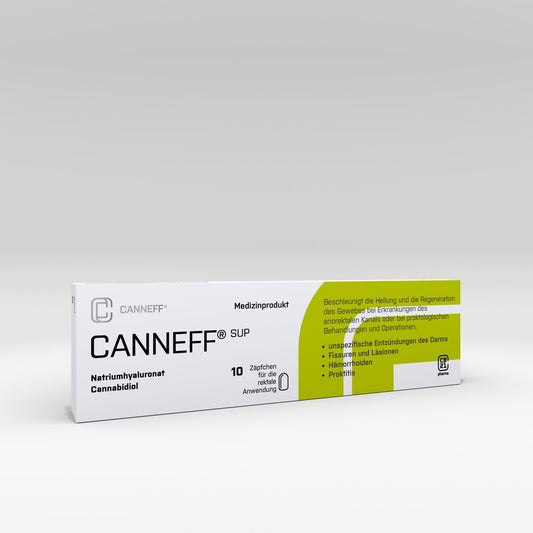
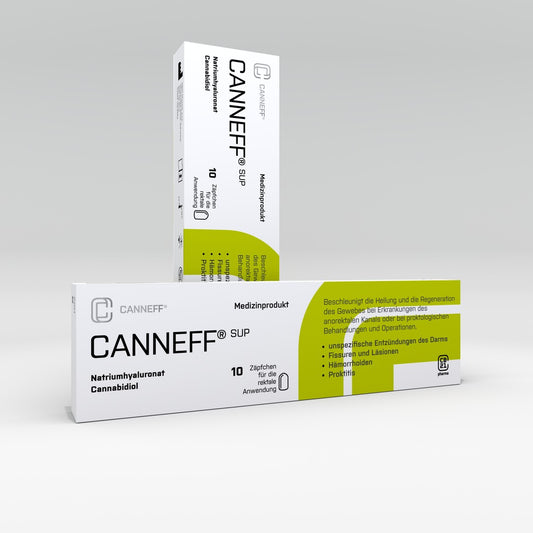
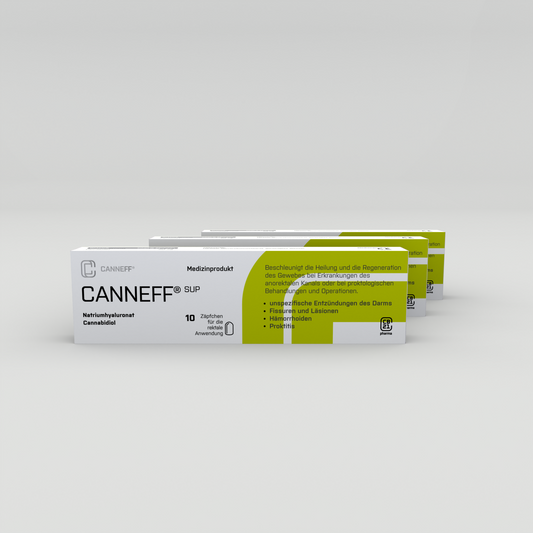
After surgery, CANNEFF® SUP suppositories are a valuable addition to aftercare. The suppositories help relieve postoperative symptoms such as itching, burning, and swelling, and promote faster healing. You should use CANNEFF® SUP suppositories daily, ideally before bedtime, to treat hemorrhoids.

When is a doctor’s visit unavoidable?
A doctor’s visit is essential if you notice the following signs.
- Severe bleeding occurs that does not stop on its own.
- Pain and swelling restrict mobility.
- Signs of infection such as fever or pus discharge are present.
- Hemorrhoids have permanently prolapsed and significantly affect daily life.
How can grade IV hemorrhoids be prevented?
Although grade IV hemorrhoids are usually the result of untreated earlier stages, preventive measures can help.
High-fiber diet: Promotes soft stools and prevents constipation.
Regular exercise: Prevents overweight and improves circulation.
Improved toilet habits: Avoid straining and prolonged sitting.
Gentle anal hygiene: Use lukewarm water and avoid irritating products.