

What are Grade I hemorrhoids?
Grade I hemorrhoids are enlarged vascular cushions in the anal canal that are neither visible nor palpable from the outside. This initial stage of hemorrhoidal disease is usually symptom-free or inconspicuous and often only shows mild symptoms such as occasional bright red blood traces after bowel movements. It is the mildest form of the disease, where the vascular cushions are enlarged but have not yet protruded from the anal canal.
Since Grade I hemorrhoids are usually mild, they are often discovered incidentally during examinations. They represent a starting point where progression can be effectively stopped through targeted measures such as lifestyle and dietary adjustments.
How to recognize Grade I hemorrhoids?
Grade I hemorrhoids are recognizable by subtle and often nonspecific signs, as they are located entirely within the anal canal and are not visible from the outside. Typical is the occurrence of mild discomfort, which can especially be noticed during bowel movements.
Small amounts of bright red blood often appear on toilet paper, caused by friction from hard stool on the sensitive vascular cushions. Occasionally, affected individuals report mild itching or burning in the anal area, which is due to irritation of the mucous membrane. Another possible sign is the feeling that the bowel is not completely emptied after a bowel movement.
These symptoms of hemorrhoids are not always present, which is why Grade I hemorrhoids are often only discovered during routine medical examinations. However, they should be taken seriously because early treatment can prevent progression to higher grades. Read more here about the different stages of hemorrhoids.
What symptoms occur with Grade I hemorrhoids?
Grade I hemorrhoids are the mildest form of hemorrhoidal disease and often cause only minor or nonspecific discomfort. Since they are located entirely within the anal canal, they are not visible from the outside. Symptoms usually develop gradually and can easily be mistaken for other issues. An overview of typical signs helps to recognize Grade I hemorrhoids early and prevent worsening.
|
Symptom |
Description |
|
Light bleeding |
Bright red blood spots on toilet paper or in the stool, caused by friction. |
|
Itching |
Occasional mild itching in the anal area, often caused by mucous membrane irritation. |
|
Burning |
Mild, sporadic irritation in the anal canal, especially after bowel movements. Read more about anal burning. |
|
Feeling of incomplete evacuation |
Subjective feeling that the bowel has not been completely emptied. |
These symptoms are usually mild and can be relieved by simple measures such as a high-fiber diet or gentle anal hygiene. However, if the symptoms persist or worsen, medical evaluation is advisable. Read more here about the symptoms of hemorrhoids.
Are Grade I hemorrhoids dangerous?
Grade I hemorrhoids are considered the mildest stage of hemorrhoidal disease and are generally not dangerous. In this early stage, the vascular cushions in the anal canal are enlarged but remain completely hidden and are neither visible nor palpable. Symptoms such as mild anal itching, burning, or occasional bright red blood spots on toilet paper may occur but are rarely severe.
As long as Grade I hemorrhoids are detected early and treated with simple measures such as a high-fiber diet, adequate fluid intake, and regular exercise, there is no increased risk of complications. However, without targeted prevention or with ongoing strain, such as heavy straining, they can progress to more advanced stages (Grade II hemorrhoids, Grade III hemorrhoids, or Grade IV hemorrhoids), which are associated with more intense symptoms and a higher need for treatment. Read more here about the different stages of hemorrhoids or about the general treatment of hemorrhoids.
Early intervention helps relieve symptoms and stop the development of hemorrhoidal disease. If the symptoms of hemorrhoids persist despite simple measures, medical evaluation is recommended to rule out other causes.
How common are Grade I hemorrhoids?
Grade I hemorrhoids are very common and are considered the most frequent form of hemorrhoidal disease. Many people experience this early stage often without noticing it, as the symptoms of hemorrhoids are mild or absent. It is estimated that more than half of adults develop hemorrhoids at some point in their lives, with Grade I often marking the onset of the condition.
People with risk factors such as a low-fiber diet, chronic constipation, lack of exercise, or a predominantly sedentary lifestyle are particularly affected. Overweight and genetic predisposition can also increase the likelihood.
Since Grade I hemorrhoids often go unnoticed, the number of unreported cases is probably high. Many affected individuals do not seek medical help because the symptoms are mild or can be improved through simple lifestyle adjustments.

Can Grade I hemorrhoids be treated on your own?
Yes, Grade I hemorrhoids can usually be treated on your own, as they often cause only minor discomfort. With targeted measures and suitable products, those affected can relieve the symptoms of hemorrhoids and prevent progression.
Self-treatment measures
Fiber-rich diet: A diet rich in fruits, vegetables, whole grains, and legumes ensures soft stool consistency and prevents excessive straining during bowel movements.
Adequate hydration: Drink at least 1.5 to 2 liters of water daily to keep the bowels moving and prevent constipation.
Exercise: Regular physical activity, such as walking or light exercise, stimulates bowel activity and reduces pressure on the anal canal.
Improved toilet habits: Avoid sitting on the toilet for long periods and straining hard, as this puts stress on the hemorrhoids.
Products to support Hemorrhoids Grade I
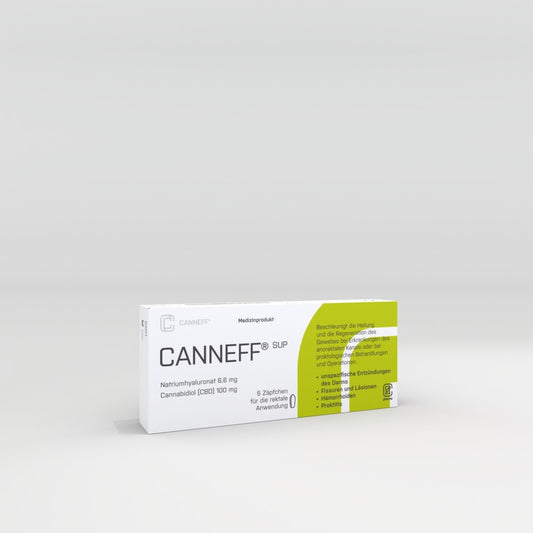
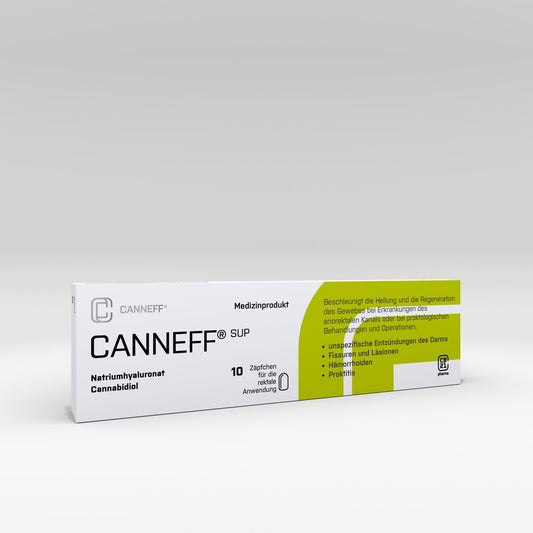
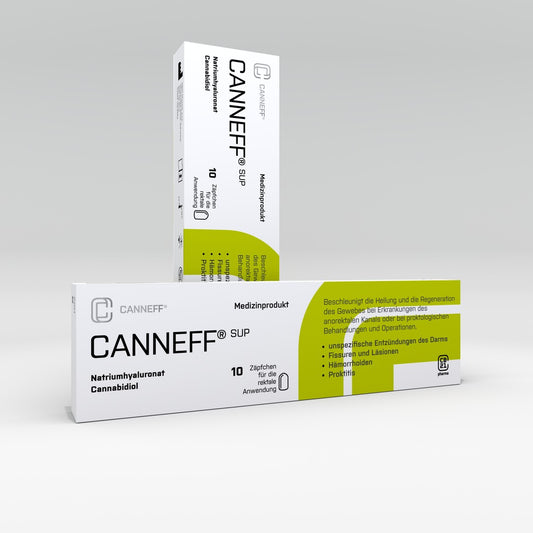
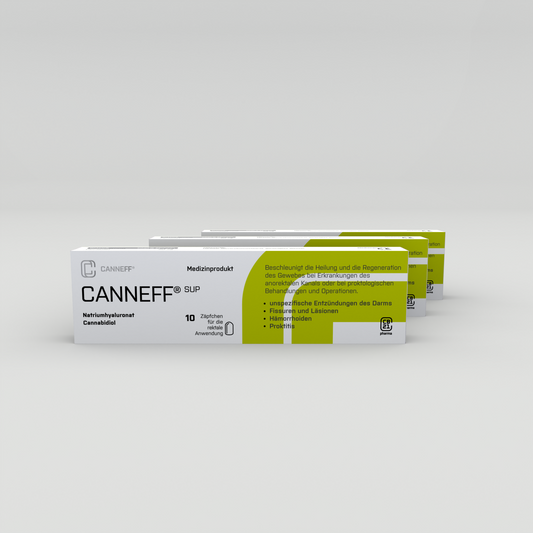
In addition to general measures, special products can promote healing and relieve symptoms. CANNEFF® SUP suppositories are an innovative solution combining cannabidiol (CBD) and hyaluronic acid. CBD and hyaluronic acid have anti-inflammatory effects, soothe irritated tissue, protect the mucous membrane, and provide moisture. The suppositories help effectively relieve symptoms of hemorrhoids such as itching and burning and promote tissue regeneration. To effectively treat hemorrhoids, find the right medical product here.
More tips for Hemorrhoids Grade I
Additionally, sitz baths with warm water or anti-inflammatory additives like chamomile can help reduce discomfort. Avoid irritating products such as perfumed toilet paper or harsh soaps to prevent further irritation of the sensitive area.
Hemorrhoids Grade I can be well controlled with these measures. However, if symptoms persist or worsen, a doctor should be consulted to obtain a more precise diagnosis and explore further treatment options.
Read more about treatment of Grade I hemorrhoids.
How can Grade I hemorrhoids be prevented?
Grade I hemorrhoids can be effectively prevented through a healthy lifestyle and targeted measures. The goal is to minimize pressure on the vascular cushions in the anal canal and promote bowel health.
Tips for preventing Grade I hemorrhoids.
Fiber-rich diet: Eat whole grains, fruits, vegetables, and legumes daily. Fiber promotes soft stool consistency and facilitates bowel movements, avoiding strong straining.
Adequate fluid intake: Drink at least 1.5 to 2 liters of water or unsweetened herbal teas per day. Fluids support the fiber's effect and prevent constipation.
Regular exercise: Activities like walking, swimming, or yoga stimulate bowel activity and reduce pressure on the anal canal.
Especially with sedentary work, regular standing up and moving is important.
Improved toilet habits: Avoid straining and prolonged sitting on the toilet. Go immediately when you feel the urge and avoid unnecessary delays.
Gentle anal hygiene: Clean the anal area after bowel movements with lukewarm water or a damp, unscented cloth.
Do not use harsh soaps or perfumed toilet paper to avoid irritation.
Avoidance of risk factors: Overweight is reduced through a healthy diet and exercise, which decreases pressure on the anal canal.
Avoid lifting heavy loads to minimize unnecessary pressure on the vascular cushions.
Preventive support through products
Products like CANNEFF® SUP Suppositories can be used preventively to strengthen the mucous membrane in the anal canal. The contained hyaluronic acid provides moisture and protects the mucous membrane from irritation. Cannabidiol (CBD) additionally has anti-inflammatory and soothing effects, reducing the risk of discomfort.
With these preventive measures, Grade I hemorrhoids can often be completely avoided or at least controlled early. A conscious approach to diet, exercise, and hygiene is key to prevention.

When should you see a doctor for grade I hemorrhoids?
In most cases, grade I hemorrhoids are harmless and can be treated with simple measures such as a high-fiber diet, adequate fluid intake, and gentle anal hygiene. However, a doctor’s visit is advisable in certain situations to clarify symptoms and rule out serious causes.
When should a doctor be consulted?
Persistent or increasing symptoms: If symptoms like itching, burning, or bleeding persist for more than two weeks despite self-treatment, a doctor should be consulted. Especially bleeding can also indicate other conditions such as anal fissures, polyps, or inflammatory bowel diseases. Read more here about hemorrhoids bleeding.
Severe bleeding: If bright red bleeding occurs regularly or extensively, a medical examination is important to exclude serious causes such as tumors in the intestine.
Pain or swelling: Although grade I hemorrhoids are rarely painful, unusual pain or swelling should be examined to rule out other possible complications such as thrombosis.
Recurring symptoms: If hemorrhoids occur frequently, a doctor can investigate the causes and provide targeted recommendations for prevention.
Uncertainty in diagnosis: If symptoms are unclear or there is uncertainty whether it is actually hemorrhoids, a doctor’s visit is recommended to obtain an accurate diagnosis.
How can the doctor help?
A doctor, usually a proctologist or general practitioner, will initiate the following steps.
Medical history: Ask about your symptoms, dietary, and toilet habits.
Examination: Assess hemorrhoids by digital examination or proctoscopy.
Recommend treatment: If necessary, prescribe medical products or minimally invasive treatments such as ointments or suppositories like CANNEFF® SUP that have anti-inflammatory effects and can regenerate the mucous membrane. A doctor's visit for Grade I hemorrhoids is important if symptoms persist, worsen, or atypical symptoms such as heavy bleeding occur. Early evaluation provides clarity and facilitates targeted treatment to avoid later complications.
Do Grade I hemorrhoids cause bleeding?
Grade I hemorrhoids can occasionally cause bleeding, but it is usually mild and harmless. The bleeding typically appears as bright red traces on toilet paper or on the surface of the stool. It occurs when hard stool irritates or injures the sensitive vascular cushions in the anal canal.
Typical characteristics of bleeding with Grade I hemorrhoids:
Color: The blood is bright red, indicating it comes from the lower part of the anal canal.
Amount: The bleeding is usually minor and drips drop by drop.
Painlessness: Bleeding rarely occurs with pain because Grade I hemorrhoids are still fully located in the pain-insensitive anal canal.
When should you be concerned?
Frequent or heavy bleeding: Repeated bleeding in larger amounts should be medically evaluated to exclude other conditions such as anal fissures, polyps, or inflammatory bowel diseases.
Blood mixed in stool: If blood appears not only on the stool but also mixed with it, this may indicate serious conditions such as colon cancer.
Prevention and treatment
A high-fiber diet and adequate fluid intake help keep stool soft and minimize the risk of bleeding.
Sitz baths with anti-inflammatory additives like chamomile or the use of products such as CANNEFF® SUP suppositories support the regeneration of the sensitive mucous membrane and prevent further irritation.
In summary, bleeding can occur with Grade I hemorrhoids but is usually harmless. However, regular bleeding or additional symptoms should be medically evaluated to rule out other causes.