

What are hemorrhoids and when is treatment necessary?
Hemorrhoids are sponge-like vascular cushions at the exit of the rectum that everyone has. These vessels consist of a network of blood vessels and play an important role in sealing the intestine. Together with the sphincter muscle, they ensure that the anus remains reliably closed, allowing controlled retention and emptying of the bowel. In their normal state, hemorrhoids are neither palpable nor visible and cause no discomfort.
When does hemorrhoidal disease occur?
Hemorrhoidal disease, often referred to as "enlarged hemorrhoids," occurs when these vascular cushions enlarge and expand. This can be promoted by factors such as chronic constipation, straining during bowel movements, a low-fiber diet, or lack of exercise. During pregnancy and in cases of overweight, the risk can also increase due to increased pressure on the pelvic area.
When is treatment necessary?
Whether and when treatment is necessary depends on the extent and severity of the hemorrhoids. Medical professionals distinguish four grades:
Grade I: Mild enlargement, not visible or palpable. Occasional slight bleeding or a feeling of discomfort may occur.
Grade II: Hemorrhoids Grade II temporarily protrude during bowel movements but retract on their own. Symptoms such as itching, burning, or slight moisture are possible.
Grade III: Hemorrhoids Grade III permanently protrude and must be manually pushed back. Typical symptoms include itching, burning, and pain.
Grade IV: Hemorrhoids Grade IV remain permanently prolapsed and can no longer be pushed back. At this stage, more severe symptoms such as bleeding, moisture, and pain may occur.
For grades I and II, conservative therapy with lifestyle and dietary adjustments is usually sufficient to relieve symptoms. From grade III, medical intervention is often necessary, and in most cases, surgery is unavoidable at grade IV. As soon as symptoms such as blood in the stool, persistent itching, burning, or severe pain occur, it is advisable to consult a doctor to start targeted treatment and rule out other possible causes.

What conservative treatment options are available for early-stage hemorrhoids?
In the early stages of hemorrhoids (grade I and II), it is possible to effectively relieve symptoms with conservative, non-surgical measures. These approaches aim to reduce symptoms such as itching, burning, and occasional bleeding, and to prevent the progression of hemorrhoidal disease. The main conservative treatment options are:
Dietary Adjustment
A high-fiber diet is one of the key measures to relieve hemorrhoid symptoms and prevent constipation. Foods such as whole grains, vegetables, fruits, and legumes promote a soft, formed stool consistency, which minimizes straining during bowel movements and reduces pressure on the hemorrhoids. Additionally, psyllium husks or flaxseeds can be taken, which swell in the intestines and gently increase stool volume. It is important to ensure adequate fluid intake (at least 1.5 to 2 liters daily).
Improvement of Toilet Habits
To reduce pressure on the hemorrhoids, the urge to go to the toilet should not be delayed. At the same time, it is advisable to take your time during bowel movements and avoid straining. It is also sensible to keep sitting on the toilet as short as possible and to avoid “rituals” such as reading or using the phone during this time.
Anal hygiene
Careful and gentle cleaning of the anal area can help avoid irritation. For this, toilet paper can be slightly moistened to gently cleanse the skin. Alternatively, a bidet can be used. Irritating substances in moist toilet paper or washing lotions should be avoided as they can further stress the sensitive skin around the anus and promote allergies or inflammation.
Sitzbaths
Sitzbaths with lukewarm water, optionally supplemented with anti-inflammatory additives such as chamomile, oak bark, or witch hazel, are a proven home remedy. A sitzbath should last about 10 to 15 minutes and can be used several times a week to relieve discomfort.
Ointments, creams, and suppositories
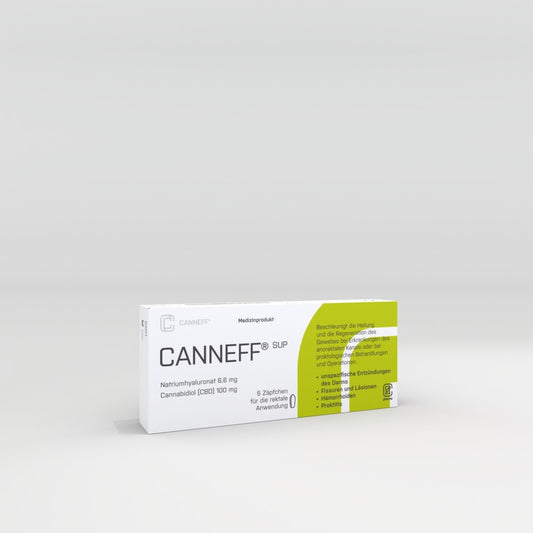
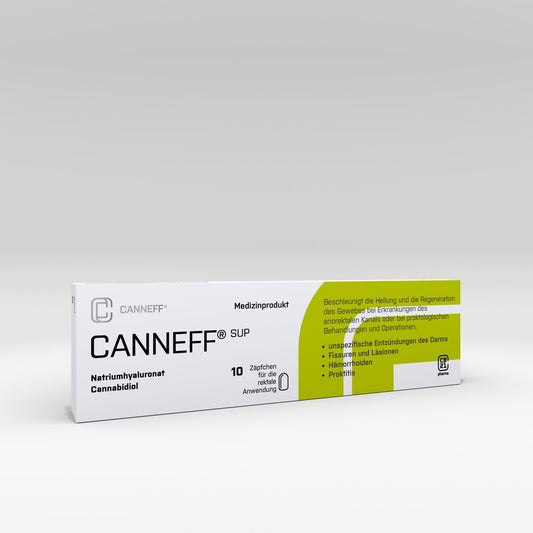
Special hemorrhoid ointments or creams as well as suppositories are available in pharmacies and can provide short-term relief for itching and mild pain. Ointments with active ingredients such as zinc, witch hazel, or aloe vera soothe the skin, have anti-inflammatory effects, and dry out weeping areas. Some over-the-counter ointments also contain lidocaine or other local anesthetics to temporarily relieve pain. For more severe inflammations, doctors may prescribe corticosteroid creams, which should only be used for a limited time. Suppositories like CANNEFF SUP contain hyaluronic acid and CBD and relieve pain, itching, and inflammation in hemorrhoids. After postoperative procedures, CANNEFF SUP suppositories can also be used to accelerate healing.
Light exercise
Regular exercise, such as walking, cycling, or swimming, supports bowel activity and can prevent constipation. Especially with a sedentary job, it is advisable to stand up and move regularly to reduce pressure in the pelvic area.
When should a doctor be consulted?
If symptoms persist or worsen despite these conservative measures, it is advisable to seek medical help. A proctologist or gastroenterologist can determine whether further therapies such as sclerotherapy (hardening) or rubber band ligation are appropriate to provide lasting relief.
What role do diet and lifestyle play in hemorrhoid treatment?
Diet and lifestyle are crucial factors in the treatment and prevention of hemorrhoids, especially in the early stages. They significantly help to relieve symptoms, prevent the progression of hemorrhoidal disease, and avoid new complaints.
Fiber-rich diet for stool regulation
A fiber-rich diet is one of the most important measures to relieve hemorrhoid symptoms. Fibers found in foods such as whole grains, fruits, vegetables, nuts, and legumes bind water in the intestines and increase stool volume. This makes the stool softer, minimizing straining on the toilet and reducing pressure on the hemorrhoids. For optimal effect, about 30 to 40 grams of fiber should be consumed daily.
Additionally, psyllium husks or flaxseeds as natural swelling agents support bowel activity and contribute to well-formed stools. However, when consuming these fiber-rich foods, it is important to drink enough water, as otherwise they could worsen constipation.
Adequate fluid intake
A regular fluid intake of 1.5 to 2 liters per day is essential to support the effect of fiber and prevent constipation. Water and unsweetened herbal teas are ideal because they stimulate the intestines and keep stool soft. Sugary drinks or excessive coffee consumption should be limited, as they can be dehydrating and tend to harden stool.
Healthy toilet habits
A conscious change in toilet habits also plays an important role. To reduce pressure on the hemorrhoids, affected individuals should not delay going to the toilet, but also should not go "preventively" out of habit. It is advisable to take time and avoid straining. Sitting too long on the toilet should also be avoided, as it increases pressure on the hemorrhoids. Simple behavioral changes and mindfulness can bring significant improvement here.
Regular exercise
Lack of exercise and prolonged sitting are risk factors for hemorrhoidal disease. Regular exercise promotes digestion and prevents constipation, which in turn can lead to hemorrhoids. Activities such as walking, cycling, swimming, or light gymnastics are especially recommended. They support blood circulation and help reduce pressure on the pelvic area.
Especially people with sedentary jobs should stretch regularly or take short walks to stimulate circulation and promote blood flow. Overweight individuals can also reduce their weight through exercise and a healthy diet, thereby reducing the pressure on the hemorrhoids.
Avoidance of irritating foods
Some foods can worsen hemorrhoid symptoms, especially if they promote inflammation or itching. Particularly spicy seasonings, heavily processed or fatty foods, and alcohol are often problematic for hemorrhoid sufferers and should be avoided if possible. Instead, a gentle, nutrient-rich diet and avoiding hard-to-digest foods are recommended.
Which ointments, creams, suppositories, and home remedies help with hemorrhoids?
To relieve hemorrhoid symptoms in the early stages (grade I and II), various ointments, creams, suppositories, and home remedies are available that can reduce symptoms such as itching, burning, and light bleeding.
Ointments and creams
Cortisone-containing ointments: These preparations help with acute inflammation and itching. Cortisone has an anti-inflammatory effect but should only be used for a short time to avoid skin irritation.
Pain-relieving and numbing creams: Local anesthetics like lidocaine, which are contained in some hemorrhoid creams, provide rapid relief from pain and itching. However, these creams are also intended for short-term use.
Zinc and panthenol: These ingredients soothe the skin and promote the healing of irritated skin areas. Zinc also has a slightly drying effect and helps with weeping complaints.
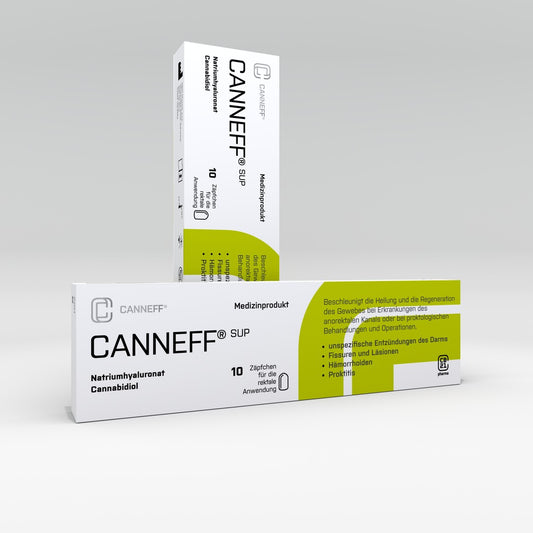
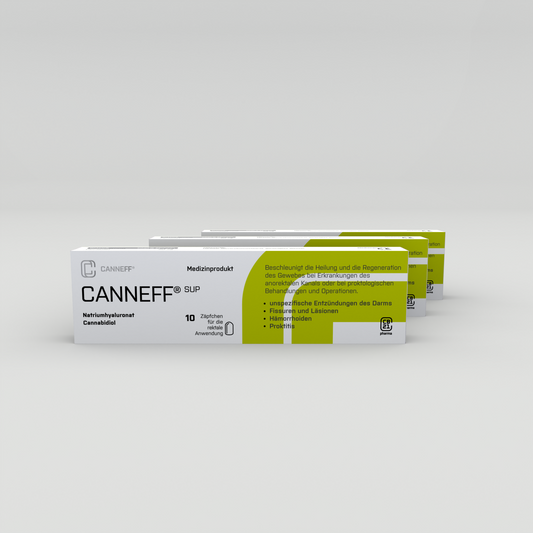
CANNEFF SUP rectal suppositories with cannabidiol (CBD) and hyaluronic acid
CANNEFF SUP is a modern rectal suppository for the supportive treatment of hemorrhoids and other complaints in the anal area. These suppositories combine cannabidiol (CBD) and hyaluronic acid and offer an innovative alternative to conventional hemorrhoid preparations. The product is used to support healing and tissue regeneration in hemorrhoids and after colorectal surgeries.
Cannabidiol (CBD): CBD is a non-psychotropic cannabinoid from the hemp plant that has antioxidant and anti-inflammatory properties. It helps neutralize reactive oxygen species and supports cell regeneration. Thus, CBD can reduce inflammation in the anal area and contribute to pain relief.
Hyaluronic acid: Hyaluronic acid ensures moisture retention in the mucous membrane and promotes wound healing. Thanks to a special emulsion matrix in which the hyaluronic acid is present in aqueous solution, CANNEFF SUP offers five times increased active ingredient delivery compared to conventional suppositories with hyaluronic acid. This technology promotes optimal absorption through the mucous membrane and accelerates healing.
Applications of CANNEFF SUP:
- Relief of pain and itching in internal and external hemorrhoids
- Support for healing of fissures, proctitis, and after surgeries
- Treatment of nonspecific inflammation in the intestinal area
- Relief for inflammation, fistulas, and other anal diseases
The suppositories are available over the counter and are used daily before bedtime. The effect occurs within about 60 minutes.
Home remedies
Sitz baths: Sitz baths with lukewarm water and anti-inflammatory additives such as chamomile, oak bark, or tea tree oil are a proven home remedy for hemorrhoids. They relieve itching, reduce inflammation, and promote blood circulation in the affected area.
Psyllium seeds: Psyllium seeds are a natural remedy for constipation. They swell in the intestines, increase stool volume, and help soften the stool, minimizing straining and reducing pressure on the hemorrhoids.
Cooling compresses: Compresses with cold water or chamomile tea can relieve acute swelling and pain in the anal area.
Aloe Vera: Aloe vera gel soothes irritated skin and has anti-inflammatory effects. It can be gently applied to the affected areas after a sitz bath.
How are CANNEFF suppositories used to treat hemorrhoids?
CANNEFF SUP rectal suppositories with cannabidiol (CBD) and hyaluronic acid are specially developed to support the treatment of hemorrhoids and other anal canal complaints. These suppositories promote healing and relief in hemorrhoids, proctitis, anal fissures, and after colorectal procedures.
Application of CANNEFF SUP suppositories:
Hygiene: Wash your hands thoroughly before and after use to ensure hygienic application.
Preparation: Separate one suppository from the strip at the perforated line. Make sure the suppository is undamaged and the expiration date has not passed.
Opening: Carefully tear open the packaging by pulling it apart and remove the suppository.
Insertion: Insert the suppository with the narrow end first into the rectum. Ideally, apply the suppository in the evening before bedtime so it can take effect overnight.
Dosage and duration of use for CANNEFF SUP suppositories:
The recommended dosage is one suppository per day, preferably before bedtime. The treatment duration depends on the type and severity of the symptoms:
For internal and external hemorrhoids: One suppository daily for 5 to 15 days until symptoms subside.
For healing after colorectal surgeries or with anal fissures: One suppository daily for 20 to 30 days.
For nonspecific inflammations such as proctitis or cryptitis: One suppository daily for 25 to 30 days.
Benefits of CANNEFF SUP Suppositories:
CANNEFF SUP uses a patented emulsion matrix that enables improved release and absorption of active ingredients. The hyaluronic acid, already dissolved in water, is efficiently absorbed by the mucous membrane and helps retain moisture and regenerate tissue. Combined with cannabidiol (CBD), which has antioxidant and anti-inflammatory effects, the suppositories relieve pain, itching, and promote healing.
Safety instructions for CANNEFF SUP suppositories:
- Keep out of reach of children and do not ingest orally.
- Do not use if the packaging is damaged.
- If uncertain about usage and duration, consult a doctor.
CANNEFF SUP is available without a prescription and offers an innovative, gentle option for treating and regenerating tissue in cases of hemorrhoids and related anal complaints.
What is sclerotherapy and when is it used?
Sclerotherapy, also called sclerosing therapy or injection sclerotherapy, is a minimally invasive treatment method to reduce enlarged hemorrhoids. It is usually used for hemorrhoids in the early stages (grade I and II) and is especially suitable for patients for whom conservative treatments such as ointments and a high-fiber diet are not sufficiently effective.
Procedure of sclerotherapy
In sclerotherapy, a special solution, usually polidocanol or another sclerosing agent, is injected into the hemorrhoids. The procedure is performed under visual control with a proctoscope, a short viewing tube gently inserted into the anal canal. The injection causes a targeted inflammatory reaction in the tissue of the hemorrhoids. The substance leads to the formation of scar tissue and shrinkage of the hemorrhoidal cushion by reducing the blood supply to the enlarged hemorrhoid.
Advantages of sclerotherapy
Painless procedure: Since hemorrhoids have few pain receptors, sclerotherapy is usually painless and does not require anesthesia.
Outpatient procedure: The procedure takes only a few minutes and can be done on an outpatient basis, so no long recovery time is necessary.
Repeatability: If the hemorrhoids cause symptoms again, sclerotherapy can be performed again without any problem.
Applications of sclerotherapy
Sclerotherapy is primarily used for grade I and II hemorrhoids characterized by symptoms such as itching, burning, or mild bleeding. It is an option for patients whose hemorrhoids cannot be adequately treated with conservative measures such as dietary changes and ointment treatment.
In cases where hemorrhoids do not respond to sclerotherapy or in advanced hemorrhoids (grade III and IV), where the lumps protrude during bowel movements and do not retract on their own, other procedures such as rubber band ligation or surgical removal are usually more appropriate.
Risks and aftercare of sclerotherapy
Sclerotherapy is a safe procedure, but mild side effects can occasionally occur, including a feeling of pressure or slight bleeding. Less commonly, swelling or an anal thrombosis may develop. Usually, most patients recover quickly and can resume their usual activities on the same day.
In summary, sclerotherapy is a proven method to easily treat mild to moderate hemorrhoids. It is an effective and low-burden treatment option, especially for hemorrhoids in the early stages.
How does rubber band ligation work for the treatment of hemorrhoids?
Rubber band ligation, also called rubber ring ligation, is a proven, minimally invasive method for treating hemorrhoids in the middle stages, especially grades II and III. This method is often used when conservative treatments like ointments and lifestyle changes do not provide sufficient relief.
Procedure of rubber band ligation
In rubber band ligation, a small, tight rubber band is placed around the base of the hemorrhoid to cut off its blood supply. The procedure is performed with a special instrument called a ligator and under visual control using a proctoscope. There are two methods for placing the rubber band:
Suction of the hemorrhoid: The hemorrhoid is gently suctioned using the ligator, lifting it away from the surrounding tissue. Then a rubber band is slipped over the tissue to cut off the blood supply.
Direct grasping of the hemorrhoid: Alternatively, the hemorrhoid can be directly grasped with forceps before placing the band.
By cutting off the blood supply, the hemorrhoid tissue dies within a few days and is expelled along with the rubber band. The process is largely painless because the tissue inside the anal canal has few or no pain receptors.
Advantages of rubber band ligation
Outpatient procedure: The procedure takes only a few minutes and can be performed on an outpatient basis.
No need for anesthesia: Since the procedure is minimally painful, no anesthesia is required.
Short recovery time: Patients can usually return to their usual activities on the same day.
Applications of rubber band ligation
Rubber band ligation is mainly suitable for hemorrhoids in stages II and III that protrude during bowel movements but do not retract on their own into the anal canal. It can also be used in individual cases for advanced hemorrhoids (grade IV) when complete removal is not possible or desired.
Risks and possible side effects of rubber band ligation
Rubber band ligation is generally safe, but side effects can occasionally occur.
Mild bleeding: After the tissue is expelled, temporary bleeding may occur.
Pain and pressure sensation: Some patients experience a slight pressure or foreign body sensation in the anal area in the days following the procedure.
Complications: In rare cases, anal thromboses, infections, or heavy bleeding may occur. Medical advice should be sought if symptoms worsen.
Aftercare and further treatments following rubber band ligation
Rubber band ligation usually needs to be repeated several times to treat all enlarged hemorrhoids. The interval between treatments is typically about two weeks. Studies show that rubber band ligation has a high success rate for Grade II and III hemorrhoids and often provides significant and long-lasting symptom relief. In summary, rubber band ligation is an effective and minimally burdensome method to specifically and gently treat hemorrhoids.
When is surgery for hemorrhoids necessary?
Surgery for hemorrhoids is usually necessary when conservative and minimally invasive treatments such as sclerotherapy or rubber band ligation no longer provide adequate relief or when hemorrhoids are in an advanced stage (Grade III or IV). Here are the specific situations where surgical removal may be recommended:
Advanced stages (Grade III and IV)
Grade III: In third-degree hemorrhoids, the hemorrhoids protrude during bowel movements and physical activities and must be manually pushed back. If conservative treatments do not provide sufficient relief, surgery may be advisable.
Grade IV: At this stage, the hemorrhoids remain permanently outside the anal canal and can no longer be pushed back. This often leads to significant symptoms such as pain, bleeding, and an increased risk of inflammation and infections.
Chronic and severe symptoms
If hemorrhoids repeatedly cause severe symptoms such as persistent bleeding, intense pain, itching, and oozing, significantly reducing quality of life, surgery is often the most effective treatment method.
Complications
In some cases, hemorrhoids can cause complications such as anal thrombosis, inflammation, or strangulation. These can cause severe pain and swelling and often require surgical treatment to relieve the affected tissue and permanently eliminate the symptoms.
Insufficient success of conservative therapies
If conservative measures such as a high-fiber diet, medications, ointments, sclerotherapy, or rubber band ligation do not achieve the desired success, surgery may be necessary to achieve long-term relief.
What surgical procedures are available for treating advanced-stage hemorrhoids?
Stage IV hemorrhoids are severely enlarged hemorrhoids that have permanently prolapsed from the anal canal and can no longer be manually pushed back. At this stage, symptoms are often significant and impair the quality of life of those affected due to pain, bleeding, itching, and a foreign body sensation. Treatment options therefore usually focus on surgical interventions, as conservative or minimally invasive methods such as ointments, sitz baths, or rubber band ligation often no longer provide sufficient relief at this advanced stage.
Classic hemorrhoidectomy (Milligan-Morgan or Ferguson method)
The hemorrhoidal nodules are surgically completely removed. In the Milligan-Morgan method, the wound remains open after removal, while in the Ferguson method it is sutured. This procedure allows for complete removal of the hemorrhoids and is especially suitable for very advanced cases. Since the tissue is removed, the risk of recurrence is reduced. As it is an invasive surgery, the healing phase is longer, and postoperative pain may occur. In some cases, bleeding or difficulties with urination are possible side effects.
Stapler hemorrhoidopexy (Longo procedure)
In the stapler method, the prolapsed hemorrhoidal tissue is pulled back into the anal canal and fixed using a special stapling device. A mucosal ring incision is made to reduce blood flow and restore the tissue to its natural position. This method is generally less painful than the classic hemorrhoidectomy because the procedure takes place above the pain-sensitive area. Recovery time is shorter, and patients can often return to their daily activities more quickly. The Longo method is especially suitable for hemorrhoids that occur in multiple locations. In very severe cases, the hemorrhoids may reoccur after some time.
Hemorrhoidal Artery Ligation (HAL) with Recto-Anal Repair (RAR)
Hemorrhoidal artery ligation (HAL) is performed using an ultrasound device that locates the arteries supplying blood to the hemorrhoids. These arteries are then tied off to reduce blood flow. Additionally, the procedure can be supplemented by Recto-Anal Repair (RAR), where the prolapsed tissue is fixed with sutures. The HAL-RAR method is minimally invasive and associated with less postoperative pain. Recovery time is often shorter, and the anal canal remains functionally intact. This method is especially suitable for patients whose hemorrhoids are not too enlarged and the surrounding tissue is intact. In very advanced hemorrhoids, the method may be less effective than hemorrhoidectomy.
Laser Hemorrhoidoplasty
In laser hemorrhoidoplasty, a laser is used to shrink and cauterize the tissue of the hemorrhoids. The procedure is minimally invasive, and the laser acts directly on the affected areas. This method is very precise and usually results in less tissue damage. Postoperative pain is often less, and patients can return to their daily activities more quickly. The laser method is often more expensive than other procedures and is not always available. It may also be less effective for very advanced grade IV hemorrhoids. Thrombectomy and treatment of complications
In acute cases where hemorrhoids are additionally inflamed due to thrombosis or strangulation, a thrombectomy may be necessary to remove the clot. This can often be performed as an immediate measure to relieve pain and treat acute symptoms before further surgery to remove hemorrhoids is carried out.
For stage IV hemorrhoids, surgical procedures are the preferred treatment method. The classic hemorrhoidectomy remains the most effective and permanent solution, while stapled hemorrhoidopexy offers a less painful alternative for selected patients. The choice of procedure depends on individual factors such as the severity of symptoms, overall health, and specific anatomical conditions. An experienced proctologist can recommend the best option and customize the treatment to the patient's needs.
Postoperative care
A hemorrhoid operation requires a certain recovery period during which painkillers and gentle hygiene help to protect the tissue and promote healing. Patients should avoid heavy physical exertion for a few days and follow a high-fiber diet to keep stools soft and avoid excessive straining. Surgery is the best option for advanced or severely troublesome hemorrhoids to achieve lasting relief and prevent recurring symptoms. By choosing the appropriate procedure, the doctor can tailor the treatment to the patient and select a method that offers the best chances of success for the individual case.
How do the Milligan-Morgan and Ferguson methods differ?
The Milligan-Morgan and Ferguson methods are two classic surgical procedures for removing hemorrhoids, which mainly differ in the type of wound treatment after hemorrhoid removal. Both methods are proven approaches and are frequently used for advanced hemorrhoids (grade III and IV) that cannot be adequately treated with conservative measures.
Milligan-Morgan Method
Procedure: In the Milligan-Morgan technique, the enlarged hemorrhoidal nodes are completely removed using a scalpel or electrosurgical knife. The procedure is performed at several points in the anal canal, and the affected tissue sections are excised.
Wound treatment: The wounds remain open after removal, allowing more time for the natural healing process and reducing the risk of infection. The open wound areas heal on their own and gradually close as the tissue grows back.
Advantages: Since no sutures are placed, there is a lower risk of complications from suture problems, bruising, or infections. The wound areas naturally heal from the inside out.
Disadvantages: Wound healing often takes longer, and patients may experience postoperative pain during bowel movements and in the anal area, which must be treated with painkillers.
Ferguson method
Procedure: Similar to the Milligan-Morgan method, the hemorrhoidal nodes are completely removed. The procedure is also performed with a scalpel or electrosurgical knife and aims to remove the enlarged tissue in several places.
Wound treatment: Unlike the Milligan-Morgan method, the wound is sutured after removal, so the affected tissue sections are closed. This is usually done with absorbable suture material that later dissolves on its own.
Advantages: Closed wound treatment often leads to faster healing and less pain because the open wound areas are covered by the suture. Patients often find closing the wound more comfortable.
Disadvantages: Suturing the wound can increase the risk of suture complications, infections, or bruising. Some patients develop scarring that can lead to some narrowing of the anal canal.
Comparison and use of the methods
Both methods are established in surgery and aim to thoroughly and effectively remove hemorrhoids. The choice of method often depends on the patient's individual conditions and the preferences of the treating surgeon.
The Milligan-Morgan method is preferred when a longer but safe healing through natural wound closure is desired, and the openness of the wound is seen as an advantage for healing. The Ferguson method can be beneficial when a faster recovery is desired and the suture techniques offer a low risk of suture complications. The main difference between the Milligan-Morgan and Ferguson methods lies in wound treatment. While the wounds remain open with the Milligan-Morgan technique, they are sutured with the Ferguson technique. Both methods are proven, and the choice depends on the individual needs of the patient and the surgeon's experience.
What is hemorrhoidal artery ligation (HAL) and who is it suitable for?
Hemorrhoidal Artery Ligation (HAL) is a modern, minimally invasive procedure for treating hemorrhoids that aims to interrupt the blood supply to the enlarged hemorrhoids. This causes the hemorrhoidal tissue to no longer receive sufficient blood and gradually shrink. The method is particularly gentle and allows for a quick recovery, which is why it is considered an alternative to traditional hemorrhoid surgery for many patients.
How does Hemorrhoidal Artery Ligation (HAL) work?
In the HAL method, the arteries supplying blood to the hemorrhoidal cushions are identified using a special proctoscope with an ultrasound probe. The procedure is as follows:
Identification of the arteries: The ultrasound probe in the proctoscope precisely locates the arterial supply of the hemorrhoids.
Ligation of the arteries: The identified arteries are then ligated with a suture, interrupting the blood supply to the hemorrhoidal nodes. This leads to a reduction in blood flow and causes the tissue to gradually shrink.
Possible additional fixation: In patients with a mucosal prolapse, the doctor can additionally fix and tighten the mucosa. This procedure is called HAL-RAR (Recto-Anal Repair) and complements the HAL method.
The HAL technique is low-pain because the ligation of the arteries takes place in an area of the anal canal that is less sensitive to pain. The procedure usually lasts 20 to 40 minutes and is performed either on an outpatient basis or with a short hospital stay.
Who is the HAL method suitable for?
The HAL method is especially suitable for patients with stage II and III hemorrhoids, where the hemorrhoids regularly protrude outward but can still retract into the anal canal or be manually pushed back. HAL is particularly suitable when:
- Symptoms such as bleeding, itching, and swelling occur, and conservative treatments have not provided sufficient relief.
- A mucosal prolapse (prolapse) is present, which can be additionally fixed using the HAL-RAR technique.
- A minimally invasive procedure is desired, as the HAL method is less invasive than conventional hemorrhoid surgeries and allows for faster recovery.
Advantages of the HAL method
Low pain: Because the artery ligation takes place in a less sensitive area of the anal canal, the HAL technique is generally less painful.
Rapid recovery: Patients can usually resume their daily activities on the day of the procedure or the following day.
Low risk of complications: Compared to traditional surgeries, the risk of infections or long-term discomfort is lower.
Preservation of hemorrhoid function: Since the hemorrhoids are not removed but only reduced in size, their natural function as cushions for fine sealing of the anal canal is preserved.
Limitations and restrictions of the HAL method
The HAL method is less suitable for:
- Grade IV hemorrhoids where the tissue permanently protrudes and can no longer be manually pushed back. In these cases, conventional surgical procedures like hemorrhoidectomy or stapler surgery are often more appropriate.
- Severe complications such as thrombosis or acute inflammations that require direct removal of the affected hemorrhoids.
The HAL method offers an effective, minimally invasive solution for patients with mid-stage hemorrhoids. It selectively restricts blood flow to the hemorrhoids, thereby reducing their size and associated symptoms. The HAL method is an attractive alternative to traditional surgery, especially for patients seeking a less invasive treatment with faster recovery.
When is stapler hemorrhoidopexy (Longo procedure) used?
Stapler hemorrhoidopexy, also known as the Longo procedure, is a modern surgical treatment for hemorrhoids. This method is especially suitable for grade III hemorrhoids and sometimes grade IV, where the tissue is significantly enlarged and protrudes permanently or under strain (prolapse). The Longo procedure aims to reposition the hemorrhoidal tissue to its natural location without removing the hemorrhoidal cushions themselves.
How stapler hemorrhoidopexy works
Lifting and fixation of the tissue: Using a special stapling device called a stapler, a ring of excess mucosa above the hemorrhoids is removed. This pulls the prolapsed hemorrhoidal tissue back up into the anal canal and fixes it there.
Cutting off blood supply: Removing the mucosa also reduces blood flow to the enlarged hemorrhoids. This causes the hemorrhoids to shrink and prevents them from swelling as much.
Protection of the anal canal: Since the fixation is above the pain-sensitive area in the anal canal, the Longo method is generally less painful than conventional surgeries that remove the hemorrhoids.
Who is stapler hemorrhoidopexy suitable for?
Patients with Grade III hemorrhoids: These hemorrhoids protrude during bowel movements and must be manually pushed back. The Longo method permanently fixes them in their natural position.
Certain cases of Grade IV: If the hemorrhoids are permanently prolapsed but the surrounding tissue is not yet fully damaged, the stapler method can also be applied.
Multiple enlarged hemorrhoids: Because the method causes an even "lifting" of the tissue, it is especially suitable when hemorrhoids occur in multiple locations.
Advantages of the Longo method
Low pain: Since the suture is placed above the sensitive anal canal, most patients find the operation less painful.
Short recovery time: Patients can usually return to their normal activities within a few days, often within a week.
Preservation of hemorrhoid function: The hemorrhoids remain intact and continue to function as cushions to seal the anal canal.
Limits and restrictions of stapler hemorrhoidopexy
Stapler hemorrhoidopexy is not suitable for all hemorrhoid stages and types:
Not for Grade I and II hemorrhoids: For less severely enlarged hemorrhoids, conservative or minimally invasive procedures such as rubber band ligation or sclerotherapy are more appropriate and less invasive.
Not suitable for very large hemorrhoids (Grade IV) with tissue damage: If the hemorrhoidal tissue and surrounding structures are severely damaged, procedures involving complete removal, such as the Milligan-Morgan method, are often the better choice.
The stapled hemorrhoidopexy according to Longo offers an effective and low-pain treatment for hemorrhoids in advanced stages with prolapse. It is especially suitable for patients seeking a gentle method with a quick recovery time while preserving the function of the hemorrhoids as vascular cushions.
What should patients consider after hemorrhoid treatment?
After hemorrhoid treatment, whether conservative therapy or surgery, good aftercare is crucial to promote healing, relieve discomfort, and minimize the risk of recurrence. The following tips help support the healing process and avoid complications.
Hygiene and care of the anal area
Gentle cleaning: The anal area should be carefully but gently cleaned after each bowel movement. Ideally, use lukewarm water and avoid aggressive rubbing. Moist, unscented toilet paper or washcloths can help with cleaning.
Avoid irritating products: Avoid soaps, perfumed, or alcohol-containing products as they can further irritate the skin.
Nutrition and fluid intake
High-fiber diet: A fiber-rich diet promotes soft stools and prevents constipation. Recommended foods include whole grains, vegetables, legumes, and fruit.
Adequate fluid intake: Drinking at least 1.5 to 2 liters daily (ideally water or unsweetened tea) helps keep stools soft and facilitates bowel movements.
Avoid constipating foods: Reduce white bread, chocolate, and fatty foods as they can promote constipation.
Gentle toilet habits
Short toilet sessions: Avoid sitting and straining on the toilet for long periods. Instead, bowel movements should be relaxed and without time pressure.
Do not suppress bowel movements: Do not wait too long to use the toilet when you feel the urge, to avoid unnecessary straining.
Pain management and wound care
Painkillers: Painkillers can be taken if needed, but only after consulting your doctor. Local anesthetics in ointment form are also often helpful to relieve symptoms.
Sitz baths: Sitz baths with lukewarm water and possibly anti-inflammatory additives like chamomile or oak bark can support the healing process and relieve pain. However, these should only be used after consulting your doctor.

Use of CANNEFF SUP suppositories to support healing
CANNEFF SUP rectal suppositories contain cannabidiol (CBD) and hyaluronic acid and are specially designed to support the healing process in the anal canal. They are suitable as an adjunct treatment for internal and external hemorrhoids as well as after proctological procedures. Cannabidiol acts as an antioxidant and anti-inflammatory agent, supporting healing and protecting tissue from reactive oxygen species. Hyaluronic acid ensures good moisture of the mucous membrane, contributing to pain relief and tissue regeneration. One suppository is best inserted into the anal canal in the evening before bedtime to ensure optimal overnight effect. Depending on the severity of symptoms, it is recommended to use CANNEFF SUP daily for 5 to 15 days. For postoperative complaints or fissures, treatment can be extended up to 30 days.
Regular exercise
Gentle exercises like walking promote bowel movement and prevent constipation. However, avoid heavy lifting and intense training during the early recovery phase. If you are recovering from surgery, it is advisable to gradually resume daily activities and pay attention to your body's signals.
Regular follow-up appointments
Doctor visits: Keep all scheduled follow-up appointments to monitor healing and detect any complications early. If new or worsening symptoms occur, you should contact your doctor immediately.