

What alternative treatment methods are there for anal fistulas?
The treatment options for an anal fistula depend on its location, depth, and cause of the fistula. While superficial fistulas can sometimes heal without surgery, deeper or complex fistulas usually can only be completely eliminated through surgical intervention.
Alternative and non-surgical methods include:
|
Treatment method |
Mode of action |
Scope of application |
|
Laser therapy (FiLaC) |
Gentle closure of the fistula using heat |
Minimally invasive alternative to surgery |
|
Fibrin glue |
Seals the fistula tract with biological glue |
Superficial or simple fistulas |
|
Stem cell therapy |
Promotes tissue regeneration and inhibits inflammation |
Chronic fistulas, Crohn's disease |
|
Seton therapy |
Controlled opening of the fistula for slow healing |
Deeper, complex fistulas |
|
Acupuncture & TCM |
Anti-inflammatory, improves gut health |
Supplementary to therapy |
|
Ozone & autologous blood therapy |
Antiseptic and regenerative effects |
Supportive for chronic fistulas |
|
Herbal ointments & suppositories |
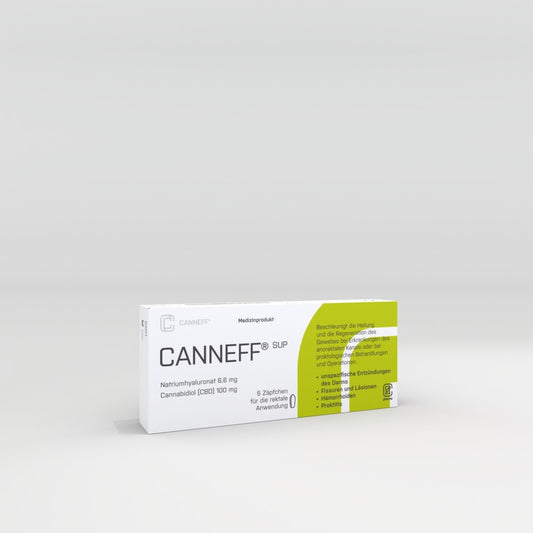
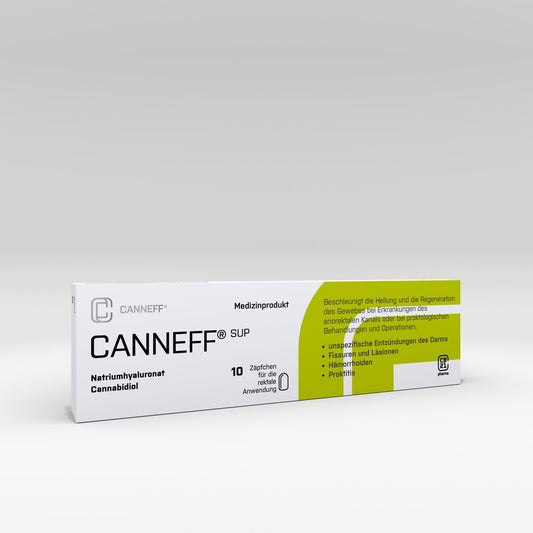
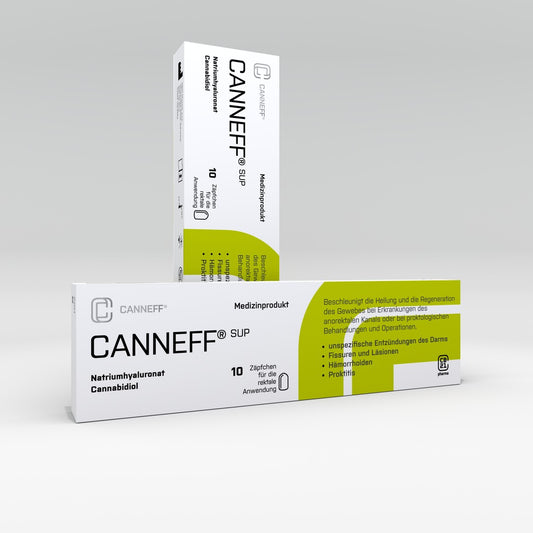
Anti-inflammatory, pain-relieving (e.g., CANNEFF® SUP suppositories) |
Relief of anal fistula symptoms |
|
Nutrition & gut flora optimization |
Soft stool, reduction of inflammatory processes |
Prevention and support of healing |
Not all of these methods can replace surgery, but they can relieve the symptoms of anal fistulas and accelerate healing. The ideal coordination of therapeutic measures is, of course, done with the treating physician. Read more about diagnosis and examinations in the blog post about the doctor's visit for anal fistulas. In the blog post on herbal treatment of fistulas, you will find further information on herbal remedies and home treatments.
Can an anal fistula heal without surgery?
Spontaneous healing of an anal fistula is extremely rare because the connecting tract between the intestine and skin usually does not close on its own. Smaller, superficial fistulas can heal on their own under optimal conditions and with intensive care.
Factors that spontaneous healing favor:
-
Very small, subanodermal fistulas (directly under the skin)
-
No purulent Anal abscess or severe inflammation
-
Good wound hygiene & anti-inflammatory measures
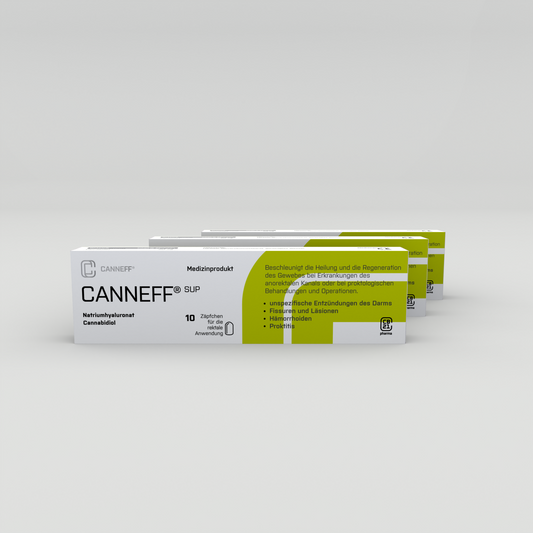
Healing can be supported by sitz baths, anti-inflammatory plant compounds, and CANNEFF® SUP suppositories. These contain CBD and hyaluronic acid, a combination that reduces inflammation and relieves pain. Read more here about the treatment of anal fistulas with suppositories. The rectal suppositories are also available in the CANNEFF® Anal Fistula and Anal Abscess Value Package in the webshop.
When is surgery unavoidable?
-
Deep-seated or transsphincteric fistulas (through the sphincter muscle)
-
Chronic fistulas with repeated infections
-
Pain, discharge, or fever
How effective are laser therapy or tissue adhesive as alternatives to surgery?
Laser therapy (FiLaC – Fistula Laser Closure) as a modern alternative
Laser therapy (FiLaC) is an innovative, minimally invasive method to precisely close anal fistulas without the need for a surgical incision. A thin laser fiber catheter is inserted into the fistula tract, gently sealing the surrounding tissue from the inside. The thermal energy of the laser causes a controlled shrinkage of the fistula tract while preserving the healthy tissue.
A key advantage of this method is the preservation of the sphincter muscle, which significantly reduces the risk of fecal incontinence. Unlike traditional surgical procedures, wound healing after the FiLaC method is much faster, and there are no open wounds that need care for weeks. Patients benefit from less postoperative pain, making the healing process often less complicated than with conventional methods.
The success rate of this method is about 60–80%, depending on the size and complexity of the fistula. Especially for simple or moderately deep fistulas, the FiLaC technique can be a sensible alternative to conventional surgery. However, it should be noted that in some cases a second treatment may be necessary if the fistula tract is not completely closed.
Tissue adhesive (fibrin glue) for sealing the fistula tract
Another approach to non-surgical treatment of anal fistulas is the use of fibrin glue, a biological adhesive based on fibrin. The glue is injected directly into the fistula tract to seal it. The body's own adhesive is intended to stabilize the fistula tract and promote natural tissue healing without the need for surgical intervention.
The treatment of anal fistulas with fibrin glue is considered painless and can be performed on an outpatient basis. There is no tissue loss, and the method can also be used for patients who should avoid surgery for various reasons.
However, in practice, the recurrence rate is relatively high. Studies show that up to 50–60% of patients experience a fistula again within a year after treatment. Additionally, this technique is less effective for complex or deep fistulas that pass through the sphincter muscle.
Comparing laser therapy with fibrin glue, the FiLaC method proves to be more promising, especially for deeper or transsphincteric fistulas. While the tissue adhesive can be quite successful for superficial fistulas, the laser offers a longer-lasting solution with a lower recurrence rate.
Which natural healing methods can support an anal fistula?
Natural treatments for anal fistulas aim to reduce inflammation, promote the healing process, and relieve pain. Particularly helpful are:
|
Naturopathic method |
Effect |
|
Sitz baths with chamomile & oak bark |
Disinfecting, anti-inflammatory |
|
Honey (Manuka honey) |
Antibacterial, promotes wound healing |
|
Aloe vera gel |
Cooling, relieves anal itching & pain |
|
Witch hazel |
Stops bleeding, anti-inflammatory |
These methods can help alleviate anal fistula symptoms, but complete healing without surgery is rare.
Are there special diets or fasting methods to support healing?
Nutrition plays a crucial role in the treatment and prevention of anal fistulas, as it affects bowel movements and thus has a direct impact on the healing process. Constipation and hard stool can further strain the affected area, increase pain, and irritate the tissue. Conversely, an inflammation-promoting diet with processed foods, sugar, and saturated fats can slow healing and encourage new inflammations. A conscious dietary change can help relieve the intestines, support tissue regeneration, and prevent recurring anal fistula symptoms.
A high-fiber diet is especially important as it regulates bowel movements and reduces pressure on the affected area. Foods like fruits, vegetables, whole grains, and legumes provide valuable fiber that stimulates intestinal activity and ensures soft stool consistency. At the same time, an adequate intake of omega-3 fatty acids, found in foods like flaxseed oil, walnuts, and fatty fish, can inhibit inflammatory processes in the body and promote wound healing.
The gut flora also plays a central role in combating inflammation. Probiotic foods like yogurt, kefir, sauerkraut, or fermented products support a healthy gut flora and can improve the body's immune defense. This reduces the risk of new inflammations that could worsen a fistula.
Adequate fluid intake is also essential to keep stool soft and prevent constipation. At least 2.5 liters of water per day – preferably in the form of still water or unsweetened herbal teas – is recommended.
Fasting can have a positive effect on chronic inflammatory bowel diseases like Crohn's disease, as it can reduce inflammatory flare-ups. However, there is no clear scientific evidence that fasting has a direct healing effect on anal fistulas. Nevertheless, targeted bowel cleansing or intermittent fasting can be supportive in certain cases if well tolerated individually.
What role do acupuncture or TCM (Traditional Chinese Medicine) play in anal fistulas?
Traditional Chinese Medicine (TCM) views anal fistulas as a sign of disrupted energy flow in the body. Acupuncture can reduce inflammatory activity, improve intestinal health, and promote blood circulation in the pelvic area, which can support the healing process. Additionally, TCM uses anti-inflammatory medicinal plants such as turmeric, frankincense, and reishi mushrooms, which help strengthen the immune system and naturally regulate inflammation.
How effective are autologous blood therapy or ozone therapy for an anal fistula?
Autologous blood therapy is an alternative treatment method aimed at stimulating the immune system and strengthening the body's natural defenses. A small amount of blood is drawn from the patient, then enriched with oxygen or ozone depending on the method, and re-injected. This technique is intended to encourage the body to regulate inflammatory processes on its own by specifically activating the immune system. In naturopathy, autologous blood therapy is often used for chronic inflammations, which is why it is also applied as a complementary measure for anal fistulas. Although there is no scientific evidence for a direct cure of fistulas through this method, some patients report improved wound healing and a reduction in inflammatory reactions.
Ozone therapy uses the strong antiseptic and regenerative properties of ozone to combat inflammation in the body. It can be applied to anal fistulas in two forms: as an ozone sitz bath, where the affected tissue comes into direct contact with ozone, or as rectal ozone insufflation, where a small amount of medical ozone is introduced into the rectum. Ozone can kill bacteria and viruses, improve tissue blood flow, and thus promote the healing process.
Although both autologous blood therapy and ozone therapy can positively influence inflammatory processes, neither method replaces surgical treatment if the fistula tract has already deeply grown into the tissue. However, they can be used as supportive measures to stabilize the immune system, reduce infection risk, and promote healing after surgery. Read more here about the treatment of anal fistulas.
Can a fistula be closed with fibrin glue or stem cell therapy?
Sealing an anal fistula with fibrin glue or stem cell therapy is a promising alternative to classical surgical removal, although effectiveness depends on various factors such as fistula type, location, and disease progression.
Fibrin glue – biological closure of the fistula tract
Fibrin glue is a biological material derived from fibrin that is injected directly into the fistula tract as a kind of "glue." The goal is to seal the fistula from the inside and promote natural tissue healing. After application, the fibrin glue is slowly absorbed by the body while the surrounding tissue simultaneously forms new cells to close the tract.
Advantages of fibrin glue treatment
-
Minimally invasive: No surgical intervention necessary
-
No tissue loss: Preservation of the sphincter muscle, no risk of incontinence
-
Quick procedure: Possible on an outpatient basis
However, the method also has disadvantages, especially a high relapse rate. Studies show that in up to 50–60% of patients, a fistula recurs within a year after treatment. The success rate is lower particularly for complex or transsphincteric fistulas that pass through the sphincter muscle. Therefore, fibrin glue is primarily suitable for simple, straight fistulas that do not lie deep in the tissue.
Stem cell therapy – regeneration of fistula tissue
A newer approach to treating anal fistulas is stem cell therapy, where the patient’s own or donor stem cells are injected to stimulate the healing process. Stem cells obtained from fat tissue are injected into the area around the fistula to reduce inflammation and regenerate the damaged tissue.
This therapy shows particularly promising results in patients with Crohn’s disease, as inflammatory processes can be specifically reduced. Clinical studies show that the chance of healing complex anal fistulas can be increased to over 50% through stem cell injection.
Advantages of stem cell therapy
-
Natural regeneration of the tissue instead of surgical removal
-
Reduction of inflammation, especially in chronic inflammatory bowel diseases
-
Low risk of side effects, since the cells used are from the patient’s own body
However, this method is not yet widespread, and the costs are high. In addition, stem cells often have to be imported from abroad because they are only partially approved in many countries.
Conclusion: While fibrin glue offers a simple but less permanent solution, stem cell therapy could become an effective alternative to surgery in the future, especially for patients with Crohn’s disease.
What experiences are there with seton therapy?
Seton therapy is a classic medical method in which a thread or rubber band is placed through the fistula tract to keep it open. This allows controlled drainage, preventing the formation of new anal abscesses.
There are two variants:
Loose seton therapy: The thread remains in the fistula tract for several weeks or months to ensure permanent drainage.
Cutting seton therapy: The seton is gradually tightened to slowly cut through the fistula tract in the sphincter muscle while allowing it to heal at the same time.
This method is especially beneficial for deeper or transsphincteric fistulas because it minimizes the risk of incontinence, which could occur with immediate surgical cutting of the sphincter muscle.
Experience shows that seton therapy is often a good alternative to immediate surgery for complex anal fistulas. However, it requires patience, as healing can take several months.
How can stress reduction and a healthy gut flora help prevent new fistulas?
A key factor in the prevention of new anal fistulas is good gut health and stress reduction, as both factors are closely linked to inflammatory processes in the body.
Stress reduction to decrease inflammation
Chronic stress can weaken the immune system and intensify inflammatory processes in the body. This increases the risk of intestinal problems, recurring infections, and slower wound healing. Stress management methods such as meditation, yoga, breathing exercises, and sufficient sleep can help calm the nervous system and support the body's healing ability. Studies show that stress reduction techniques have a positive effect on inflammatory bowel diseases and can thus also reduce the risk of new anal fistulas.
Healthy gut flora as protection against new fistulas
A disturbed gut flora can promote inflammatory processes in the intestines and encourage the formation of new fistulas. Regular consumption of probiotic foods such as yogurt, fermented vegetables (sauerkraut, kimchi), or kefir can help stabilize the gut flora. Prebiotics, found in fibers like psyllium husks, oats, and chicory, also promote the growth of healthy gut bacteria. Additionally, an anti-inflammatory diet rich in omega-3 fatty acids, antioxidants, and low in sugar is recommended to support the immune system.
Read more here about the treatment of anal fistulas.