

Anal fissure surgery: When is surgical intervention necessary?
Surgical intervention becomes necessary if conservative treatments such as ointments, suppositories, sitz baths, or dietary changes do not lead to healing. Typical indications for an anal fissure surgery are:
-
Chronic anal fissures, lasting longer than 8 weeks
-
Severe pain, which significantly impair daily life
-
Recurring bleeding, which do not heal
-
Fissure fistulas or abscesses, which can lead to infections
-
Sphincter spasm, which hinders healing
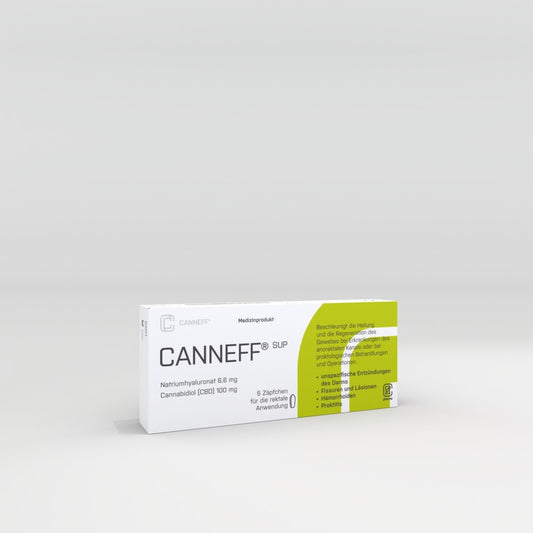
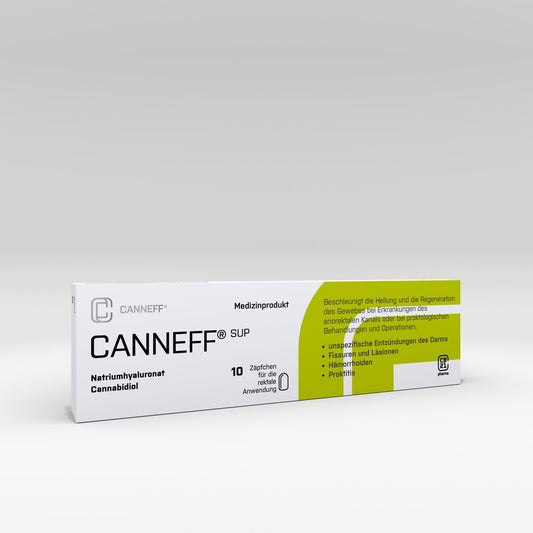
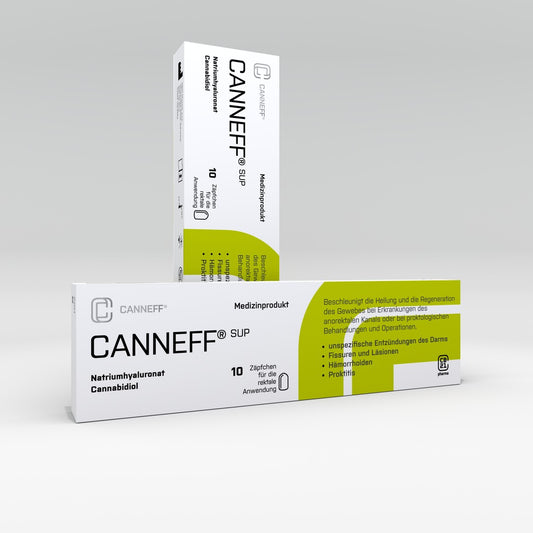
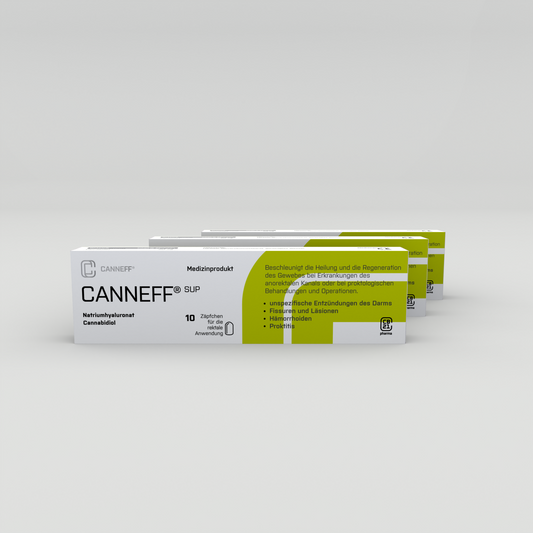
If an anal fissure surgery is to be avoided, conservative therapy with anti-inflammatory CANNEFF® SUP suppositories can help, which regenerate the mucosa through their moisturizing and healing-promoting effect.
What surgical methods are available for treating anal fissures?
There are various surgical methods for the treatment of an anal fissure, depending on the severity of the condition:
|
Surgical method |
Description |
Advantages |
Disadvantages |
|
Fissurectomy |
Excision of the fissure with removal of scarred tissue. The wound heals secondarily. |
High healing rate |
Longer healing time (4–6 weeks) |
|
Lateral sphincterotomy (LIS) |
Partial division of the internal sphincter muscle to reduce pressure. |
Faster healing, less pain |
Risk of mild incontinence |
|
Flap plastic surgery |
The fissure is covered with healthy mucosa. |
Especially suitable for stubborn, poorly healing fissures |
More complex procedure, requires an experienced surgeon |
|
Botox injections |
Temporary paralysis of the sphincter muscle to reduce pressure and promote healing. |
Minimally invasive, no surgical scar |
Limited effect, repeat injections needed |
Experiences after anal fissure surgery: pain and healing
After anal fissure surgery, pain usually occurs, which is treated with painkillers or locally anesthetic ointments. Pain during bowel movements is common in the first few days, so soft stools are recommended through a high-fiber diet and CANNEFF® SUP suppositories for moisture regulation. Certain home remedies for anal fissures like sitz baths can additionally help relieve symptoms. Read more here about measures that can accelerate the healing of an anal fissure.
How long does recovery take after anal fissure surgery?
The duration of healing after an anal fissure surgery depends on the chosen method and individual factors. While minimally invasive procedures like Botox injections often provide quick relief, surgical methods such as fissurectomy or sphincterotomy require a longer recovery period.
Healing time depends on the method:
-
Fissurectomy : 4–6 weeks
-
Sphincterotomy : 2–4 weeks
-
Flap plastic surgery : 6–8 weeks
-
Botox injections : Effect after 1 week, lasts 3–6 months
Regular check-ups with a proctologist are crucial to monitor the healing process and detect possible complications early. Products like CANNEFF® SUP can contribute to mucous membrane regeneration and accelerate healing due to their anti-inflammatory and moisturizing properties.
What complications can occur after anal fissure surgery?
As with any surgical procedure, side effects cannot be ruled out after an anal fissure surgery. Most complications are temporary and can be minimized through careful aftercare and hygiene.
Possible complications:
-
Infections: Wound care and hygiene are essential.
-
Bleeding: Especially possible in the first few days after surgery.
-
Pain during bowel movements: Usually only temporary, decreases over time.
-
Mild incontinence: Rarely occurs, mainly after sphincterotomy.
CANNEFF® SUP can help regenerate the mucous membrane and minimize the risk of infections after surgery. Read more here about the suppositories for treating anal fissures.
Anal fissure surgery compared: Which method has the best healing rate?
Not every anal fissure surgery automatically leads to complete healing. The choice of procedure depends on the severity of the fissure, the individual health condition, and possible comorbidities. Different surgical methods offer varying healing rates and risks.
Studies show the following long-term healing rates:
|
Surgical method |
Healing rate |
Recurrence rate |
|
Fissurectomy |
80–90 % |
10–15 % |
|
Sphincterotomy |
90–95 % |
5–10 % |
|
Flap plastic surgery |
85–90 % |
10–15 % |
|
Botox injections |
50–70 % |
30–50 % |
Sphincterotomy shows the best results with a healing rate of up to 95%, although there is a small risk of mild fecal incontinence. CANNEFF® SUP can support the healing of the mucous membrane after anal fissure surgery as a complementary regeneration therapy.
Experience reports: What does the time after surgery feel like?
Many affected individuals look back on the anal fissure surgery as worthwhile because chronic pain and discomfort disappear permanently. Patients report:
-
Relief after surgery , as the severe pain subsides after a few days.
-
Severe pain immediately after the Anal fissure surgery, which can be well controlled with painkillers.
-
Fear of the first bowel movement , as this can initially be uncomfortable.
-
Rapid improvement of the symptoms of anal fissure , if consistent follow-up care is maintained.
Does surgery really help against anal fissures in the long term?
Yes, in most cases the fissure heals permanently after the anal fissure surgery. The key to long-term success is:
-
Soft stool , to prevent recurring fissures
-
Good hygiene , to prevent infections
-
Regular follow-up care , to detect recurrences early
-
CANNEFF® SUP , to optimally regenerate the mucous membrane after surgery
Aftercare and care after anal fissure surgery
After anal fissure surgery, good care is crucial for successful healing:
-
Sitz baths with chamomile or oak bark to reduce inflammation
-
Gentle cleansing with lukewarm water (no soaps or harsh cleaning agents)
-
Wound healing promoting products such as CANNEFF® SUP to support regeneration
-
Pain therapy with local anesthetics or oral painkillers
-
Avoiding hard sitting postureto reduce pressure on the wound
Read more here about measures that can accelerate the healing of an anal fissure.
Diet and stool regulation after anal fissure surgery
The right diet after anal fissure surgery helps keep stools soft and prevents re-tearing:
|
Allowed |
Avoid |
|
High-fiber diet (whole grains, vegetables, fruit) |
Constipation-promoting foods (white bread, red meat) |
|
Adequate fluid intake (2 liters daily) |
Alcohol and caffeinated beverages |
|
Flaxseed or psyllium husks for stool regulation |
Spicy seasonings and irritating foods |
|
Fermented foods (yogurt, kefir) for the gut flora |
Sugary, highly processed foods |
An anal fissure surgery is necessary when the fissure is chronic and does not respond to conservative treatments. Sphincterotomy offers the highest healing rate, while fissurectomy is a proven method. Proper aftercare with soft stools, sitz baths, and care products like CANNEFF® SUP is important to prevent recurrence of fissures. Read more here about the causes of anal fissures, or about measures to prevent anal fissures.
Here you can also find more information about the treatment of anal fissures:
Herbal treatment of anal fissures
Alternative treatment of anal fissures